
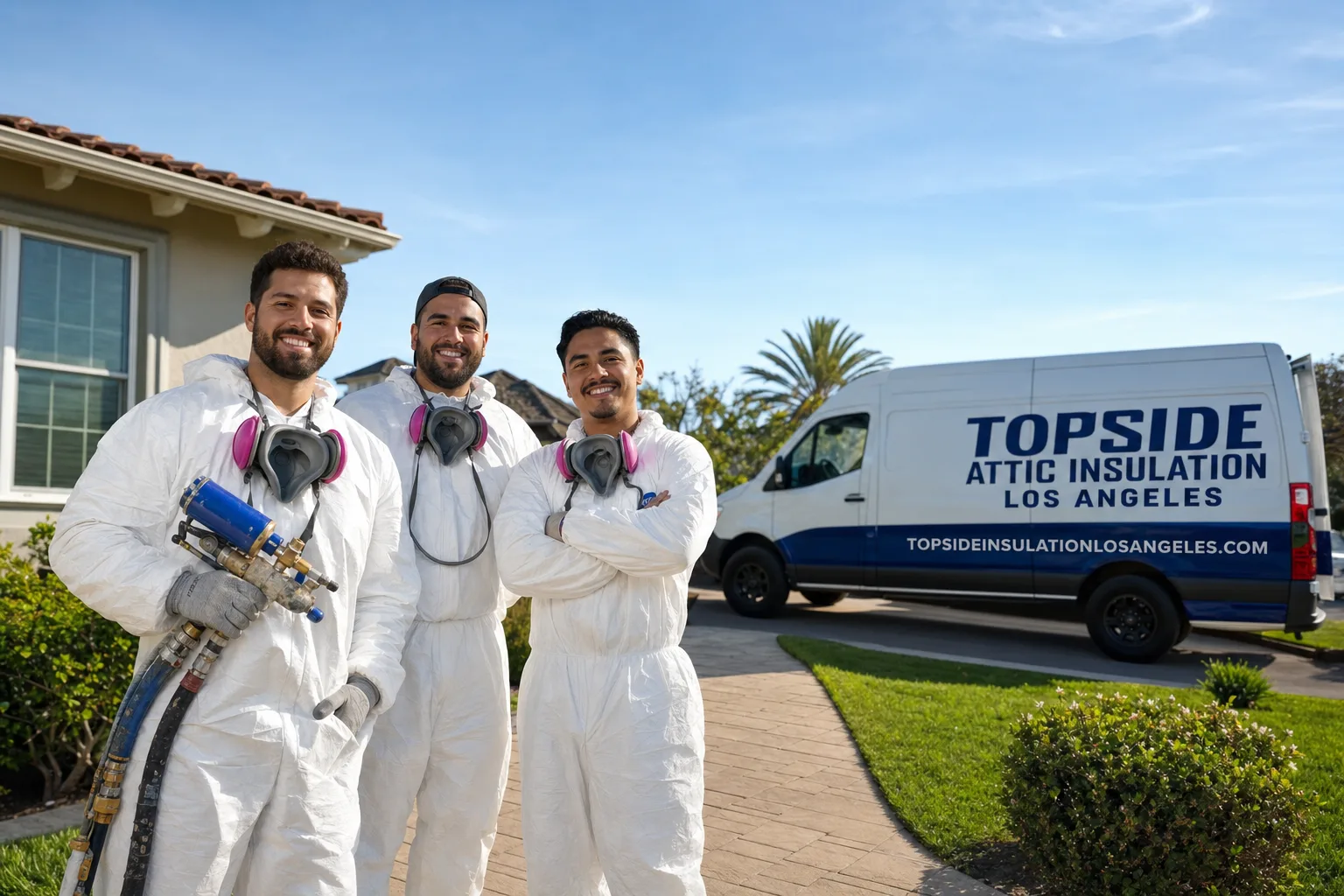
Fast, Reliable Attic Insulation Across Hawthorne
Most attic insulation jobs in Hawthorne run $2,800-$6,500 depending on whether we’re sealing and topping up an existing thermal layer or performing a full acoustic retrofit under the LAWA RSI program. Our crews are dispatched from the Los Angeles office and typically arrive in Hawthorne within 45 minutes to an hour. We’ve worked on the post-WWII stucco bungalows along Prairie Avenue, the ranch homes near Hawthorne Boulevard, and the tighter lots in the Hollyglen area - so we know what hides in these attics before we pull the hatch.
Call (628) 226-1097 for a written price before any work starts. Estimates are free, and we answer live 24/7.
Why Topside Attic Insulation Los Angeles Is Hawthorne’s Preferred Attic Insulation Company
We’ve sealed and insulated over 9,000 homes since 2016, and a growing share of our Hawthorne work comes from referrals in the 90250 ZIP - homeowners who tell their neighbors about the blower-door numbers we left behind. Our reviews from Hawthorne customers consistently note two things: we show up when we say we will, and we document everything. Under Haven Standard: Arrive on schedule, you get a named technician and a text when they are on the way.
Response time to Hawthorne averages under an hour from dispatch because our crews know the local grid - Crenshaw Boulevard to the east, the 405 corridor to the west, and the residential pockets between them that don’t always map cleanly. We’re also fluent in LAWA RSI program documentation, which matters more here than in neighboring cities. Gardena and Lawndale sit outside the primary noise contours; Hawthorne doesn’t. That difference changes what we quote, how we spec materials, and what paperwork we prepare.
Our Attic Insulation in Hawthorne work is backed by the 365-Day Done Right Promise - if it’s not done right, we make it right - and every job closes with a Documented Photo Record, not available on request, included automatically.
Our Attic Insulation Services in Hawthorne
Blown-In Attic Insulation
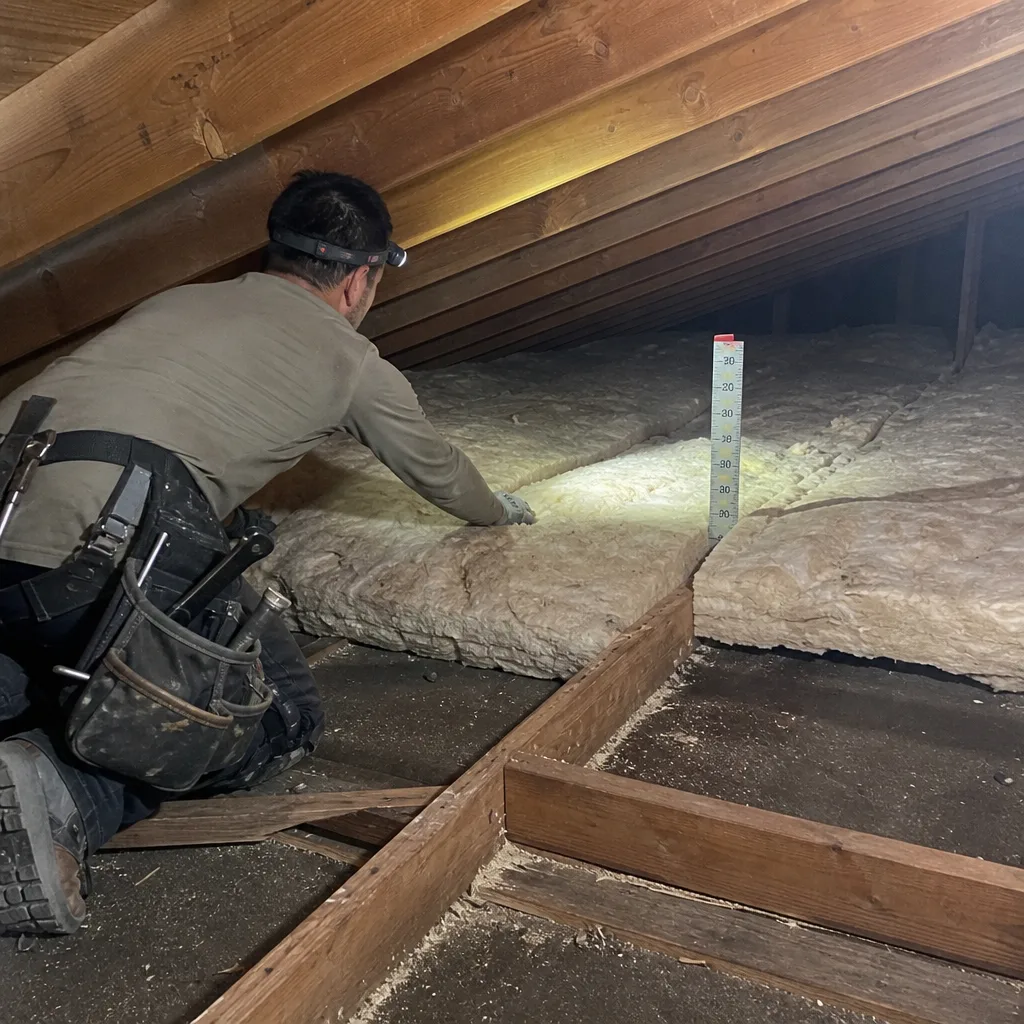
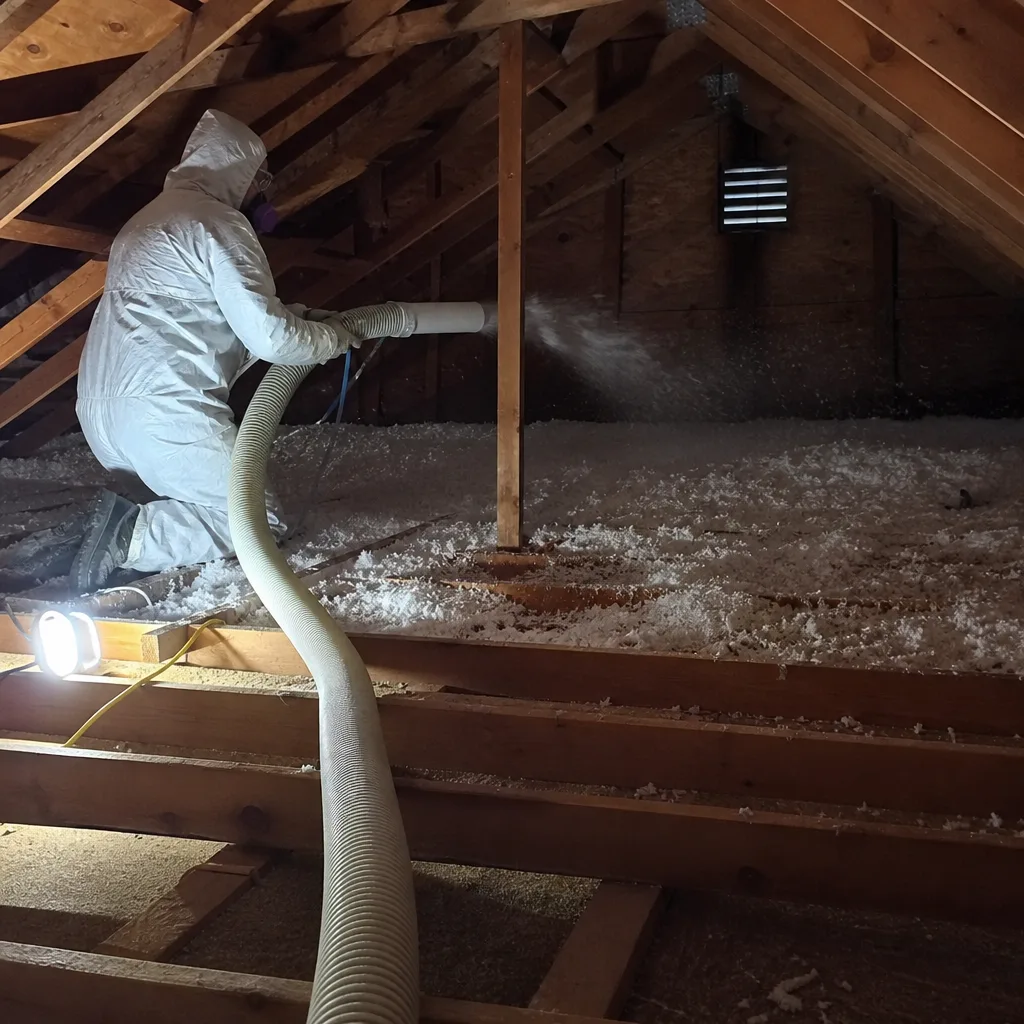
Blown-in cellulose or fiberglass - loose-fill material blown through a hose to achieve consistent depth and coverage - is our most common Hawthorne installation. In the 1940s and 1950s stucco bungalows near 120th Street and Aviation, attics were often left entirely empty or received a thin, uneven fiberglass layer in the 1970s. We remove the compacted debris, seal the attic plane with acoustic caulk where LAWA RSI standards apply, then blow R-38 to R-49 depending on ceiling joist depth and the homeowner’s thermal or acoustic target. The material settles into irregular cavities that batt insulation leaves exposed. For Hawthorne homes inside the 65 dB CNEL contour, we spec higher-density blown-in and pair it with targeted air sealing to meet STC ratings.
Attic Batt Insulation
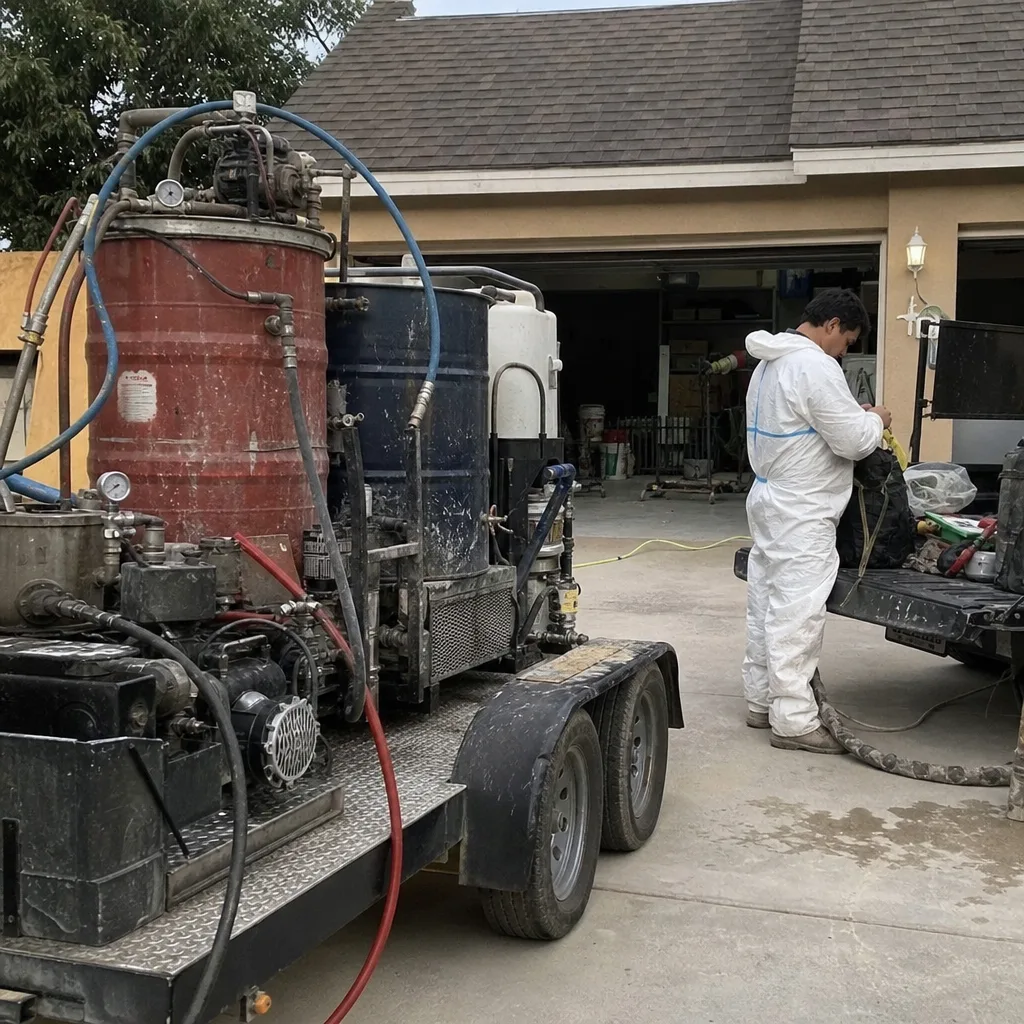
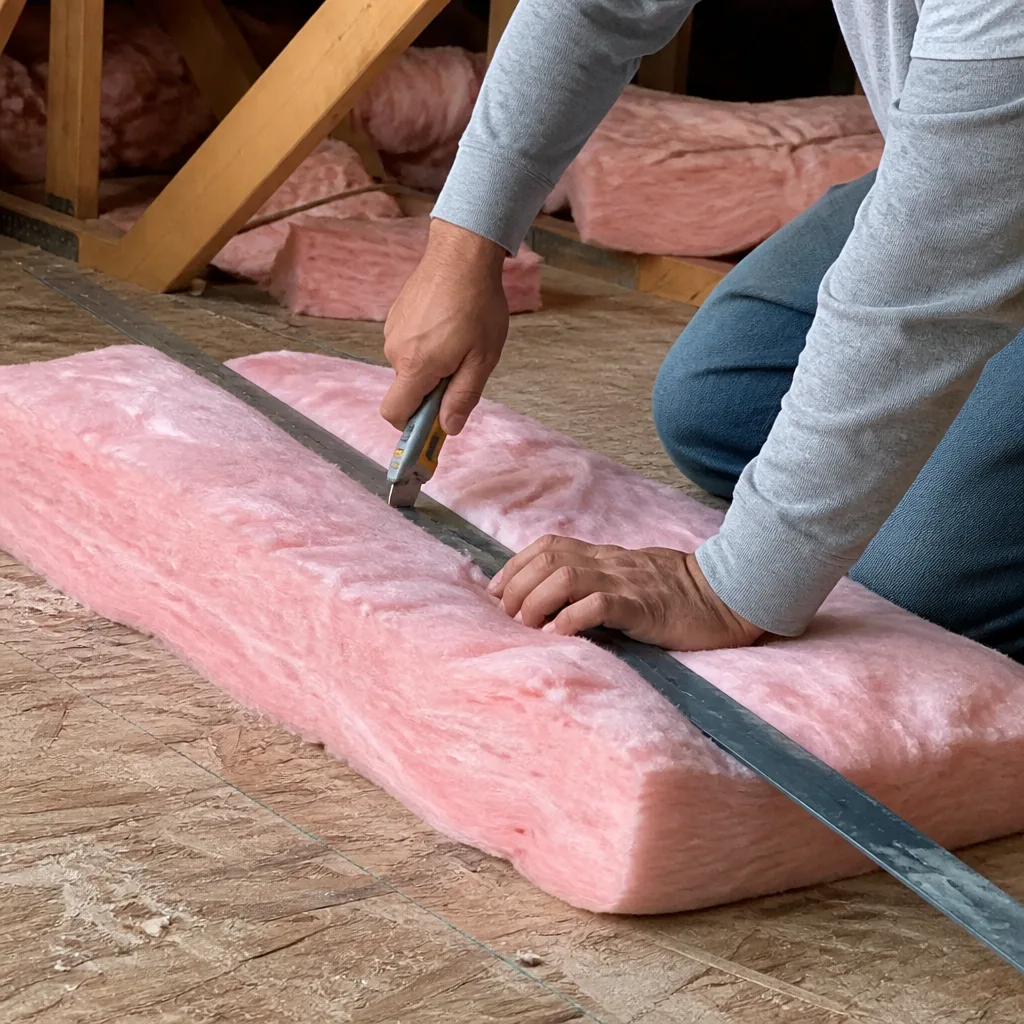
Batt insulation - pre-cut fiberglass or mineral wool panels fitted between joists or rafters - still has a place in Hawthorne attics, especially for acoustic retrofits where STC performance is the primary metric. Our crew was called to a 1952 stucco bungalow near the corner of 132nd and Prairie in Hawthorne’s north end, where the homeowner’s attic had never been insulated and LAX noise was rattling the kitchen cabinets. We removed compacted 1970s fiberglass batts, added R-38 Owens Corning blown-in over the top plate, and sealed the attic plane with acoustic caulk to knock down flanking paths for the RSI-driven STC target. The homeowner’s complaint about jet noise in the bedroom dropped noticeably, and the scope passed LAWA documentation review on the first pass. For standard thermal jobs, we stock Johns Manville and Knauf batts in widths matching Hawthorne’s common 16-inch and 24-inch on-center framing.
Attic Insulation Top-Up
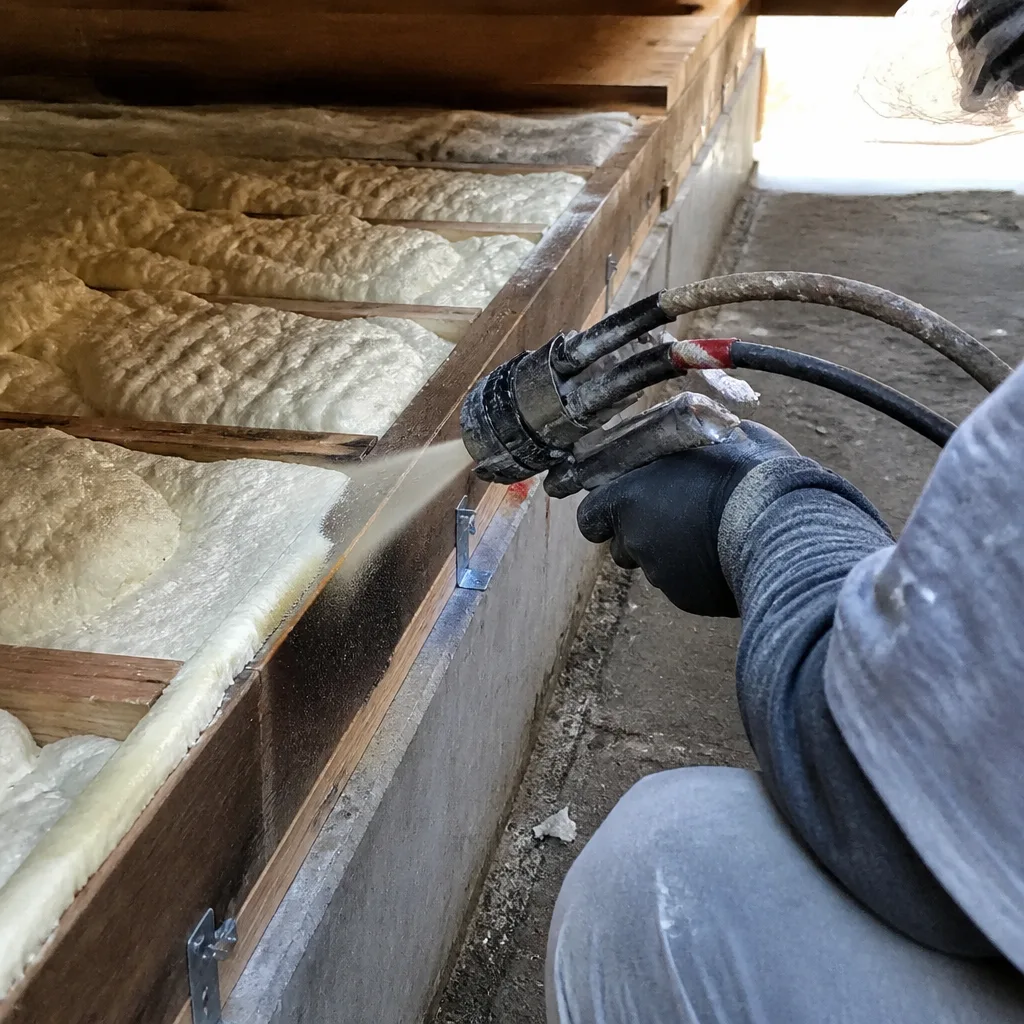
Top-up work - adding material over existing insulation without full removal - makes sense when the original layer is dry, uncontaminated, and reasonably level. In Hawthorne’s mild marine climate, summer highs rarely crack 80°F, so thermal performance alone is a weak argument for replacement; but that same climate caused builders to skip insulation entirely, meaning many “top-ups” are really first-time installations over thin or patchy existing material. We assess what’s there, photograph the condition, and quote a written price for adding blown-in to reach R-38 or better. If the existing material is compacted, moisture-damaged, or rodent-affected, we’ll tell you - and we’ll document why removal makes more sense.
Attic Insulation Replacement
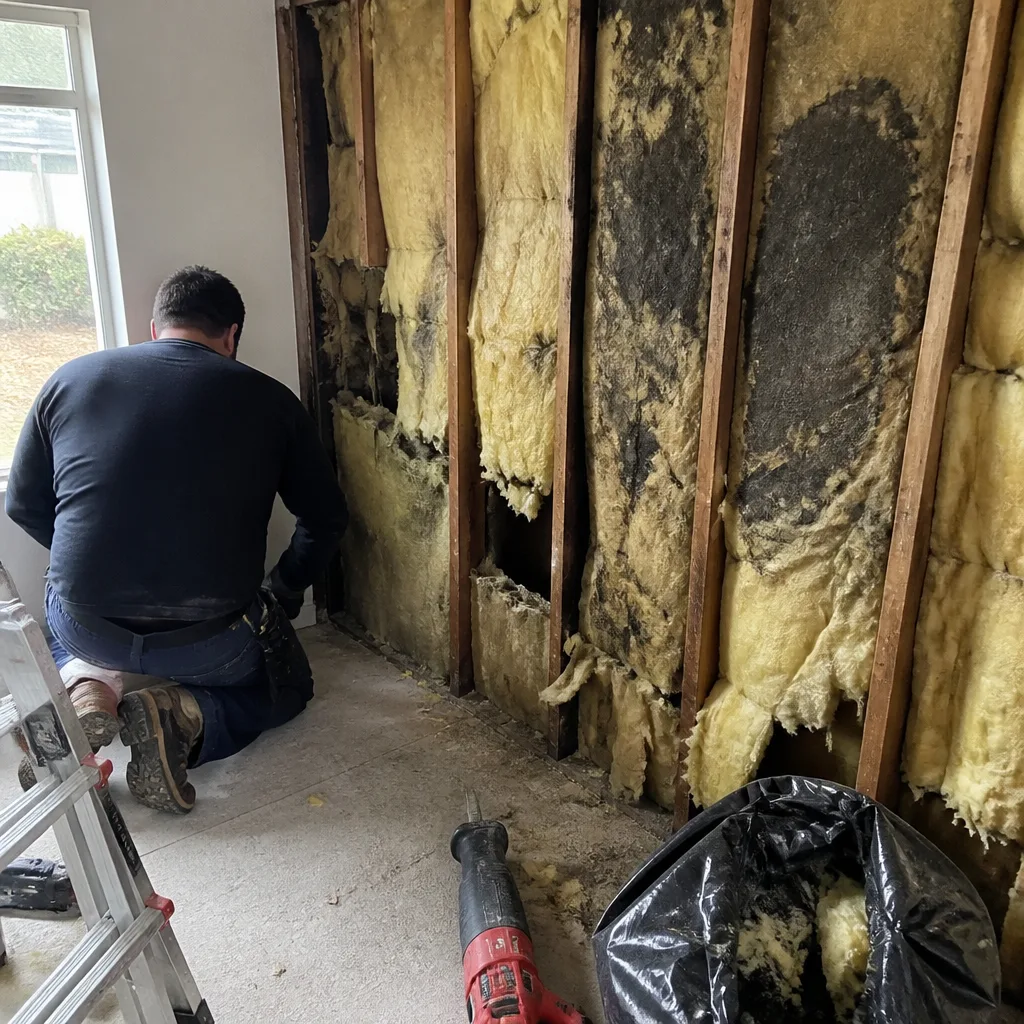
Full replacement starts with removal of the old material, disposal, and a bare-attic inspection. In Hawthorne’s housing stock, we frequently find original 1945-1965 attics that were never insulated, or only a thin 1970s fiberglass batt was laid loose - now compacted, dust-laden, and providing near-zero R-value or acoustic damping. Moisture from marine-layer condensation and occasional roof leaks has degraded batt insulation in older Hawthorne attics, creating sagging, mold-tinged batts that fail both thermally and acoustically. Homes within the LAWA 65 dB CNEL contour frequently have under-insulated attics that were never upgraded to acoustic STC specifications, leaving jet-noise flanking paths through the ceiling plane unaddressed. Replacement lets us seal first, then insulate - in that order. Envelope will never blow insulation over an unsealed attic floor; air sealing of top plates, can lights, and penetrations is completed before any insulation is added.
Attic Baffles & Ventilation Prep
Baffles - the cardboard or foam channels that keep soffit vents open and prevent insulation from blocking airflow - are critical in Hawthorne’s older homes where original carpentry never accounted for modern insulation depths. Without them, blown-in material drifts into the eaves, choking ventilation and trapping moisture against the roof deck. We install baffles as standard prep on every full Hawthorne job, not as an add-on. For homes near the coast where marine-layer humidity is highest, this step prevents the condensation issues that destroy insulation performance from below.
What happens when you call
- 1
A real person answersNo phone trees - you reach a local pro.
- 2
You get an upfront price rangeHonest numbers before anyone is dispatched.
- 3
A background-checked tech heads outLicensed & insured, dispatched right away.
- 4
You approve before work beginsNothing starts until you say go.
 Before
 After
AfterTrusted Brands We Service in Hawthorne
We source materials from Owens Corning, Johns Manville, Knauf, Rockwool, CertainTeed, Icynene, Demilec, and GreenFiber - no proprietary product lock-in. For Hawthorne’s acoustic retrofits, we frequently spec Rockwool or CertainTeed acoustic batts with higher STC ratings than standard thermal products. Johns Manville and Knauf fiberglass blown-in handle the bulk of our thermal work. We stock locally and coordinate delivery to Hawthorne job sites without the delays that come from drop-shipping specialty acoustic materials. The brand matters because LAWA RSI documentation requires spec sheets and installation certificates; we provide those as part of the written scope, not as afterthoughts.
Common Attic Insulation Problems We See in Hawthorne Homes
- Never-insulated original construction. Hawthorne’s post-WWII stucco bungalows and ranch-style homes built 1945-1965 frequently have 2×4 wall framing that was left entirely uninsulated, and attics that received nothing at all. The stucco-over-wood-sheathing construction offers no meaningful thermal or acoustic break between exterior and living space.
- Compacted 1970s fiberglass with zero remaining performance. Where insulation was added during the energy-crisis era, it was often thin, poorly fitted, and has since compressed to a fraction of its original R-value. We measure what’s there and show you the numbers.
- Moisture degradation from marine-layer condensation. Hawthorne’s location 4-5 miles from the coast brings persistent marine moisture that condenses on cooler attic surfaces, especially in spring and fall. Sagging, discolored batts are a tell; we photograph the condition and include it in your Documented Photo Record.
- Acoustic flanking paths in LAWA contour homes. Northern and western Hawthorne neighborhoods within the 65 dB CNEL noise contour often have attics that were never upgraded to meet STC specifications. Jet noise penetrates through unsealed top plates, recessed can lights, and plumbing chases - paths a standard thermal job ignores entirely.
Pricing for Attic Insulation in Hawthorne, CA
A typical blown-in attic insulation job in a Hawthorne bungalow runs $2,800-$4,200 for attics up to 1,200 square feet, assuming accessible hatch, reasonable joist spacing, and no major air-sealing complexity. Full acoustic retrofits under LAWA RSI guidelines - which include targeted sealing, higher-density material, and STC-compliant installation - typically range $4,500-$6,500 depending on ceiling plane area and the number of penetrations to treat. Attic insulation replacement with removal and disposal adds $800-$1,400 to any scope.
What moves the number: attic square footage, existing material condition, accessibility (some Hawthorne attics have hatches cut into closets with tight clearances), and whether the job is thermal-only or acoustic-targeted. We don’t guess. Every quote follows a site visit, a written scope, and a flat price delivered before anyone lifts a tool. Haven Standard Clause 1.
Bring us a competing quote; we will read it with you. Our Free Second Opinion on Any Written Estimate applies to every Hawthorne homeowner. Call (628) 226-1097 to schedule.
We Also Serve Cities Near Hawthorne
Our Attic Insulation crews work throughout the South Bay and Westside, including Lawndale, Inglewood, Manhattan Beach, and Gardena. Each city has different building stock, different code history, and different primary drivers for attic work - thermal, acoustic, or both. We adjust the scope accordingly rather than applying a single template.
Serving Hawthorne, CA - Our Local Coverage Area
We’re based in the Hawthorne area and know this community well. Use the map below to see our service coverage - if you’re nearby, we can almost certainly help.
FAQs - Attic Insulation in Hawthorne
Yes - if your home falls within the LAWA 65 dB CNEL noise contour, acoustic insulation is specifically designed to address the low-frequency rumble and structure-borne vibration that standard thermal insulation cannot block. Standard R-value fiberglass does almost nothing for jet noise; you need higher-density material, sealed penetrations, and attention to flanking paths through the ceiling plane. We assess your location against LAWA’s published maps and spec accordingly. Call (628) 226-1097 for a written quote - estimates are free.
We start with a bare-attic inspection, a blower-door test - a pressurization reading that shows, in one number, how much air your building envelope is losing - and a written scope that names the exact steps, materials, and price before anyone starts. For a 1953 Hawthorne stucco bungalow, we typically find an empty attic, unsealed top plates, and original can lights that leak air and noise. We document everything, seal first, then insulate. The 365-Day Done Right Promise applies to all completed work.
Homeowners in Hawthorne’s northern and western neighborhoods within the 65 dB CNEL contour may qualify for LAWA RSI program grants covering acoustic insulation, window upgrades, and ventilation - but the contractor must document STC compliance and submit proper paperwork. We ask every new client “have you checked your LAWA eligibility?” before quoting a standard job, because program funding often covers more extensive work than homeowners initially request. If you qualify, we handle the spec sheets and installation certificates as part of our standard documentation. Call (628) 226-1097 and we’ll walk you through the eligibility check.
Yes - Hawthorne’s mild marine climate means thermal performance alone is a weak sales argument compared to inland LA County cities, but that same historically mild climate caused builders to skip insulation entirely, leaving the stock acoustically and thermally vulnerable. The persistent moisture also degrades fiberglass batts over time, especially where roof leaks or inadequate ventilation allow condensation. We address this by ensuring proper baffle installation and specifying moisture-resistant materials where conditions warrant. Your written scope will note exactly what we found and what we did about it.
We install Owens Corning, Johns Manville, Knauf, Rockwool, CertainTeed, and others - no proprietary lock-in means we match the material to the job, not the other way around. For Hawthorne acoustic retrofits, brand matters because LAWA RSI documentation requires manufacturer spec sheets proving STC performance. For standard thermal work, brand matters less than proper installation depth and air sealing quality. We publish the brand, the product line, and the installed R-value or STC rating in your written scope so there’s no ambiguity. Call (628) 226-1097 for specifics on your project.
Written by Wes Okafor, Owner at Topside Attic Insulation Los Angeles, serving Hawthorne since 2016.