
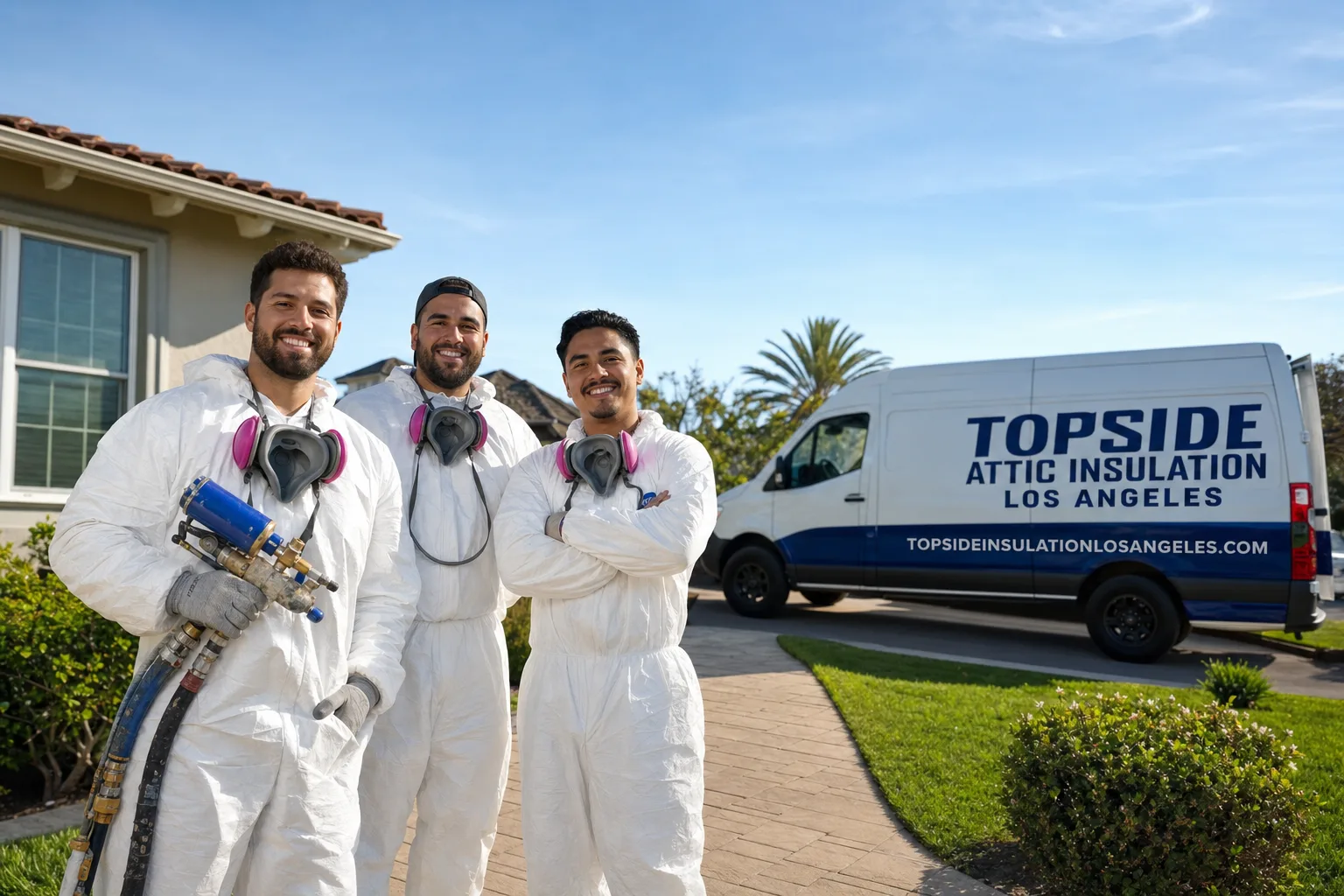
Fast, Reliable Blown-In Insulation Across Bell
Blown-in insulation in Bell, CA typically runs $1,800-$4,200 for attic work and $2,400-$5,500 for dense-pack wall retrofits, with most jobs completed in a single day. We’re familiar with the tight attic hatches and lot-line-to-lot-line builds you’ll find throughout Bell’s pre-1960 housing stock, and our crews are dispatched from the Los Angeles office with same-day response to calls from the 90201 area. If your cooling bills are climbing faster than your neighbors’ in Huntington Park or South Gate, the problem is usually in the attic. Call (628) 226-1097 for a free estimate with a written price before any work starts.
Why Topside Attic Insulation Los Angeles Is Bell’s Preferred Blown-In Insulation Company
We’ve worked the Southeast LA Basin long enough to know that Bell isn’t just another dot on the map. The 1940s bungalows along Gage Avenue and the stucco fourplexes clustered near Atlantic Boulevard have specific problems: wall cavities that were never insulated, attics packed with crumbled rock wool that hasn’t met code in forty years, and summer heat that sits on the roof like a lid.
Our reviews from Bell customers consistently mention two things: we show up when we say we will, and we leave documentation behind. The 365-Day Done Right Promise applies here like everywhere else, but in Bell it matters more because so many jobs are tied to utility-program inspections that don’t pass twice. We answer calls 24/7 with a live person, not a voicemail loop, and we dispatch crews who’ve already dense-packed walls through exterior stucco on buildings with eighteen inches of side-yard clearance.
Response time to Bell is typically same-day for estimates and next-day for most installations. We know the difference between a job that needs SoCalGas program paperwork and one that doesn’t, and we won’t waste your time with the wrong process.
Our Blown-In Insulation Services in Bell
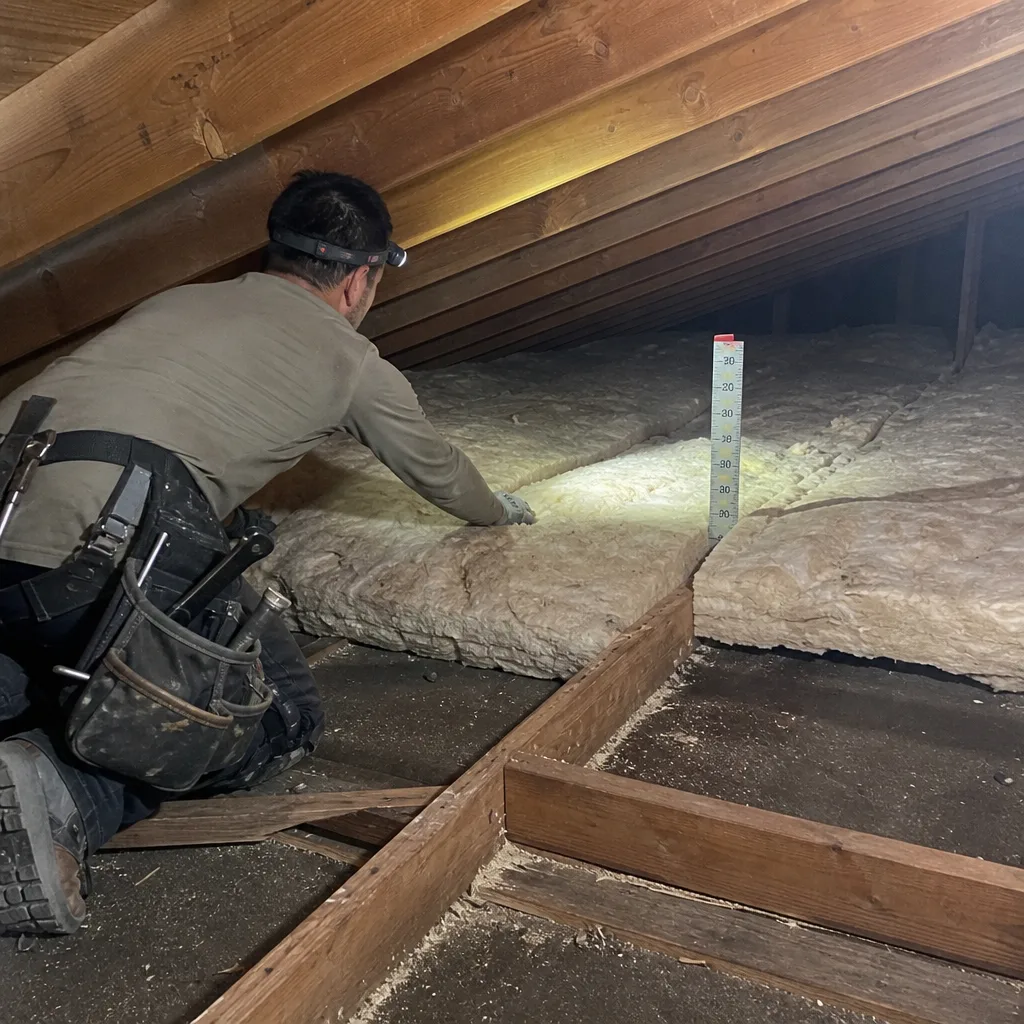
Blown-In Cellulose
Cellulose is our go-to for Bell attics because it handles the urban heat island effect better than fiberglass in this climate. We source treated cellulose from GreenFiber and other manufacturers, blow it to R-38 or higher, and we never top old material without air-sealing first. On a typical 900 sq ft bungalow near Florence Avenue, that means sealing top plates, can-light penetrations, and the chimney chase before the blower truck arrives. The result is a documented CFM50 reduction you can compare to your pre-work blower-door number.
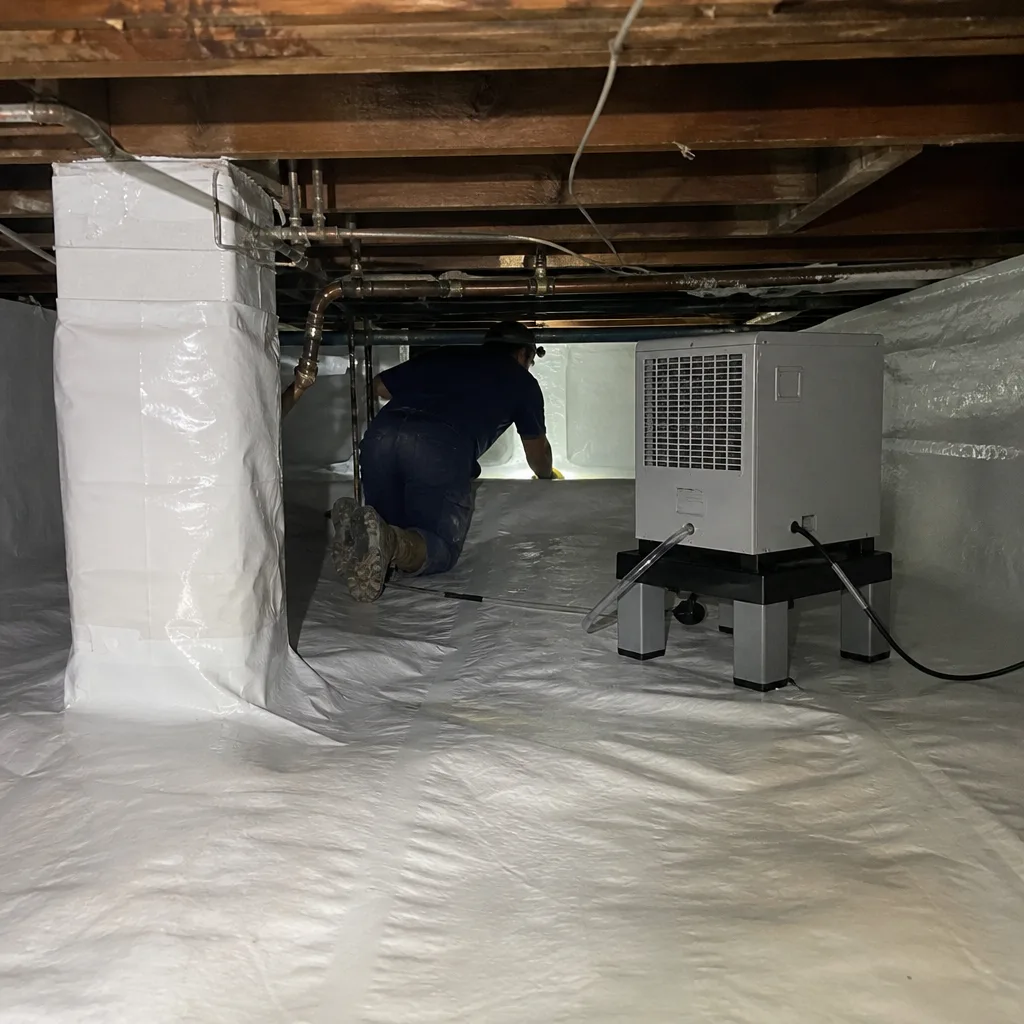
Blown-In Fiberglass
Fiberglass works in Bell when the attic is already reasonably sealed and the homeowner wants a lighter material with faster install times. We use Johns Manville and Knauf loose-fill products, installed with proper baffling at the eaves to prevent wind-washing. In Bell’s heat-cycling attics, though, fiberglass has a failure mode we watch for: the top layer bakes into a matted crust near the hatch, blocking subsequent top-ups from achieving rated R-value. We flag this during inspection and recommend cellulose if the attic temperature history supports it.
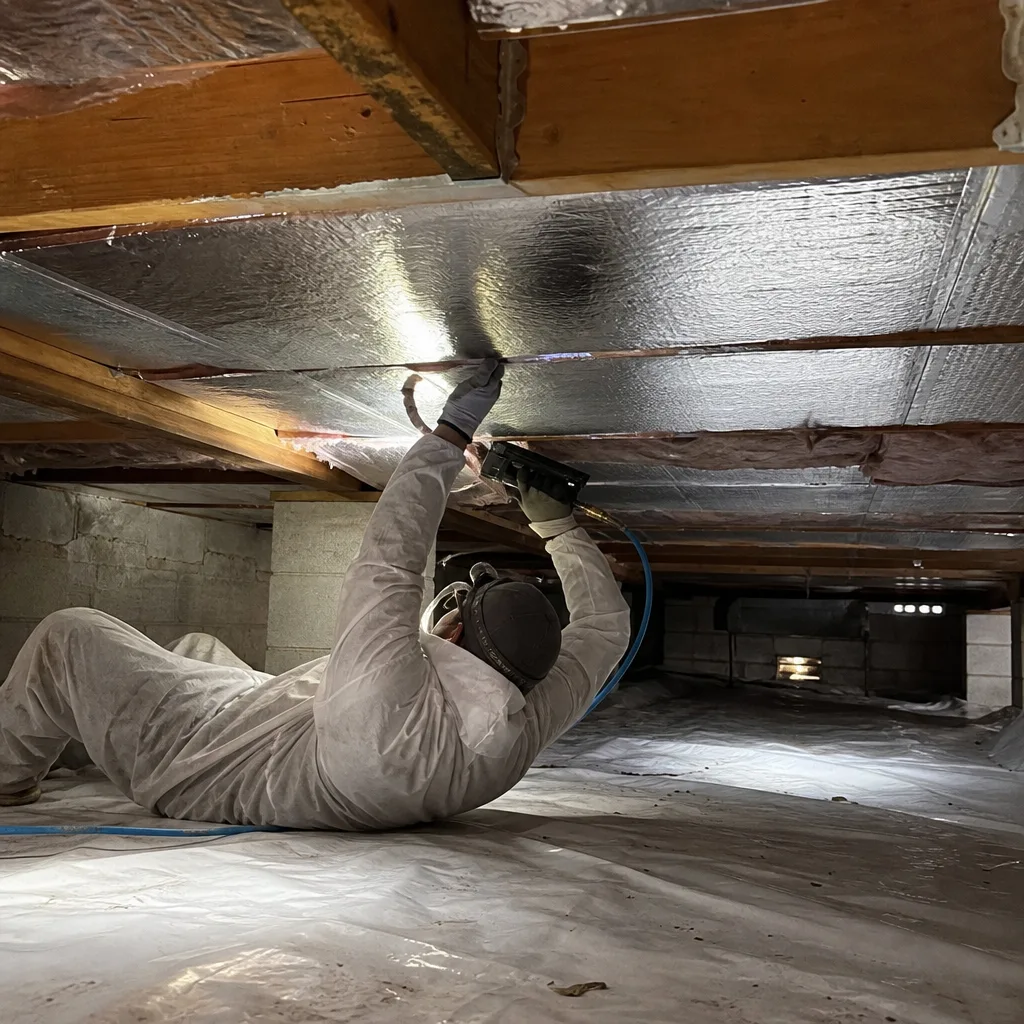
Dense-Pack Wall Insulation
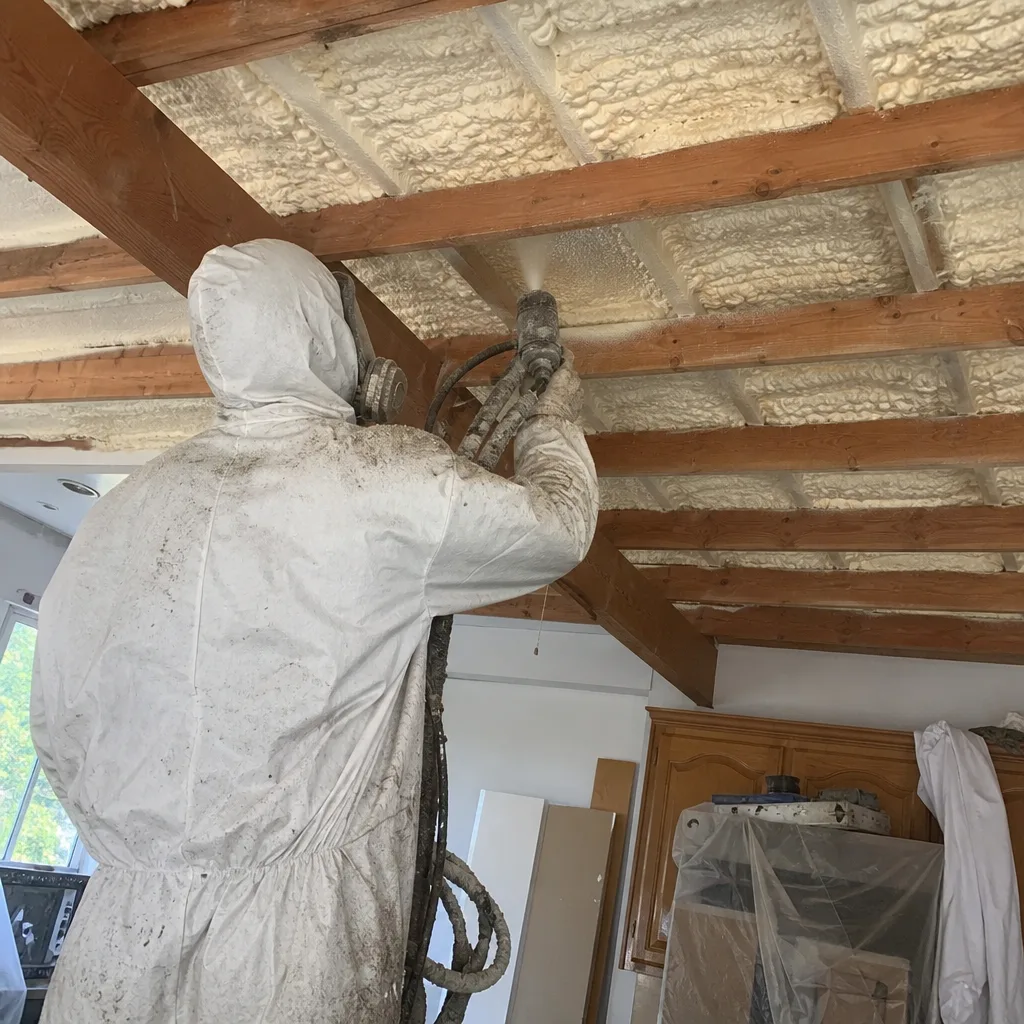
This is where Bell’s housing stock demands real technique. Those 1940s-1960s stucco fourplexes and bungalows have empty wall cavities, and gutting the interior isn’t an option when tenants are in place. We dense-pack through exterior stucco using minimal-collar drilling, blow cellulose to 3.5 pounds per cubic foot to prevent settling, and patch with color-matched exterior compound. On lot-line-to-lot-line buildings with barely two feet of side clearance, our techs work with angled rigs and flexible hose extensions that most crews don’t carry. The effective R-value of a dense-packed Bell wall runs R-13 to R-15, depending on stud spacing and whether we hit plumbing chases that create thin-coverage pockets.
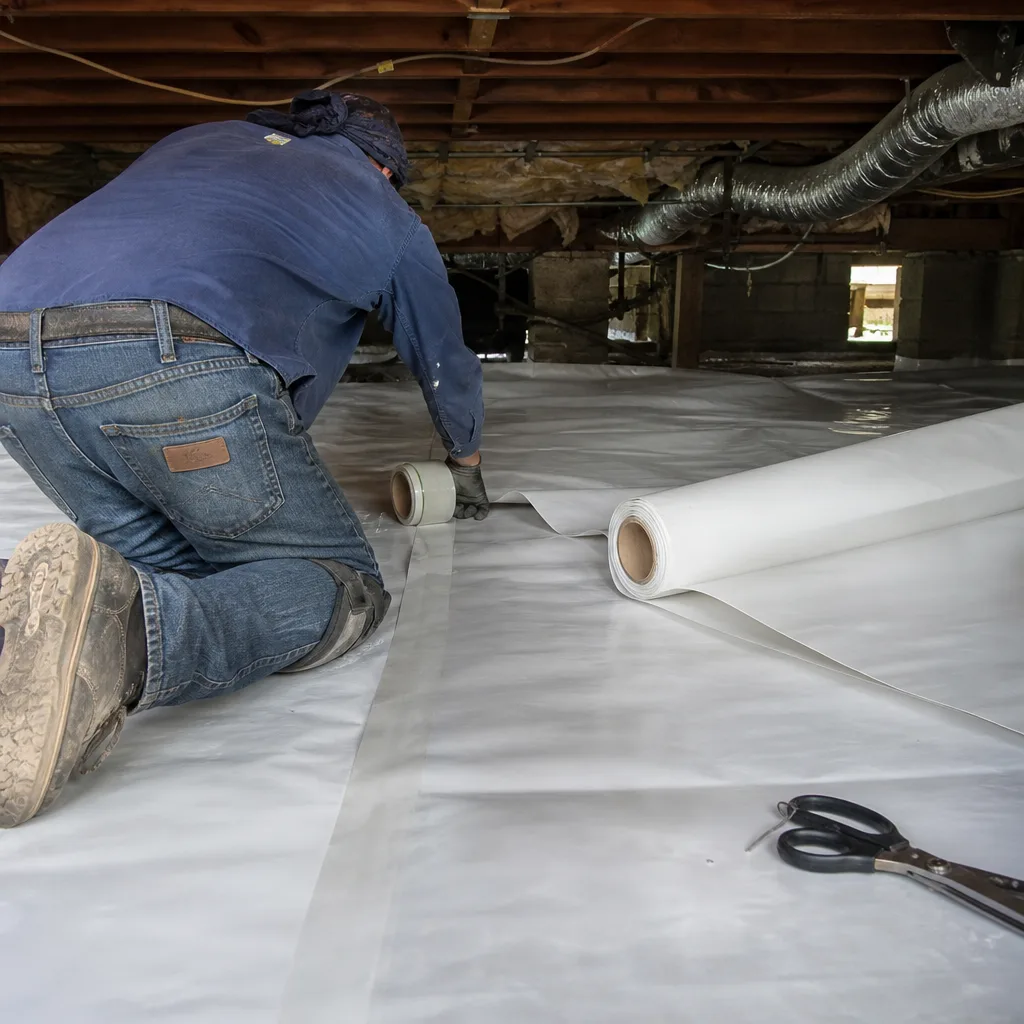
Blown-In Top-Up
Top-ups are common in Bell because so many attics have some old material that isn’t doing much anymore. Compacted rock wool from 1952 doesn’t insulate; it just takes up space. Our rule, under Haven Standard, is seal first, then insulate. We’ll remove or work around the old material, seal every penetration with documented photos, then blow new cellulose to the full depth. A top-up without air sealing is money thrown at the problem. We don’t do it.
What happens when you call
- 1
A real person answersNo phone trees - you reach a local pro.
- 2
You get an upfront price rangeHonest numbers before anyone is dispatched.
- 3
A background-checked tech heads outLicensed & insured, dispatched right away.
- 4
You approve before work beginsNothing starts until you say go.
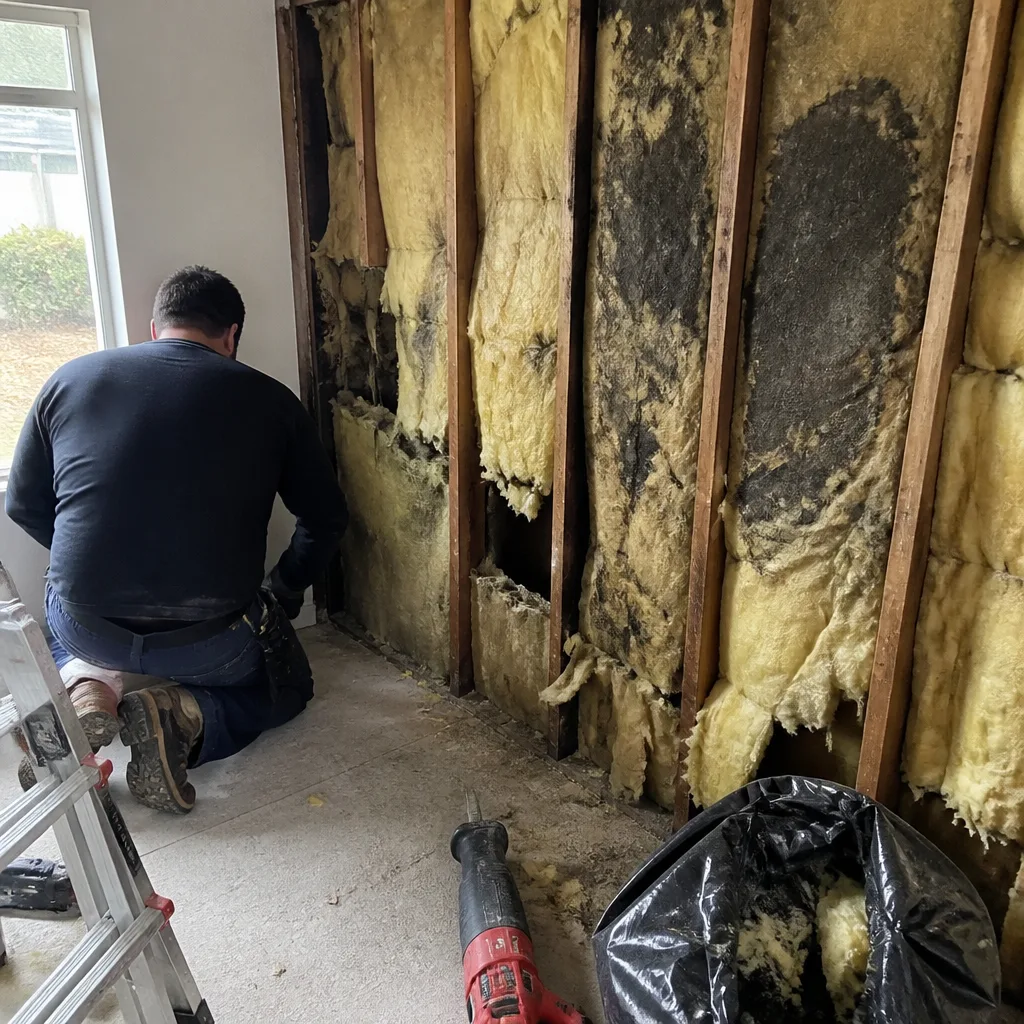 Before
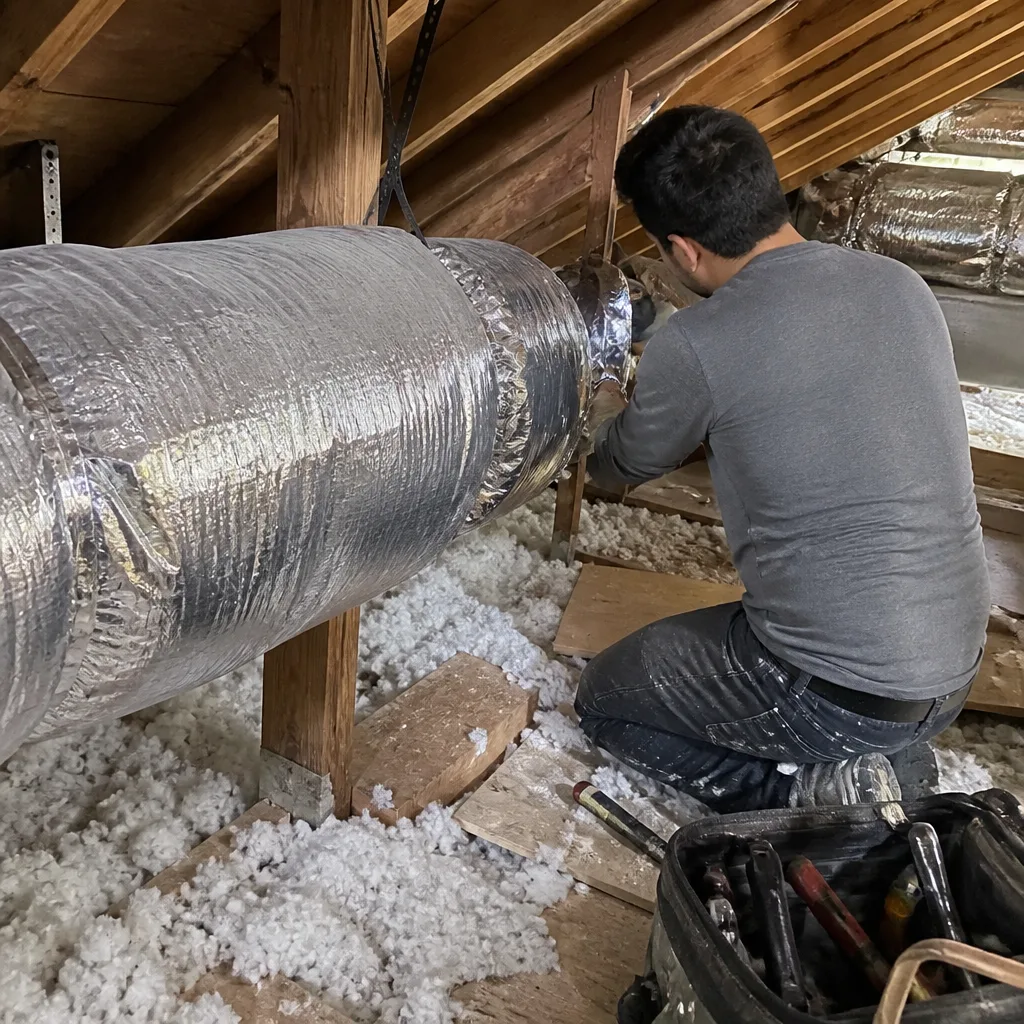 After
AfterTrusted Brands We Service in Bell
We stock and install materials from Johns Manville, Knauf, Rockwool, and CertainTeed, among others. No proprietary lock-in, no brand exclusivity that limits what’s right for your building. For Bell’s climate and housing type, we typically specify GreenFiber cellulose for attics and Knauf Jet-Stream for dense-pack walls, but we’ll match any program-required material if your job runs through SoCalGas or LADWP funding. Local inventory means we don’t wait on special orders for standard jobs.
Common Blown-In Insulation Problems We See in Bell Homes
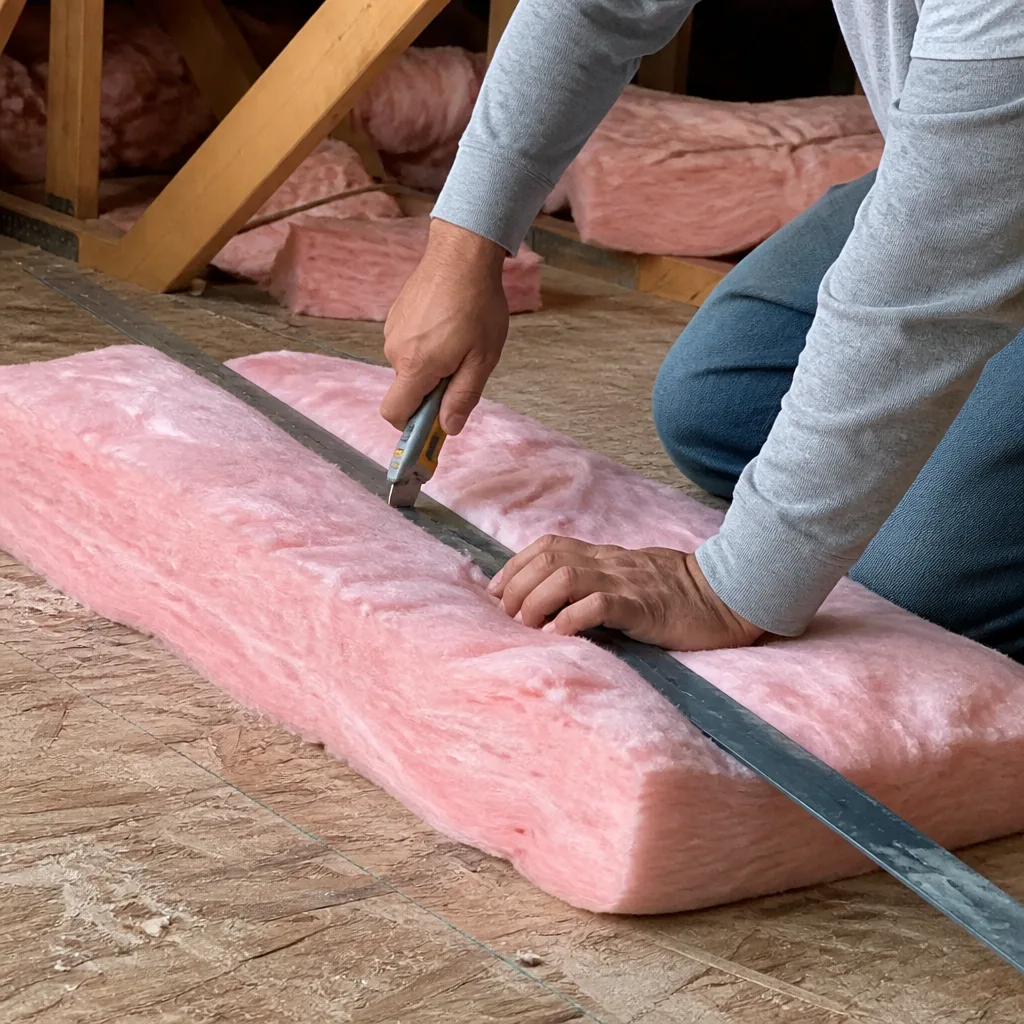
- Compacted rock wool topped instead of sealed. We find this in maybe half the Bell attics we open. The old material is compressed to R-5 or less, and some contractor blew fiberglass on top without sealing the ceiling penetrations. Heat still short-circuits through the gaps. Cooling bills drop maybe 8% when they should drop 25%.
- Thin-coverage pockets behind plumbing chases in dense-pack walls. On lot-line-to-lot-line fourplexes near the I-710 corridor, wall cavities aren’t straight runs. Pipes and electrical chases create dead zones where the cellulose won’t flow at full density. We map these with borescope inspection before we drill, then angle our fill tubes to hit the pockets.
- Matted fiberglass crust blocking top-up value. Bell’s attic temperatures, running 140°F+ in July and August, bake the top inch of blown fiberglass into a hard shell. New material sits on top, but the thermal bridge underneath nullifies most of the gain. We remove the crusted layer and start from a sealed substrate.
- Unsealed can lights and top plates in program jobs that passed visual inspection. Utility inspectors check depth and coverage, not always air leakage. We’ve re-done three Bell jobs in the past eighteen months where the original contractor skipped the sealing and the homeowner’s bills never moved. Our blower-door numbers catch this before we leave.
Pricing for Blown-In Insulation in Bell, CA
Most blown-in attic jobs on a Bell bungalow or small fourplex run between $1,800 and $4,200, depending on square footage, existing material condition, and whether we need to remove old insulation before air sealing. Dense-pack wall retrofits run $2,400-$5,500 for a typical 700-1,100 sq ft structure, with the higher end reflecting stucco repair and multiple unit coordination.
Blown-in top-ups where we can work over properly sealed existing material start around $1,200. Jobs tied to SoCalGas Energy Savings Assistance Program or LADWP low-income weatherization funding are priced to program caps, with no out-of-pocket cost to qualifying residents. We provide a written price before any work starts, always, and a Free Second Opinion on any competing written estimate.
Call (628) 226-1097 for your exact number. Estimates are free.
We Also Serve Cities Near Bell
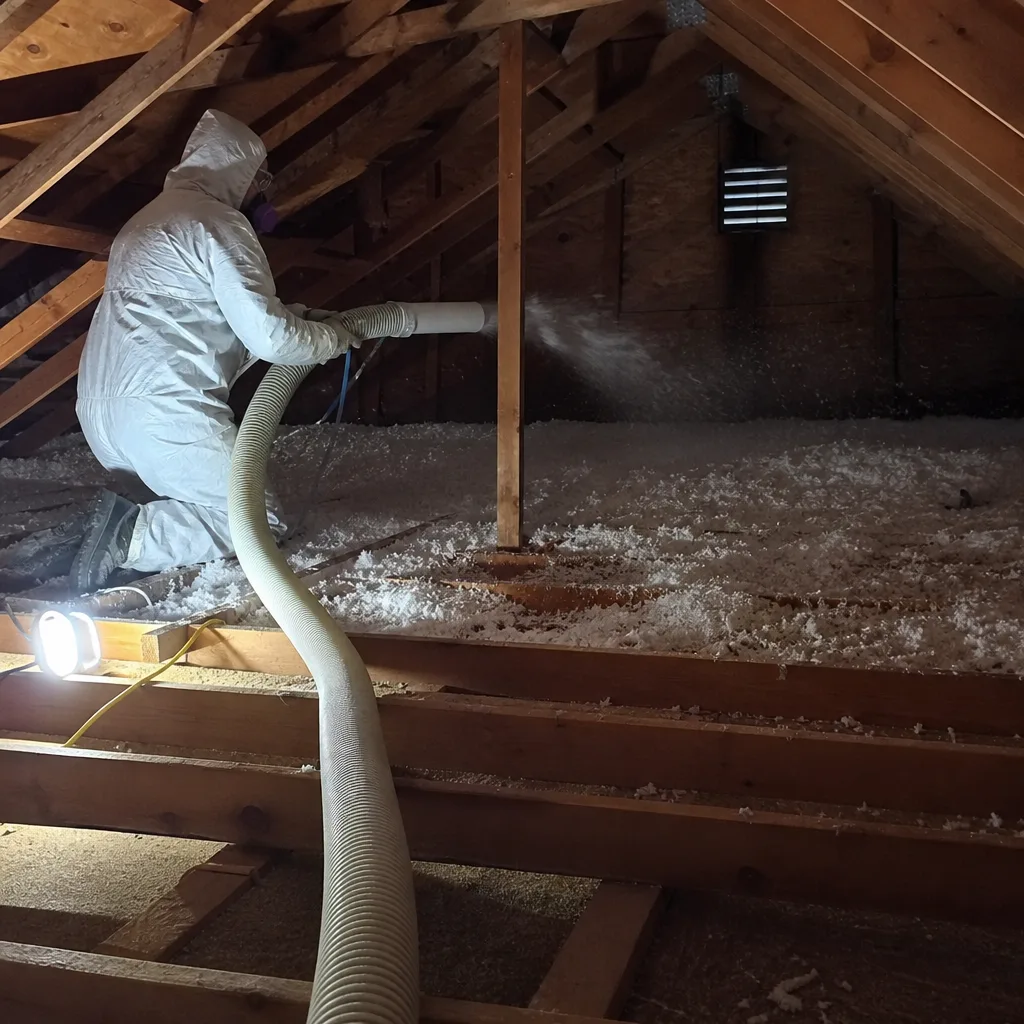
Our crews work Bell regularly and also cover Huntington Park, South Gate, Los Angeles, and Lynwood from the same dispatch point. If you’re near the border, call us and we’ll confirm coverage by address. For the full scope of what we install, see our Blown-In Insulation service page.
Serving Bell, CA - Our Local Coverage Area
We’re based in the Bell area and know this community well. Use the map below to see our service coverage - if you’re nearby, we can almost certainly help.
FAQs - Blown-In Insulation in Bell
We drill minimal 2-inch holes through the exterior stucco at stud-bay spacing, insert flexible fill tubes to the top and bottom of each cavity, and blow cellulose to 3.5 pounds per cubic foot until the cavity is full and the flow resistance tells us we’ve hit density. On a 1948 two-unit stucco fourplex off Atlantic Boulevard near the I-710 corridor, we dense-packed the street-facing wall cavity through the exterior stucco and blew GreenFiber cellulose into an attic that held nothing but compacted rock wool - the lot-line-to-lot-line build gave our tech roughly 24 inches of working clearance at the hatch. We sealed and topped the attic to R-38 so the tenant’s LADWP cooling load stopped dumping straight through the ceiling, and the utility-program inspection passed on the first walkthrough. Call (628) 226-1097 to schedule a borescope inspection and written price.
Yes, both programs cover blown-in insulation for income-qualifying households, and roughly seven of every ten Bell households rent, so most blown-in insulation work here runs through SoCalGas Energy Savings Assistance Program or LADWP low-income weatherization funding - meaning utility income-qualification packets and post-install inspection sign-offs, not homeowner financing, drive the scheduling and documentation on nearly every job. We handle the paperwork, coordinate the inspection, and price to program caps with zero out-of-pocket for qualified residents. Bring us your utility bill and we’ll walk you through qualification. Call (628) 226-1097 to start the process.
We won’t, and any contractor who says yes without inspecting is cutting corners. Compacted rock wool from pre-1960 construction has lost most of its R-value and creates a thermal bridge that new cellulose can’t fix from above. We remove or work around the old material, air-seal every penetration with documented photos, then blow new cellulose to full depth on a clean, sealed substrate. The extra step costs more upfront, but it’s the only way the blower-door number moves. Call (628) 226-1097 for a written scope and price.
Bell sits in the hottest interior pocket of the Southeast LA Basin, cut off from marine-layer cooling by distance and the urban mass around it; summer afternoons commonly run 5-8°F hotter than coastal LA communities. Your attic is probably 140°F or higher, and if the insulation is old, missing, or improperly installed, that heat radiates straight through the ceiling. Your cousin’s attic might be the same temperature, but better insulation and air sealing keep it out of the living space. We measure this with a blower-door test - a pressurization reading that shows, in one number, how much air your building envelope is losing - before and after our work. Call (628) 226-1097 for a free assessment.
Most 900 sq ft Bell bungalows take one full day: morning for setup, old material removal if needed, air sealing with documented photos, and afternoon for blowing insulation to R-38 and final cleanup. Dense-pack wall jobs add a second day for drilling, filling, and stucco patch curing. We schedule around tenant availability and utility-program inspection windows when applicable. Call (628) 226-1097 to book a specific date.
Written by Wes Okafor, Owner at Topside Attic Insulation Los Angeles, serving Bell since 2016.