
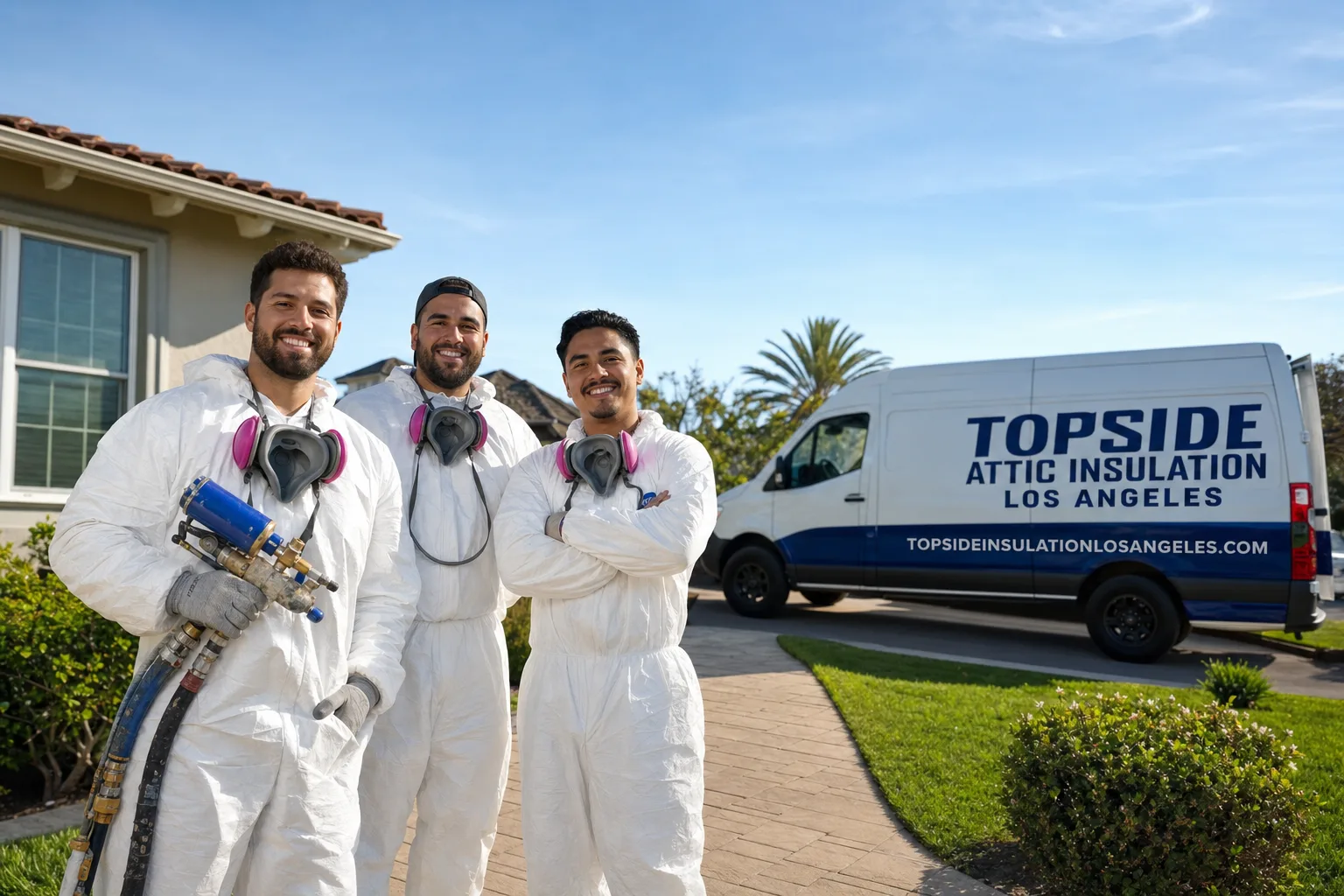
Fast, Reliable Blown-In Insulation Across Compton
Blown-in insulation in Compton typically runs $1,800-$4,500 for a full attic, with most 1950s bungalows landing in the $2,200-$3,200 range after air sealing. Because Compton is designated a Disadvantaged Community under CalEnviroScreen, many homeowners qualify for Weatherization Assistance Program or TECH Clean California subsidies that cover the entire job. Our crews are dispatched from our Los Angeles office and usually arrive in Compton within 45 minutes of scheduling. Call (628) 226-1097 for a written price before any work starts.
We’ve worked on enough Compton attics to know what we’re walking into: original 1945-1970 stucco bungalows with fiberglass batts compacted to dust, unpermitted back-room additions that share an open attic plane with zero insulation, and exhaust fans dumping moisture straight into the joist bays. The housing stock here is remarkably consistent, and so are the problems. That predictability is actually useful - it means we can assess your attic quickly and give you a flat, written price that won’t change once we’re up there.
Why Topside Attic Insulation Los Angeles Is Compton’s Preferred Blown-In Insulation Company
Our reputation in Compton was built on documentation, not slogans. Homeowners here read reviews carefully, and they notice when a contractor posts before-and-after blower-door numbers instead of vague claims about “improved efficiency.” We’ve completed blown-in insulation jobs across Compton’s neighborhoods, from the older bungalows near the Alameda Corridor to the post-war tracts east of Central Avenue. Our response time to Compton averages under 45 minutes from dispatch, and our crews carry the specific materials these houses need - Owens Corning blown-in fiberglass, GreenFiber cellulose, and the eave baffles that most 1950s Compton attics never got.
We’re familiar with the local conditions that affect your job. The urban heat island here, driven by the 710 Freeway corridor and industrial activity in Carson and Wilmington, pushes attic temperatures well above what you’d see in Long Beach. That makes ventilation and R-value genuine comfort issues, not code checkboxes. We also know the permit history of Compton’s housing stock: many garage conversions and back-room additions were never inspected, which means we regularly find insulation gaps the homeowner didn’t know existed. Our Blown-In Insulation team documents everything with photos and written scope before any material goes in.
Our Blown-In Insulation Services in Compton
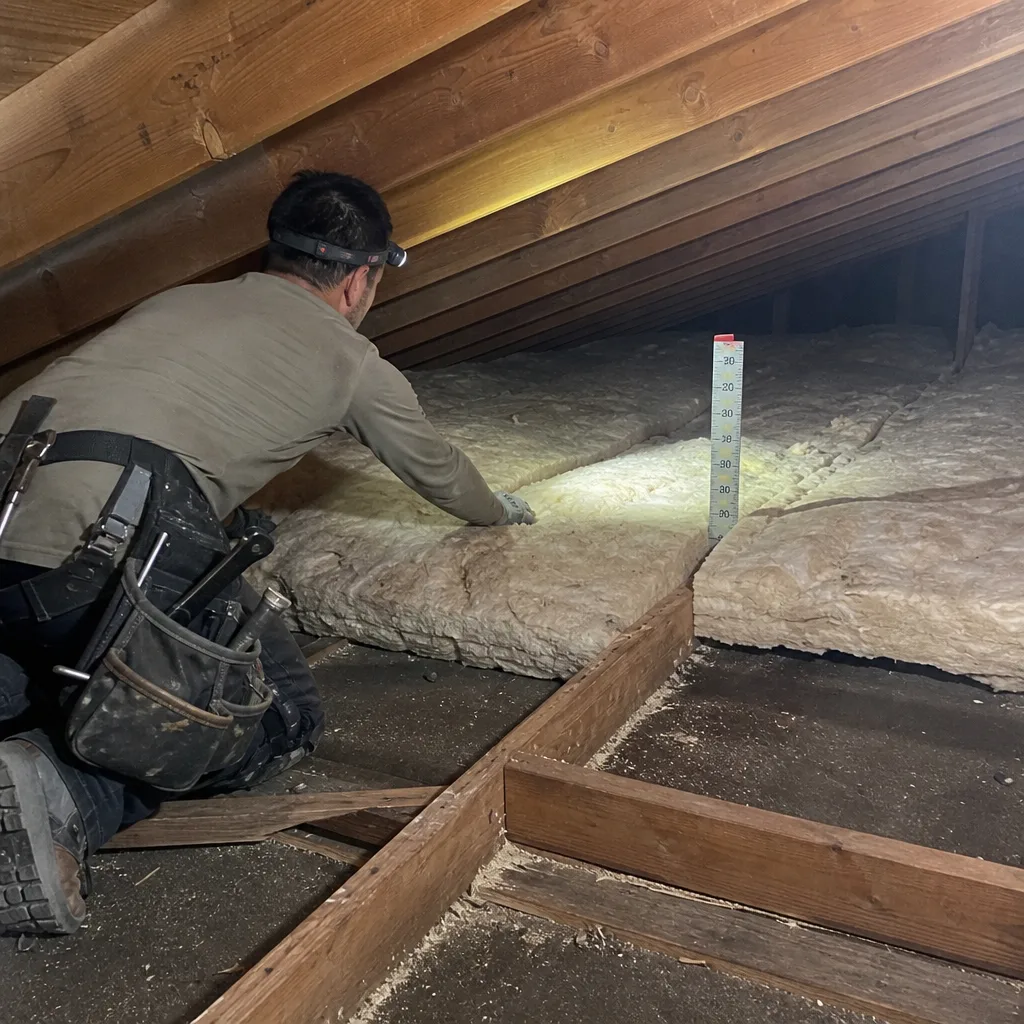
Blown-In Fiberglass
We use Owens Corning and Johns Manville blown-in fiberglass for most Compton attic restorations. Fiberglass doesn’t absorb moisture the way cellulose can, which matters in Compton attics where bathroom exhaust fans often terminate inside the joist bays rather than venting outside. For a typical 1,000-square-foot Compton bungalow, we’ll air-seal top plates and penetrations first, install rafter vents at the eaves, then blow fiberglass to R-38 - the current Title 24 standard that virtually none of these original homes meet. The material settles minimally and maintains its R-value across the temperature swings Compton sees between summer afternoons and winter mornings.
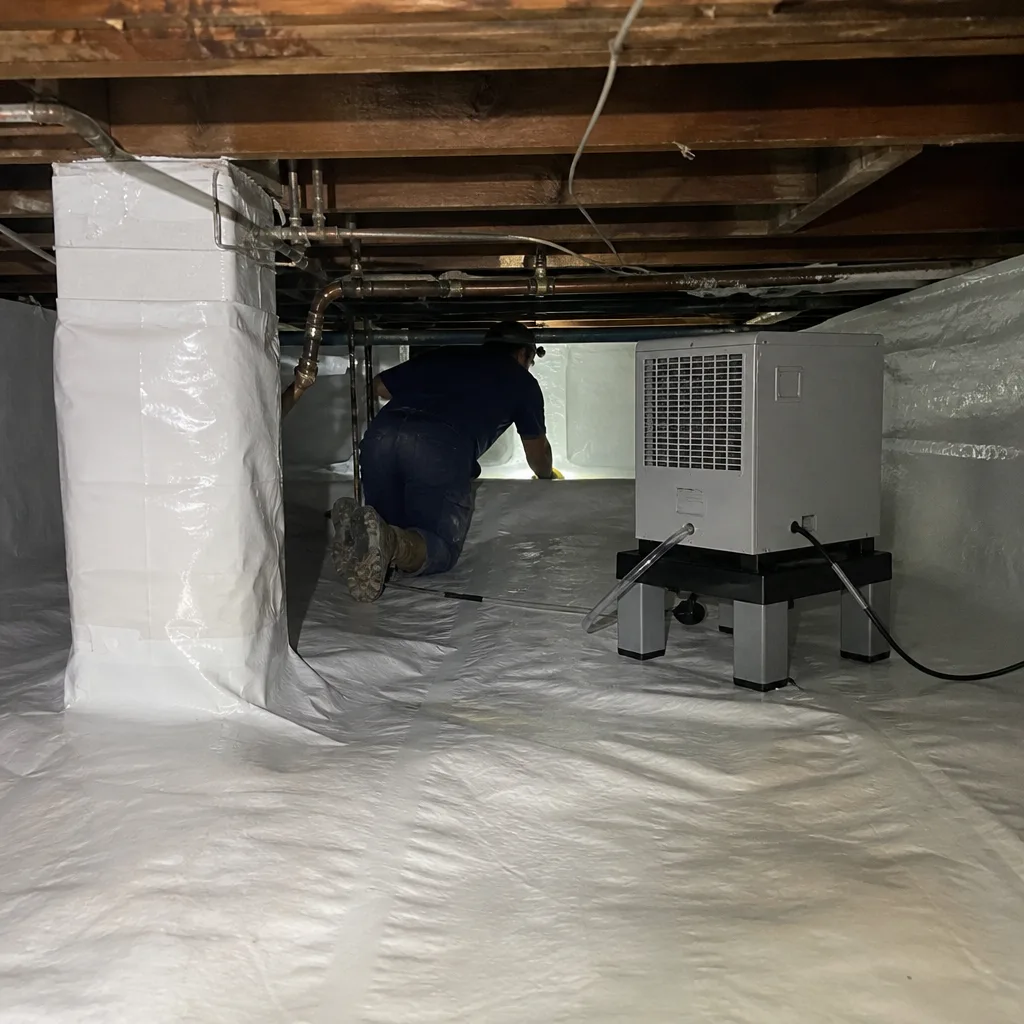
Blown-In Cellulose
GreenFiber cellulose works well in Compton attics where we’re doing a full removal and replacement rather than a top-up. Cellulose has slightly better air-blocking characteristics than fiberglass, though it requires more careful attention to moisture management. We don’t recommend cellulose for attics with active roof leaks or unvented bath exhaust, both of which we find regularly in Compton’s older stock. When conditions are right, cellulose offers good performance at a lower material cost, and it’s the product many Weatherization Assistance Program contractors default to for subsidized jobs.
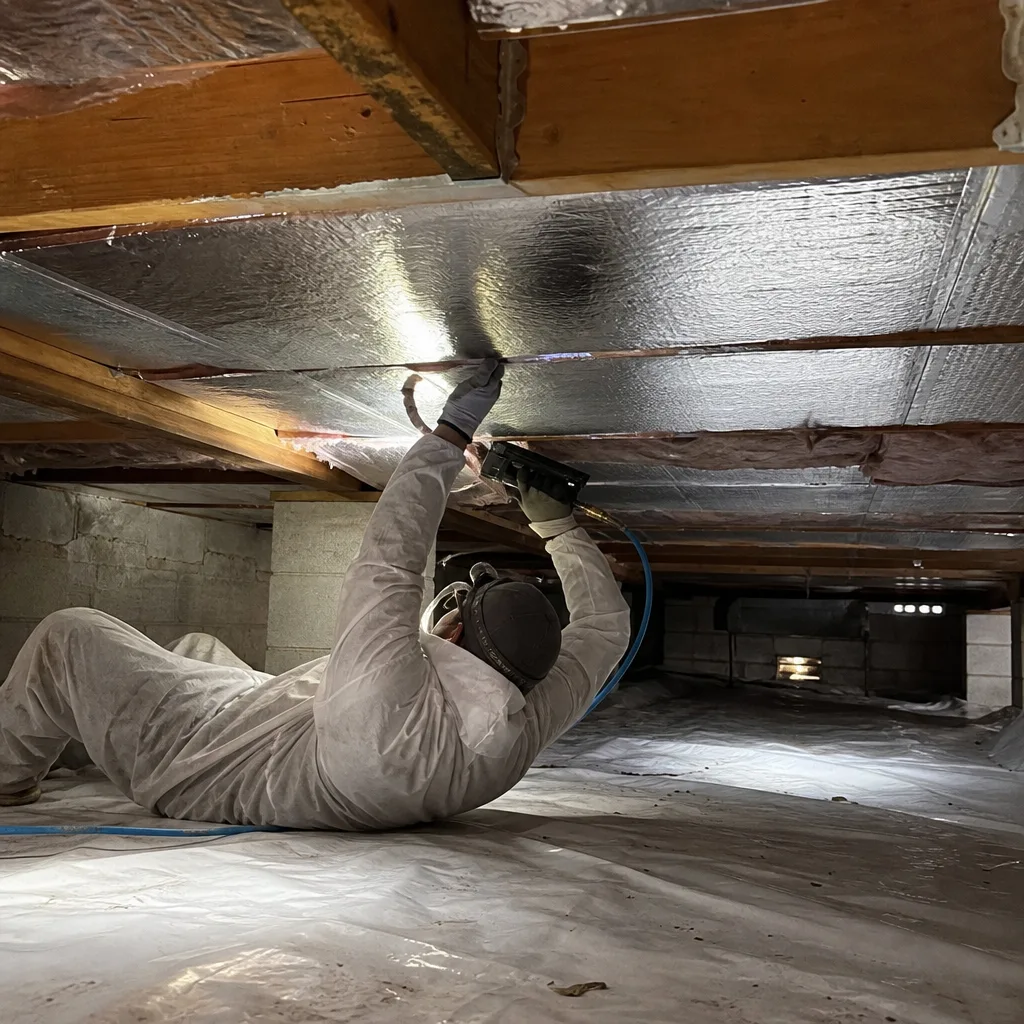
Dense-Pack Wall Insulation
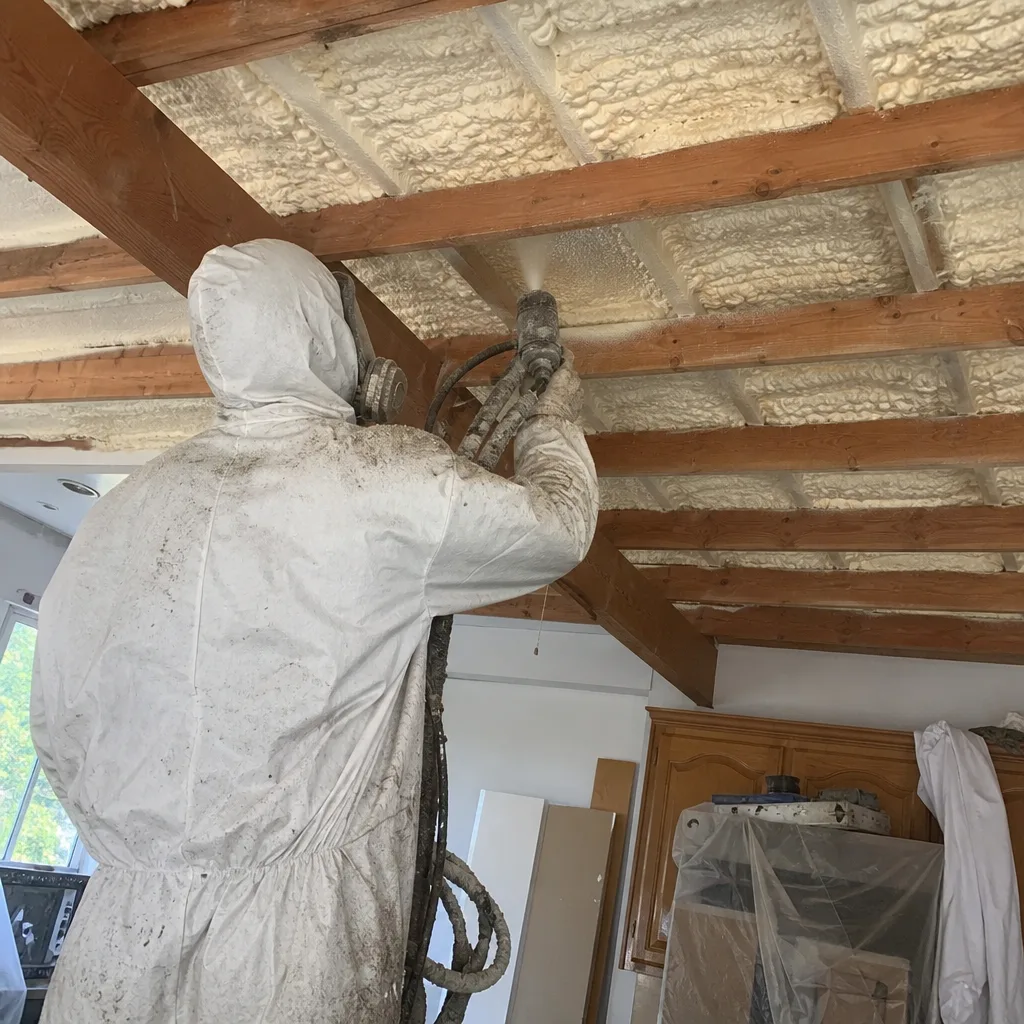
This is where Compton’s unpermitted additions become relevant. A 1950s bungalow with a tacked-on back room often has an open wall cavity separating the original house from the new space - no insulation, no air barrier, just drywall and siding. We dense-pack these cavities with blown fiberglass or cellulose at 3.5 pounds per cubic foot, which creates an air-blocking insulation layer without tearing out finished walls. On a job near the west end of Compton, our crew found exactly this scenario: the homeowner’s unpermitted addition shared an open attic plane with the main house and had zero insulation in the shared wall. We dense-packed the wall cavity and brought the flat attic to R-38. The owner qualified for TOP/TECH subsidy and paid only the wall-cavity portion out of pocket.
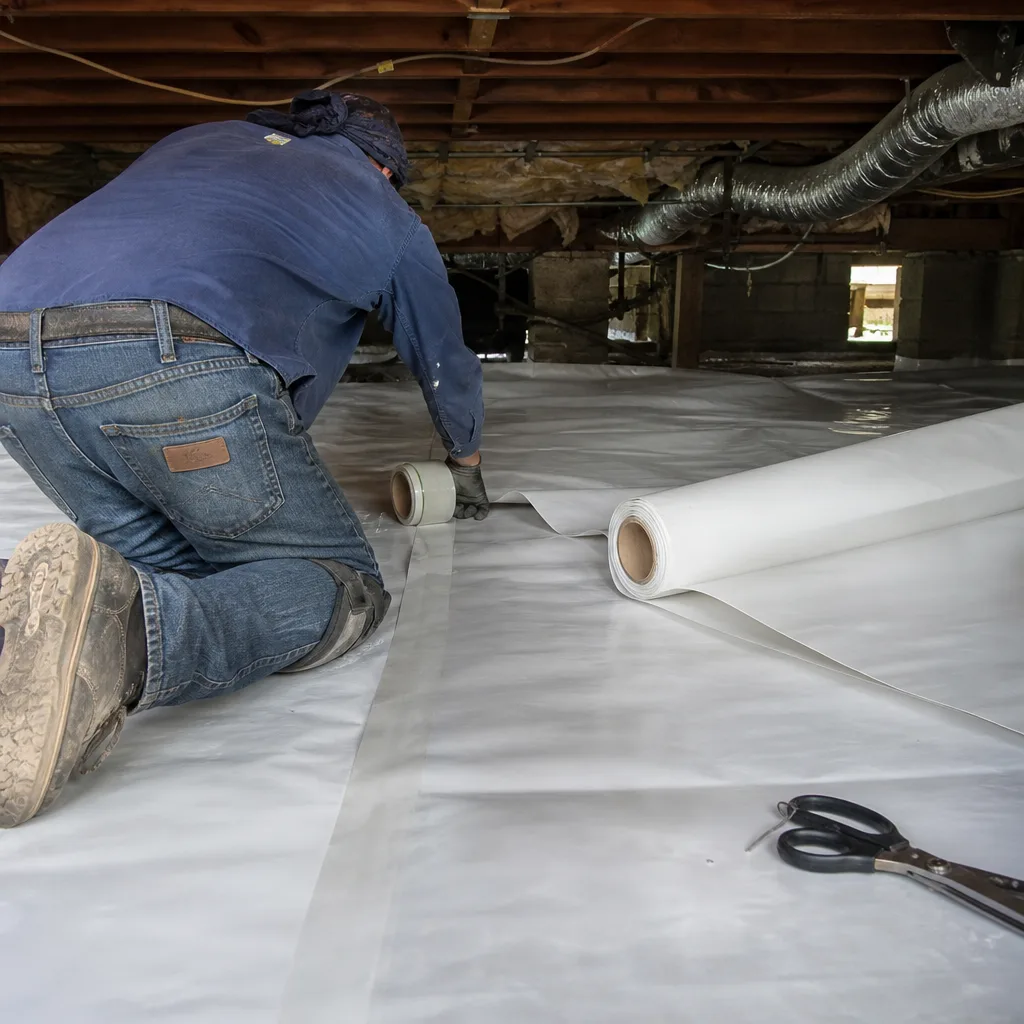
Blown-In Top-Up
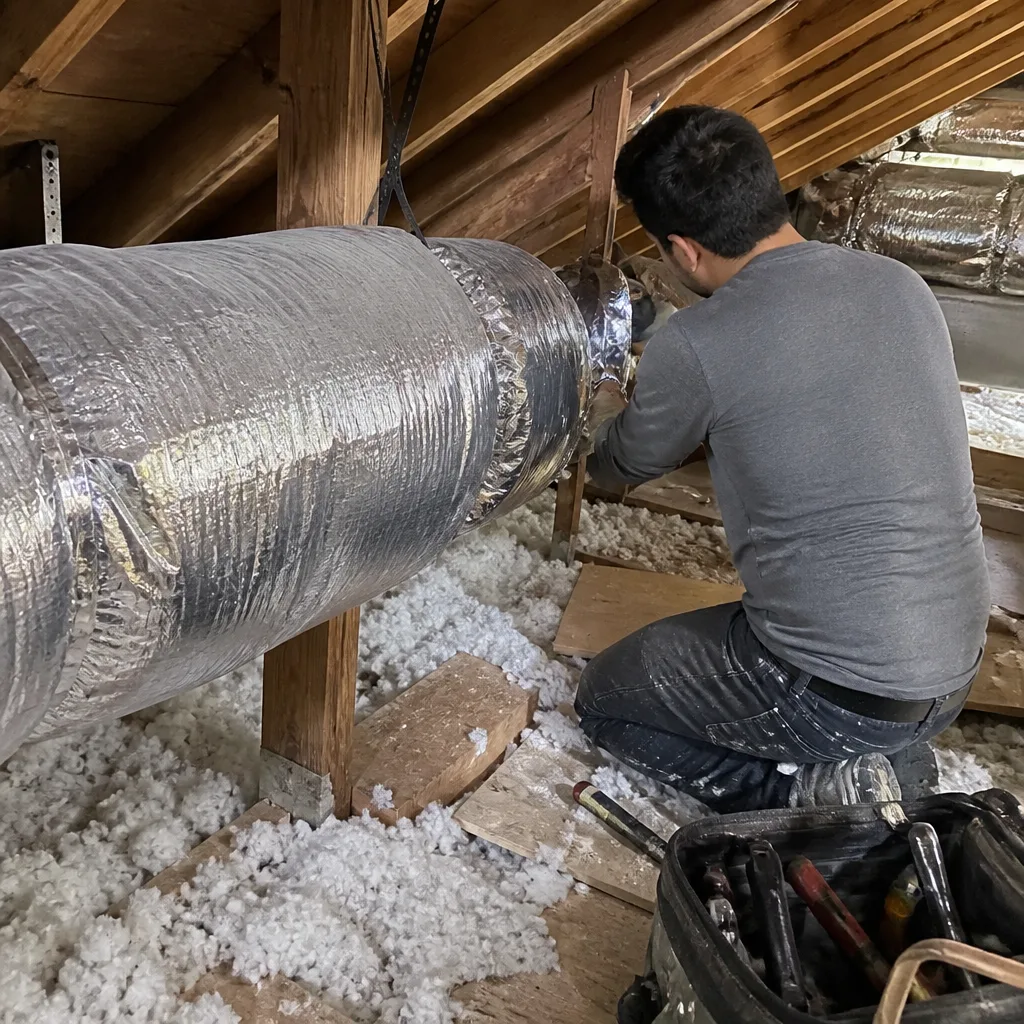
The most common call we get in Compton. Homeowners know their attic has “some insulation” from a 1980s retrofit or original batts, and they want to add on top. We won’t do it without inspecting first. Original fiberglass batts from the 1950s have usually compacted to R-2 or less, and blowing new material over them without air sealing underneath just traps heat in the ceiling plane. Our top-up jobs start with removal of the old material, air sealing of all penetrations, then fresh blown-in to R-38. If your existing insulation is in decent shape and the attic is already sealed, a true top-up is faster and cheaper - but that’s rare in Compton’s housing stock.
What happens when you call
- 1
A real person answersNo phone trees - you reach a local pro.
- 2
You get an upfront price rangeHonest numbers before anyone is dispatched.
- 3
A background-checked tech heads outLicensed & insured, dispatched right away.
- 4
You approve before work beginsNothing starts until you say go.
 Before
 After
AfterTrusted Brands We Service in Compton
We stock Owens Corning, Johns Manville, and GreenFiber materials for Compton jobs, with no proprietary lock-in that forces you into a single product line. Owens Corning blown-in fiberglass is our default for Compton attics because it performs predictably in the heat-island conditions these homes face. Johns Manville supplies our dense-pack wall material, and GreenFiber cellulose is available for homeowners who prefer it or whose subsidy program specifies it. We don’t claim exclusive status with any manufacturer - we pick the product that matches your attic’s condition and your budget, and we document the choice in your written scope.
Common Blown-In Insulation Problems We See in Compton Homes
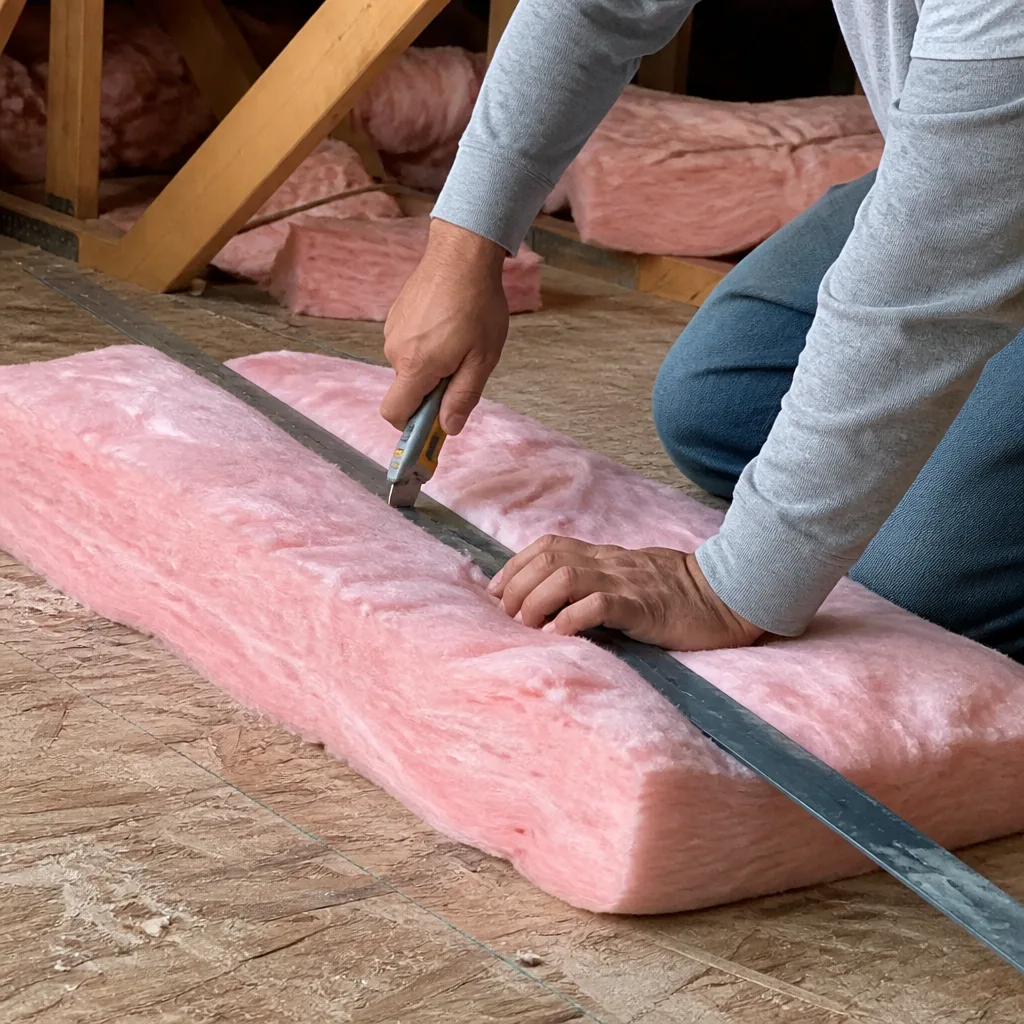
- Compacted original batts with no air sealing. The 1945-1960 fiberglass batts in Compton’s post-WWII bungalows have compressed to near-zero R-value over 70 years. Worse, they were installed directly over the drywall with no air sealing of top plates, wire penetrations, or can lights - so conditioned air leaks straight into the attic year-round. A blown-in top-up without fixing this first just adds weight to a failed system.
- Unpermitted additions sharing an open attic plane. That back room or garage conversion added in the 1970s or 1980s often has no ceiling insulation at all, and the attic space above it is continuous with the main house. Homeowners call for “attic insulation” and discover they need a two-zone job they hadn’t budgeted for. We find this on roughly one in three Compton bungalows we inspect.
- Missing eave baffles and blocked ventilation. Compton’s heat island effect makes attic ventilation critical - afternoon roof deck temperatures can exceed 150°F in summer. Without baffles at the eaves, blown insulation blocks the intake airflow from soffit vents, turning the attic into a convection oven that radiates down through the ceiling. We install proper rafter vents as standard on every job.
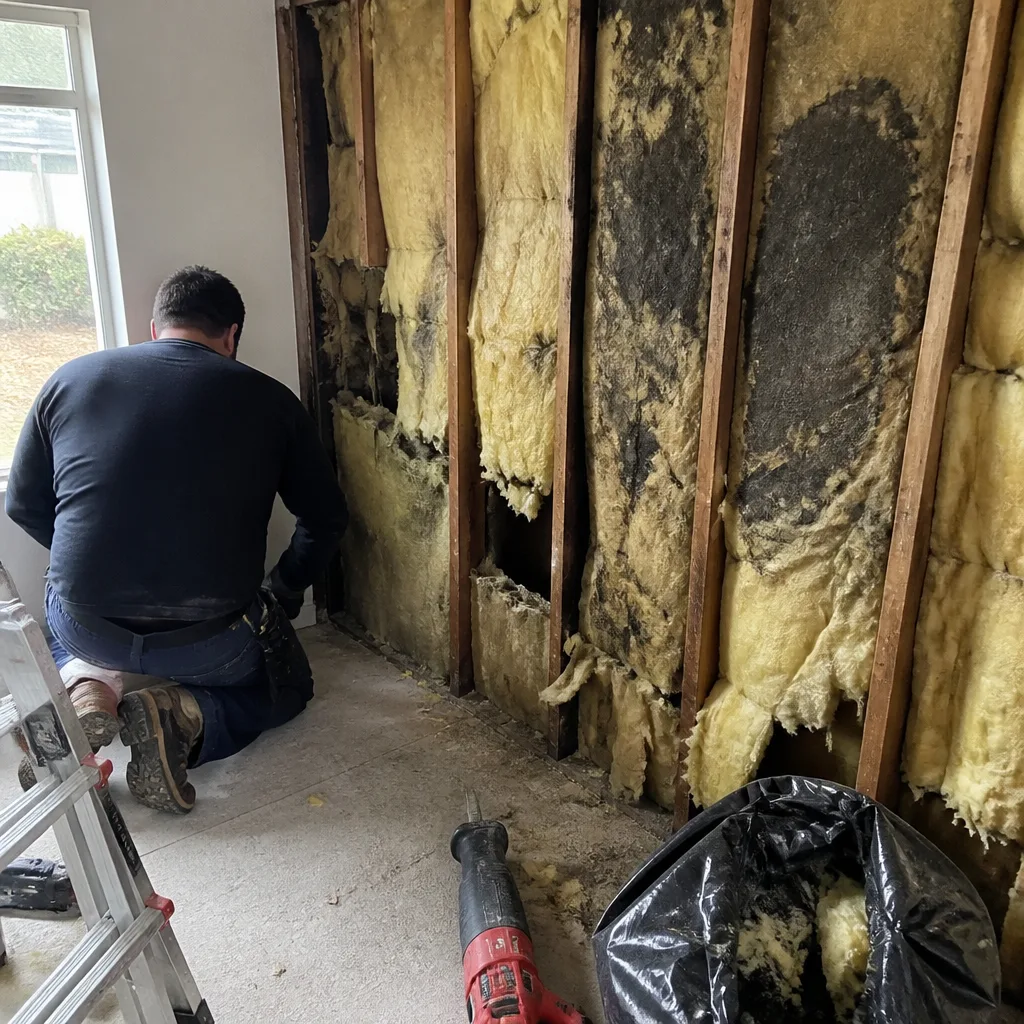
- Exhaust fans terminating in the attic. Bath and kitchen fans that dump moist air into joist bays create condensation problems that destroy insulation performance and grow mold. We route these to proper exterior vents as part of our air-sealing phase, before any insulation goes in.
Pricing for Blown-In Insulation in Compton, CA
A full attic restoration in Compton - removal of old material, air sealing, baffle installation, and blown-in fiberglass to R-38 - typically runs $2,200-$3,800 for a 900-1,200 square foot bungalow. Dense-pack wall insulation for an unpermitted addition adds $800-$1,400 depending on cavity accessibility. A true top-up on an attic that’s already sealed and properly vented runs $1,400-$2,200.
These are the out-of-pocket numbers. For Compton homeowners who qualify through CalEnviroScreen-linked programs, the actual cost is often zero for the attic portion. We navigate the subsidy paperwork as part of our scope - it’s not an extra service, it’s how the job gets done here. Every price is written and fixed before work starts, under Haven Standard Clause 1. Call (628) 226-1097 for a written estimate; there’s no charge to assess your attic and no obligation to proceed.
We Also Serve Cities Near Compton
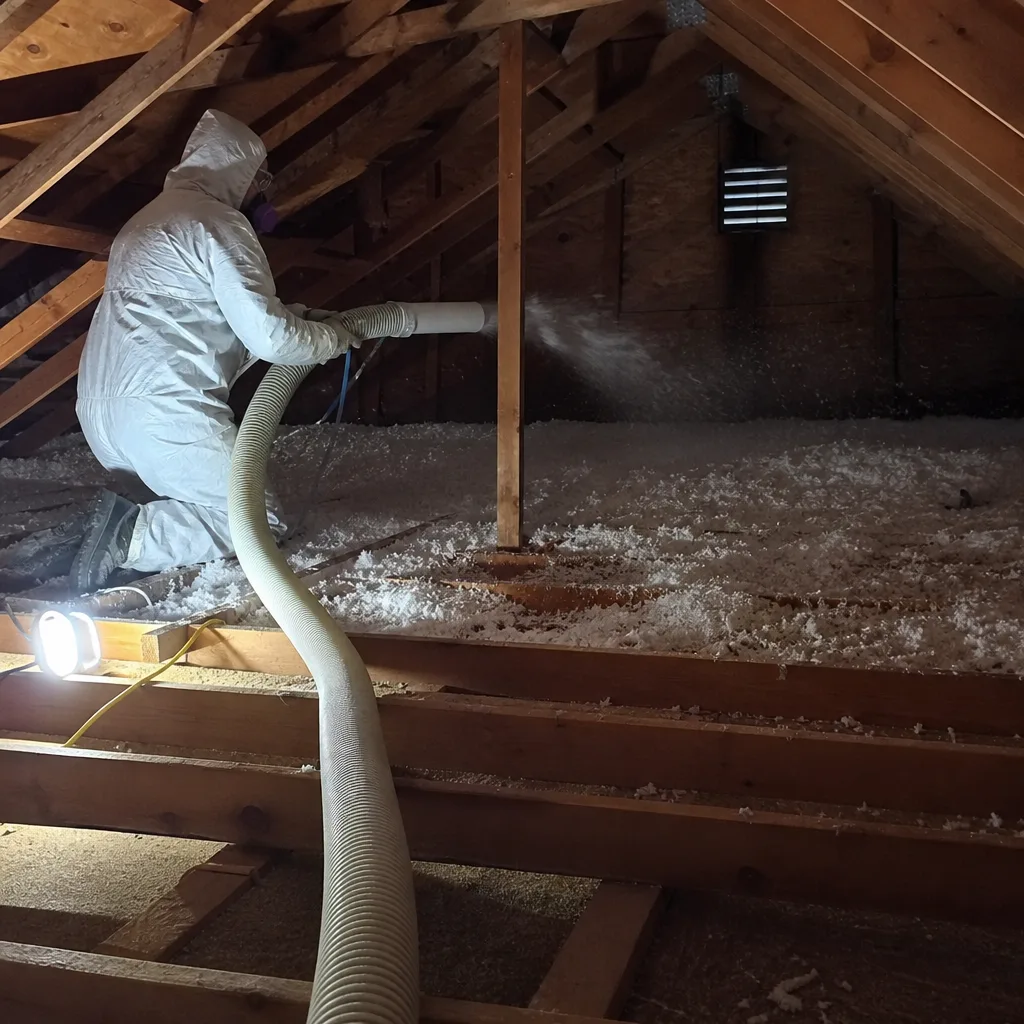
Our crews work throughout the South Bay and Gateway Cities. If you’re in Compton or nearby Gardena, Lynwood, Torrance, or South Gate, we can typically schedule an inspection within 24 hours. Dispatch is coordinated from our Los Angeles office, with local crews carrying the full material stock for same-day starts on approved jobs.
Serving Compton, CA - Our Local Coverage Area
We’re based in the Compton area and know this community well. Use the map below to see our service coverage - if you’re nearby, we can almost certainly help.
FAQs - Blown-In Insulation in Compton
Most likely, yes. Compton’s CalEnviroScreen Disadvantaged Community designation unlocks Weatherization Assistance Program and TECH Clean California funding that covers full attic insulation for income-qualified homeowners, with deeper subsidies than most neighboring cities receive. We verify eligibility during our free inspection and handle the contractor registration paperwork as part of the job. Call (628) 226-1097 to check your address against current program criteria.
Original 1945-1965 construction in Compton typically included fiberglass batts at R-11 or lower, and those batts have compacted over 60-70 years to roughly R-2 - effectively useless. Many homes also lost material to rodent activity, remodeling debris, or homeowners who disturbed it for wiring or plumbing work and never replaced it. The result is an attic that looks “insulated” from below but performs like an open ceiling. We document the actual R-value with photos during inspection.
Yes, and we regularly do. These additions typically share an open attic plane with the main house but have zero insulation over the new ceiling and an uninsulated wall cavity where they connect to the original structure. We dense-pack the shared wall and blow insulation across the addition’s ceiling area, treating it as a second zone. The work isn’t code-compliant in the permitting sense - we can’t retroactively permit an unpermitted structure - but the insulation performance meets current standards.
Fiberglass, in most Compton attics. The urban heat island here pushes peak attic temperatures higher than coastal cities, and fiberglass doesn’t degrade or settle as readily under thermal cycling. Cellulose can work well if your attic has excellent moisture control - which means exterior-vented exhaust fans, no roof leaks, and functional ventilation - but those conditions are rare in Compton’s older stock. We assess moisture risk during inspection and recommend accordingly.
A true top-up on a prepared attic takes 3-4 hours. Most Compton jobs aren’t true top-ups - they’re full restorations requiring old material removal and air sealing first, which runs one full day for a typical bungalow. The crew needs attic access for the duration, so we schedule around your availability and protect interior floors with drop cloths. You’ll receive a Documented Photo Record and, on applicable jobs, before-and-after blower-door readings when we finish.
Written by Wes Okafor, Owner at Topside Attic Insulation Los Angeles, serving Compton since 2016.