
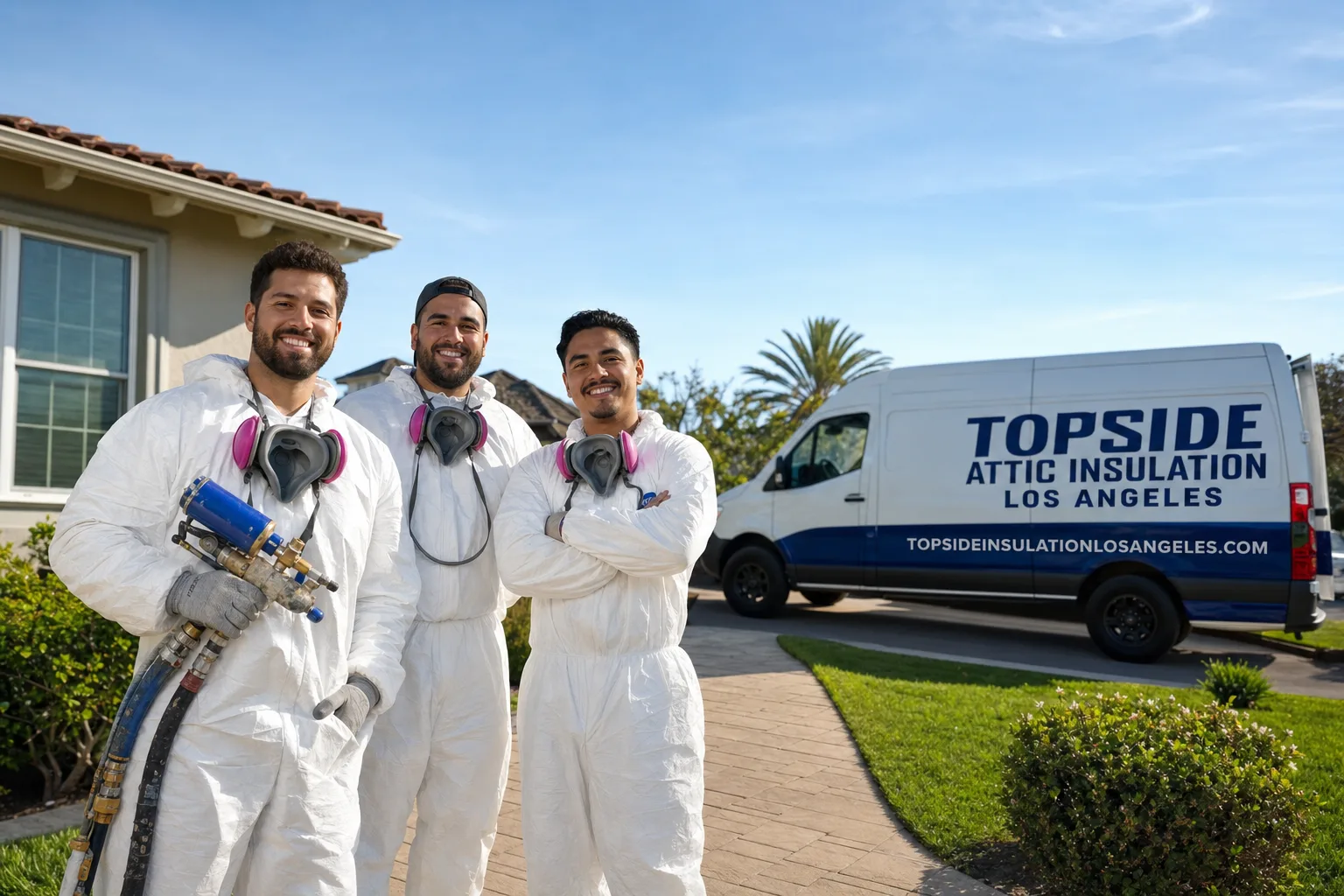
Fast, Reliable Blown-In Insulation Across Glendale
Blown-in insulation in Glendale typically runs $2,800-$5,500 for a full attic and $4,200-$7,800 when dense-pack wall work is included, with most jobs completed in one day. Our crews serve Glendale from our Los Angeles office, and we carry Owens Corning, Johns Manville, and Knauf materials stocked for same-day starts on approved scopes. Call (628) 226-1097 for a written price before any work starts - that’s Haven Standard Clause 1.
We’ve worked the hillside framing in Chevy Chase Canyon, the plaster-and-lathe walls of Rossmoyne, and the canyon-edge crawl spaces in Glenoaks Canyon. Glendale’s pre-WWII housing stock isn’t a footnote for us - it’s the baseline we plan around. Every job begins with a blower-door test, a written scope, and a flat price. No exceptions.
Why Topside Attic Insulation Los Angeles Is Glendale’s Preferred Blown-In Insulation Company
Our reputation in Glendale was built on documented results, not promises. We’ve sealed and insulated 9,000+ homes since 2016, and we publish before-and-after blower-door numbers on every applicable job so homeowners see the actual performance change. In Glendale specifically, that means showing a 1920s bungalow owner that their 4,100 CFM50 pre-work reading dropped to 2,200 after we sealed the top plates and dense-packed the walls. The numbers are what they are.
Response time to Glendale is same-day or next-day for standard calls, with live dispatch 24/7. No voicemail loops. No callback windows measured in business days. When you call (628) 226-1097, a person answers.
Local knowledge matters here because Glendale’s building stock breaks standard assumptions. A crew trained on 1990s tract homes in the Inland Empire will treat a 1934 Spanish Revival in Kenneth Village like it’s the same job. It isn’t. The stud spacing is irregular. The fire-blocking is hidden. The plaster keys into wood lath that splinters under standard drill-and-fill pressure. We’ve learned where to slow down.
Wes Okafor has led this operation since 2016, and our Blown-In Insulation in Glendale crews are background-checked, uniformed, and named on your written scope before they arrive. You get a text when they’re on the way. Haven Standard: Arrive on schedule.
Our Blown-In Insulation Services in Glendale
Blown-In Cellulose
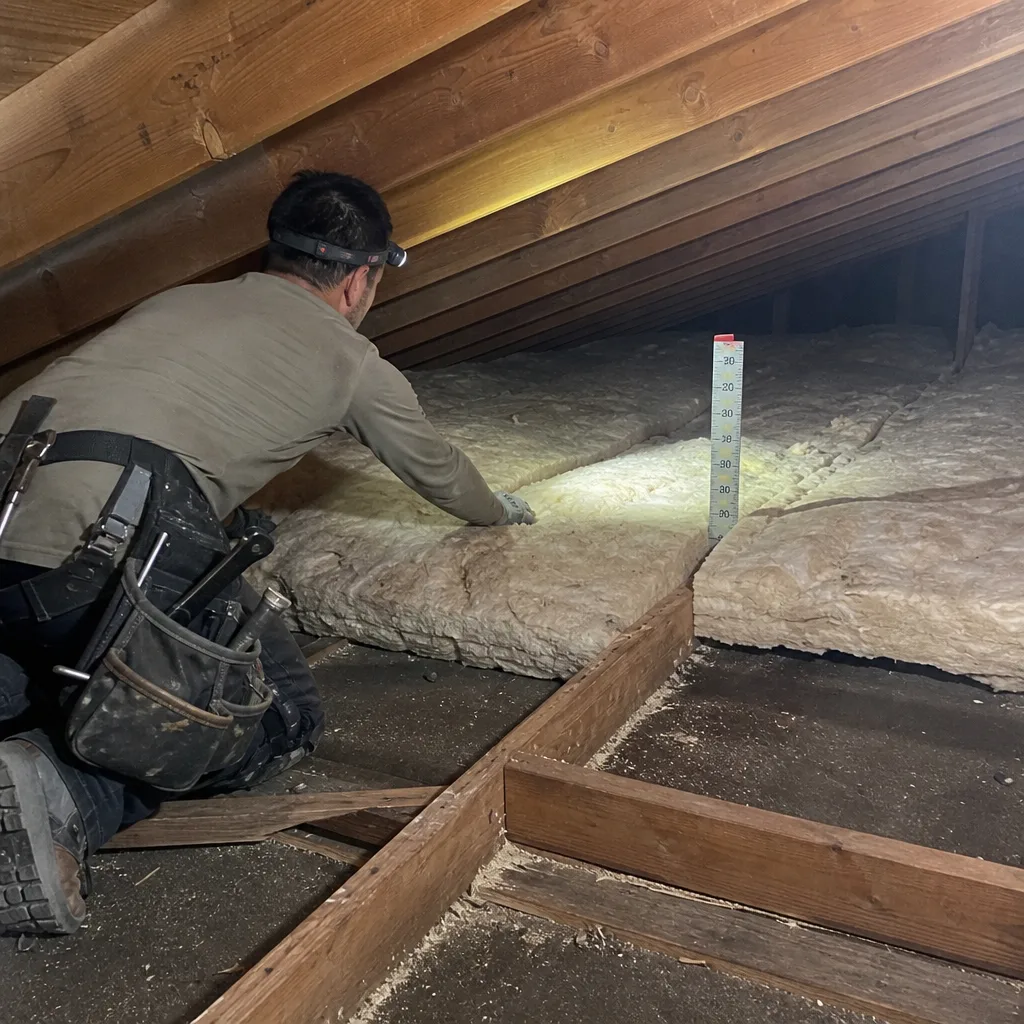
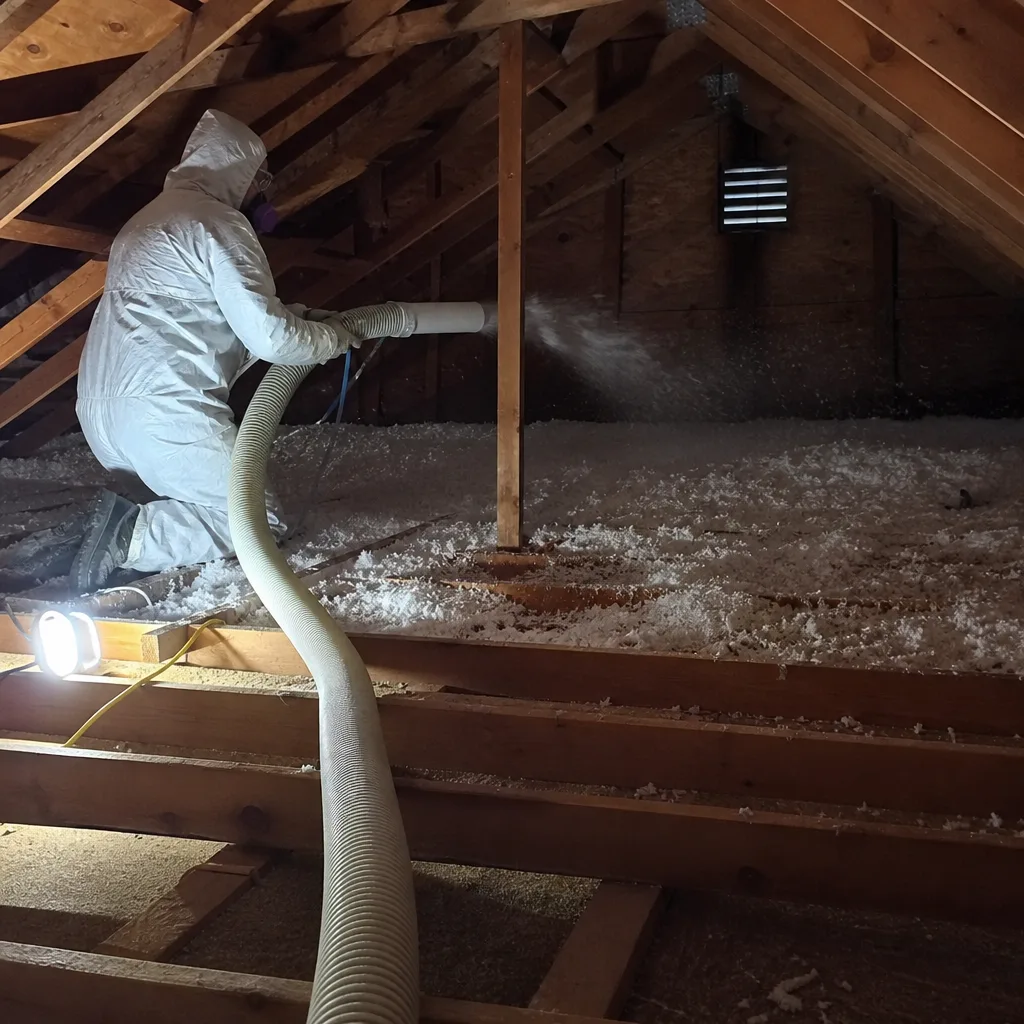
Cellulose - treated recycled paper fiber with borate fire retardant - performs well in Glendale’s steep, irregular attics because it conforms to framing obstructions that batts bridge over. We specify GreenFiber cellulose for most Glendale retrofits, blown to R-38 or R-49 depending on joist depth and access. In Chevy Chase Canyon homes with cathedral ceilings or dormered second floors, cellulose often wins because it fills the taper where roof meets wall plate without the voids batts leave.
Our crew was called to a 1928 Spanish Revival in Rossmoyne where the homeowner’s energy bills spiked every July; pulling a wall outlet revealed zero cavity fill behind the original plaster-and-lathe. We dense-packed the exterior walls with GreenFiber cellulose and blew Owens Corning fiberglass across the attic floor, then air-sealed the top plates before adding a Knauf batt cap over the 1930s kraft paper. The next summer, the second-floor bedrooms held temperature without the window units running all day.
Blown-In Fiberglass
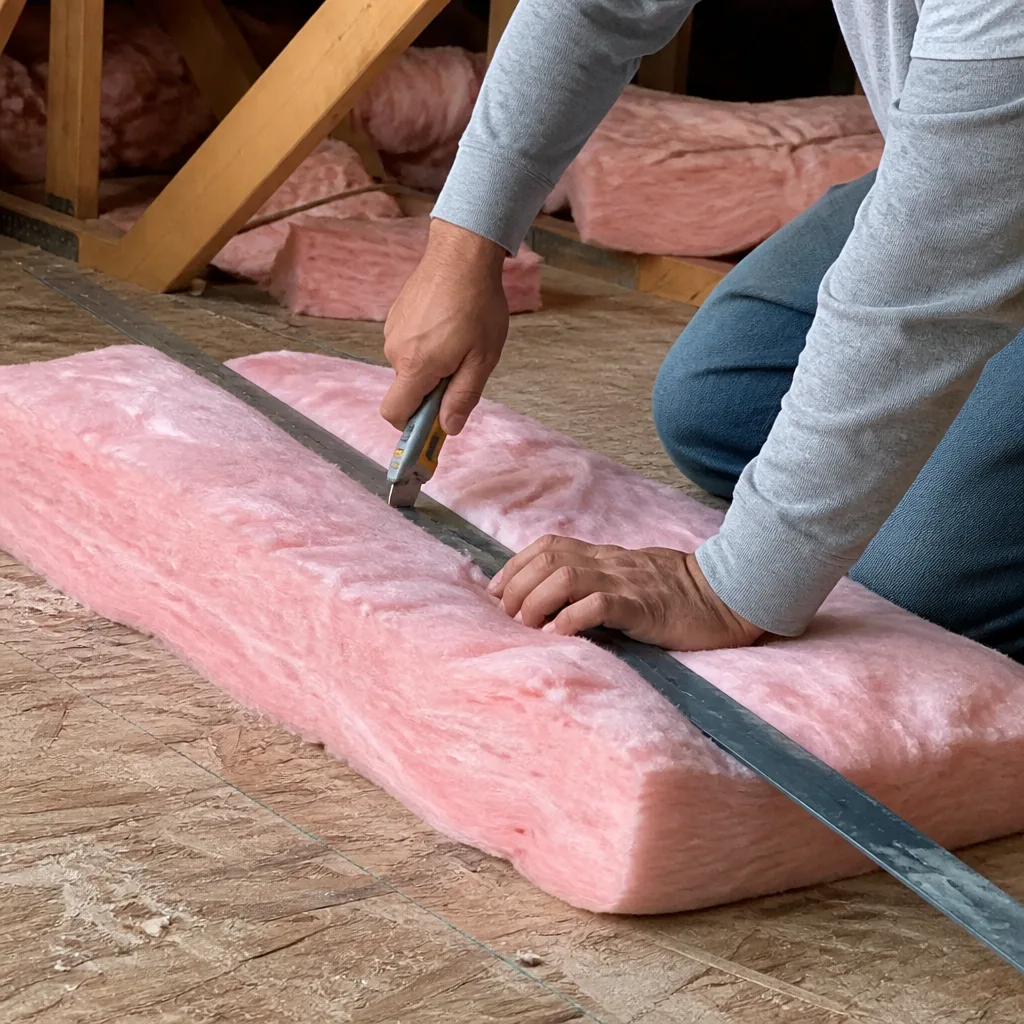
We use Owens Corning and Johns Manville loose-fill fiberglass for attic top-ups and full-floor installs where the existing substrate is sound and the primary need is thermal resistance, not air-sealing correction. Fiberglass doesn’t settle as aggressively as cellulose, which matters in Glenoaks Canyon homes where attic access is limited to scuttle holes and future inspection is unlikely. We never blow fiberglass over unsealed top plates or can lights - that’s insulating a leaky bucket.
Dense-Pack Wall Insulation
This is where Glendale’s housing stock demands real technique. Dense-pack - cellulose blown into closed wall cavities at 3.5-4.0 lbs per cubic foot - fills the void without settling, but only if the installer knows where the fire-blocking is. In Rossmoyne and Kenneth Village, we routinely find hidden horizontal blocking that shallow installers miss, leaving the lower cavity empty. That void becomes a thermal chimney. Our crews use borescope verification on jobs where plaster condition allows, and we mark every drill point on the photo record you receive.
Plaster-and-lathe walls in pre-WWII Glendale homes have irregular stud spacing and hidden fire-blocking, so shallow dense-pack installations often bridge only the top plate and leave lower cavities empty - the exact void that lets 150°F+ attic heat drive through the wall. We check our work.
Blown-In Top-Up
Some Glendale homes have partial insulation from a 1980s retrofit or a previous owner’s DIY attempt. We assess what’s there, photograph it, and specify a top-up only if the existing material is dry, uncontaminated, and the air sealing beneath it is complete. A top-up over compromised kraft paper or unsealed penetrations is wasted money. We’ll tell you if that’s the case. Free second opinion on any written estimate.
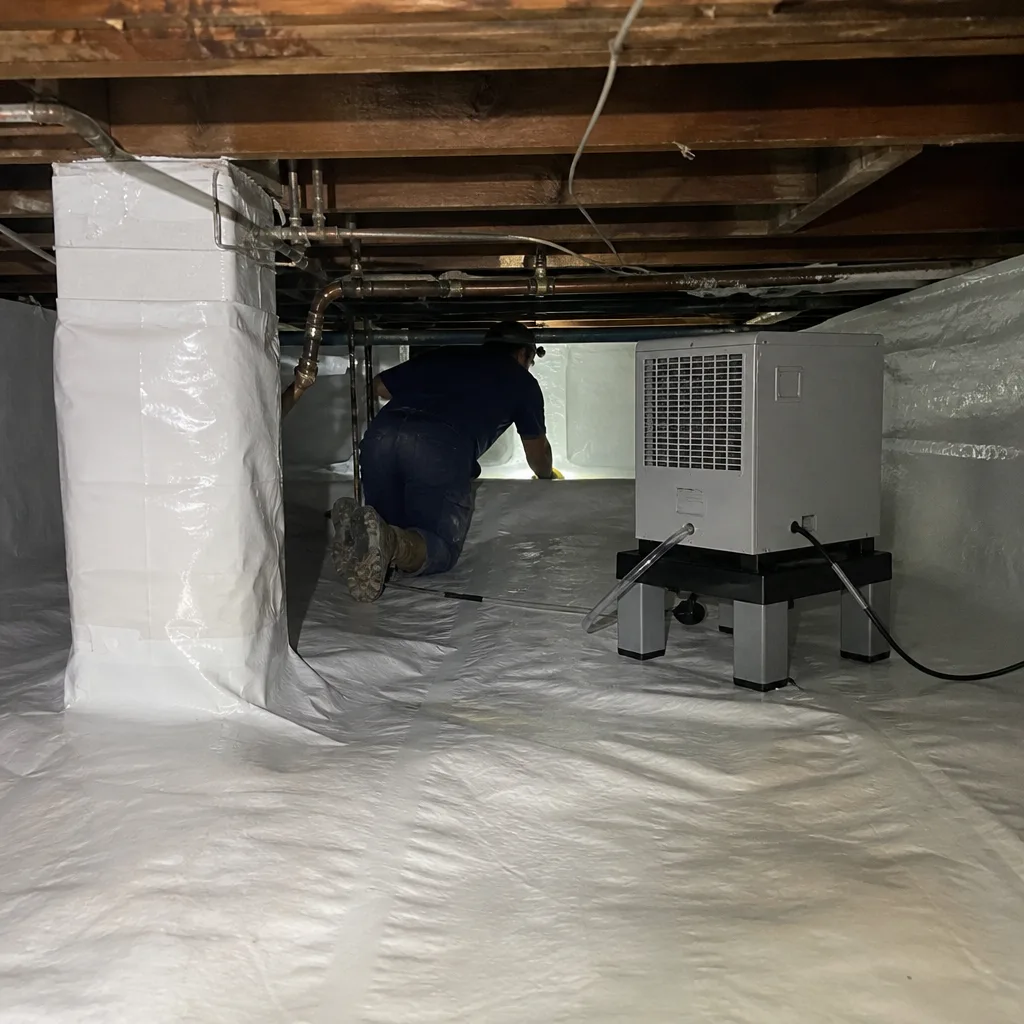
What happens when you call
- 1
A real person answersNo phone trees - you reach a local pro.
- 2
You get an upfront price rangeHonest numbers before anyone is dispatched.
- 3
A background-checked tech heads outLicensed & insured, dispatched right away.
- 4
You approve before work beginsNothing starts until you say go.
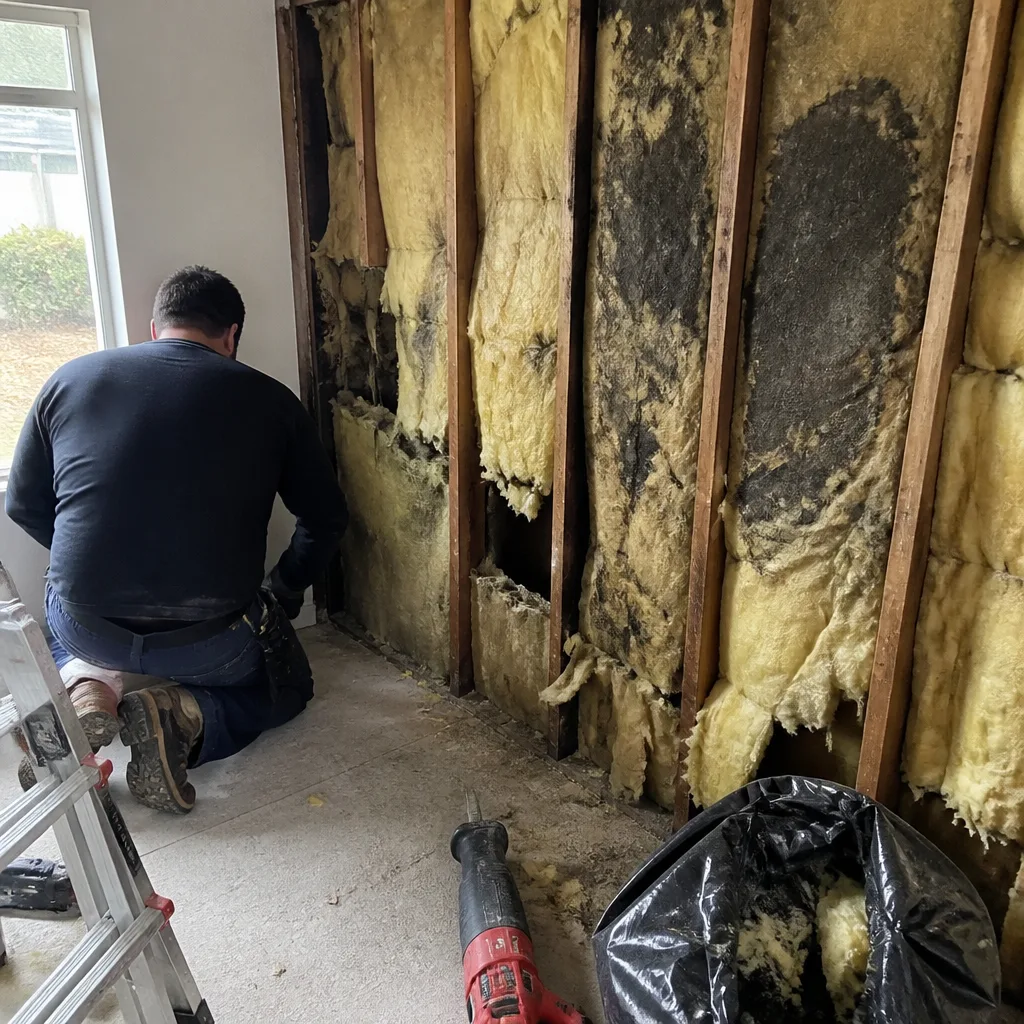 Before
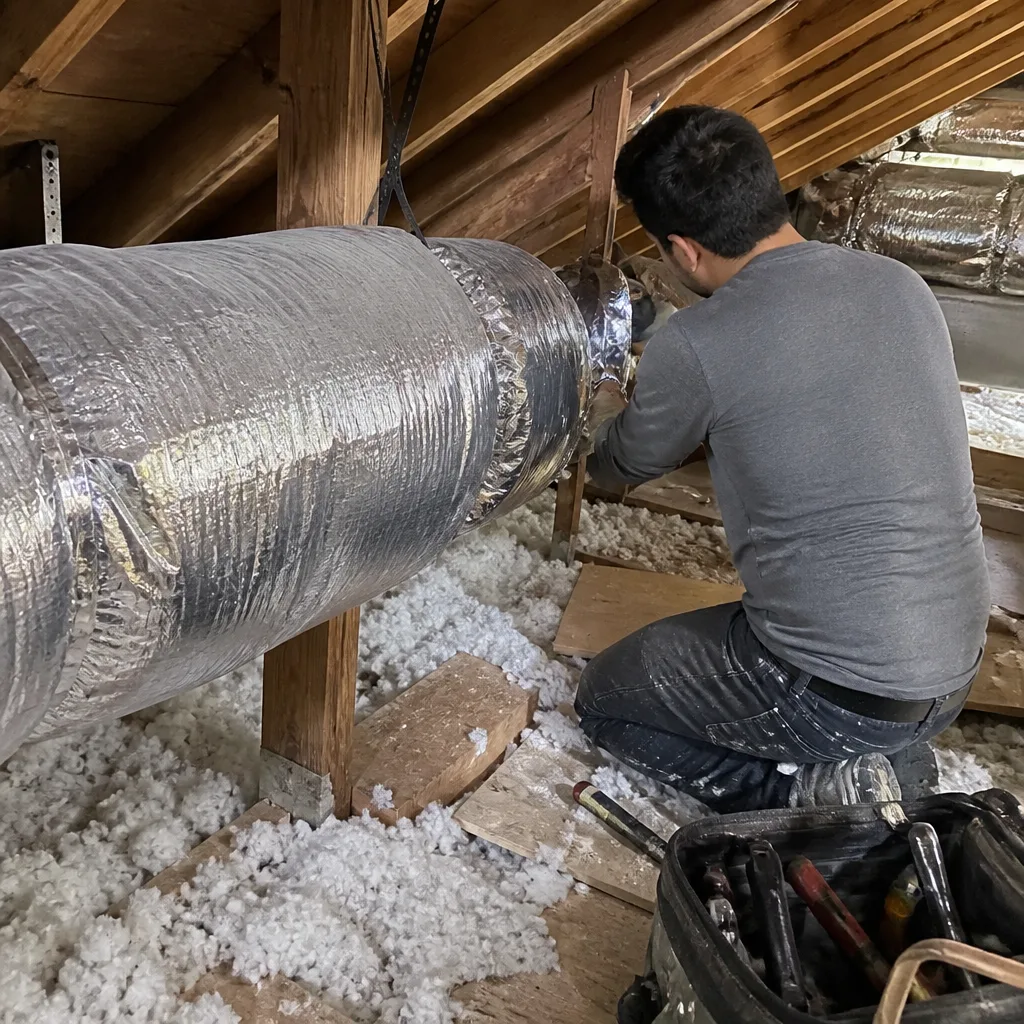 After
AfterTrusted Brands We Service in Glendale
We source from Owens Corning, Johns Manville, Knauf, and other manufacturers - no proprietary lock-in, no house brand with a markup. For Glendale’s older homes, material selection matters. Owens Corning fiberglass works well over sealed attic floors where R-value per inch isn’t constrained. Johns Manville formaldehyde-free batts suit homeowners with chemical sensitivity concerns. Knauf EcoSeal and Jet Stream products give us options for dense-pack jobs where we need specific density and low dust. We stock the common densities and R-values locally, so a Glendale job doesn’t wait on a distributor run to the Valley.
Common Blown-In Insulation Problems We See in Glendale Homes
- Uneven cellulose settlement in hillside attics. Blown-in cellulose settles unevenly over time in the irregular, steep-slope attic framing common to Chevy Chase Canyon and Glenoaks Canyon hillside homes, leaving bare patches on the uphill side where heat radiates in from the Verdugo Mountains. We specify higher initial density and use depth markers during install.
- Trapped moisture from misapplied fiberglass over old kraft paper. Original 1930s kraft paper in Rossmoyne and Kenneth Village attics acts as a vapor retarder in the wrong position; adding blown-in fiberglass directly over it without inspection can trap moisture against the framing and degrade the old paper into a dust layer. We inspect before we cover.
- Incomplete dense-pack in irregular wall cavities. Plaster-and-lathe walls with hidden fire-blocking leave lower cavities empty when installers don’t verify fill depth. We borescope or use fill-tube resistance to confirm.
- Insulation installed before air sealing. This is the big one. A blower-door test on a typical Glendale bungalow reads 3,500-4,500 CFM50 before sealing. Blowing insulation over that leaks money into the attic. We seal first. Then we insulate. In that order.
Pricing for Blown-In Insulation in Glendale, CA
A typical blown-in attic insulation job in Glendale runs $2,800-$4,200 for a 1,200-1,800 square foot footprint with standard access and sound existing substrate. Add air sealing of top plates, can lights, and penetrations: $800-$1,400. Dense-pack wall insulation for a single-story Glendale bungalow: $4,200-$6,800 depending on cavity depth, plaster condition, and linear footage. Combined attic and wall packages for full retrofits in larger Rossmoyne homes: $7,500-$11,000.
| Service | Typical Range in Glendale |
|---|---|
| Blown-in attic (fiberglass or cellulose) | $2,800 - $4,200 |
| Attic + air sealing package | $3,600 - $5,600 |
| Dense-pack wall insulation | $4,200 - $6,800 |
| Full attic + wall retrofit | $7,500 - $11,000 |
| Blown-in top-up (attic only) | $1,800 - $3,200 |
What moves the number: attic access type (scuttle vs. full stair), presence of HVAC equipment in the attic, plaster condition on walls, and whether we find existing insulation that needs removal. We give you a written price before any work starts. No exceptions. Free second opinion on any competing written estimate.
We Also Serve Cities Near Glendale
Our Blown-In Insulation crews work Burbank, West Hollywood, Beverly Hills, and Culver City from the same Los Angeles dispatch. Each city gets the same Haven Standard: written price first, documented record last, blower-door numbers when applicable. But the building stock differs, and our scopes reflect that. A 1960s Burbank ranch isn’t a 1926 Glendale bungalow. We don’t treat it like one.
Serving Glendale, CA - Our Local Coverage Area
We’re based in the Glendale area and know this community well. Use the map below to see our service coverage - if you’re nearby, we can almost certainly help.
FAQs - Blown-In Insulation in Glendale
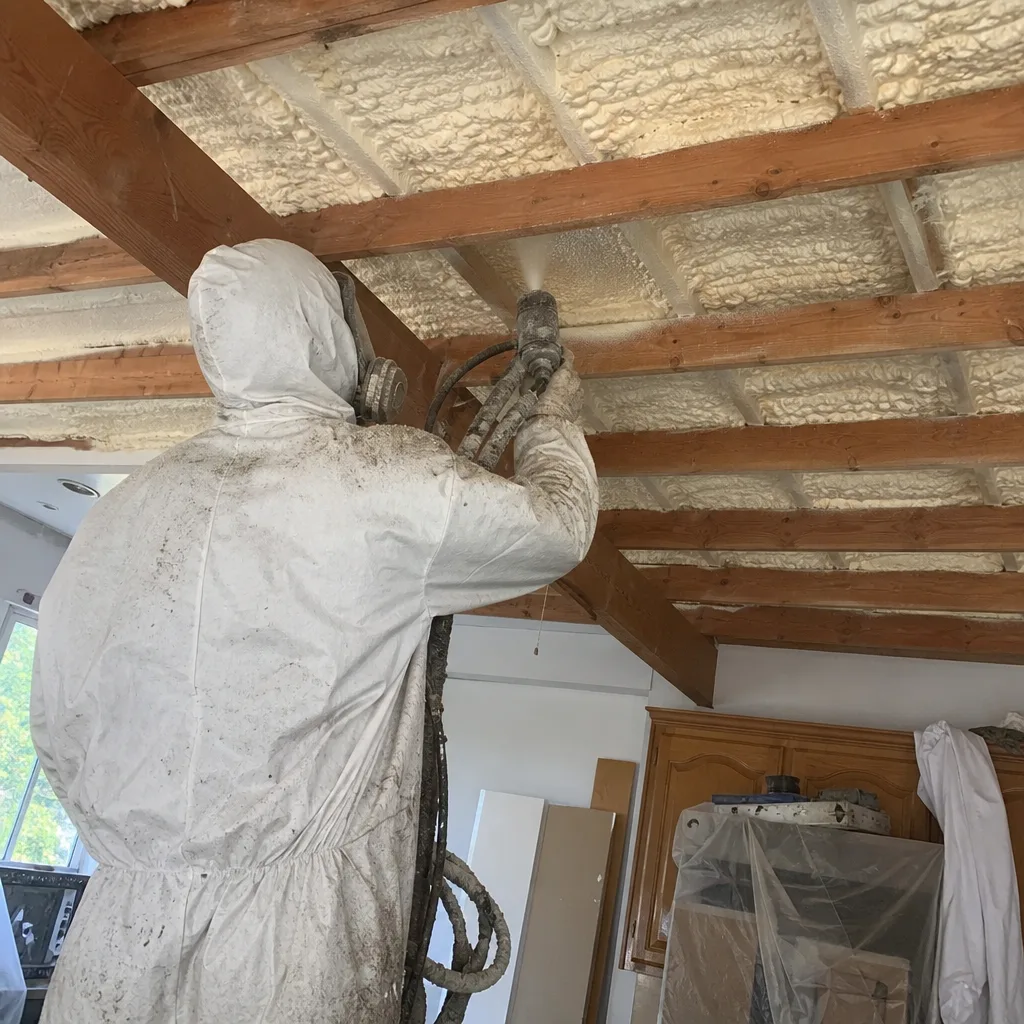
Most 1926 Rossmoyne bungalows benefit from both, but the attic is the easier win and the walls are the bigger comfort change. Attic-only typically cuts summer heat gain 30-40%. Adding dense-pack walls gets you to 50-60% and eliminates the hot-wall effect that makes south-facing rooms unusable in July. We’ll blower-door test and show you the numbers for each scope. Call (628) 226-1097 for a written price - estimates are free.
Glendale sits pinned against the Verdugo Mountains in a position that traps heat rolling in from the San Fernando Valley, routinely pushing summer temperatures 10-15°F above coastal LA while blocking the marine layer that cools neighboring areas. The city’s dense concentration of pre-WWII California bungalows and Spanish Colonial Revival homes - particularly across historic neighborhoods like Rossmoyne and Kenneth Village - were built under no meaningful insulation requirement, leaving walls and attics essentially bare. This pairing of above-average trapped heat and a large uninsulated historic housing stock makes retrofit insulation more urgent and more economically impactful in Glendale than in cooler, newer-stock cities immediately to the west.
Yes, but it requires technique the standard blower truck doesn’t provide. Steep rooflines create a low-side pile where gravity concentrates material and a high-side bare patch where the Verdugo Mountain radiant heat enters. We use baffled dams, depth markers every 24 inches, and in some cases dense-pack netting to maintain even coverage. The photo record shows you what was installed where. Call (628) 226-1097 to schedule a scope.
We install Owens Corning, Johns Manville, and Knauf blown-in products, selected by application rather than brand preference. Owens Corning loose-fill fiberglass for standard attic floors. Johns Manville formaldehyde-free options for sensitive occupants. Knauf dense-pack systems for wall cavities where we need specific density control. No proprietary lock-in. The right material for your specific framing condition.
Winter cold-air pooling in the lower canyon mouths creates localized frost conditions rare in nearby flatland communities, giving insulation real year-round ROI rather than the purely summer-cooling case made in coastal LA. We specify higher R-values and more complete air sealing for canyon homes than for same-era homes on the flat, because the heating penalty in January is as real as the cooling penalty in August. The blower-door test quantifies both. Call (628) 226-1097 for a written scope and price.
Written by Wes Okafor, Owner at Topside Attic Insulation Los Angeles, serving Glendale since 2016 under The Haven Standard.