
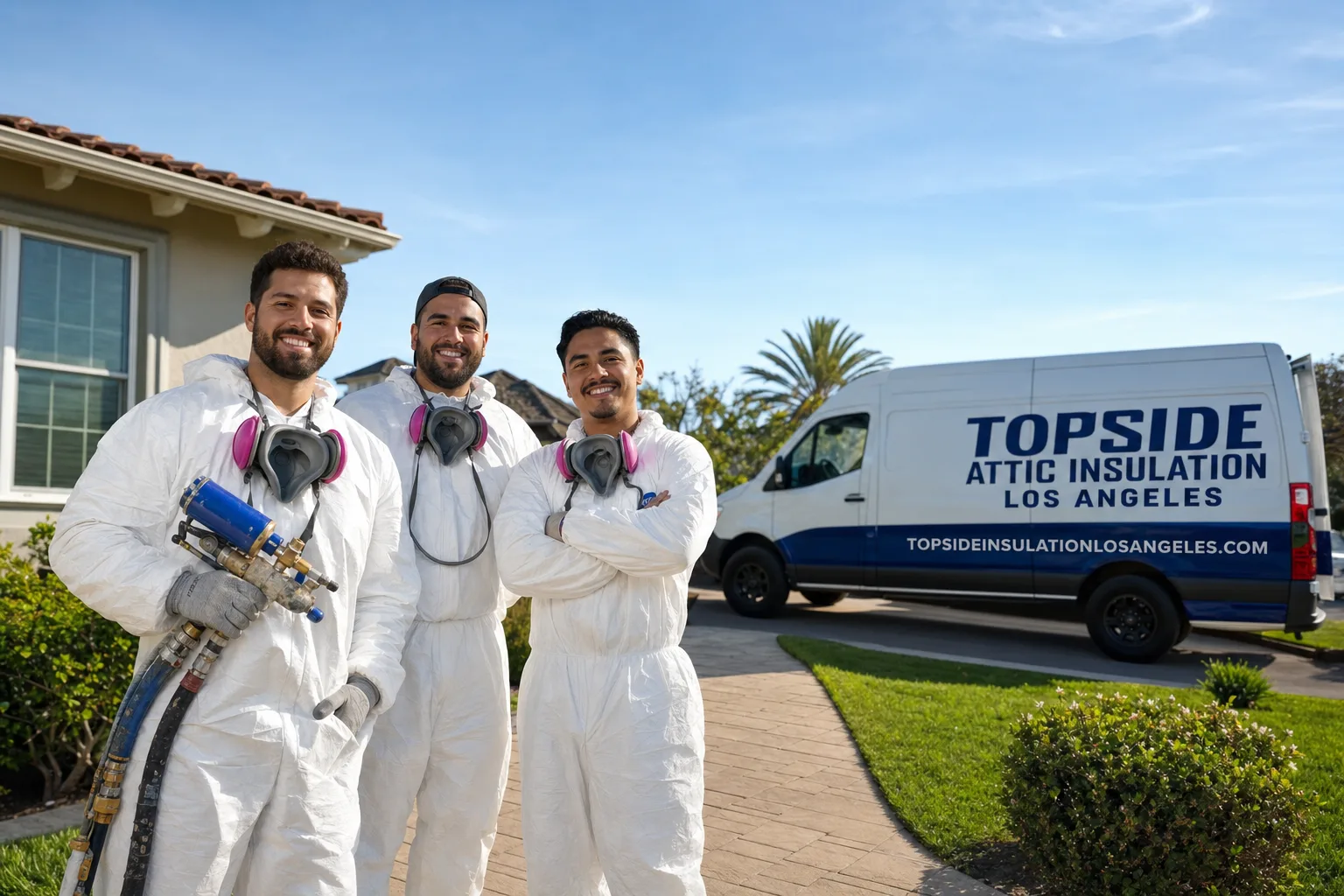
Insulation in Glendale, CA
Crawl space encapsulation and vapor barrier installation in Glendale typically runs $3,800-$7,500 for homes under 2,500 square feet, with most jobs completed in two days. Glendale’s position against the Verdugo Mountains creates a unique moisture pattern: winter cold-air pooling in canyon mouths like Chevy Chase Canyon drives ground vapor upward through unsealed crawl spaces, while summer’s trapped heat accelerates condensation on cool subflooring. We’re Envelope Insulation Co., and we treat air sealing as a hard prerequisite before any insulation goes in - documented with before-and-after blower-door numbers on every applicable job. If your crawl space smells musty or your floors feel cold in January, call (628) 226-1097 for a written price before any work starts.
Why Glendale Homes Are Different
Glendale sits pinned against the Verdugo Mountains in a position that traps heat rolling in from the San Fernando Valley, routinely pushing summer temperatures 10-15°F above coastal LA while blocking the marine layer that cools neighboring areas. The city’s dense concentration of pre-WWII California bungalows and Spanish Colonial Revival homes - particularly across historic neighborhoods like Rossmoyne and Kenneth Village - were built under no meaningful insulation requirement, leaving walls and attics essentially bare.
This pairing of above-average trapped heat and a large uninsulated historic housing stock makes retrofit insulation more urgent and more economically impactful in Glendale than in cooler, newer-stock cities immediately to the west. Canyon-edge neighborhoods like Chevy Chase Canyon and Glenoaks Canyon add steep-slope rooflines, hillside crawl spaces, and irregular framing that complicate standard blown-in or batt installations. Contractors working the older blocks of Rossmoyne or Kenneth Village routinely find plaster-and-lathe walls with zero cavity fill and attics insulated with nothing but original 1930s-era kraft paper - on homes that now sell for $1.2M+ - making the pitch to homeowners straightforward: a single-family retrofit pays back in comfort within the first summer.
The Verdugo Mountains also create a winter problem rare in flatland LA: cold-air pooling in lower canyon mouths produces localized frost conditions that stress plumbing and force heating systems to run longer. Insulation here delivers year-round ROI, not just summer cooling relief.
Our Main Glendale Services
Most Glendale homeowners who call us start with attic work or spray foam, but blown-in remains the workhorse for quick retrofits in the city’s older stock.
Attic Insulation in Glendale
Attic insulation in Glendale means dealing with roof temperatures that regularly exceed 150°F in July and August, radiating downward through uninsulated ceilings into living spaces below. We typically find original kraft paper or early fiberglass batts compressed to R-11 or less in the bungalows and Spanish Revival homes that dominate the city’s housing stock. Our crews work from the Los Angeles office and serve Glendale locally, arriving with blower-door gear to measure the air-leakage baseline before any material goes in. Attic Insulation in Glendale covers our full process, from removal of degraded existing material to air sealing and new installation with documented photo records.
Spray Foam Insulation in Glendale
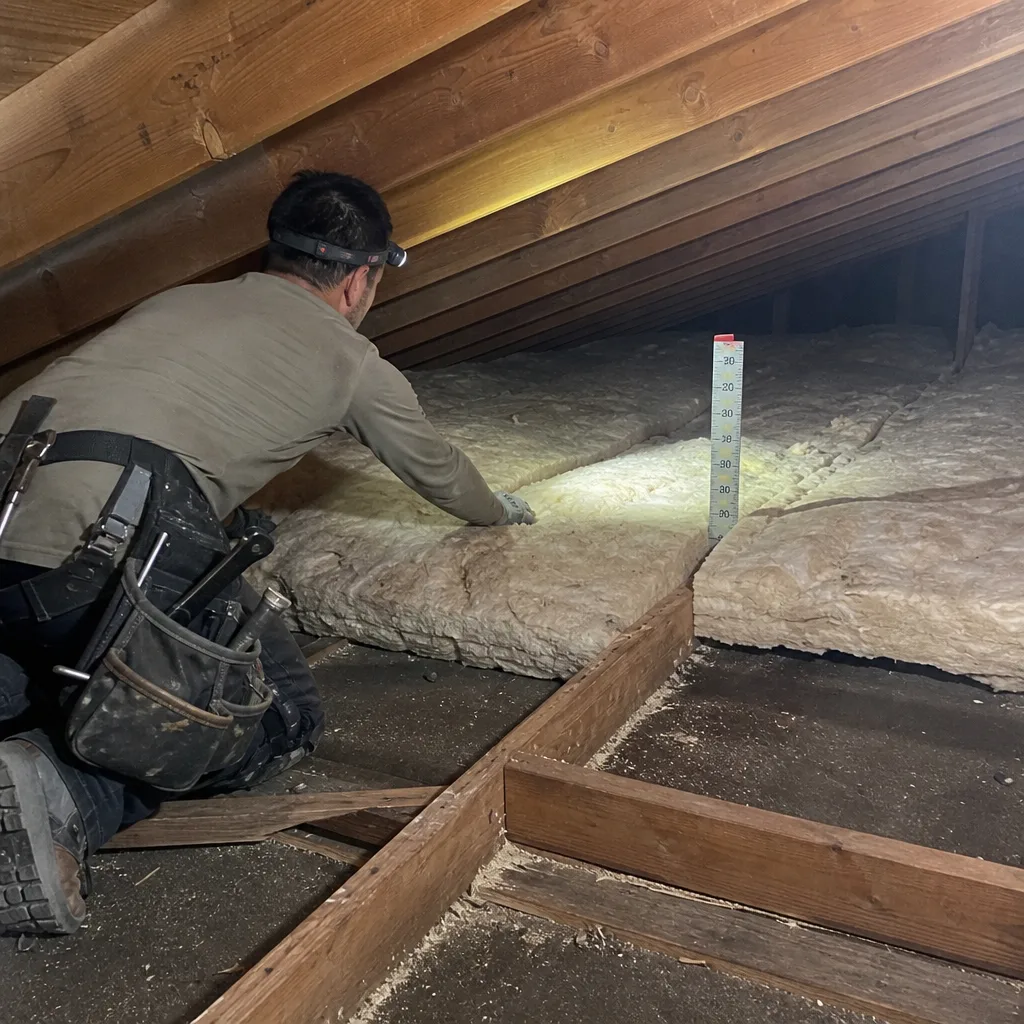
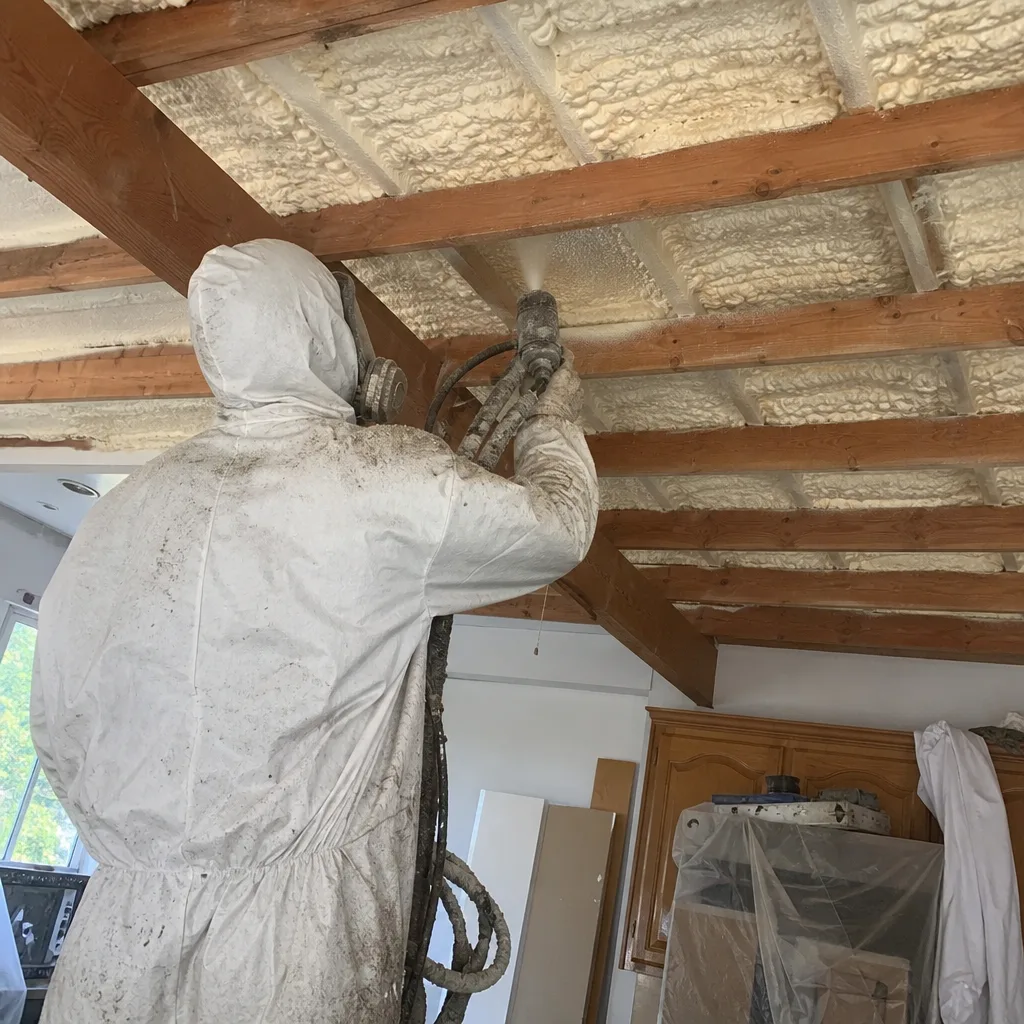
Spray foam insulation in Glendale solves problems that batts and blown-in cannot touch: irregular framing in canyon homes, zero-clearance cathedral ceilings, and the need for both insulation and air sealing in a single application. We use open-cell and closed-cell formulations from Icynene and Demilec, selected for the specific assembly - never a one-product default. The Haven Standard requires a written price before any work starts, and every spray foam job closes with a Documented Photo Record showing coverage depth and continuity. Spray Foam Insulation in Glendale details our application standards and material specifications.
Blown-In Insulation in Glendale
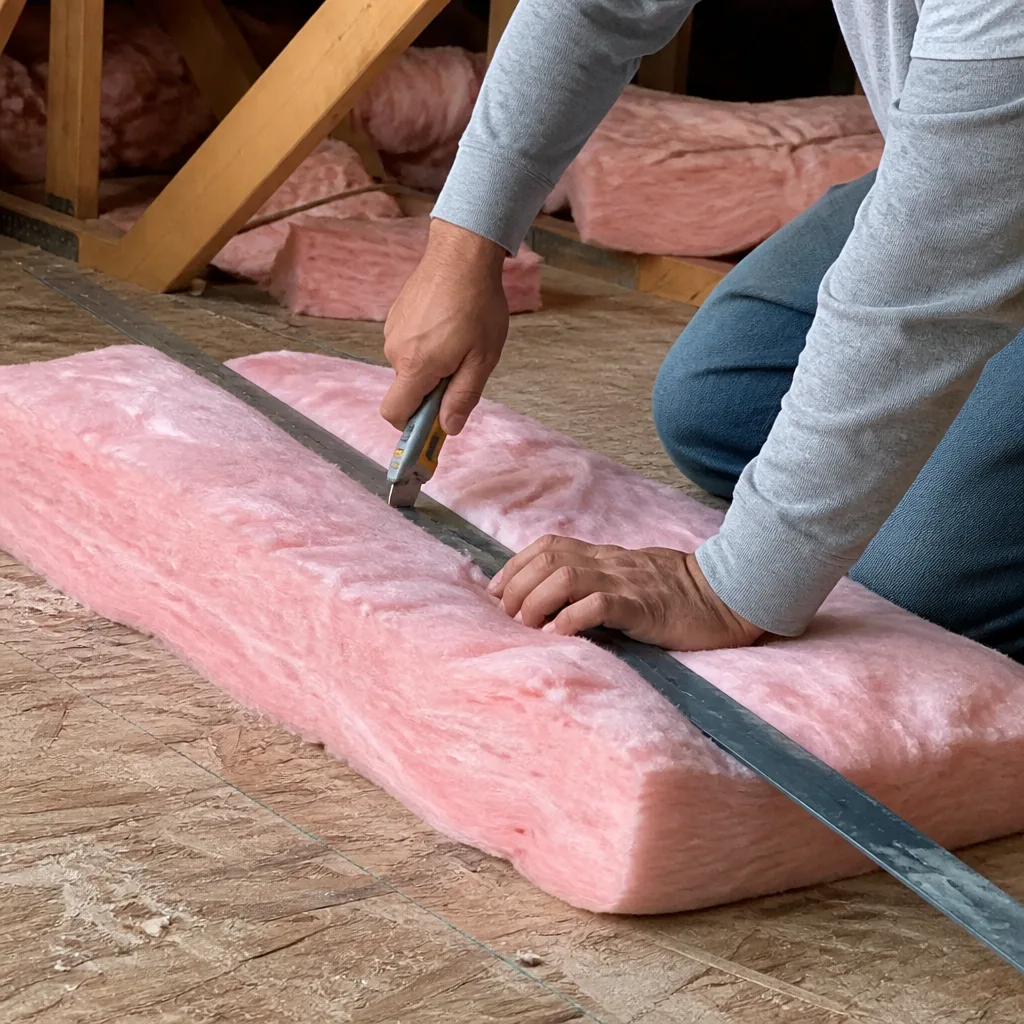
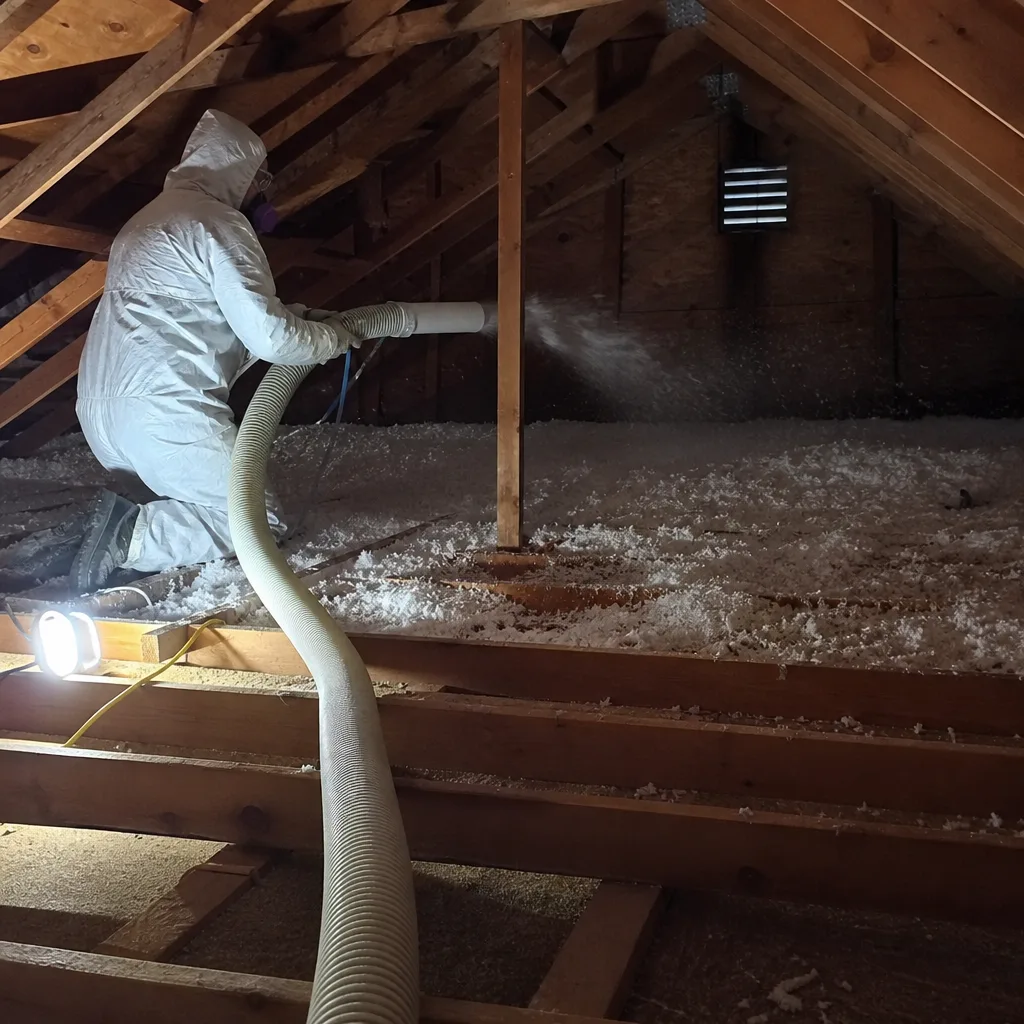
Blown-in insulation in Glendale offers the fastest path to code-level R-value in attics with open joist bays and reasonable access. We use cellulose from GreenFiber and fiberglass from Owens Corning and Johns Manville, blown to specified depth with depth markers left visible for inspection. In Glendale’s older homes, we never blow over an unsealed attic floor - top plates, can lights, and penetrations are sealed first, then insulated. Blown-In Insulation in Glendale explains our density standards and how we verify coverage.
What happens when you call
- 1
A real person answersNo phone trees - you reach a local pro.
- 2
You get an upfront price rangeHonest numbers before anyone is dispatched.
- 3
A background-checked tech heads outLicensed & insured, dispatched right away.
- 4
You approve before work beginsNothing starts until you say go.
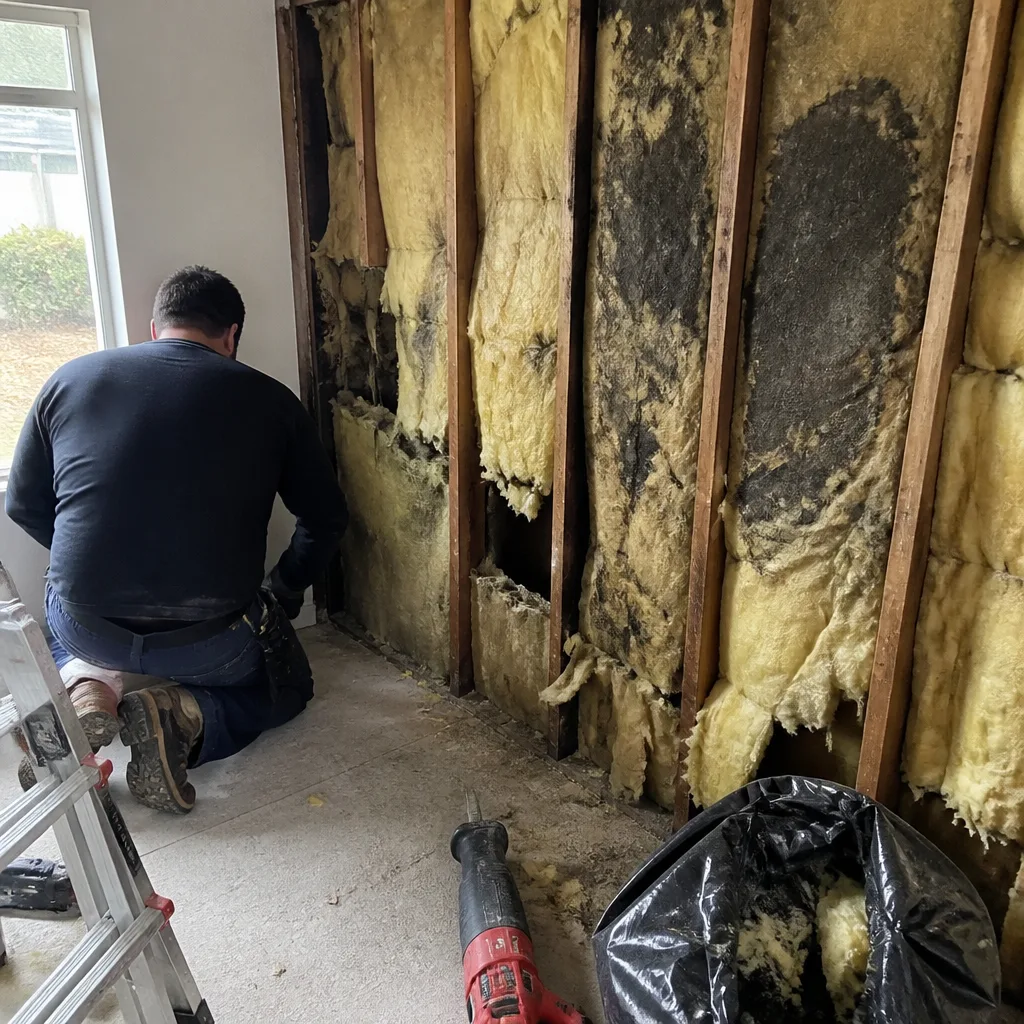 Before
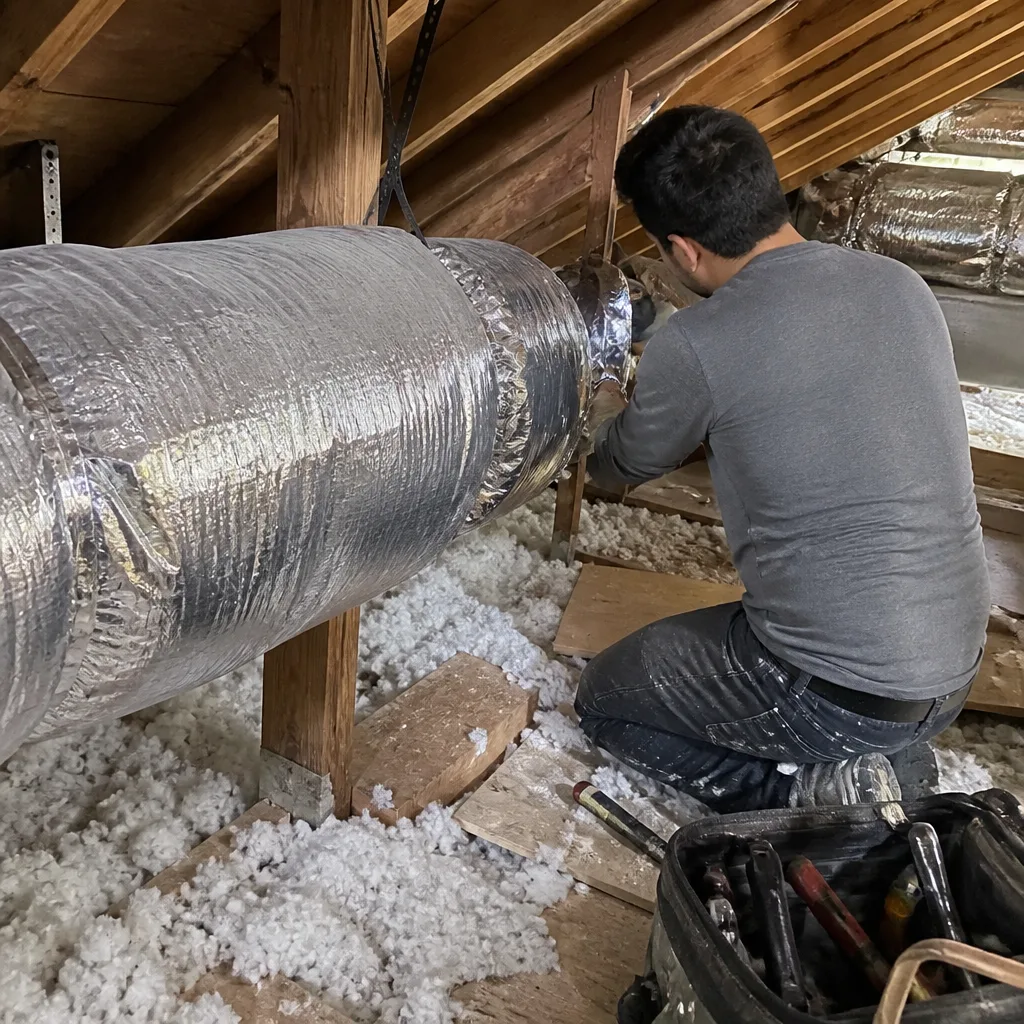 After
AfterCrawl Space Encapsulation & Vapor Barrier in Glendale
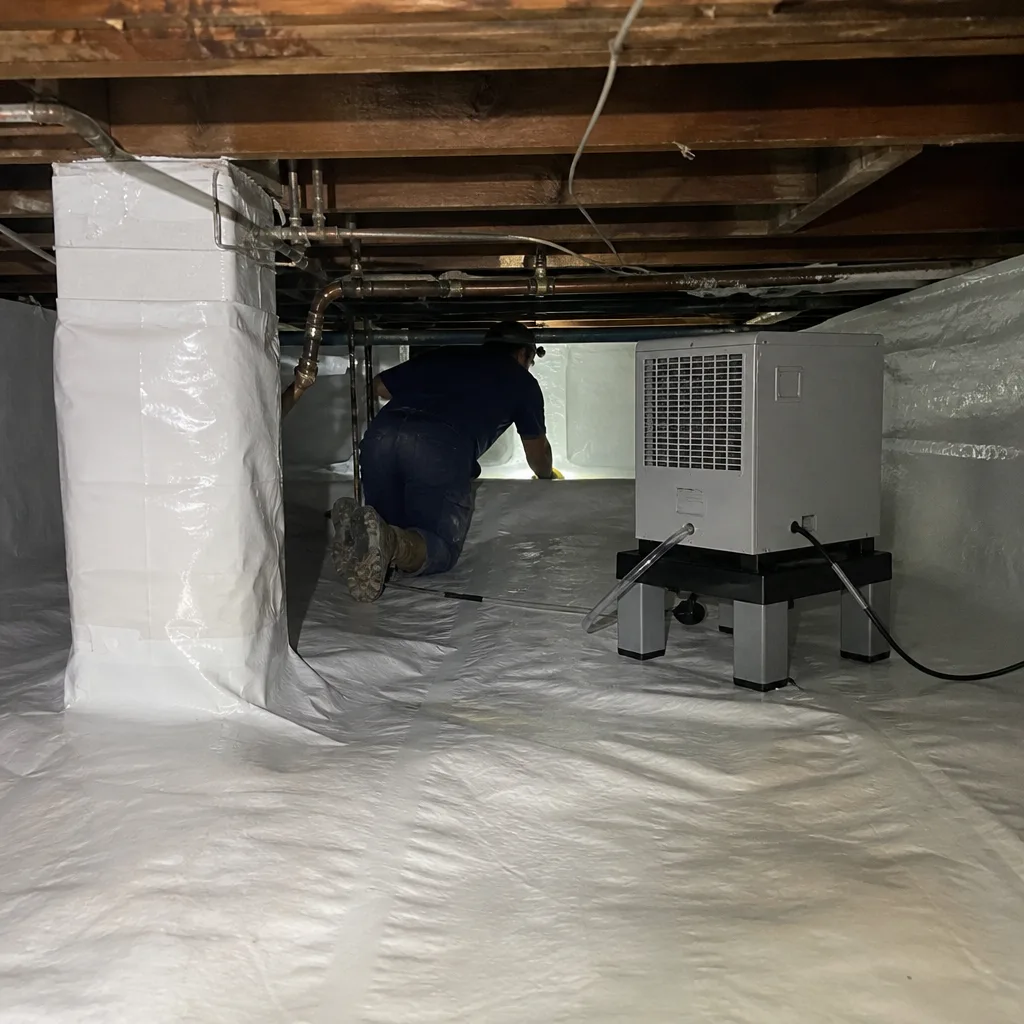
Glendale’s hillside geography creates crawl spaces that trap moisture year-round: winter cold-air pooling in canyon neighborhoods like Chevy Chase Canyon drives ground vapor upward, while summer heat accelerates evaporation from bare soil. Most pre-1978 homes in the city have unsealed crawl spaces with no vapor barrier, leaving subfloors exposed to relative humidity that routinely exceeds 70% in January and February. Crawl Space Encapsulation & Vapor Barrier is our primary service in Glendale because the combination of old housing stock and mountain-trapped moisture produces more crawl space problems here than in flatter, drier parts of Los Angeles County.
Crawl Space Vapor Barrier
Signs you need it
Your crawl space has standing water after rain, white mineral deposits on the foundation wall, or floor joists that feel damp to the touch in winter.
What it costs in Glendale
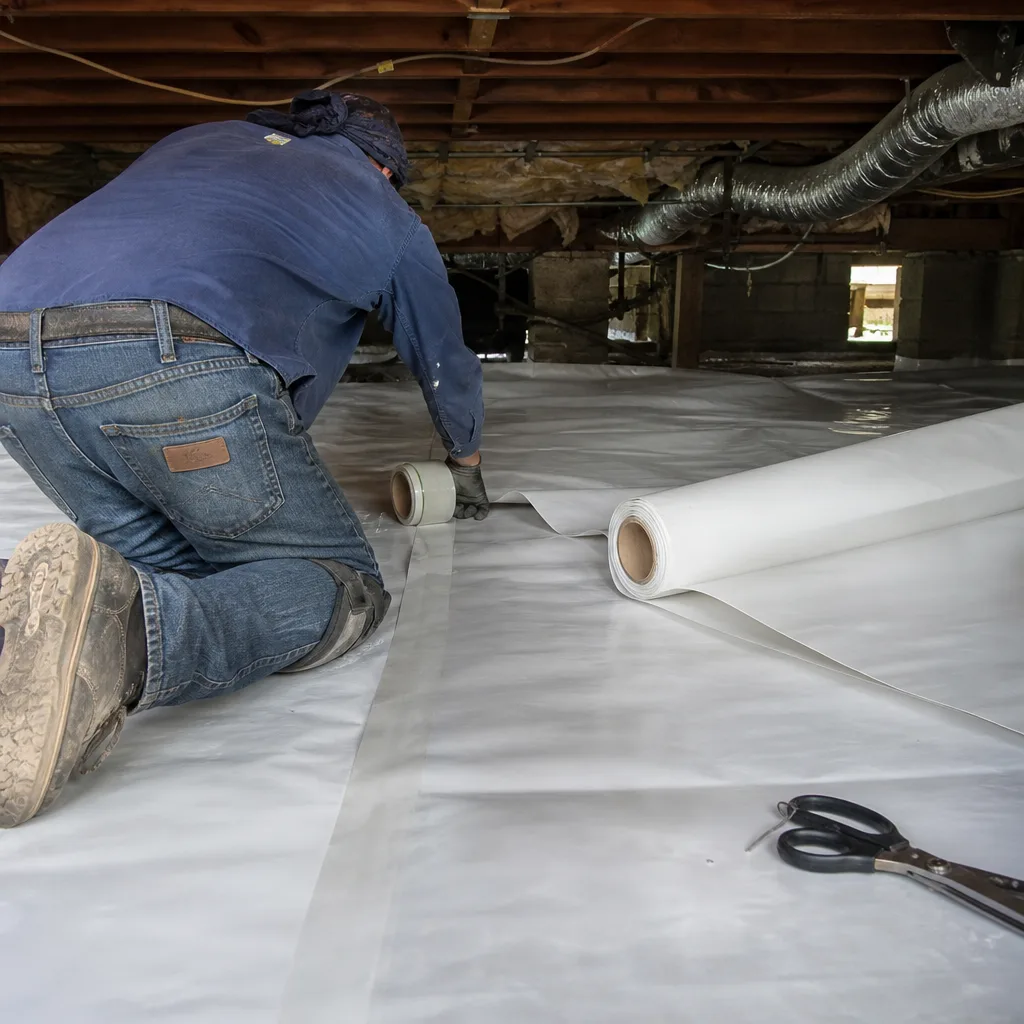
A 6-mil to 20-mil vapor barrier installed over bare earth in a typical Glendale crawl space runs $1,800-$3,500, with thicker mil ratings and seam sealing at the higher end.
How we do it
We remove debris, grade the soil for drainage, lay overlapping polyethylene sheets with sealed seams, and extend the barrier 6-12 inches up foundation walls before mechanical fastening.
Crawl Space Encapsulation
Signs you need it
You smell musty air in the living space, see mold on floor joists, or your hardwood floors cup seasonally despite normal indoor humidity.
What it costs in Glendale
Full encapsulation with sealed vapor barrier, insulated walls, and conditioned-air supply in a Glendale home typically ranges $5,500-$12,000 depending on crawl space height and accessibility.
How we do it
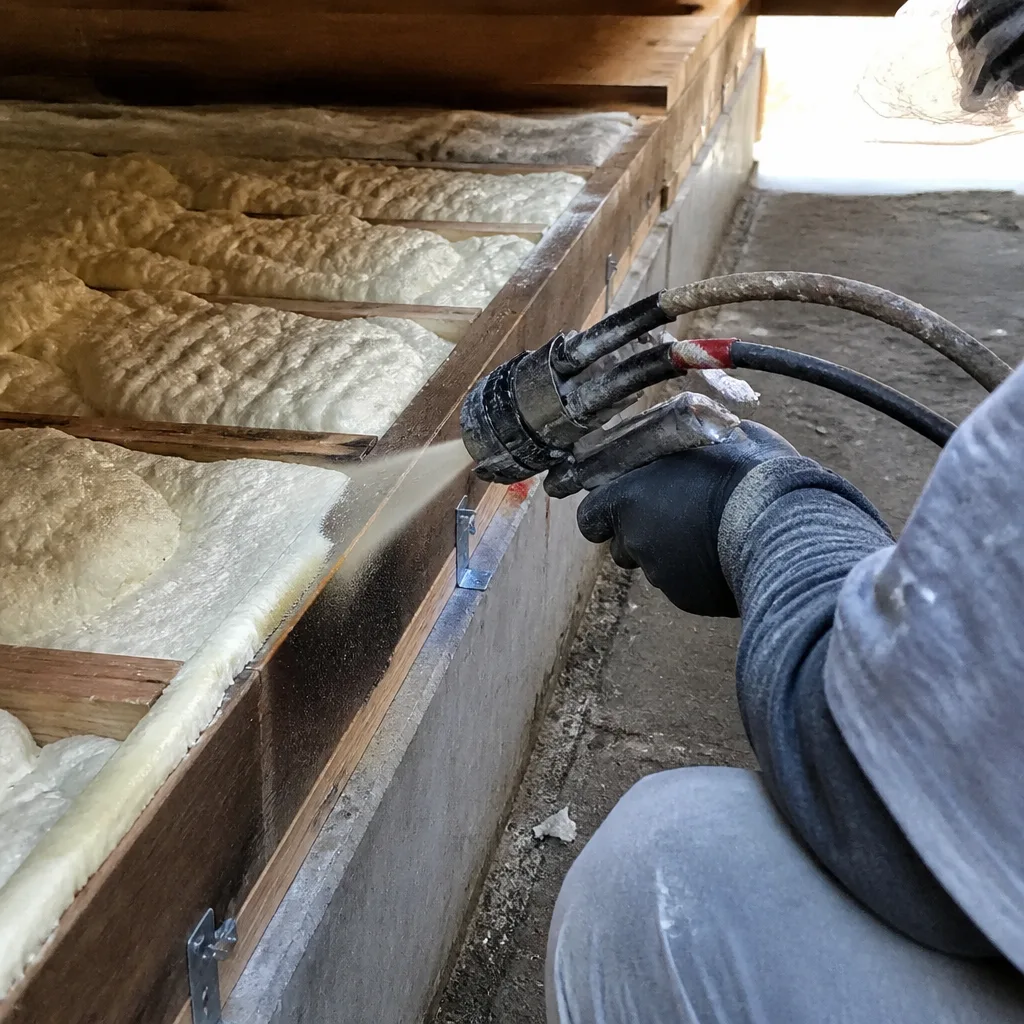
We install a reinforced vapor barrier across floors and walls, seal all seams and penetrations with closed-cell foam, add rigid foam wall insulation, and install a dehumidistat-controlled ventilation or conditioning system.
What Crawl Space Encapsulation & Vapor Barrier Costs in Glendale
| Item | Typical range in Glendale |
|---|---|
| Vapor barrier (6-20 mil, earth only) | $1,800 - $3,500 |
| Partial encapsulation (walls + floor) | $4,000 - $7,500 |
| Full encapsulation with conditioning | $5,500 - $12,000 |
How long does crawl space encapsulation take in Glendale?
Most vapor barrier installations finish in one day; full encapsulation with wall insulation and conditioning equipment takes two to three days. We coordinate with Glendale’s building department for permit-required work and provide a written schedule before starting.
Will encapsulation fix my musty smell?
Yes, when the source is ground moisture evaporating into the crawl space - encapsulation blocks that vapor path and controls relative humidity below 60%. If mold is present, we include sanitizing and source removal in the written scope, not as a surprise add-on.
Radiant Barrier Installation in Glendale
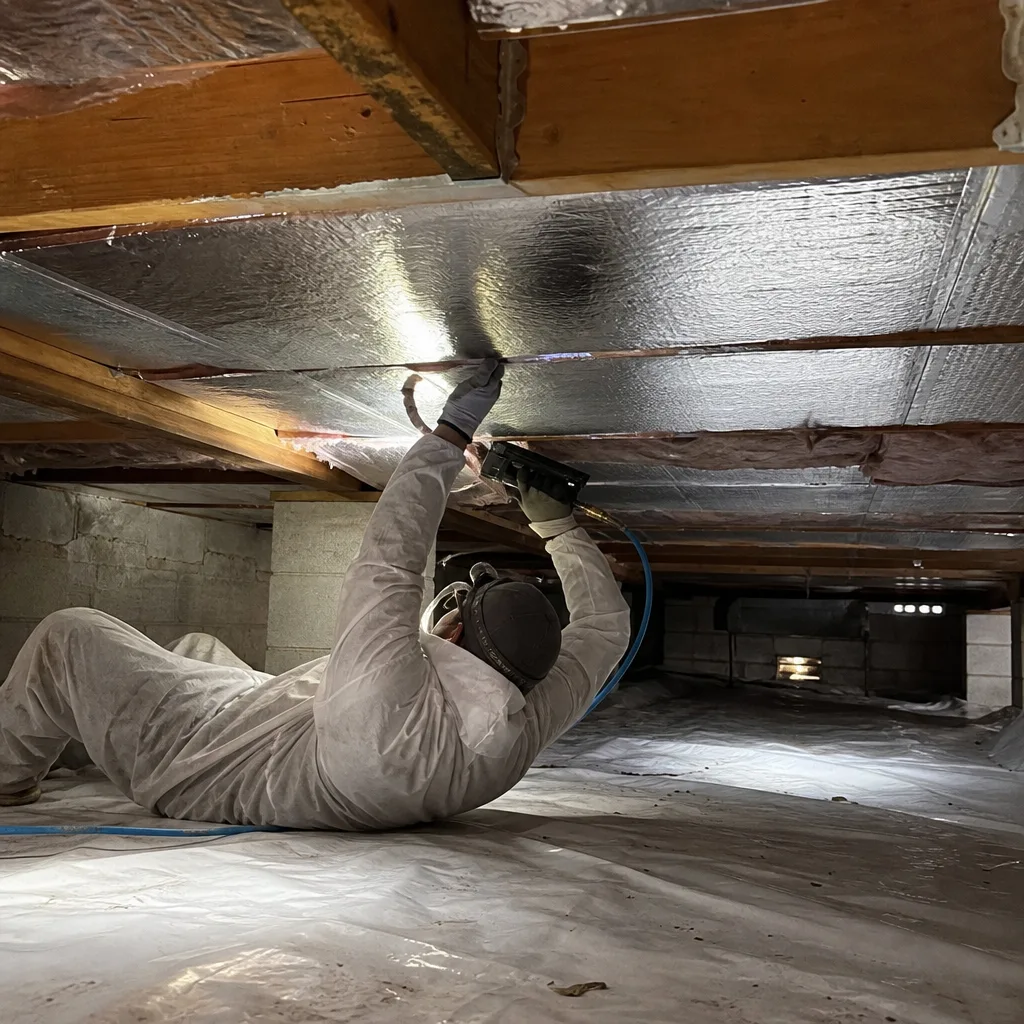
Glendale’s attic temperatures regularly exceed 150°F in July and August because the Verdugo Mountains reflect radiant heat back onto rooftops while blocking the cooling marine layer. Homes in neighborhoods like Rossmoyne and Kenneth Village - many with dark composite shingles over unvented or poorly vented attics - suffer ceiling heat gain that forces air conditioners to run 30-50% longer than in coastal LA. Radiant Barrier Installation reduces radiant heat transfer from roof deck to living space, lowering cooling load and extending roof material life in this specifically harsh microclimate.
Attic Radiant Barrier
Signs you need it
Your ceiling feels hot to the touch on summer afternoons, your AC runs continuously after 2 PM, or your second story stays 10°F warmer than the first.
What it costs in Glendale
Radiant barrier foil installed across attic rafters or joists in a typical Glendale home runs $1,200-$2,800, with stapled foil at the lower end and perforated, breathable products with proper air gaps at the higher end.
How we do it
We install perforated aluminum foil or metallized fabric across the underside of roof rafters, maintaining a minimum 3/4-inch air gap on the reflective side, and verify with infrared thermometer readings from the attic floor.
Radiant Barrier Roof Deck
Signs you need it
You’re re-roofing a Glendale home with dark shingles, your attic ventilation is limited by historic roof geometry, or spray foam on the roof deck is not in the budget.
What it costs in Glendale
Radiant barrier sheathing or peel-and-stick membrane applied to the roof deck during re-roofing typically adds $1,500-$3,500 to the roofing project, depending on pitch and accessibility.
How we do it
We specify OSB with factory-applied reflective foil or install peel-and-stick radiant barrier membrane directly to the deck before underlayment, ensuring the reflective surface faces an air space per manufacturer requirements.
What Radiant Barrier Installation Costs in Glendale
| Item | Typical range in Glendale |
|---|---|
| Foil radiant barrier, attic rafters | $1,200 - $2,800 |
| Radiant barrier roof deck (re-roofing add) | $1,500 - $3,500 |
| Radiant barrier with attic air sealing package | $2,500 - $4,500 |
Does radiant barrier work with existing insulation?
Yes, radiant barrier complements rather than replaces insulation - it blocks radiant heat transfer that fiberglass or cellulose cannot stop, while insulation slows conductive heat flow. In Glendale, we typically recommend both for attics that currently have R-19 or less.
Will radiant barrier help my winter heating bills?
Radiant barrier primarily reduces summer cooling load by reflecting roof-generated heat; in Glendale’s mild winters, the savings are modest compared to the summer impact. We prioritize air sealing and insulation upgrades for year-round performance, adding radiant barrier where cooling dominates the energy profile.
Insulation Removal & Replacement in Glendale
Glendale’s pre-1978 housing stock contains insulation that has degraded, been compromised by rodents, or never met modern standards - we regularly find 1930s kraft paper, compressed fiberglass from the 1960s, and cellulose contaminated by roof leaks in the bungalows and Spanish Revival homes that define the city. The combination of aged materials, mountain-trapped moisture, and active rodent populations in canyon neighborhoods makes removal and replacement a frequent starting point before any new performance work can begin. Insulation Removal & Replacement follows the Haven Standard: written price, documented photo record, and no new insulation until the cavity is clean and sealed.
Contaminated Insulation Removal
Signs you need it
Your attic smells of urine or decay, you see droppings or nesting material in insulation, or your family experiences unexplained respiratory symptoms that worsen at home.
What it costs in Glendale
Removal of contaminated insulation from a typical Glendale attic, with HEPA containment and disposal, runs $2,000-$4,500; sanitizing and rodent proofing add $800-$2,000.
How we do it
We establish negative air pressure with HEPA filtration, remove bagged insulation through contained chutes, apply enzyme-based sanitizers to affected substrates, and document with photos before any new material is specified.
Insulation Replacement
Signs you need it
Your existing insulation is compressed below its labeled R-value, has visible water staining, or was installed before 1990 and has never been evaluated.
What it costs in Glendale
Full removal and replacement with new fiberglass or cellulose in a standard Glendale attic typically ranges $3,500-$7,000, including air sealing of top plates and penetrations before the new insulation goes in.
How we do it
We remove old material to bagged disposal, inspect and photograph the deck and framing, seal all air leaks with foam and caulk, then install new insulation to specified depth with depth markers and coverage verification.
What Insulation Removal & Replacement Costs in Glendale
| Item | Typical range in Glendale |
|---|---|
| Contaminated insulation removal only | $2,000 - $4,500 |
| Removal + replacement with air sealing | $3,500 - $7,000 |
| Removal + replacement + sanitizing/proofing | $4,500 - $9,000 |
Can you remove insulation with asbestos?
No, we do not handle asbestos-containing materials - if we suspect asbestos in vermiculite or early fiberglass, we stop work and refer you to a licensed abatement contractor. We resume with replacement only after receiving written clearance documentation.
How do I know if my insulation is contaminated?
Visual inspection from the attic hatch often reveals droppings, staining, or compressed paths; musty smells in the living space or increased allergy symptoms are secondary indicators. We include contamination assessment in our free evaluation and will show you the photos before recommending removal.
Attic Air Sealing in Glendale
Glendale’s uninsulated and under-insulated attics leak conditioned air through thousands of linear feet of gaps at top plates, wire penetrations, can lights, and duct boots - in homes that never had air sealing as part of original construction. The pressure differential between hot attic and cooled living space in summer, reversed in winter when cold air pools in canyon neighborhoods, drives energy loss that new insulation alone cannot fix. Attic Air Sealing is the prerequisite step we complete before any insulation upgrade, with before-and-after blower-door numbers published on every applicable job so Glendale homeowners can verify the performance change.
Top Plate & Penetration Sealing
Signs you need it
You feel drafts from outlets on exterior walls, see dust streaks around ceiling fixtures, or your blower-door test - if you’ve had one - shows excessive leakage at the ceiling plane.
What it costs in Glendale
Sealing top plates, wire and pipe penetrations, and framing gaps in a typical Glendale attic runs $1,500-$3,000, with plaster-and-lathe homes at the higher end due to irregular framing and limited access.
How we do it
We locate gaps with blower-door-assisted smoke pencils and thermal imaging, seal with expanding foam and fire-rated caulk where required, and verify with a second blower-door test showing CFM50 reduction.
Can Light & Duct Boot Sealing
Signs you need it
You see conditioned air escaping around can light trims, feel hot attic air entering through ceiling grilles when the system is off, or have rooms that never reach set temperature despite adequate duct size.
What it costs in Glendale
Sealing can lights with fire-rated covers and mastic-sealing duct boots typically adds $800-$2,000 to an attic air sealing project, depending on fixture count and duct configuration.
How we do it
We install pre-formed fire-rated enclosures over IC and non-IC can lights, seal all duct boot connections with fiberglass-reinforced mastic, and pressure-test the duct system where accessible.
What Attic Air Sealing Costs in Glendale
| Item | Typical range in Glendale |
|---|---|
| Top plate and penetration sealing | $1,500 - $3,000 |
| Can light and duct boot sealing | $800 - $2,000 |
| Full attic air sealing package | $2,200 - $4,500 |
Do I need air sealing if I’m adding insulation?
Yes - we will not install new insulation over an unsealed attic floor because wind washing and stack effect will degrade the effective R-value by 30% or more. The Haven Standard requires sealing first, insulating second, in that order, with blower-door verification.
How much does air sealing save on bills?
Typical Glendale homes built before 1978 see 15-25% heating and cooling reduction after comprehensive attic air sealing, with greater savings in two-story homes and canyon locations with higher wind exposure. Your specific savings depend on current leakage, HVAC efficiency, and fuel type - we estimate this during the initial evaluation.
Wall Insulation in Glendale
Glendale’s 1920s-1940s bungalows and Spanish Colonial Revival homes were built with plaster-and-lathe interior finishes and empty wall cavities - no insulation, no vapor barrier, no consideration of thermal performance. The Verdugo Mountains’ heat reflection and winter cold-air pooling make these empty walls a year-round problem: summer heat radiates through stucco and sheathing unimpeded, while winter temperature differentials create condensation on interior plaster that damages finishes and promotes mold. Wall Insulation in Glendale requires methods that work with existing construction without gutting historic interiors.
Drill & Fill Wall Insulation
Signs you need it
Your exterior walls feel hot to the touch in summer, cold in winter, or you have rooms with two exterior walls that are consistently uncomfortable despite adequate attic insulation.
What it costs in Glendale
Drill-and-fill cellulose or fiberglass in a typical Glendale single-story home runs $3,500-$7,500, with two-story homes, irregular framing, or hard stucco exteriors at the higher end.
How we do it
We drill 2-inch holes through exterior stucco or siding at stud-bay spacing, blow cellulose or fiberglass to verified density, plug with color-matched patches, and verify fill with thermal imaging from the interior.
Injection Foam Wall Insulation
Signs you need it
You have air leakage through walls despite intact siding, want higher R-value per inch than cellulose provides, or need to fill irregular cavities in balloon-framed historic construction.
What it costs in Glendale
Injection foam in existing Glendale walls typically ranges $5,000-$10,000 for a single-story home, with open-cell foam at the lower end and closed-cell at the higher end due to material cost and density requirements.
How we do it
We access walls through exterior holes or interior baseboard removal, inject slow-rise foam that fills without distorting plaster, trim excess after cure, and verify with thermal imaging and core samples where accessible.
What Wall Insulation Costs in Glendale
| Item | Typical range in Glendale |
|---|---|
| Drill-and-fill cellulose/fiberglass | $3,500 - $7,500 |
| Injection foam (open-cell) | $5,000 - $8,500 |
| Injection foam (closed-cell) | $7,000 - $10,000 |
Will drill-and-fill damage my stucco?
We match patch texture and color to existing stucco, but the repair is visible upon close inspection - we show you sample patches before proceeding. For historically sensitive exteriors, we sometimes recommend interior access through baseboard or plaster repair instead.
Can you insulate walls without removing drywall?
Yes, drill-and-fill and injection foam both work through small exterior or interior penetrations without full drywall removal - the standard approach for Glendale’s historic homes where preserving original plaster is a priority. We discuss access strategy and finish repair during the evaluation.
Attic Cleaning & Rodent Proofing in Glendale
Glendale’s canyon-edge neighborhoods - Chevy Chase Canyon, Glenoaks Canyon, and the hillside blocks above Kenneth Village - have active rodent populations that exploit unsealed attic vents, eave gaps, and plumbing penetrations in aging wood-frame construction. Once inside, squirrels, rats, and mice compress insulation for nesting, contaminate it with urine and feces, and create entry points for secondary pests. Attic Cleaning & Rodent Proofing restores the attic to a clean, sealed condition before any new insulation work begins, with photo documentation of every step.
Attic Cleanout
Signs you need it
Your attic contains old storage items, fallen insulation, or construction debris from prior work that prevents proper air sealing and insulation installation.
What it costs in Glendale
Attic cleanout and debris removal in a typical Glendale home runs $800-$2,000, with walk-up attics and heavy debris loads at the higher end.
How we do it
We remove stored items to owner-designated locations, bag and dispose of loose debris and degraded insulation, vacuum the deck with HEPA filtration, and photograph the cleaned substrate before proceeding.
Rodent Proofing & Exclusion
Signs you need it
You hear scratching in walls or ceilings, find droppings in the attic, or see gnaw marks on fascia, soffits, or vent screens around the roofline.
What it costs in Glendale
Rodent proofing with exclusion screening, vent guards, and penetration sealing typically runs $1,200-$3,000 for a Glendale single-family home, with multi-story roofs and steep canyon pitches at the higher end.
How we do it
We inspect the roofline and foundation for entry points, install galvanized steel mesh over vents and gaps, seal penetrations with rodent-resistant materials, and provide a written exclusion map showing every location addressed.
What Attic Cleaning & Rodent Proofing Costs in Glendale
| Item | Typical range in Glendale |
|---|---|
| Attic cleanout only | $800 - $2,000 |
| Rodent proofing and exclusion | $1,200 - $3,000 |
| Cleanout + proofing + sanitizing | $2,500 - $5,500 |
Do you handle the rodents or just seal the entry?
We exclude and proof - we do not trap or poison, which requires a pest control license. We coordinate with your pest control provider or can refer licensed trappers; we begin our work after they confirm rodent activity has ceased.
How do I know if rodents are in my attic now?
Listen for scratching at dawn and dusk, inspect the attic for droppings and compressed insulation paths, and check exterior vents for gnawed screens or staining. We include active-infestation assessment in our evaluation and will defer proofing if signs indicate ongoing activity.
Home Energy Audit in Glendale
Glendale’s combination of uninsulated historic housing, mountain-trapped heat, and canyon-specific cold-air pooling makes generic energy advice unreliable - what works in coastal Santa Monica often fails here. A home energy audit in Glendale must account for the specific microclimate, the age and type of construction, and the interaction between air leakage, insulation, and HVAC performance in buildings that were never designed as sealed systems. Home Energy Audit provides the documented baseline - blower-door numbers, thermal images, and prioritized recommendations - that lets Glendale homeowners make informed decisions about where to spend first.
Blower Door Test
Signs you need it
You suspect your home leaks excessively, want to quantify improvement after air sealing and insulation work, or need documentation for a rebate or energy-efficiency program.
What it costs in Glendale
A standalone blower-door test with written report in Glendale typically runs $300-$600; when bundled with thermal imaging and insulation inspection, the package is $500-$900.
How we do it
We install a calibrated fan in an exterior door, depressurize the house to 50 Pascals, measure CFM50 leakage, and identify major leak locations with smoke pencils and infrared cameras while the fan runs.
Thermal Imaging Inspection
Signs you need it
You have rooms that are consistently too hot or too cold, suspect missing insulation in walls or ceilings, or want to verify contractor work quality after a recent installation.
What it costs in Glendale
Thermal imaging as part of a comprehensive audit runs $200-$400 additional to the blower-door test, or $400-$700 as a standalone interior/exterior scan with report.
How we do it
We scan interior surfaces and the attic with a calibrated FLIR camera during heating or cooling season, documenting temperature differentials that indicate missing insulation, air leakage, or moisture intrusion.
What Home Energy Audit Costs in Glendale
| Item | Typical range in Glendale |
|---|---|
| Blower-door test with report | $300 - $600 |
| Thermal imaging (standalone) | $400 - $700 |
| Comprehensive audit (blower door + thermal + inspection) | $500 - $900 |
Will an audit tell me what to fix first?
Yes, we prioritize recommendations by cost-effectiveness and comfort impact specific to your home’s construction and Glendale’s climate - typically air sealing first, then attic insulation, then wall insulation or HVAC right-sizing. You receive a written priority list with estimated ranges for each measure.
Can I use audit results for rebates?
Many California utility rebate programs accept third-party blower-door and thermal imaging documentation - we format reports to program requirements and can advise which current programs apply to your specific measures. We do not guarantee rebate approval.
Brands We Service in Glendale
We source insulation and air-sealing materials from Owens Corning, Johns Manville, Knauf, and Rockwool, with no proprietary product lock-in - we specify what performs for your specific assembly. Our Los Angeles office stocks common batt, blown, and rigid foam products for fast turnaround on Glendale jobs. our brands
Pricing for Insulation in Glendale, CA
| Service | Typical range in Glendale |
|---|---|
| Crawl space vapor barrier (6-20 mil) | $1,800 - $3,500 |
| Crawl space encapsulation, full | $5,500 - $12,000 |
| Radiant barrier, attic rafters | $1,200 - $2,800 |
| Radiant barrier roof deck (add-on) | $1,500 - $3,500 |
| Insulation removal, contaminated | $2,000 - $4,500 |
| Insulation removal + replacement | $3,500 - $7,000 |
| Attic air sealing, top plates/penetrations | $1,500 - $3,000 |
| Attic air sealing, full package | $2,200 - $4,500 |
| Wall insulation, drill-and-fill | $3,500 - $7,500 |
| Wall insulation, injection foam | $5,000 - $10,000 |
| Attic cleanout + rodent proofing | $2,500 - $5,500 |
| Home energy audit, comprehensive | $500 - $900 |
Prices in Glendale run higher than flatland LA for jobs requiring steep-roof access, hillside crawl spaces, or plaster-and-lathe wall work - the labor and safety factors are real. Every job still begins with a written price before any work starts, under Haven Standard Clause 1, and we offer a Free Second Opinion on any written estimate you’ve already received.
Neighborhoods We Serve in Glendale
We work across Glendale’s full residential geography, from the historic flatland neighborhoods to the canyon hillsides. Most Glendale appointments are scheduled within 48 hours of initial contact, with emergency response for active leaks or HVAC failure related to insulation compromise.
- Rossmoyne
- Kenneth Village
- Chevy Chase Canyon
- Glenoaks Canyon
- Adams Hill
Service Area - Cities Near Glendale
Our crews serve Glendale from the Los Angeles office and regularly work in neighboring communities. We also provide insulation services in Burbank, CA, West Hollywood, CA, Beverly Hills, CA, and Culver City, CA. Scheduling and dispatch are coordinated from our metro office; you reach a live person when you call, 24/7, not a callback queue.
Serving Glendale, CA - Our Local Coverage Area
We’re based in the Glendale area and know this community well. Use the map below to see our service coverage - if you’re nearby, we can almost certainly help.
FAQs About Insulation in Glendale
Most attic insulation retrofits and crawl space encapsulation require a Glendale building permit when R-value is added or mechanical ventilation is installed - we pull permits as part of our standard process and include the cost in your written price. Wall insulation and simple removal typically do not trigger permit requirements unless exterior cladding is altered.
We typically schedule evaluations within 24-48 hours for standard requests, with same-day availability for urgent situations like post-leak insulation failure or HVAC overload. A live person answers calls to (628) 226-1097 at any hour; we do not use voicemail callbacks.
Glendale HOAs in planned communities like parts of Rossmoyne may require notice for exterior-access work or visible roof modifications like radiant barrier sheathing during re-roofing - we provide the documentation and photo records your HOA requests, and we coordinate scheduling to minimize disruption. Interior-only work rarely requires HOA involvement.
What happens when you call
- 1A real person answersNo phone trees - talk to a local insulation pro.
- 2You get an upfront price rangeHonest numbers before anyone is dispatched. No surprises.
- 3A background-checked tech heads outLicensed & insured, typically same-day.
- 4You approve before work beginsNothing starts until you say go.
What Glendale Customers Say
"Turned up on time, protected the hallway, and the written scope matched what was actually done."
- Bruno S."They air-sealed the attic floor before insulating and showed me the blower-door number before and after. The upstairs is finally the same temperature as downstairs."
- Marisol D."They photographed rodent damage in the old insulation that we had no idea about, and priced the exclusion work separately so we could decide."
- Harriet N.