
How Much Does Spray Foam Insulation Cost in Los Angeles?
Spray foam insulation in Los Angeles typically costs between $1,800 and $6,500 for a whole-home or attic application, with most single-family homes landing between $2,400 and $4,200 depending on square footage, foam type, and how much air sealing prep the building envelope needs before the foam goes in. Open-cell foam runs $0.44-$0.65 per board foot installed; closed-cell foam runs $1.00-$1.50 per board foot. Those ranges hold across most Los Angeles neighborhoods we work in, from Silver Lake bungalows to San Fernando Valley ranch houses built in the 1960s.
Spray Foam Insulation Cost Breakdown (2026)
The table below reflects what homeowners in Los Angeles are actually paying in 2026 – not national averages. Prices are installed, meaning they include labor, materials, prep, and cleanup. They do not include drywall repair if open-wall work is involved.
| Application | Foam Type | Typical LA Price Range | Notes |
|---|---|---|---|
| Attic rafters / roof deck (1,000 sq ft) | Open-cell (2″) | $900 - $1,400 | Common in older Silver Lake and Echo Park homes |
| Attic rafters / roof deck (1,000 sq ft) | Closed-cell (2″) | $1,800 - $2,600 | Preferred for homes near coast; better vapor resistance |
| Crawl space rim joists | Closed-cell (2″) | $400 - $900 | Common in hillside homes with raised foundations |
| Exterior wall cavities (per 100 sq ft) | Open-cell (3.5″) | $280 - $420 | Retrofit via drill-and-fill or open-wall only |
| Garage ceiling (400 sq ft) | Closed-cell (2″) | $750 - $1,200 | Very common request in Studio City and Burbank |
| Whole-home attic encapsulation (1,500 sq ft) | Open-cell (5.5″) | $2,800 - $4,500 | Full unvented attic conversion; air sealing included |
| Whole-home attic encapsulation (1,500 sq ft) | Closed-cell (3″) | $4,200 - $6,500 | Highest air-barrier performance; LA coastal zones |
| Attic air sealing only (top plates, penetrations, can lights) | Two-component foam / mastic | $450 - $950 | Always completed before any insulation is added |
What the Numbers Don’t Show on Their Own
A price-per-board-foot figure tells you the material cost, but it doesn’t tell you how many board feet the job actually requires, whether the attic floor needs to be cleared of old cellulose first, or whether the penetrations above your kitchen were ever sealed in the first place. In Los Angeles, where homes in neighborhoods like Atwater Village, Glassell Park, and Palms span decades of construction from the 1920s to the 2000s, the condition of the existing envelope varies dramatically even within a single block.
At Envelope Insulation Co., we never begin our Spray Foam Insulation services by quoting a per-board-foot number in isolation. Every job starts with a written scope and a flat written price before any work begins – that’s Haven Standard Clause 1, and it applies to every job regardless of size. You know the exact number before a crew member sets foot in your attic.
One additional cost factor specific to Los Angeles: LADBS (Los Angeles Department of Building and Safety) may require a permit for certain foam applications, particularly closed-cell foam sprayed to the underside of roof sheathing in an unvented attic conversion. Permit fees in the city of Los Angeles typically run $150-$350 for this scope. Some jurisdictions – Pasadena, Santa Monica, Culver City – have their own permitting departments and their own fee schedules. We pull the correct permits and include that cost in your written price upfront.
What Affects Spray Foam Insulation Pricing in Los Angeles
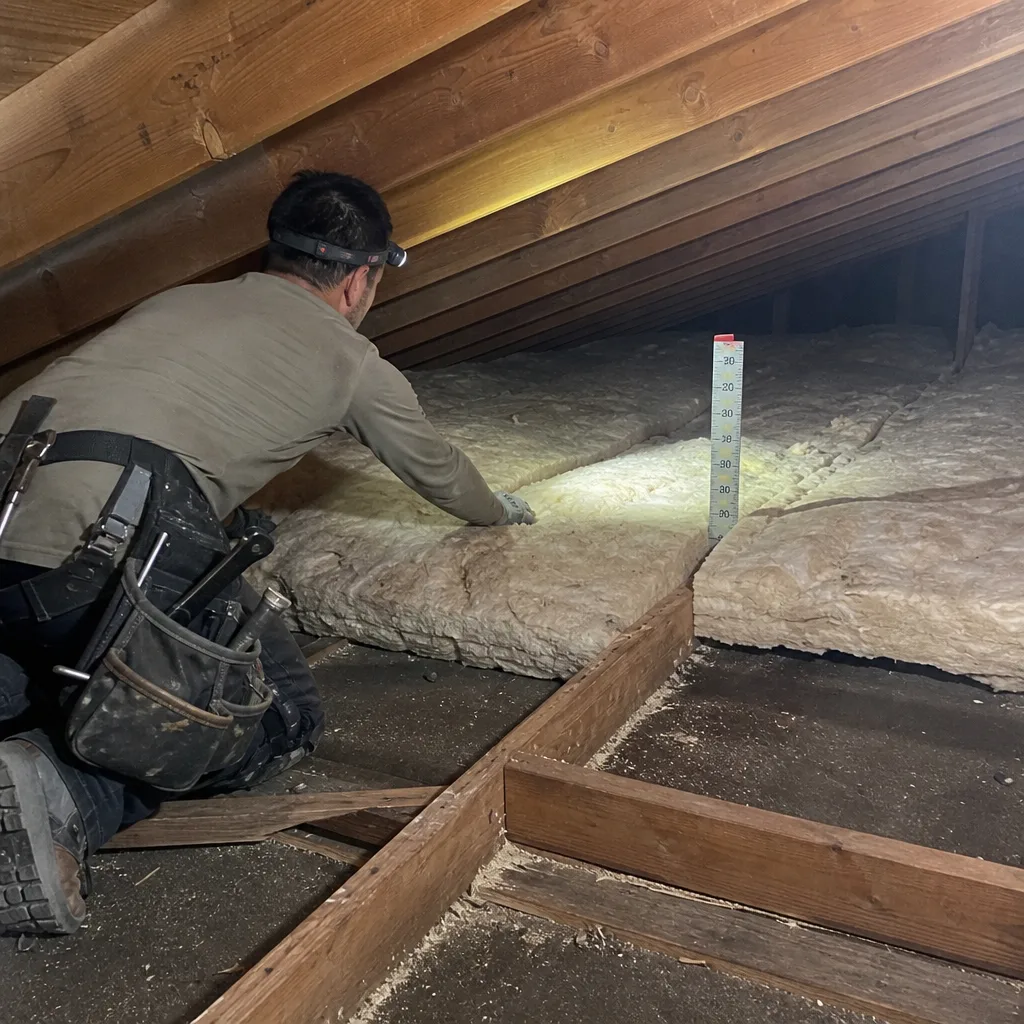
- Foam type: open-cell vs. closed-cell. Open-cell foam (roughly R-3.7 per inch) is significantly less expensive than closed-cell (roughly R-6.5 per inch). For most Los Angeles attic applications, open-cell at 5.5 inches hits R-20, which meets California Title 24 minimums for climate zone 9 (most of the metro). Closed-cell is the right call for homes in coastal zones like Santa Monica, Mar Vista, or Venice where vapor management matters more, or anywhere you need a true air and vapor barrier in a thinner profile.
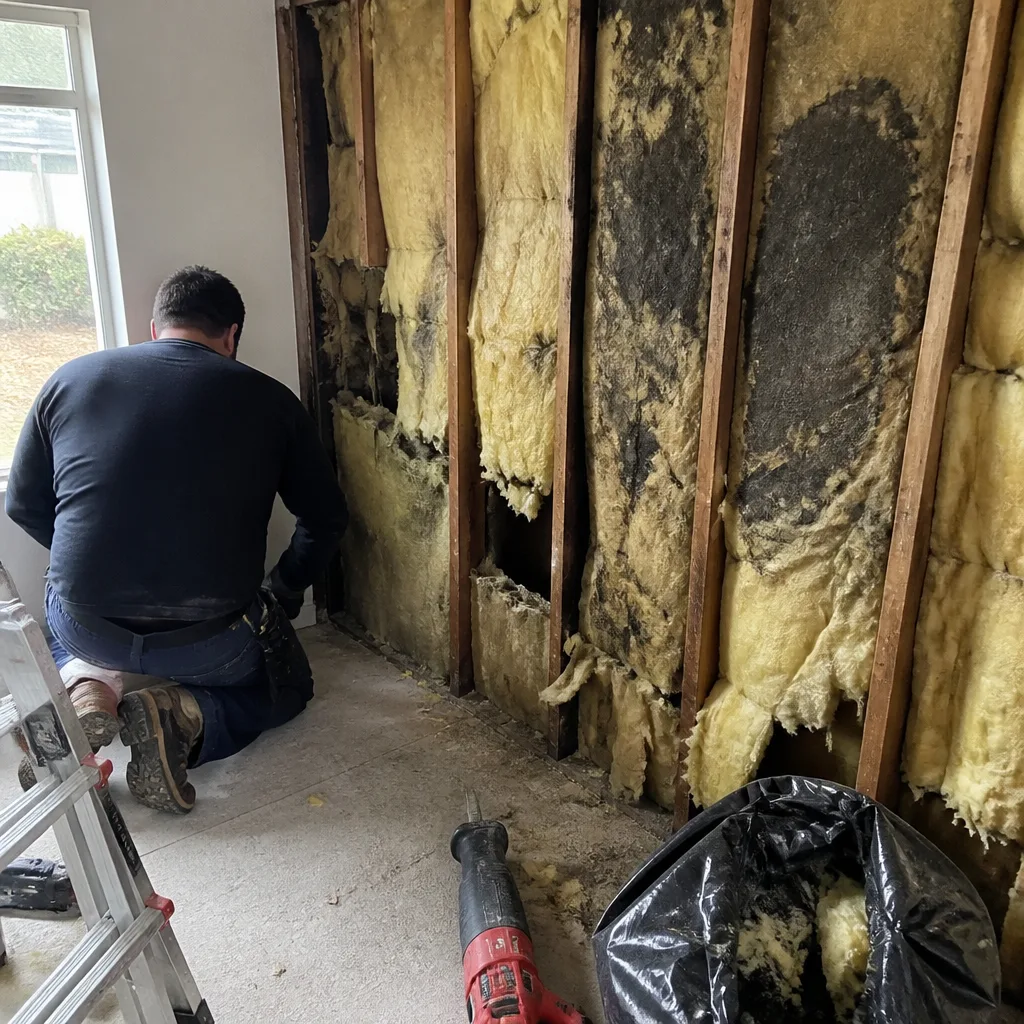
- Existing insulation removal. Homes in Highland Park and Boyle Heights built in the 1950s through 1970s often still have the original blown cellulose or batt fiberglass in the attic. If that material is damaged, contaminated, or compressed below useful R-value, it needs to come out before spray foam goes in. Removal typically adds $0.50-$1.25 per square foot to the project total. We document the existing conditions with photos before any removal, so you have a baseline record.
- Access and attic height. Los Angeles has a lot of low-slope roofs – flat roofs with minimal attic clearance are common in Koreatown, Mid-Wilshire, and parts of the San Fernando Valley. When technicians can’t stand upright or need to work in an attic that drops below 18 inches at the eaves, labor time increases. Expect an access surcharge of $200-$500 on tight attics.
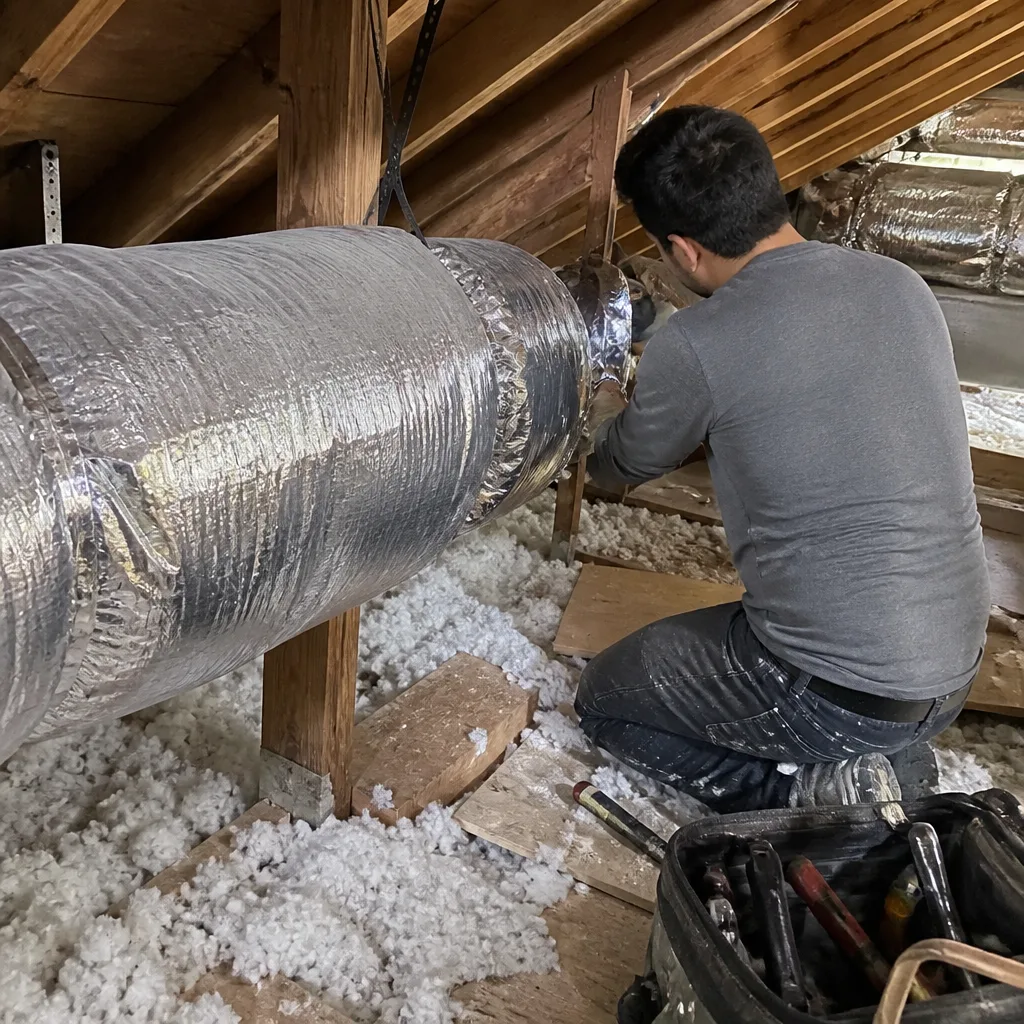
- Air sealing complexity before foam installation. At Envelope Insulation Co., air sealing is a hard prerequisite – we will not spray foam over an unsealed attic floor because doing so locks in the air leak rather than fixing it. The number of can lights, top-plate gaps, plumbing penetrations, and HVAC chases that need sealing varies enormously. A 1,200-square-foot bungalow in Silverlake with recessed lighting in every room might have 40+ penetrations to address before a single inch of foam goes in. That prep work is reflected in the written price.
- California Title 24 compliance and climate zone. Los Angeles County spans multiple Title 24 climate zones (8, 9, 10, and parts of 14 in the hotter inland areas near the Santa Clarita Valley). The required R-value and the approved assembly types differ by zone. Meeting the code minimum isn’t hard in most of the metro, but the project design – and therefore the cost – changes if you’re in Sylmar versus Malibu versus Pomona. We run the Title 24 numbers before writing your price.
- Board foot thickness specified. Every additional inch of closed-cell foam in a given area adds roughly $0.50-$0.75 per board foot. Upgrading from 2 inches to 3 inches of closed-cell on a 1,200-square-foot roof deck adds $600-$900 to the job – but it’s also the difference between R-13 and R-19, which matters in the hotter inland LA neighborhoods where summer attic temperatures regularly exceed 140°F.
 Before
 After
AfterOpen-Cell vs. Closed-Cell Spray Foam: Which One for Your Los Angeles Home?
This question comes up on nearly every estimate, and the honest answer depends on three things: where in Los Angeles you live, what assembly you’re insulating, and what you’re trying to achieve beyond R-value.
Open-Cell Spray Foam
Open-cell foam is softer, expands more aggressively (roughly 100x its original volume), and is a better sound barrier than closed-cell. At $0.44-$0.65 per board foot installed, it’s the more affordable way to get R-20 or better in an attic. The drawback in the Los Angeles context: open-cell is vapor-permeable, which means in areas with measurable coastal humidity – think West LA, Culver City, El Segundo – you’ll want to verify that the assembly handles vapor correctly. For most inland neighborhoods in the LA basin, open-cell at code depth performs well and delivers a meaningful improvement in cooling load. We use Icynene and Demilec open-cell products depending on the application.
Closed-Cell Spray Foam
Closed-cell foam is denser, achieves R-6.5 per inch, and functions as both an air barrier and a Class II vapor retarder. At 2 inches, it also adds meaningful structural rigidity to roof sheathing – relevant in older Los Angeles homes where the plywood or board sheathing has some flex to it. The higher cost is real: $1.00-$1.50 per board foot installed versus $0.44-$0.65 for open-cell. For homes in coastal areas, homes converting to an unvented attic assembly in a hot-dry microclimate (like the east-facing slopes of Griffith Park or the hotter pockets of the San Gabriel Valley), or anywhere you need maximum performance at minimum thickness, closed-cell earns the premium. We source closed-cell products from Icynene and Demilec, and we do not have a proprietary product lock-in – the foam specified is the one that fits the assembly.
A Note on Safety for DIY Consideration
Two-component spray polyurethane foam is not a DIY material. The isocyanate component (the “B” side of any two-part SPF system) is a respiratory sensitizer – meaning exposure without proper respirator protection doesn’t just cause discomfort, it can trigger permanent isocyanate asthma. Professional installers use supplied-air respirators, full PPE, and follow EPA SPF guidelines on re-entry times (typically 24 hours after application). Consumer-grade “big-box” cans are fine for sealing a single penetration. A whole-attic application is not. We mention this not as a sales tactic but because the health consequence is real and irreversible.
How to Save on Spray Foam Insulation in Los Angeles
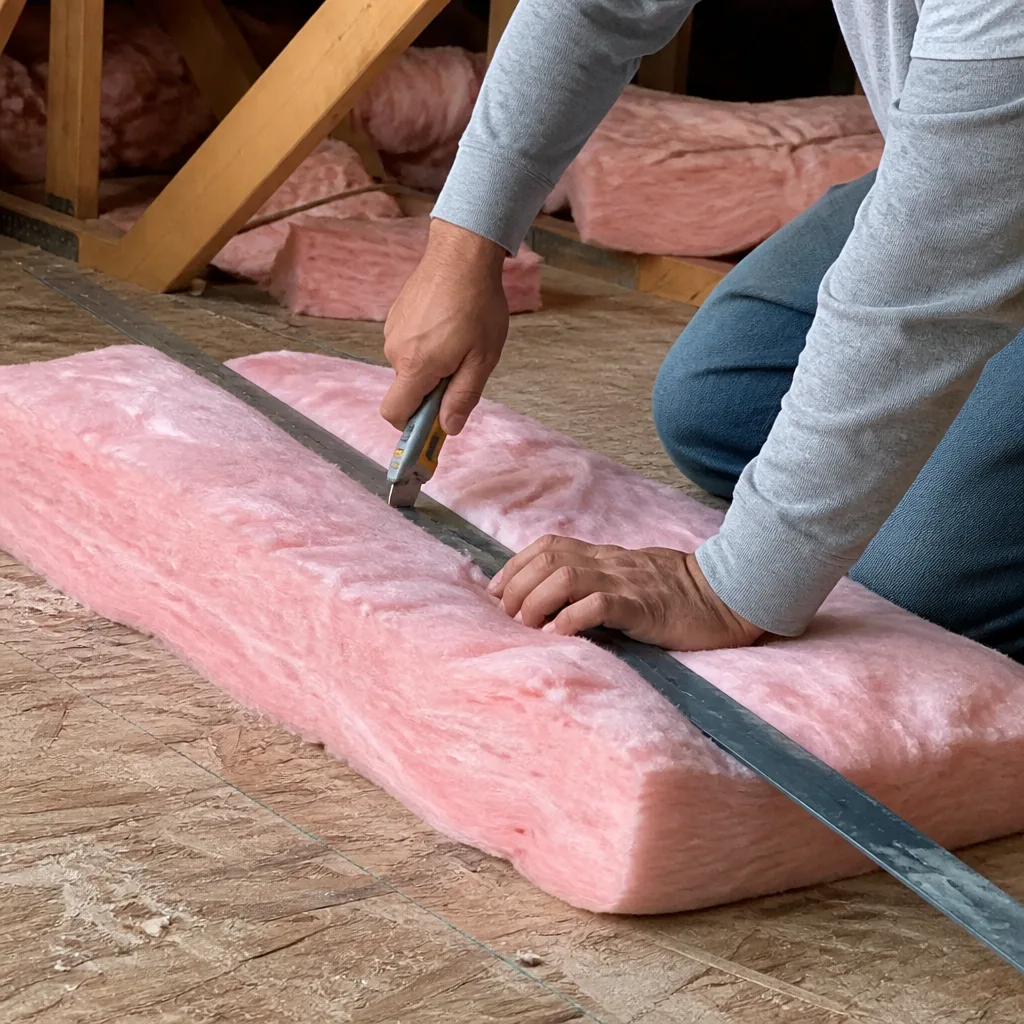
There are real ways to reduce the cost of a spray foam project in Los Angeles, and there are false economies that end up costing more. Here are the ones worth knowing.
Use Spray Foam Where It Performs Best, Not Everywhere
Spray foam earns its price when air sealing performance and high R-value per inch are both needed – typically at the roof deck in an unvented attic, at crawl space rim joists, or at a garage ceiling adjacent to conditioned space. For an open attic floor where you’re simply adding R-value over an already-sealed substrate, blown-in fiberglass or cellulose will achieve the same thermal result for a fraction of the cost. A good building-science approach – and what we document in every written scope – matches the right material to the right location. Over-specifying closed-cell foam throughout a house that doesn’t need it is expensive without adding proportional performance.
Do the Air Sealing Before Any Insulation Goes In
This sounds like it adds cost, and in the short term it does. But air sealing before insulating – sealing top plates, plumbing chases, can lights, and duct penetrations – is what makes the R-value number you’re paying for actually matter in the real world. In homes across Los Angeles that we’ve tested with a blower-door before and after work, air sealing alone has moved the CFM50 reading by 30-50% before a single inch of foam is added. If you skip air sealing and go straight to insulation, you’ve insulated an air leak, not eliminated it. The R-value on paper won’t match what shows up on your utility bill.
Pull the LADBS Permit When Required
Skipping the permit on a closed-cell unvented attic conversion saves $150-$350 upfront. It also means the work isn’t inspected, which creates a disclosure problem when you sell and a potential insurance issue if you ever make a claim involving the roof assembly. In Los Angeles, permit records are public and buyers’ agents pull them. A permitted job is a documented job. We include permit costs in the written price and pull the correct permits for the jurisdiction – whether that’s LADBS, the city of Pasadena, or Santa Monica’s own building department.
Request a Second Opinion on Any Written Estimate
If you’ve already received a written quote from another contractor, bring it to us. We offer a Free Second Opinion on any written estimate. We’ll read it with you line by line – checking the foam type, the specified depth, the board feet quoted, and whether air sealing is included or excluded. In our experience reviewing competing quotes across Los Angeles, the most common discrepancy is that air sealing is listed as an upsell or omitted entirely, which means the quoted price looks lower but the job isn’t complete.
Check for Southern California Gas and LADWP Rebates
Both SoCalGas and LADWP offer rebates for insulation upgrades in qualifying homes, and California’s TECH Clean California initiative has expanded residential incentives through 2026. The rebate amounts and eligibility rules change frequently, but a $400-$1,200 rebate on a qualifying attic insulation project is realistic for many Los Angeles homeowners. We don’t administer the rebates, but we provide the documentation – material specs, R-value installed, square footage – that the rebate applications require.
For a free written estimate on your specific home, call us at (628) 226-1097. We run the numbers on square footage, climate zone, existing conditions, and foam type before quoting anything – and you’ll have the price in writing before any work starts.
Spray Foam vs. Other Insulation Types: Cost Comparison for Los Angeles Homes
Spray foam is not always the right answer, and we’d rather tell you that plainly than sell you the most expensive product on every job. Here’s how it compares to the alternatives we install across Los Angeles:
- Blown-in fiberglass (attic floor): $0.30-$0.55 per square foot for R-30 to R-38. Best for open attic floors where the substrate is already air-sealed. No vapor management benefit, but plenty of thermal performance at a lower price.
- Blown-in cellulose (attic floor): $0.28-$0.50 per square foot for R-30 to R-38. Similar range to fiberglass, with slightly better air resistance. Made from recycled material. Fire-retardant treated. Very common in LA’s older housing stock where we’re adding R-value to existing insulation.
- Fiberglass batts (wall cavities): $0.20-$0.40 per square foot installed. Fine for new construction or open walls during a remodel. Not a realistic option for retrofit without opening walls.
- Open-cell spray foam (attic rafter bays): $0.44-$0.65 per board foot. The right call when you’re converting to an unvented attic assembly or when you need an air barrier at the roof line rather than the attic floor.
- Closed-cell spray foam (roof deck, rim joists, tight applications): $1.00-$1.50 per board foot. The highest R-per-inch option, and the only one that functions as a vapor retarder without a separate membrane.
- Radiant barrier (attic roof deck): $0.15-$0.30 per square foot. Reduces radiant heat gain through the roof – works differently from mass insulation and is often combined with blown-in on the attic floor. Very effective in the hotter parts of the Los Angeles basin, including the San Fernando Valley.
The right answer is usually a combination: closed-cell foam at the rim joists and specific problem areas, blown-in on the attic floor with thorough air sealing underneath it, and a radiant barrier at the roof deck if you’re in a part of Los Angeles where summer temperatures push attic temps above 130°F. We put that recommendation in writing before any work starts.
What the Project Looks Like From Start to Finish
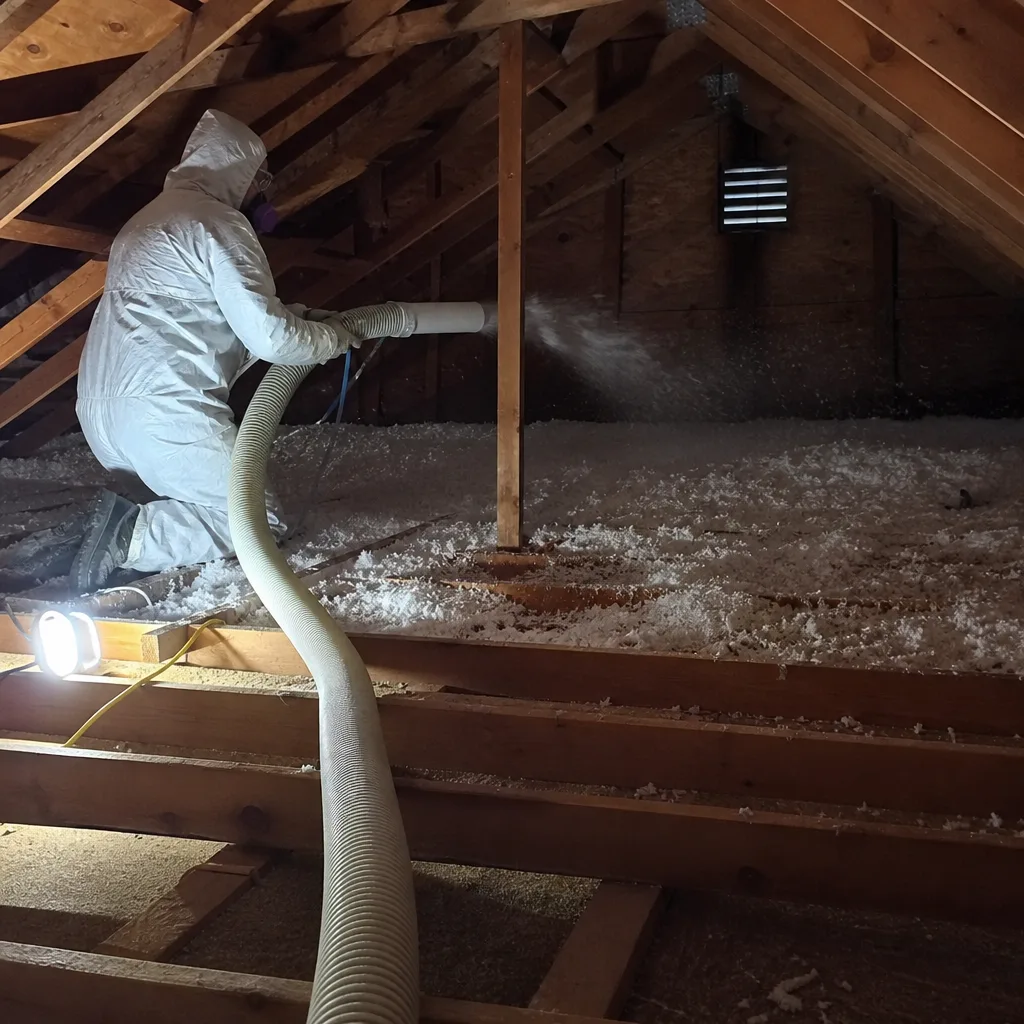
Most Los Angeles homeowners haven’t hired an insulation contractor before, and the process is less obvious than calling a plumber or an electrician. Here’s what a spray foam project with us actually looks like from the first call to the final documentation.
Step 1: Written Estimate With a Site Walk
We don’t quote spray foam jobs remotely from a square-footage number. An estimator – background-checked and uniformed – visits the home, accesses the attic (and crawl space if applicable), documents existing conditions with photos, notes the number of penetrations that need sealing, confirms the climate zone and Title 24 requirements, and writes a flat price. You receive the scope in writing before we leave. Under Haven Standard Clause 1, no work starts without a written price.
Step 2: Air Sealing First
On installation day, the crew seals top plates, can lights, plumbing chases, and any other penetrations before foam is applied. This is not negotiable at Envelope Insulation Co. – we have declined jobs where customers wanted us to skip air sealing to reduce cost, because the insulation wouldn’t perform as specified. In Northridge and Chatsworth, where we see a lot of 1970s and 1980s track homes with open top plates running the full length of the house, proper air sealing before foam installation is the difference between hitting R-value on paper and actually reducing the cooling load.
Step 3: Foam Application
Spray foam application itself is faster than most homeowners expect – a 1,500-square-foot attic encapsulation typically takes a full day. The foam reaches its final cure within 24 hours, after which the attic is re-entry safe for homeowners and follow-on trades.
Step 4: Blower-Door Test (On Applicable Jobs)
On jobs where air sealing is part of the scope – which includes most spray foam attic encapsulations – we conduct a blower-door test before and after. The reading is in CFM50, which is the volume of air in cubic feet per minute moving through the building envelope when the house is pressurized to 50 Pascals. We’ve seen readings move from 4,800 CFM50 before sealing to under 2,200 after on homes in Reseda and Canoga Park. We give you both numbers in writing. Not as a marketing claim – as a measurement.
Step 5: Documented Photo Record
Every visit ends with a Documented Photo Record – photos of conditions before work started, in-progress, and at completion. This is included on every job, not available on request. The photos serve as your record if you ever need to file a rebate application, disclose work to a buyer, or invoke the 365-Day Done Right Promise.
FAQs: Spray Foam Insulation Cost in Los Angeles
How much does spray foam insulation cost per square foot in Los Angeles?
Open-cell spray foam in Los Angeles runs $0.44-$0.65 per board foot installed; closed-cell runs $1.00-$1.50 per board foot. For a 1,200-square-foot attic encapsulation with open-cell foam at 5.5 inches, expect to pay $2,000-$3,200 installed. For the same area in closed-cell at 3 inches, the range is $3,200-$4,800. For a free written price specific to your home’s square footage and assembly, call (628) 226-1097.
Is spray foam insulation worth the cost in Los Angeles’s climate?
In most of Los Angeles, yes – with a caveat. The benefit of spray foam over less expensive alternatives is concentrated at two points: the roof deck (where converting to an unvented attic assembly and eliminating attic ventilation losses produces a measurable cooling-load reduction) and at rim joists and crawl spaces (where foam’s air-barrier properties outperform batts or blown-in in tight spaces). For a straightforward attic floor application where the substrate is already sealed, blown-in cellulose or fiberglass will get you to the same R-value for 40-60% less cost. Spray foam earns its price when both air sealing and thermal performance are needed in the same location and in a thinner profile.
Do I need a permit for spray foam insulation in Los Angeles?
It depends on the assembly. LADBS requires a permit for closed-cell spray foam applied to the underside of roof sheathing (unvented attic conversion), since it changes the attic’s ventilation classification and affects fire exposure of the foam. Permit fees at LADBS run $150-$350 for this scope. Other jurisdictions in LA County – Pasadena, Santa Monica, Culver City, Glendale – have their own permitting departments and fee schedules. Spot foam sealing of penetrations or rim joists typically does not require a permit. We confirm the permit requirement for your specific address and jurisdiction and include permit costs in your written price.
Can spray foam insulation lower my energy bills in Los Angeles?
Yes, but the magnitude depends on your starting point. Homes in the San Fernando Valley with uninsulated or under-insulated attics and little air sealing can see summer cooling costs drop 20-35% after a spray foam attic encapsulation – we’ve documented this in homes in Reseda, Van Nuys, and Sylmar where pre-work blower-door readings were above 4,000 CFM50. Homes that already have R-30 on the attic floor and reasonable air sealing will see a smaller utility improvement from adding more insulation. The blower-door numbers before and after tell you what actually changed, rather than what a rule-of-thumb estimate would suggest.
How long does spray foam insulation last in Los Angeles?
Closed-cell and open-cell spray foam are both considered long-term materials – properly applied foam doesn’t compress, settle, or degrade meaningfully over time the way fiberglass batts can in a hot attic. Most manufacturers rate cured SPF for the life of the building when protected from UV exposure (which a roof deck application is, by definition). The relevant warranty in the Los Angeles context is the contractor’s workmanship warranty for proper adhesion and coverage depth, not the material life. Our 365-Day Done Right Promise covers the installation: if coverage is uneven, adhesion fails, or the specified thickness wasn’t achieved, we come back and make it right.
How does Envelope Insulation Co. price spray foam jobs differently?
Every job starts with a flat written price – not a range, not a “starting at” number, not a per-board-foot quote that scales at the discretion of the installer. The price you receive covers materials, labor, permit fees, cleanup, and the before-and-after blower-door test on applicable jobs. Air sealing is included in the scope as a prerequisite, not quoted as an add-on. If the job ends up taking longer than expected because of conditions we didn’t anticipate, that’s our problem, not yours – the written price doesn’t change. That’s Haven Standard Clause 1, and it applies to every job we do in Los Angeles.
Key Takeaways
- Open-cell spray foam in Los Angeles: $0.44-$0.65 per board foot installed. Closed-cell: $1.00-$1.50 per board foot installed.
- A full attic encapsulation for a typical 1,200-1,500 sq ft LA home runs $2,400-$6,500 depending on foam type and existing conditions.
- Air sealing – top plates, can lights, penetrations – must be completed before foam is applied, not after. This is a prerequisite, not an upsell.
- Permits are required for unvented attic conversions in LADBS jurisdiction and most LA County cities. Permit costs run $150-$350 and should be in your written price.
- Before-and-after blower-door readings (CFM50) show the actual air sealing result – not an estimate of it.
- SoCalGas, LADWP, and TECH Clean California rebates can reduce net cost by $400-$1,200 on qualifying projects.
- Get the price in writing before any work starts. If a contractor won’t give you a flat written price, that’s the answer.
Get a Free Written Estimate for Spray Foam Insulation in Los Angeles
Wes Okafor and the team at Envelope Insulation Co. have written prices for and completed insulation work on more than 9,000 Los Angeles-area homes since 2016 – every one with a documented photo record when the crew left and a written warranty before they started. If you’re evaluating spray foam insulation for your home in Los Angeles and want a flat written price rather than a range, call us at (628) 226-1097. A live person answers – no voicemail loop, no callback window measured in business days.
If you already have a written estimate from another contractor, we’ll read it with you. Our Free Second Opinion on any written estimate is there specifically because the difference between a complete scope and an incomplete one isn’t always obvious until you’re looking at them side by side.
You can learn more about how we approach every project on our home page, or go straight to the full service overview on our Spray Foam Insulation in Los Angeles page.
Written by Wes Okafor, Owner at Envelope Insulation Co. (operating as Topside Attic Insulation Los Angeles), serving Los Angeles since 2016. Pricing reflects the Los Angeles market as of 2026. Topside Attic Insulation Los Angeles offers free written estimates – call (628) 226-1097.
What Our Customers Say
"The winter gas bill dropped by about a third. They had estimated a quarter, so they under-promised."
- Genevieve R."Fixed price, clean work, and they hauled the old material away as agreed."
- Todd M."Crawl space encapsulation done properly. Photographs of the vapour barrier at every seam, and the damp smell in the hallway is gone."
- Ainsley P.