
How Much Does Radiant Barrier Installation Cost in Los Angeles?
Radiant Barrier Installation services in Los Angeles typically cost between $1,200 and $3,800 for a single-family home, with most jobs landing around $1,800 to $2,600 depending on attic square footage and access conditions. That range covers foil material, labor, and any stapling or decking prep – nothing more, nothing hidden. We publish a written price before anyone touches your attic, every time.
Los Angeles’s climate is the core reason radiant barriers make sense here. With attic temperatures routinely hitting 140-160°F in the San Fernando Valley and Inland Empire-adjacent neighborhoods like Sylmar and Chatsworth during summer, a properly installed radiant barrier can cut radiant heat gain through your ceiling by 25-40%, reducing the load on your air conditioner in a measurable way – not just a feeling.
Radiant Barrier Installation Cost Breakdown (2026)
Here is how the numbers break down for the Los Angeles market in 2026. These are real dollar ranges based on actual job conditions in LA neighborhoods – not national averages carried over from a database.
| Job Type / Scope | Typical Cost Range | Notes |
|---|---|---|
| Small attic (under 1,000 sq ft of attic floor) | $1,200 – $1,700 | Bungalows, older Craftsmans in Silver Lake, Echo Park |
| Mid-size attic (1,000 – 1,800 sq ft) | $1,700 – $2,600 | Most single-family homes in the Valley, West LA, SGV |
| Large attic (1,800 – 2,800 sq ft) | $2,600 – $3,800 | Larger homes in Granada Hills, Porter Ranch, Sherman Oaks |
| Estate / custom home (over 2,800 sq ft attic) | $3,800 – $5,500+ | Complex rooflines, hip roofs, limited access hatches |
| Radiant barrier + attic air sealing bundle | $2,400 – $4,500 | Sealed first, then foil installed – the correct sequence |
| Radiant barrier + blown-in insulation combo | $3,200 – $6,000 | Full envelope upgrade; most common in pre-1990 LA homes |
| Material-only (foil, no installation) | $0.10 – $0.30 per sq ft | DIY reference; professional-grade perforated foil runs higher |
| Labor only (installer-supplied materials) | $0.75 – $1.40 per sq ft of attic floor | Varies with access, pitch, obstructions |
A few things to understand about these numbers. First, attic square footage is not the same as the home’s conditioned floor area – the attic can be larger or smaller depending on the roofline. A 1,600-square-foot house in Van Nuys might have 1,400 square feet of accessible attic, or it might have 900 if the roofline is complex. Second, labor costs in Los Angeles run meaningfully higher than the national average because of permitting overhead, drive time across the metro, and the skilled-trade wage rates in California. A foil job quoted at $0.85 per square foot in Phoenix will legitimately run $1.10 to $1.35 in Los Angeles. That is not markup – that is market reality.
Under the Haven Standard, the price you see on the written scope is the price you pay. No material substitutions mid-job, no change orders that appear after we have your signature.
What Affects Radiant Barrier Installation Pricing in Los Angeles
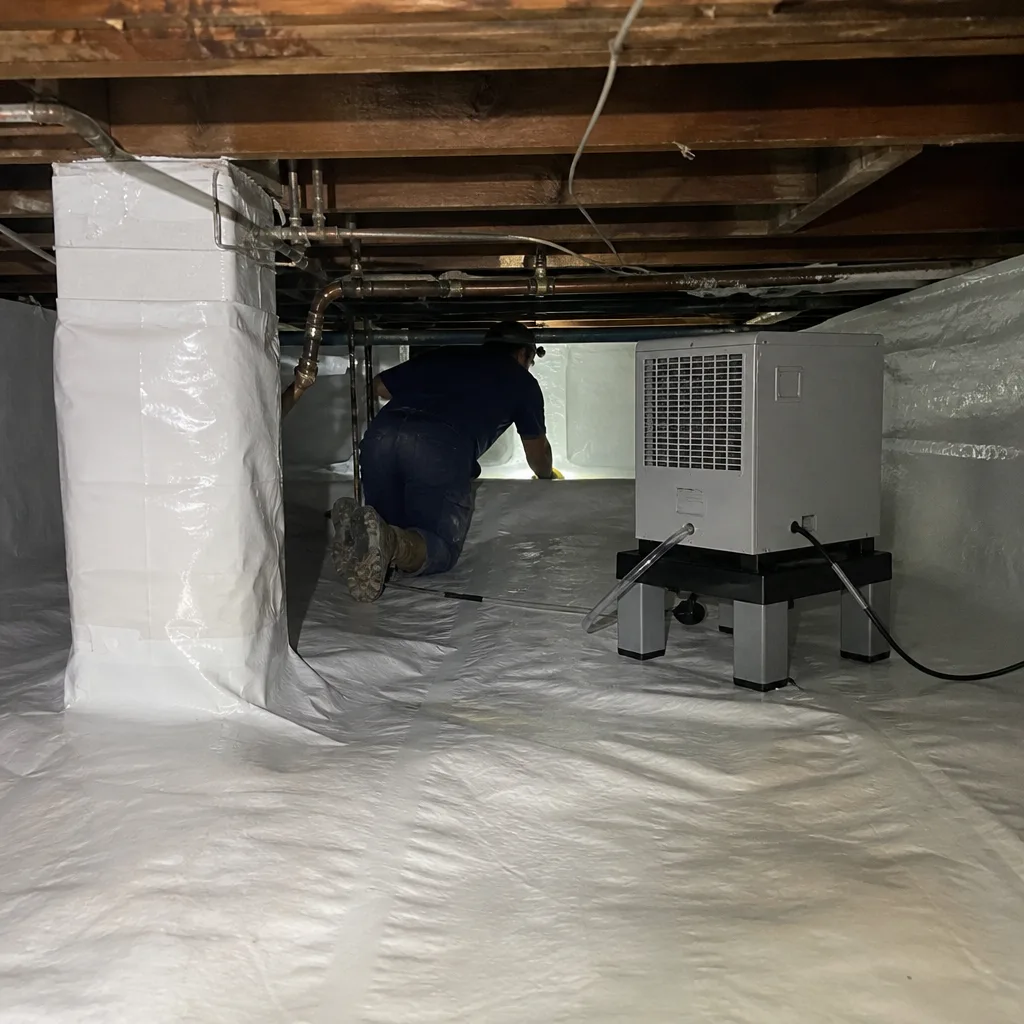
Six variables move the number more than anything else. Understanding them lets you evaluate a competing quote intelligently – which is exactly what our Free Second Opinion on any written estimate is designed to help you do.
- Attic access and clearance. Los Angeles has a wide range of home vintages, from 1920s Craftsman bungalows in Highland Park with hatches barely large enough to fit a body, to 1990s tract builds in Stevenson Ranch with full-height walkable attics. Tight access adds labor hours. If your technician has to army-crawl across 1,800 square feet of joists in a 22-inch clearance space, that adds cost – sometimes $300 to $600 over a comparable job with good access.
- Roof geometry and pitch. Hip roofs – common on mid-century ranch homes in the Crenshaw district and Torrance – require more cuts and seams than simple gable roofs. Every additional seam is a place where the foil must be overlapped and secured correctly to maintain reflective continuity. Complex rooflines add both material waste and labor time.
- Whether air sealing needs to happen first. At Envelope Insulation Co., we will not install a radiant barrier – or any insulation – over an unsealed attic floor. Top plates, can lights, and penetrations get sealed first. If air sealing is included in the scope, that adds $400 to $1,200 to the project cost, but it is not optional from a building science standpoint. A foil that reflects radiant heat while conditioned air pours out of open top plates is a partial solution.
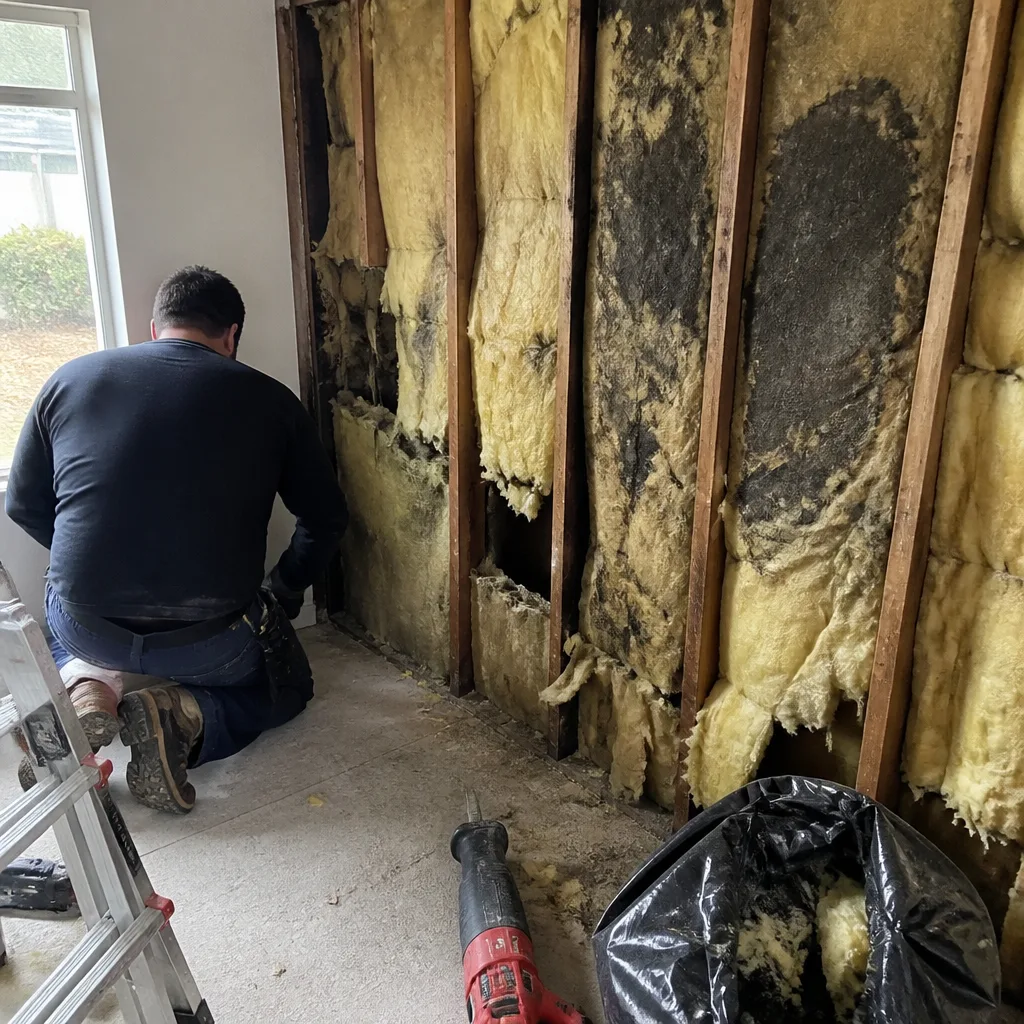
- Existing insulation depth and condition. In homes across Northridge, North Hollywood, and Reseda, we regularly find attics with three to four inches of original blown-in insulation from the 1970s, sometimes with rodent contamination. If insulation needs to be removed and replaced before the foil goes in, that is a separate line item – typically $1.00 to $2.00 per square foot for removal, plus haul-off. We document what we find with photos before any work begins, so nothing is a surprise.
- Foil type and permeability rating. Perforated radiant barrier foil – the correct specification for most Los Angeles attics – allows moisture vapor to pass through rather than trapping it against the decking. Non-perforated foil is cheaper per roll but can cause condensation issues in microclimates near the coast, in neighborhoods like Mar Vista, Culver City, and Playa del Rey where marine layer humidity is a regular presence. Specifying the right product matters; the cost difference is roughly $0.05 to $0.12 per square foot of material.
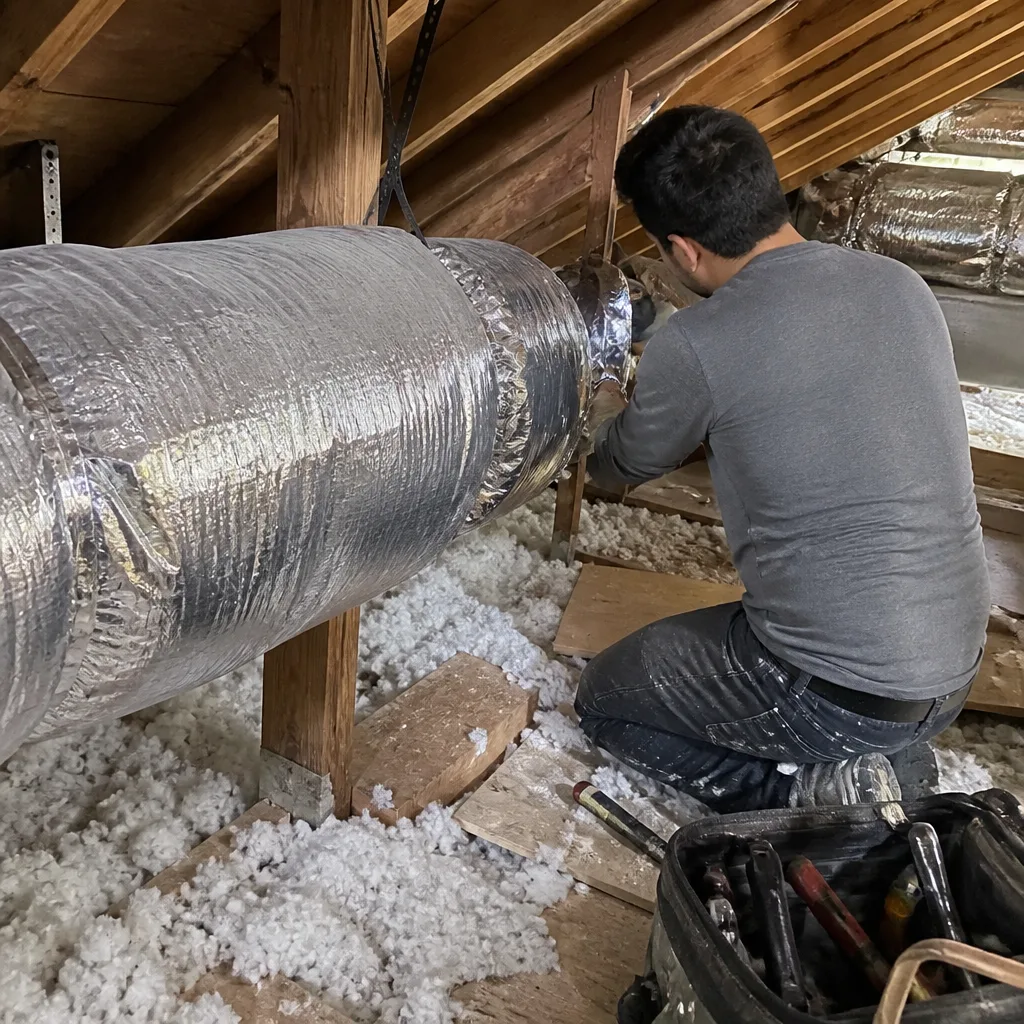
- Staple-up versus drape method, and decking condition. The staple-up method – attaching foil directly to the underside of roof rafters – is the most common and most effective approach in LA’s climate because it creates an air gap between the foil and the roofing material. If rafters are spaced irregularly (common in pre-1950 homes in Boyle Heights and East LA) or decking is deteriorated, installation takes longer and may require minor repairs before the foil can be secured correctly.
 Before
 After
AfterHow to Save on Radiant Barrier Installation
There are real ways to reduce the cost of a radiant barrier project in Los Angeles without cutting corners on the product or the installation method. There are also ways people try to save money that end up costing more – and those are worth knowing about too.
Bundle the work when the attic is already open
The single most effective way to reduce per-square-foot cost is to schedule radiant barrier installation at the same time as attic air sealing or blown-in insulation work. The attic access, setup, and cleanup costs are shared across the scope. In a typical mid-size LA home, bundling radiant barrier with attic air sealing saves $200 to $500 compared to scheduling them separately, because the crew is already positioned and staged. This is especially true in neighborhoods like Encino, Tarzana, and Woodland Hills where attics tend to be large and setup time is meaningful.
Use utility rebates before they change
Southern California Edison and the Los Angeles Department of Water and Power both run rebate programs for qualifying energy efficiency improvements, and radiant barrier installation has historically qualified under certain conditions. Rebate availability and amounts shift year to year, so verify directly with your utility before assuming a specific dollar figure – but the savings can be real. A $200 to $400 rebate on a $2,200 job is not trivial. Ask your contractor for documentation that the installation meets the rebate program’s technical requirements, because not all installations qualify.
Get a written scope before you agree to anything
This one is not just about price – it is about knowing what you are actually comparing. Two quotes for “radiant barrier installation” in Los Angeles can look similar on paper and represent completely different scopes. One might include perforated foil, full rafter-span coverage, and air sealing; another might be non-perforated foil draped over existing insulation with no edge sealing. A written, line-item scope lets you compare them accurately. Under Haven Standard Clause 1, we provide a written price and written scope before any work starts – and we offer a Free Second Opinion on any written estimate you have already received, so you can read it with us before you commit.
Don’t skip air sealing to save money upfront
We see this regularly in Pacoima, Sun Valley, and similar neighborhoods where homeowners are working with a tighter project budget: the radiant barrier goes in without air sealing the attic floor first, because air sealing costs extra. The problem is that without sealed penetrations, conditioned air continues escaping through top plates and can lights at the same rate it always did. The radiant barrier does its job on radiant heat but cannot address the convective and conductive losses from air movement. You end up paying for a partial solution and needing the air sealing work done later – usually at a higher cost because the crew has to come back separately. Do it in sequence, seal first, then insulate.
Schedule during non-peak months
Los Angeles radiant barrier installation peaks in late spring and early summer, when homeowners first notice attic heat becoming a problem. Scheduling in February, March, or October typically means shorter lead times and occasionally better material availability, though it does not always translate to lower quotes – we price by scope, not by season. Still, if your timeline is flexible, off-peak scheduling gives you more choices in contractor availability.
For a specific, written number on your attic, call (628) 226-1097. There is no charge for the estimate, and you will receive a written price before anyone enters your attic.
Why the Sequence Matters: Seal First, Then Foil
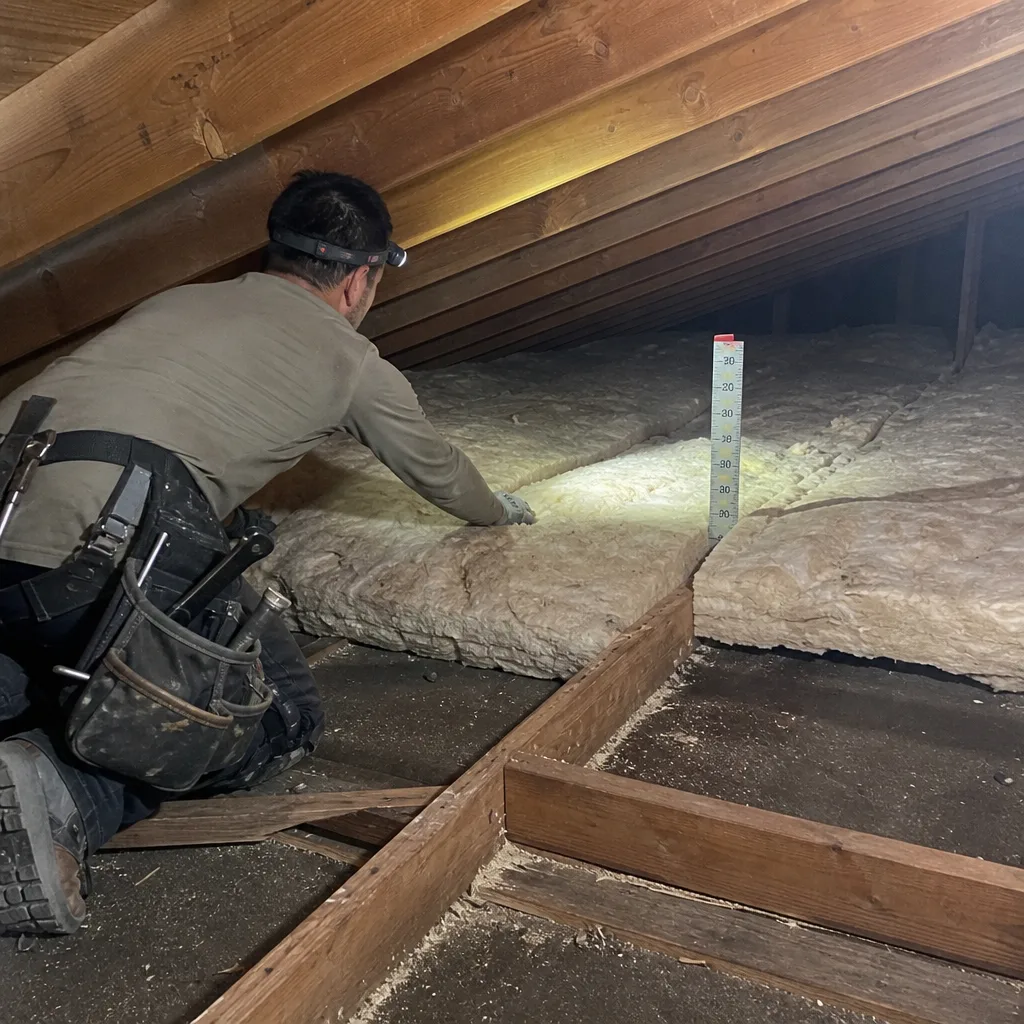
This is the part most radiant barrier installation pages skip, and it is the part that most directly affects whether you see the energy performance you are paying for.
A radiant barrier works by reflecting infrared radiation – the heat that travels directly from your hot roof decking toward your attic floor. In a Los Angeles summer, that is a real and significant heat source. Studies from the Florida Solar Energy Center, which is the most-cited research body on this topic in a hot climate context, document 16-42% reductions in attic heat gain from properly installed perforated foil barriers.
But here is the problem: most Los Angeles homes built before 1990 lose a significant portion of their conditioned air through attic penetrations – top plates (the framing members where walls meet the ceiling), recessed can light housings, plumbing and electrical chases, and attic hatches that are not weatherstripped. If those pathways are open, air sealing is the higher-leverage fix on a dollar-for-dollar basis.
At Envelope Insulation Co., we run a blower-door test – a pressurization measurement that shows, in a single number, how much conditioned air the home’s envelope is losing – before and after any air sealing work. On applicable jobs, those before-and-after numbers are documented and provided to the homeowner. We have been doing this across Los Angeles since 2016, across more than 9,000 homes. We have seen blower-door readings in San Pedro ranch houses drop from 5,800 CFM50 to 3,200 CFM50 after attic air sealing alone – before any additional insulation was added. That is a measurable result, not a marketing claim.
The foil goes in after the floor is sealed. That is the correct sequence, and we will not reverse it. If you have received a quote that does not mention air sealing at all, that is worth asking about. Our Free Second Opinion offer exists precisely for this situation – bring us the written estimate and we will read it with you.
Radiant Barrier vs. Attic Insulation: Do You Need Both?
In Los Angeles, the honest answer is usually yes – but they solve different problems and the order matters.
Radiant barrier foil addresses radiant heat transfer: the infrared energy that travels through air from a hot surface (your roof decking at 150°F) to a cooler one (your attic floor, your ceiling). It reflects that heat back toward the roof before it can enter the living space. It does not reduce conductive heat transfer through the ceiling assembly itself.
Attic insulation – whether fiberglass batts, blown-in cellulose, or open-cell spray foam – addresses the conductive and convective pathways: heat moving through solid materials and through air movement within the insulation layer. The two products do different jobs and work better together than either does alone.
In a home in Northridge or Granada Hills with R-19 attic insulation and no radiant barrier, adding a radiant barrier will meaningfully reduce peak attic temperatures. In a home in the same neighborhood with a good radiant barrier but only two inches of insulation on the attic floor, the barrier helps but the thin insulation is the bigger problem. A blower-door and thermal imaging assessment before you commit to a scope will show you which problem is larger – and that is the starting point for an honest written quote.
Learn more about the full service on our Radiant Barrier Installation in Los Angeles page, which covers product types, installation methods, and the documentation we provide on every job.
FAQs – Radiant Barrier Installation Cost in Los Angeles
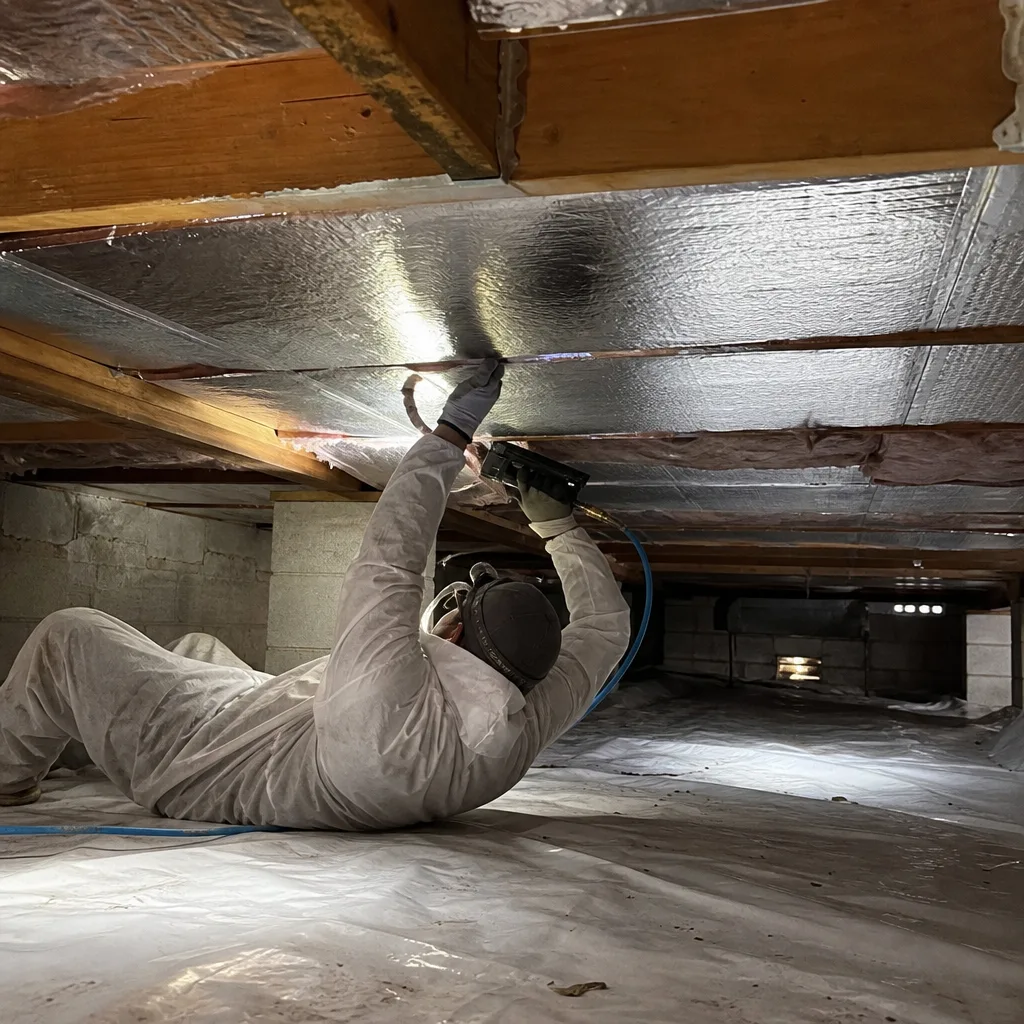
How much does radiant barrier installation cost in Los Angeles in 2026?
Most radiant barrier jobs in Los Angeles run between $1,700 and $2,600 for a standard single-family attic in the 1,000 to 1,800 square foot range. Smaller homes with straightforward attic access can come in at $1,200 to $1,700. Larger homes with complex rooflines, limited access, or older construction – common in neighborhoods like Sylmar, Reseda, and Chatsworth – frequently land between $2,600 and $3,800. These figures reflect 2026 Los Angeles labor and material costs. Call (628) 226-1097 for a written quote specific to your attic – there is no charge for the estimate.
Is radiant barrier installation worth it in Los Angeles?
For most Los Angeles homes with attic temperatures that regularly exceed 130°F, a properly installed perforated radiant barrier is worth the cost – particularly when bundled with attic air sealing. Research on hot-climate homes documents 16-42% reductions in attic heat gain from radiant barriers installed with an air gap below the roof decking. In practical terms for a home in the San Fernando Valley, that reduction in heat gain typically translates to lower peak cooling loads and longer AC compressor run cycles that operate more efficiently. The payback period on a $2,000 job varies depending on your current insulation level, AC efficiency, and utility rates – but in Los Angeles’s climate, the numbers usually work in the homeowner’s favor within 4 to 8 years.
Can I install a radiant barrier myself to save money?
Perforated foil is not a high-hazard material, and some homeowners do install radiant barriers themselves. The material cost runs $0.10 to $0.30 per square foot, so you would save on labor. The risks are specific: working in a Los Angeles attic in summer at temperatures that can exceed 130°F presents a real heat stress hazard, so if you attempt this yourself, work in the early morning and hydrate aggressively. The more common problem with DIY radiant barrier installation is coverage gaps and seam failures – any uncovered section acts as a thermal bypass and reduces the system’s effectiveness. If you are in an attic with active wiring, damaged rafters, or suspected asbestos (relevant in homes built before 1978 in neighborhoods like Leimert Park, Windsor Hills, or mid-century Burbank), professional assessment before entry is the right call. Call (628) 226-1097 if you want a written price for professional installation – estimates are free and come with a written scope you can compare against DIY costs.
Does radiant barrier installation require a permit in Los Angeles?
In most cases, radiant barrier installation alone does not require a permit from the Los Angeles Department of Building and Safety. The foil is typically classified as insulation or a building material addition rather than a structural modification. However, if the scope includes electrical work near existing wiring, or if the home is subject to HOA architectural review, check with your installer and your local building department before work begins. If air sealing or insulation is being added as part of the same scope, permit requirements may change depending on the extent of work. We document the work with a photo record regardless of permit status – that record protects you if the question ever comes up during a future sale or refinance inspection.
How long does radiant barrier installation take in a Los Angeles home?
A typical single-family attic in Los Angeles – 1,000 to 1,800 square feet of attic floor area – takes one full day with a two-person crew. Larger homes with complex hip rooflines, multiple access points, or significant obstructions can run into a second day. Homes in older sections of the city where attic clearance is limited – common in Boyle Heights, Highland Park, and parts of West Adams – also add time. If attic air sealing is being done on the same visit (which is our recommended sequence), add two to four hours depending on the number of penetrations. You will receive a timeline estimate in the written scope before any work begins.
What type of radiant barrier works best in the Los Angeles climate?
Perforated foil, stapled to the underside of roof rafters with an air gap between the foil and the roof decking, is the right specification for most Los Angeles attics. The perforation allows moisture vapor to pass through, which matters in coastal neighborhoods like Mar Vista, Culver City, Santa Monica, and Playa del Rey where nighttime marine layer brings meaningful humidity into attic spaces. Non-perforated foil is slightly cheaper per roll but can trap moisture against the decking over time, which accelerates wood degradation. The cost difference between perforated and non-perforated foil is roughly $0.05 to $0.12 per square foot of material – a small number that has an outsized effect on long-term performance. We source materials from manufacturers including Owens Corning, Johns Manville, and CertainTeed; we do not lock you into a proprietary product.
What You Get When Envelope Insulation Co. Does the Work
Since 2016, Wes Okafor and the Envelope Insulation Co. team have completed work in more than 9,000 Los Angeles-area homes. Every one of those jobs started with a written price and ended with a documented photo record. That is not a policy that gets applied when it is convenient – it is Haven Standard Clause 1, and it applies to a $1,400 foil job in Van Nuys the same way it applies to a $5,000 full-envelope upgrade in Porter Ranch.
On jobs that include attic air sealing – which we treat as a prerequisite, not an upsell – we provide before-and-after blower-door readings. That is a pressurization measurement that shows, in a single number, how much conditioned air the home was losing before we sealed the attic floor and how much after. You see the result in a number you can verify, not in a claim we make about our own work.
The 365-Day Done Right Promise covers every completed job. If the installation is not right, we make it right – in writing, before the crew leaves, not subject to negotiation after the fact. Wes Okafor built this company on the position that documented evidence is worth more than any marketing promise, and the structure of every job reflects that.
Our technicians are background-checked and uniformed. Calls are answered by a live person, around the clock – no voicemail, no callback windows. When Wes or a team member is on the way to your attic, you get a text with a named technician, not a vague arrival window.
If you have a written estimate from another contractor, bring it to us. We will read it with you – line by line – under our Free Second Opinion offer. We will tell you what it includes, what it does not, and where the specifications matter. That conversation does not cost you anything.
You can start at our home page to see the full range of building-envelope services we provide, or go directly to a free estimate by calling the number below.
Get a Written Price for Your Los Angeles Attic
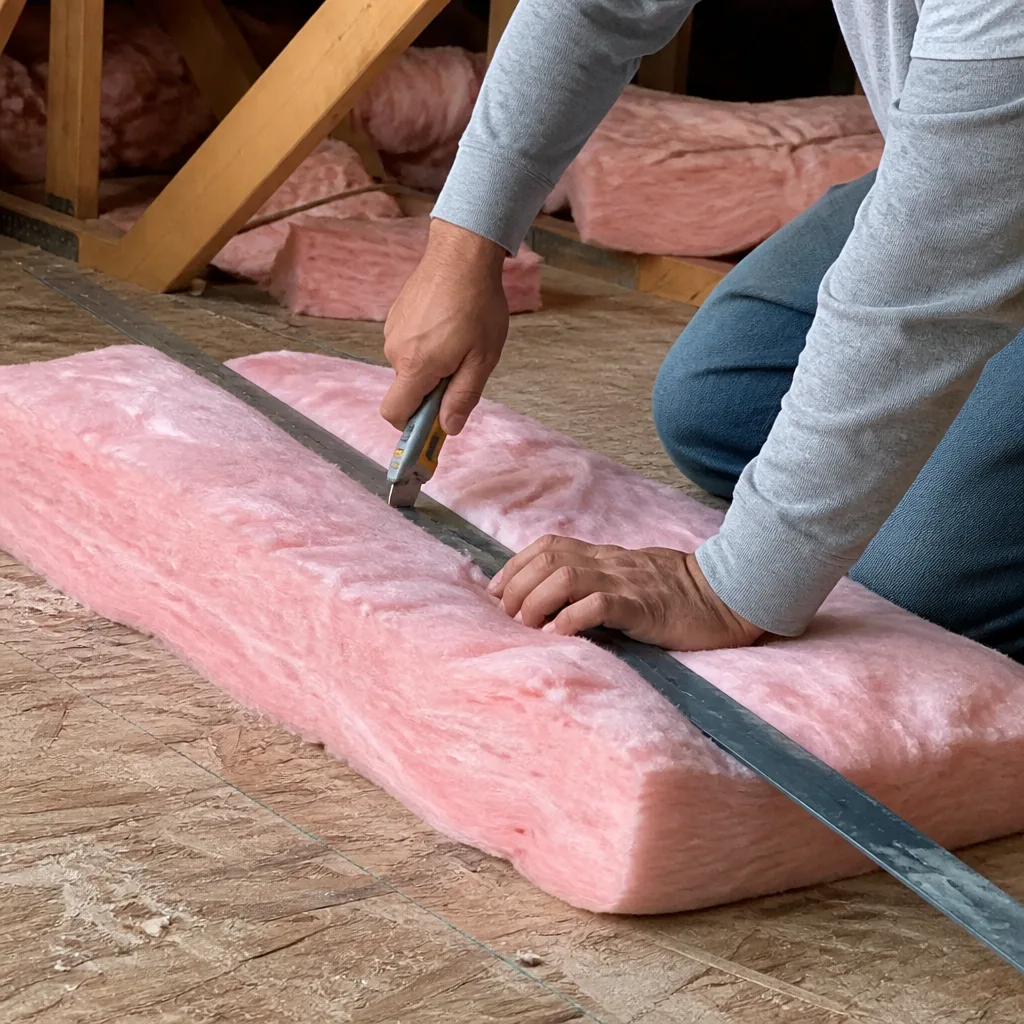
If you want a specific number for your home – not a range from a page, but a written price tied to your actual attic square footage, access conditions, and roofline – call (628) 226-1097. The estimate is free, comes with a written scope, and obligates you to nothing. Under Haven Standard Clause 1, no work starts without a written price in your hand first. That is how it has worked on every job since 2016, and it is how it works on yours.
Pricing reflects the Los Angeles market as of 2026. Topside Attic Insulation Los Angeles offers free estimates – call (628) 226-1097.
Written by Wes Okafor, Owner at Envelope Insulation Co., serving Los Angeles since 2016.
What Our Customers Say
"Fixed price, clean work, and they hauled the old material away as agreed."
- Todd M."Crawl space encapsulation done properly. Photographs of the vapour barrier at every seam, and the damp smell in the hallway is gone."
- Ainsley P."Two other companies quoted to blow more insulation on top of what was there. These were the only ones who said the existing material had to come out first, and explained why."
- Clifford E.