
Rockwool Crawl Space Encapsulation & Vapor Barrier in Los Angeles: What to Know First
We provide independent Rockwool crawl space encapsulation & vapor barrier service across Los Angeles, typically completing standard jobs in one to two days with a written price locked in before any work starts. Most Rockwool crawl space projects in this market run between $3,800 and $8,500 depending on whether we’re addressing isolated moisture intrusion or full perimeter encapsulation with conditioned-air integration. This page is for homeowners who’ve found Rockwool Comfortbatt, Comfortboard, or AFB (Acoustical Fire Batt) installed in their crawl space and need to know whether the existing assembly can be salvaged or needs complete reconfiguration. Call (628) 226-1097 for a free estimate with a written scope and documented photo record included.
How Rockwool Products Fail - and How We Fix Them
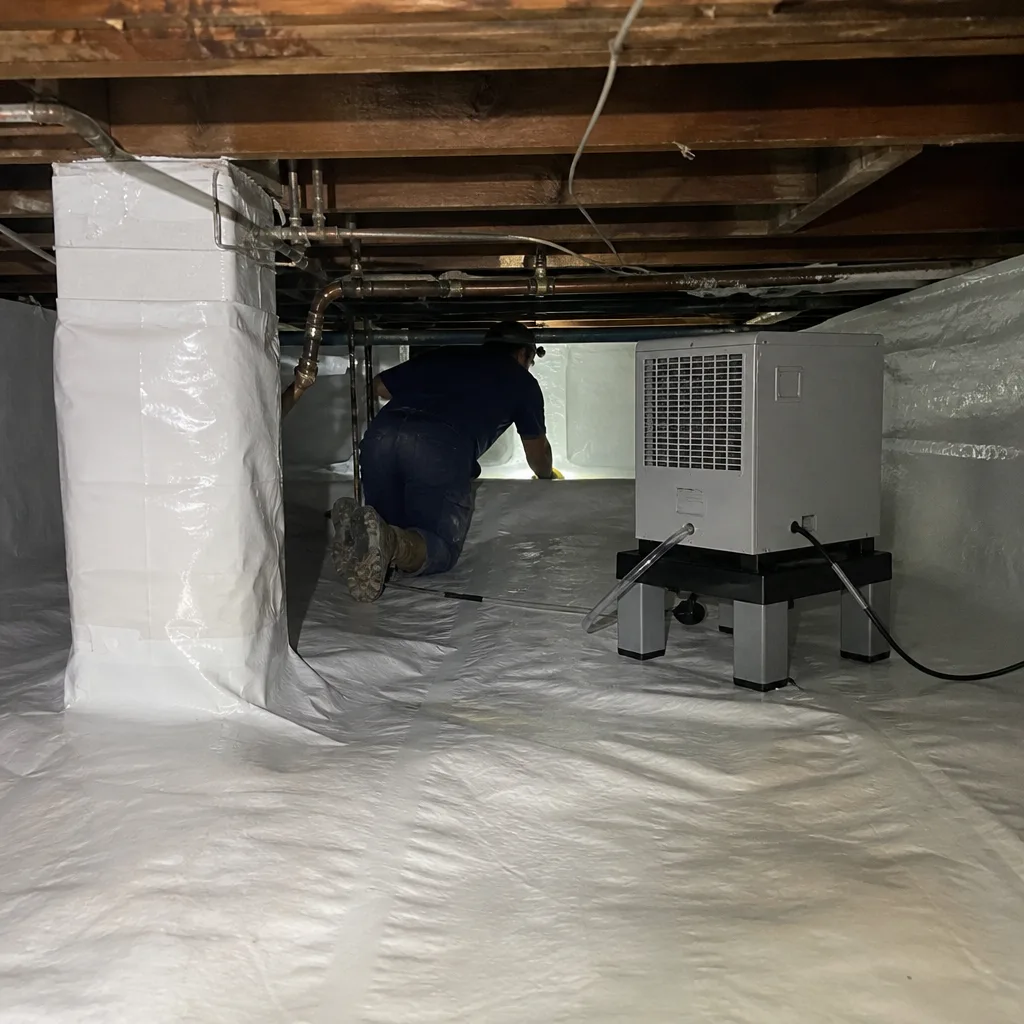
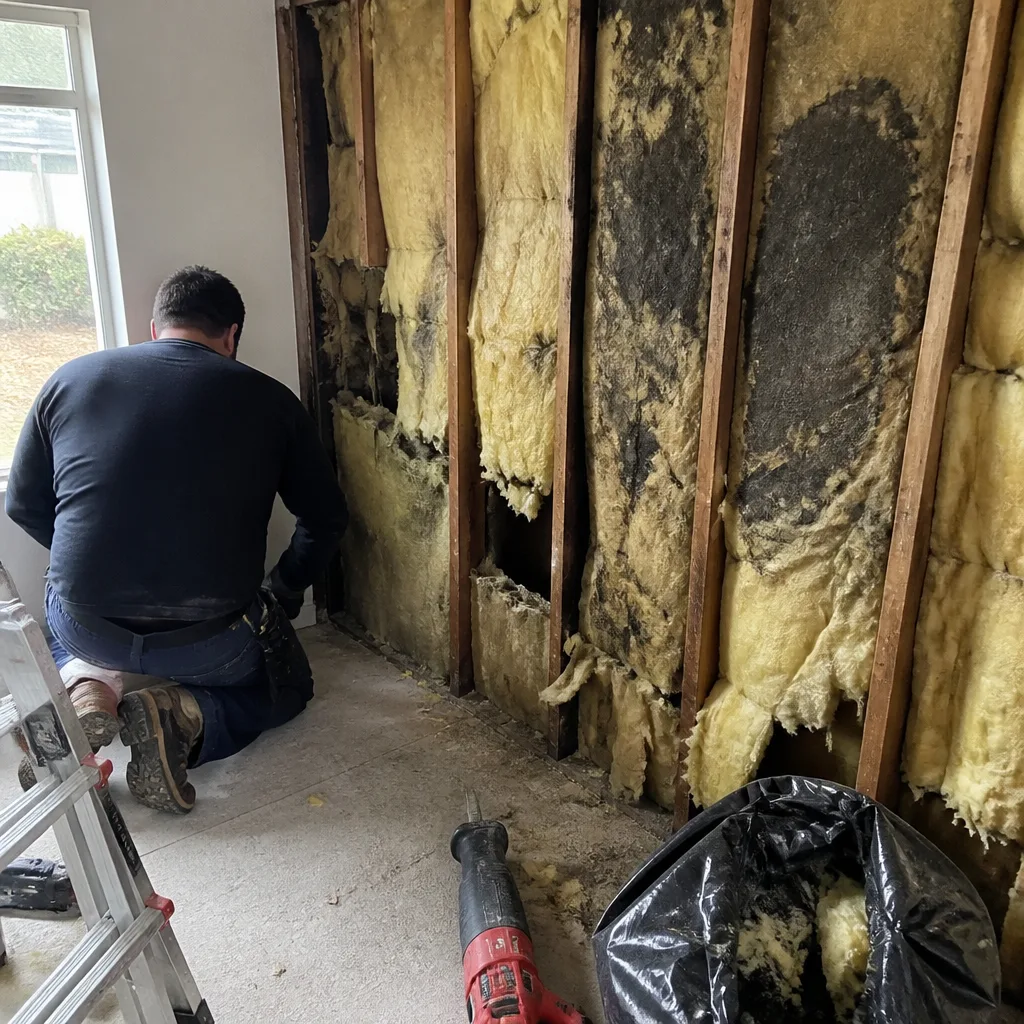
- Comfortbatt CI (Cavity Insulation) saturated at the bottom third. The hydrophobic binder in Comfortbatt repels liquid water but won’t stop capillary wicking from unsealed concrete or dirt crawl space floors. We see this in Los Angeles homes built on the old alluvial soils of the San Fernando Valley, where seasonal groundwater rises higher than the foundation drainage was designed to handle. Our fix: remove the affected batts, install a 6-mil minimum vapor barrier with sealed seams over the entire ground plane, then replace with new Comfortbatt only after the wood framing reads below 18% moisture content on a pin meter.
- Comfortboard 80 or 110 delaminating from foundation walls. These rigid boards rely on mechanical fasteners and compatible adhesives for vertical crawl space applications. When previous installers used standard construction adhesive rated for interior drywall rather than masonry-grade foam adhesive, the boards sag within 18 to 36 months. We remove the failed boards, grind the foundation wall to bare concrete, and reattach with proper fasteners at 16 inches on center plus a continuous bead of appropriate adhesive.
- AFB (Acoustical Fire Batt) installed in non-fire-rated crawl space locations. AFB carries a premium price for its ASTM E84 flame-spread rating, but we’ve found it misapplied in ordinary crawl space ceilings where standard Comfortbatt would perform identically at lower cost. The mineral wool itself doesn’t fail; the homeowner overpaid for a specification that adds no functional value below grade. We document the existing installation, explain the rating mismatch, and let the owner decide whether to relocate the AFB to rated interior walls or replace with appropriate material.
- Rockwool batts compressed by improper vapor barrier placement. When encapsulation crews drape polyethylene sheeting across joist bottoms and staple it tight, the weight of the membrane compresses the batts to 60% or less of their designed loft. Compressed mineral wool loses R-value proportionally. We see this in Mid-Century Moderns around the Hollywood Hills where low crawl space clearances tempt shortcuts. Our fix: suspend the vapor barrier on the warm side of the insulation using proper strapping, or switch to a two-part closed-cell spray foam application where headroom won’t permit full batt recovery.
- Comfortbatt installed over unsealed rim joists and sill plates. Rockwool’s air permeability is well-documented - it’s a filter, not an air barrier. When rim joists show daylight or sill plates sit uncaulked against masonry, the batt becomes a collection surface for convective moisture and outdoor particulates. In coastal Los Angeles neighborhoods like Venice and Playa del Rey, that means salt-laden air accelerating corrosion on galvanized fasteners. We pull the batts, seal all joints with acoustic sealant or appropriate foam, then reinstall or replace as conditions warrant.
Our Rockwool Crawl Space Encapsulation & Vapor Barrier Process
- 1
Call and scheduling. A live person answers. We book a diagnostic visit with a named technician. You’ll get a text when they’re en route.
- 2
Site assessment and moisture mapping. We pin-test the framing, measure relative humidity, and photograph every condition. If the crawl space has existing Rockwool, we identify the series and note any compression, saturation, or misapplication.
- 3
Blower-door or smoke-pencil test where accessible. Not every crawl space interfaces directly with conditioned space, but when it does, we quantify the leakage path. Seal the holes first. Then measure the R-value. In that order.
- 4
Written scope and price. Before any work starts, you receive: the repair or replacement plan, material specifications (OEM Rockwool or equivalent from Johns Manville, Knauf, or other named suppliers if the owner prefers), labor line items, and the 365-Day Done Right Promise in writing.
- 5
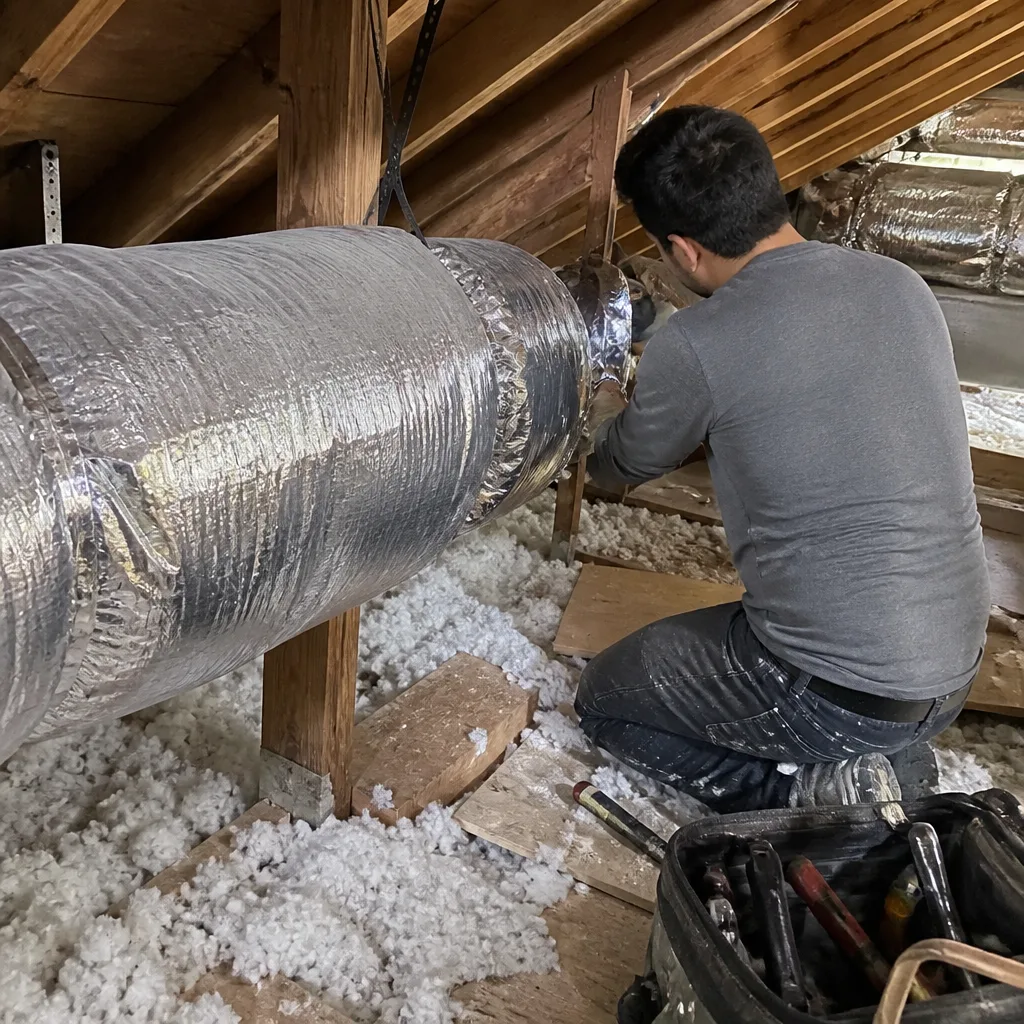
Execution with photo documentation. Technicians perform the encapsulation, vapor barrier installation, and any insulation replacement. Every stage is photographed. The crew lead reviews the images with you before signing off.
- 6
Final test and record delivery. Where applicable, we run a post-work blower-door test or humidity monitoring check. You walk away with the photo record, any test readings, product data sheets, and the written warranty.
 Before
 After
AfterWhat Rockwool Crawl Space Encapsulation & Vapor Barrier Costs in Los Angeles
These are the ranges we see on actual signed scopes in the Los Angeles market:
- Partial vapor barrier with localized Rockwool replacement: $3,800 - $5,200
- Full perimeter encapsulation with new ground barrier and existing Rockwool salvage: $5,500 - $7,200
- Complete Rockwool removal, encapsulation, and reinstall with conditioned-air integration: $7,000 - $8,500
- Additional rim joist air sealing (required on most pre-1980 homes): $800 - $1,400
What moves the price: crawl space square footage, accessibility (some Los Angeles hillside homes have 14-inch clearances), whether the existing Rockwool is salvageable, and whether we find unpermitted plumbing or electrical work that must be coordinated around. We also service Reflectix radiant barrier systems when they’re part of the same envelope assembly. Call (628) 226-1097 for an exact quote - estimates are free, and we provide a Free Second Opinion on any written estimate you’ve already received.
Why Los Angeles Homeowners Call Topside Attic Insulation Los Angeles for Rockwool Work
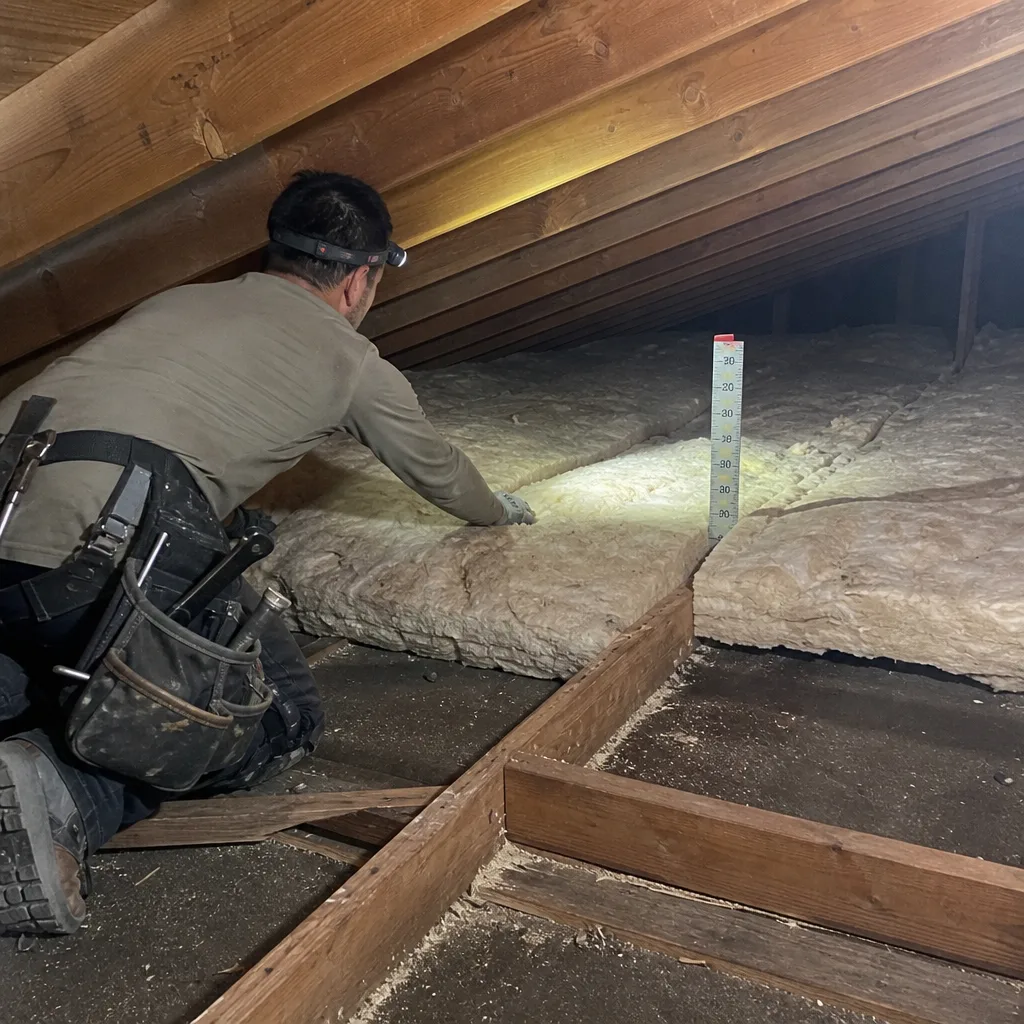
We’ve been sealing and insulating homes under The Haven Standard since 2016. Every Rockwool crawl space job starts with a written price and ends with a documented photo record. On jobs where the crawl space connects to conditioned space, we publish before-and-after blower-door numbers so you can verify the air-sealing result in a single figure.
Our technicians are background-checked and uniformed. Wes Okafor, our owner and lead technician, learned the trade at Richard J. Daley College’s HVAC and building science programs before moving into insulation work full time more than two decades ago. He and his crew have spent recent years working across Los Angeles, including retrofits on older ranch-style homes in the Leimert Park corridor where unvented knee walls and bypassed soffit chases remain common. When a Rockwool assembly needs attention, we know which binder formulations tolerate damp conditions and which don’t - because we’ve pulled failed batts and read the manufacturer data sheets side by side with the installed product.
The 365-Day Done Right Promise applies to all completed work. If it’s not done right, we make it right. That’s Haven Standard Clause 2, and it’s in writing before anyone lifts a tool.
FAQs
No. Rockwool’s limited warranty covers manufacturing defects in the mineral wool itself, not installation conditions. As an independent Rockwool service provider with no manufacturer authorization, we document the product batch and installation environment so any future warranty claim rests on facts, not speculation. If you have concerns about a specific Comfortbatt or Comfortboard lot, we can photograph the packaging labels during our visit. Call (628) 226-1097 and we’ll walk through the documentation.
Most complete encapsulations with Rockwool replacement finish in one to two days. Homes in the Los Angeles basin with straightforward access and dry conditions tend toward the shorter end. Hillside properties with tight clearances or active moisture issues that need dehumidification staging may run longer. We don’t guess at schedules; the written scope includes a day count based on what we found during inspection.
Replace it if the batts show mold growth, compression below 80% of original thickness, or saturation that has degraded the binder. Repair by repositioning and supplementing only if the material is clean, fully lofted, and the moisture source has been eliminated. We make this call during inspection and explain the reasoning with photos. A partial repair typically saves $1,500 to $2,800 versus full replacement, but only when conditions actually permit it. Call (628) 226-1097 for an assessment.
Yes. We source materials from Owens Corning, Johns Manville, Knauf, CertainTeed, and other named manufacturers. Rockwool Comfortbatt at standard 3.5-inch thickness delivers R-15; equivalent fiberglass or alternative mineral wool batts hit the same number. We specify the product, the installed R-value, and the price in writing before you decide. No proprietary lock-in.
Typically within five to seven business days in the Los Angeles area, though seasonal demand after heavy rains can extend that. We don’t manufacture urgency. When you approve the written price, we commit to a start date in the same document. If that date changes, we notify you by text or call - no voicemail loops, no callback windows measured in business days.
Written by Wes Okafor, Owner & Lead Insulation Technician, Topside Attic Insulation Los Angeles at Topside Attic Insulation Los Angeles, serving Los Angeles and nearby areas.