
Icynene Spray Foam Insulation in Los Angeles: What to Know First
We provide independent Icynene spray foam insulation in Los Angeles, typically completing open-cell and closed-cell retrofits in one to two days with crews available for urgent calls. Most jobs run between $3,800 and $8,500 depending on whether we’re treating an attic roof deck, a garage ceiling, or rim joists in a crawl space, and we put that price in writing before anyone loads a rig. This page is for homeowners who already have Icynene foam in their building envelope and need service, or those comparing Icynene specifically against other spray foam systems for a Los Angeles retrofit. Call (628) 226-1097 for a free estimate with a written scope.
How Icynene Products Fail - and How We Fix Them
- Icynene Classic Max (open-cell) shrinkage at roof decks. In Los Angeles, the daily temperature swing from 55°F marine mornings to 95°F inland afternoons stresses the water-blown open-cell matrix. Over five to eight years, we see 3-8% linear shrinkage pulling away from rafter bays in neighborhoods like Eagle Rock and Highland Park, where unvented attics trap heat. We cut back the failed section, seal the gap with Icynene-approved low-expansion foam, and re-blow to the original thickness rather than capping with a different product that voids the remaining warranty coverage.
- Icynene MD-R-200 (closed-cell) delamination from OSB sheathing. This 2.0 lb density closed-cell system bonds aggressively when installed, but if the substrate was damp during original application - common in Santa Monica and Venice where morning fog penetrates framing - the adhesive layer can release in sheets. We remove the delaminated foam mechanically, apply a breathable primer compatible with Icynene’s chemistry, and reinstall MD-R-200 to the specified 2-inch pass thickness with a dew-point analysis for the new assembly.
- Icynene Classic Plus (open-cell) pest intrusion at incomplete perimeter seals. The 0.5 lb density open-cell structure is not a food source, but rodents compress it easily to nest. We find this most in crawl space rim joist jobs around Leimert Park and Baldwin Hills where original installers missed the sill plate-to-foundation gap. Our fix: remove the compromised section, seal the perimeter with acoustic sealant and backer rod, then re-foam with a pest-deterrent additive that Icynene’s technical bulletin allows in retrofit applications.
- Icynene ProSeal LE (low-emissory closed-cell) off-ratio curing from aged equipment. The LE formulation is sensitive to exact 1:1 A-side/B-side ratio; when we encounter tacky, uncured sections in a 3-year-old job, the cause is almost always a worn mixing chamber or temperature drift in the original applicator’s rig. We map the affected area with a moisture meter, remove the uncured foam to substrate, and reinstall with fresh ProSeal LE from a calibrated system - we log every ratio check in the job record.
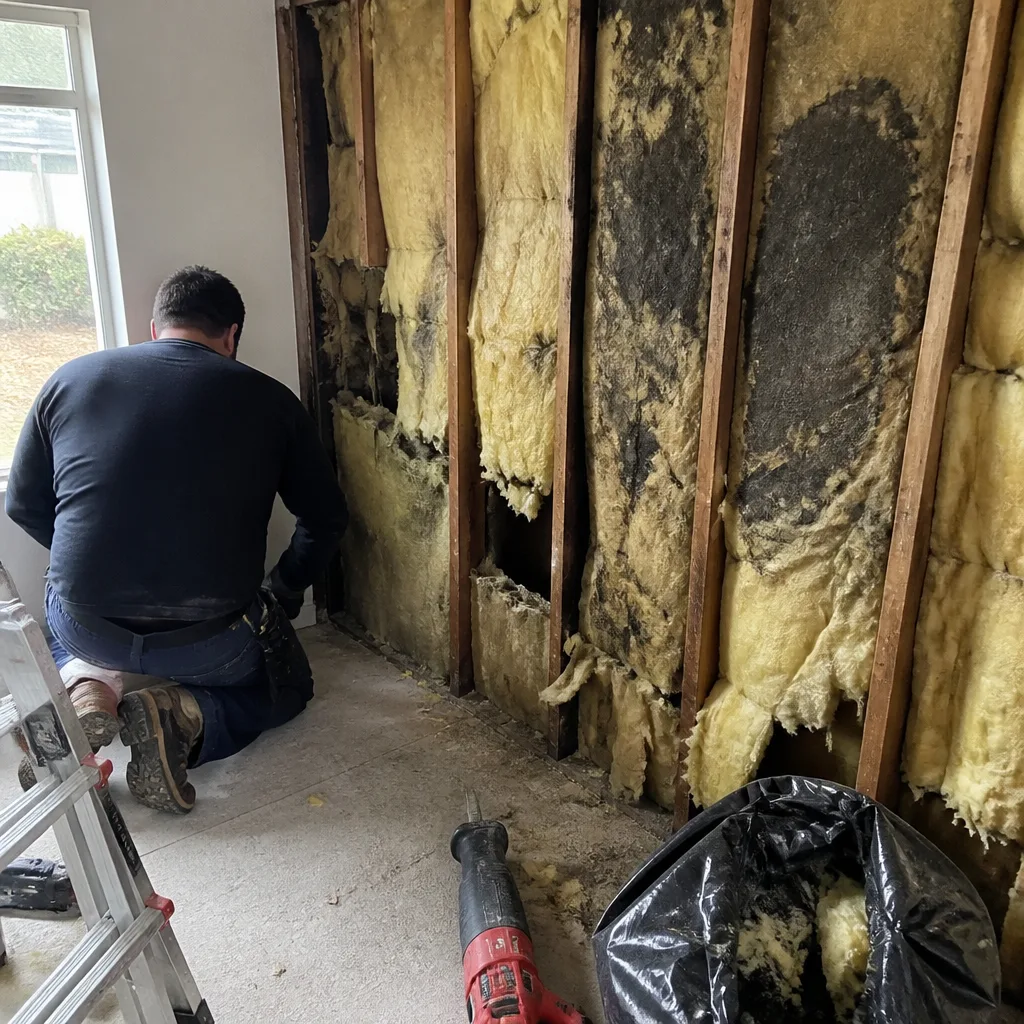
- Icynene LD-C-50 (light-density open-cell) water staining from roof leaks. The 0.5 lb density holds water like a sponge once the vapor retarder is compromised, and in Los Angeles’ occasional heavy rain years, a single slipped tile can saturate a bay. We don’t just patch the roof and leave the foam - we cut out the stained section to prevent mold amplification, dry the cavity with targeted airflow, and reinstall LD-C-50 with a continuous vapor retarder membrane where the original spec called for it but wasn’t executed.
Our Icynene Spray Foam Insulation Process
- 1
Call and scheduling. A live person answers, 24/7. We book a site visit with a named technician and text when they’re en route - Haven Standard: Arrive on schedule.
- 2
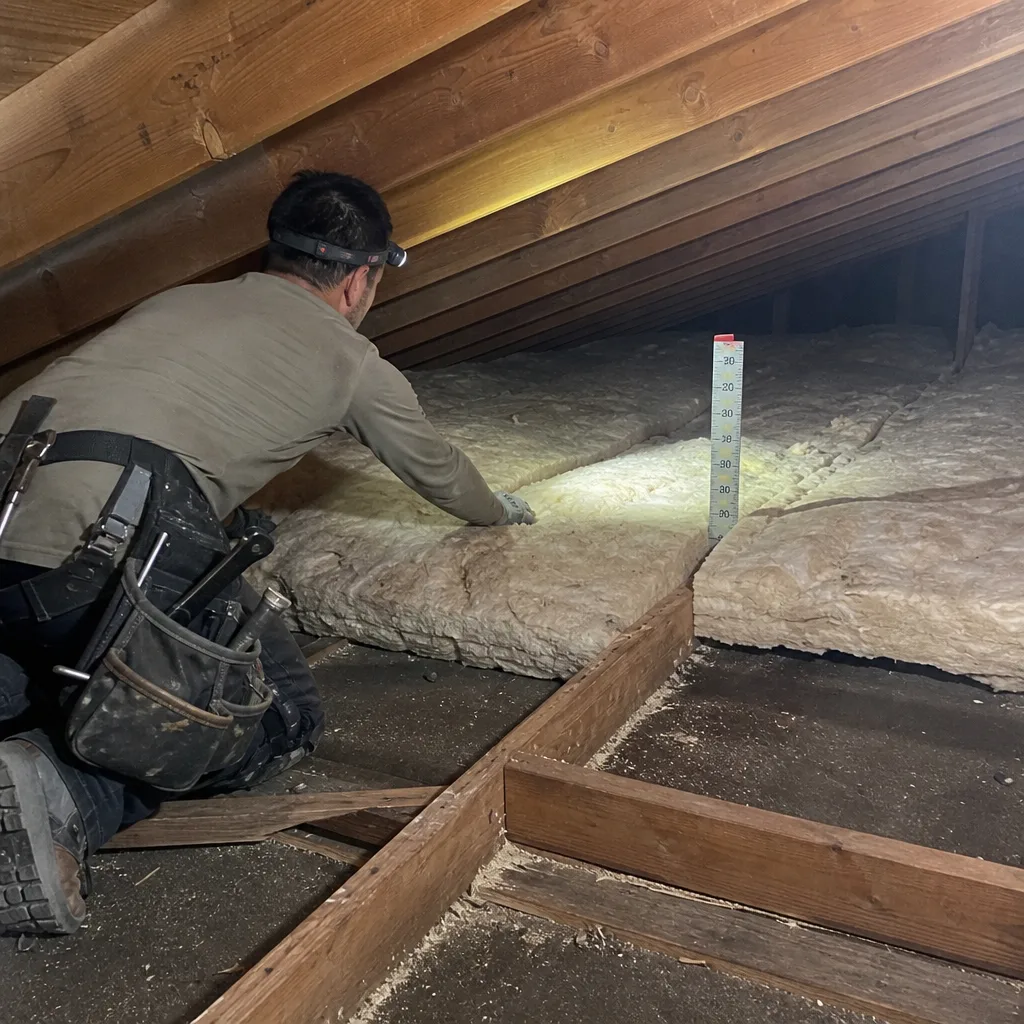
Blower-door test and visual survey. We pressurize the house to find air leakage paths before touching foam. In a 2023 Leimert Park retrofit, the pre-test read 3,800 CFM50; the homeowner had no idea the original Icynene installer had bypassed the soffit chases entirely.
- 3
Written price and scope. We specify the Icynene product line, the repair or install sequence, and the post-job test. No work starts without this document - Haven Standard Clause 1.
- 4
Air sealing first, then foam. Seal the holes first. Then measure the R-value. In that order. Top plates, can lights, penetrations - sealed with compatible materials before any new Icynene goes in.
- 5
Installation or repair with documented ratios and passes. For closed-cell, we log every 2-inch pass thickness and A/B ratio. For open-cell, we verify full-cavity fill and trim timing. Photos every step.
- 6
Post-test and documentation. We run the blower-door again, hand you the before-and-after CFM50 numbers, the installed R-value, product data sheets, and the photo record. The 365-Day Done Right Promise starts then.
 Before
 After
AfterWhat Icynene Spray Foam Insulation Costs in Los Angeles
| Job Type | Typical Range | What Moves the Price |
|---|---|---|
| Open-cell attic roof deck (1,200 sq ft) | $3,800 - $5,400 | Accessibility, existing removal, need for new vapor retarder |
| Closed-cell garage ceiling (400 sq ft) | $2,800 - $4,200 | Height, fire-rated thermal barrier requirement, rim joist tie-in |
| Rim joist only (crawl space or basement) | $1,800 - $3,200 | Linear feet, pest damage repair, sill plate condition |
| Full closed-cell roof deck replacement | $6,500 - $8,500 | Removal of failed foam, substrate repair, multiple passes |
These are real numbers for Los Angeles homes we’ve worked on - not teaser rates. The price moves up with removal of failed existing foam, down with simple open-cell top-ups in accessible attics. Every estimate is free, written, and includes a Documented Photo Record. Call (628) 226-1097 for your exact scope.
Why Los Angeles Homeowners Call Topside Attic Insulation Los Angeles for Icynene Work
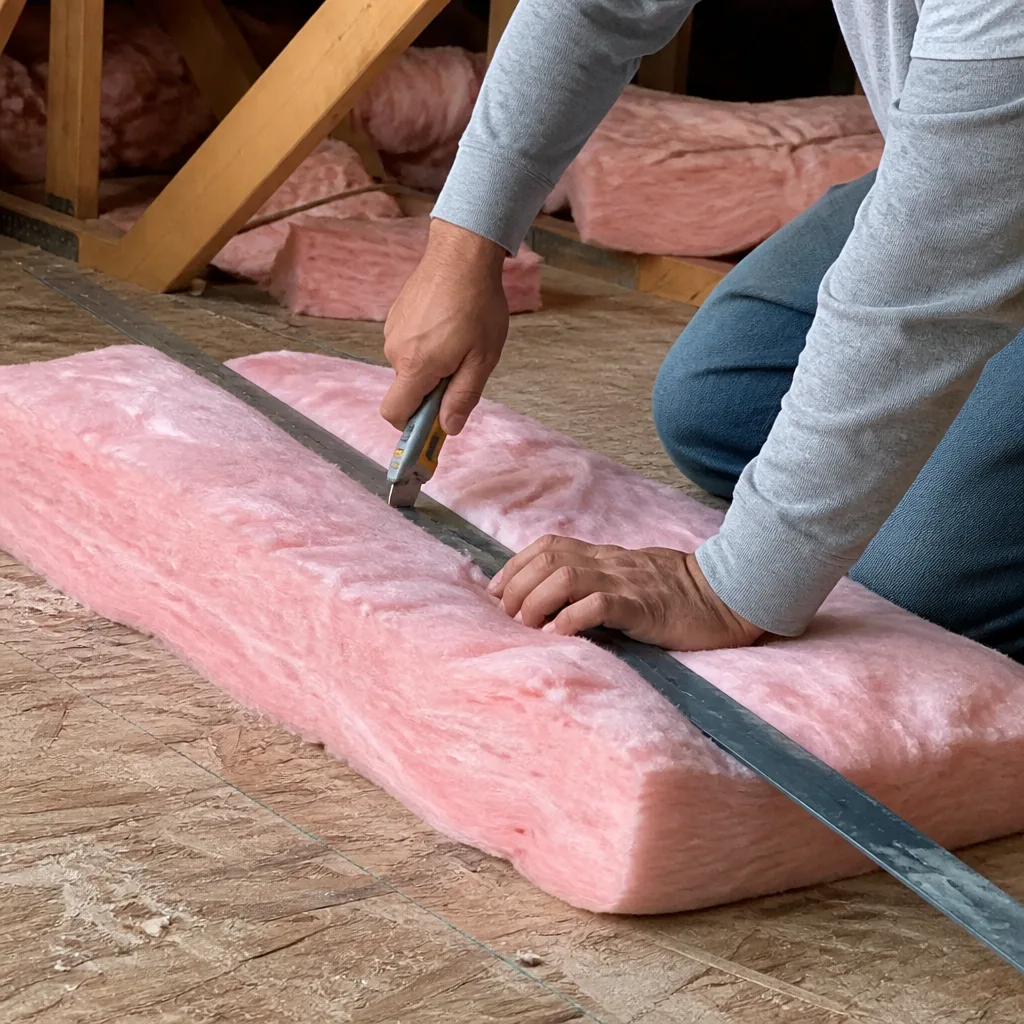
We’ve been measuring, air-sealing, and blowing attic assemblies across Los Angeles for years, and we’ve learned that Icynene-specific knowledge matters - the pass thickness limits, the cure-time windows in our dry climate, the warranty-safe repair methods. As an independent Icynene service provider, we’re not locked into one manufacturer’s product line; we also work with Reflectix and other systems when the building science calls for a hybrid approach. Every job gets the 365-Day Done Right Promise, background-checked uniformed technicians, and that written price before anyone lifts a tool. Wes Okafor, our owner and lead technician, learned the trade at Richard J. Daley College’s HVAC and building science programs and has been running blower-door tests on Los Angeles homes for years - including retrofits on older ranch-style homes in the Leimert Park corridor where unvented knee walls and bypassed soffit chases are still common.
FAQs
It depends on who does the work and what materials they use. Icynene’s original installation warranty typically covers product and application defects when serviced by the original installer or an approved applicator. As an independent Icynene service provider, we use Icynene-compatible materials and document the repair with photos and product data sheets, which preserves any remaining coverage for product defects. We also provide our own 365-Day Done Right Promise on all labor. Call (628) 226-1097 and we’ll review your original paperwork with you.
Most localized repairs - a single delaminated bay, a shrinkage gap, a pest intrusion section - are completed in four to six hours. Full attic roof deck replacements take one to two days depending on removal requirements and cure times between passes. We schedule to finish, not to rush, and we text arrival times the morning of.
Repair makes sense when the failure is localized and the surrounding foam tests sound for adhesion, density, and R-value. Replacement is the right call when more than 30% of the area shows failure, when the original application was off-ratio throughout, or when the building code has changed and the assembly no longer meets current requirements. We make that recommendation after the blower-door test and a core sample inspection, not before. The estimate is free either way.
Yes, when the product is still manufactured. We stock Classic Max, MD-R-200, ProSeal LE, and LD-C-50 for Los Angeles jobs. If your original Icynene line has been discontinued, we specify the closest current equivalent with compatible chemistry and document the substitution in your written scope. We never patch closed-cell with open-cell or vice versa - the vapor profile has to match.
The signs of a proper job are checkable: consistent pass thickness (closed-cell should show distinct 2-inch lifts), uniform color and texture, full contact with all six sides of the cavity, and a documented final thickness measurement. We find the problems - shrinkage gaps, off-ratio tackiness, missed perimeter seals - during our initial survey, and we show you with photos, not opinions. Call (628) 226-1097 for a free inspection and written findings.
Written by Wes Okafor, Owner & Lead Insulation Technician, Topside Attic Insulation Los Angeles at Topside Attic Insulation Los Angeles, serving Los Angeles and nearby areas.