
GreenFiber Attic Insulation: The Los Angeles Owner’s Guide
We stock and install GreenFiber loose-fill cellulose insulation in Los Angeles homes, with most attic retrofits running between $2,800 and $5,400 for a typical 1,200-2,000 square foot home depending on existing depth and air-sealing needs. Same-day installation is available when we have your target R-value and attic square footage confirmed by phone. Most Los Angeles homeowners discover their GreenFiber insulation is underperforming when upstairs rooms stay hot past 9 PM, energy bills spike during September Santa Ana events, or a home energy audit reveals the attic is sitting at R-19 when the Title 24 code calls for R-38 or higher.
Which GreenFiber Models This Applies To
GreenFiber manufactures loose-fill cellulose sold under the Sanctuary and All Borate lines, both of which we blow in Los Angeles attics. Sanctuary is the higher-density product at 1.6 lbs per cubic foot, treated with borate fire retardant and optimized for open blow applications where there’s no attic floor to walk on. All Borate runs slightly lighter at 1.5 lbs per cubic foot and carries the same Class A fire rating but with a different dust profile during installation. You can identify which product is in your attic by the bag stamp, usually visible if any original bags were left behind, or by the color: Sanctuary has a gray-blue tint from the mineral additive, while All Borate reads more tan.
The compatibility gotcha in Los Angeles is mixing GreenFiber with existing fiberglass. The two materials settle at different rates - cellulose compacts to about 20 percent of its blown depth over the first two years, while fiberglass holds closer to 85 percent. We’ve opened attics in Mid-City where a previous installer layered GreenFiber over old pink fiberglass and created a stratified mess with cold spots at every boundary. If you’re adding to existing insulation, we match the material or remove the old layer first. Topside Attic Insulation Los Angeles is an independent service provider, not affiliated with GreenFiber. We also stock Reflectix radiant barrier products for the hybrid systems some Los Angeles homeowners prefer.
Signs Your GreenFiber Attic Insulation Is Failing
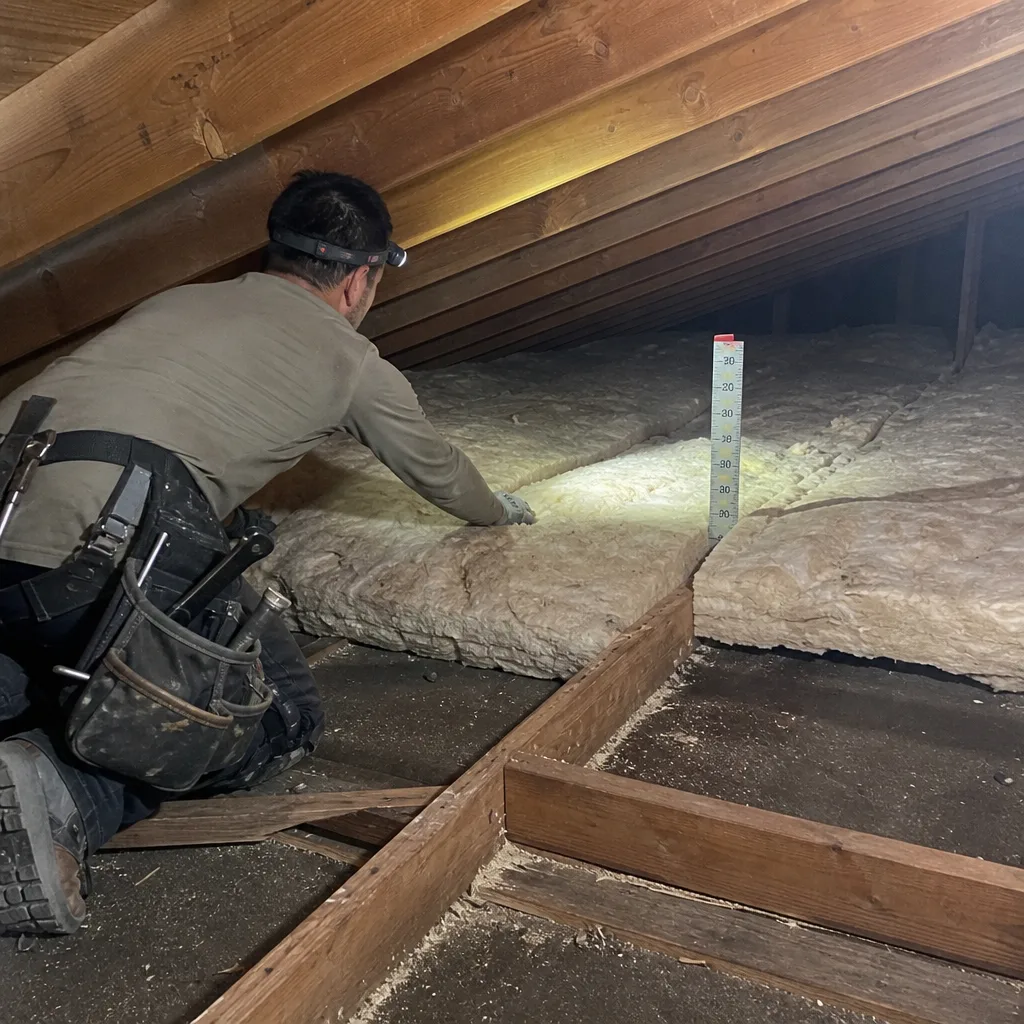
- Uneven temperature between rooms. GreenFiber settles over time, and in Los Angeles homes with recessed can lights or duct chases, the insulation migrates away from top plates and leaves thermal bypasses. We find 40-degree surface temperature differences on infrared cameras where the settled depth dropped below R-19.
- Energy bills climbing year over year. Cellulose doesn’t lose R-value chemically, but mechanical disturbance from rodents, HVAC technicians, or storage activity breaks up the matrix. Once the fibers separate, convective loops form and the effective R-value drops 15 to 30 percent before any visible settling occurs.
- Dust or cellulose particles in living spaces. GreenFiber is held together by friction and interlock; when attic air leaks pull conditioned air upward through ceiling penetrations, it carries fine particles through the path of least resistance. This usually means your air barrier failed, not the insulation itself, but the symptom shows up as white dust on return grilles.
- Moisture staining on ceiling drywall. Los Angeles coastal zones see marine layer intrusion that condenses on attic sheathing when the insulation depth is uneven. GreenFiber handles incidental moisture well - borate treatment resists mold - but sustained wetting from a roof leak or bathroom fan discharge will mat the fibers and destroy R-value locally.
- Ice damming or heat bloom on the roof. Even in mild Los Angeles winters, poor attic insulation shows as melted dew patterns or early shingle aging on the south face. We measure roof deck temperatures with infrared on every audit; a 20-degree differential between shaded and sun-exposed sections usually points to insulation gaps or missing soffit venting.
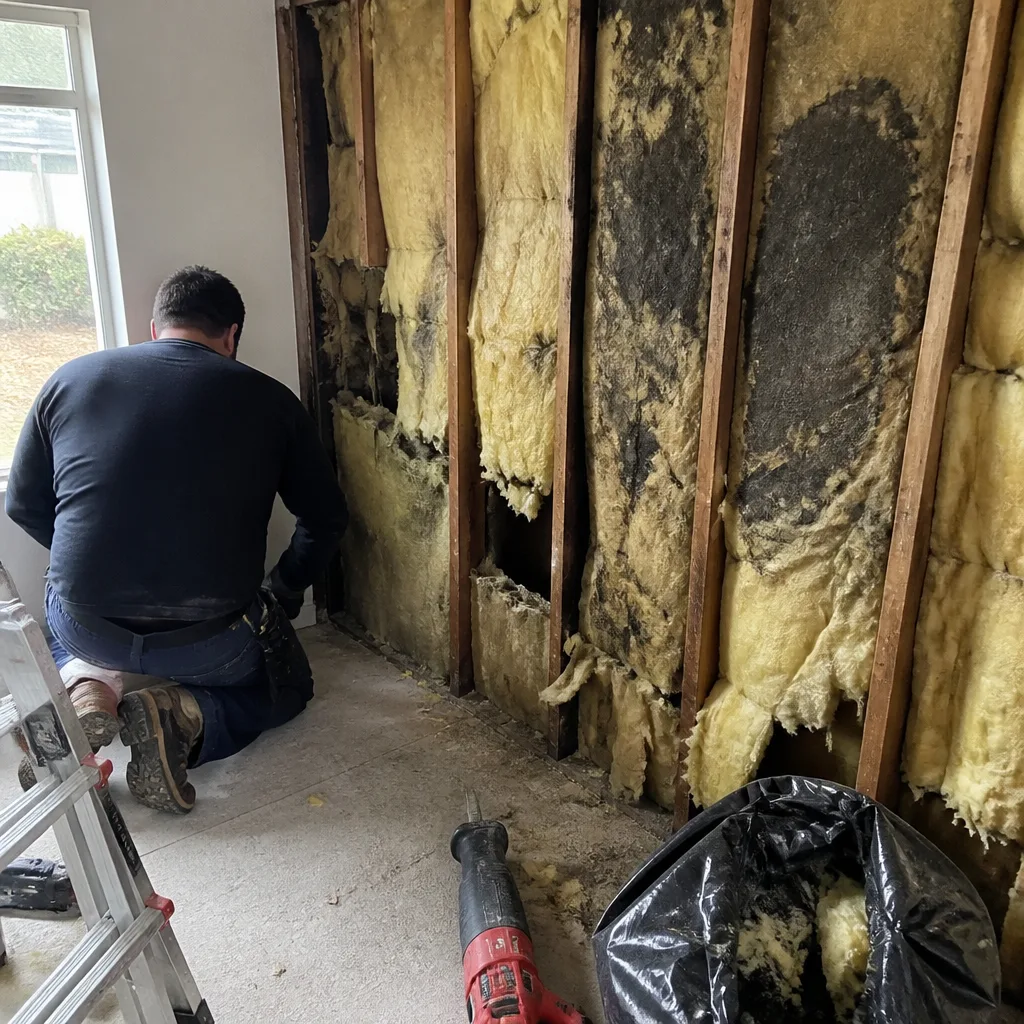 Before
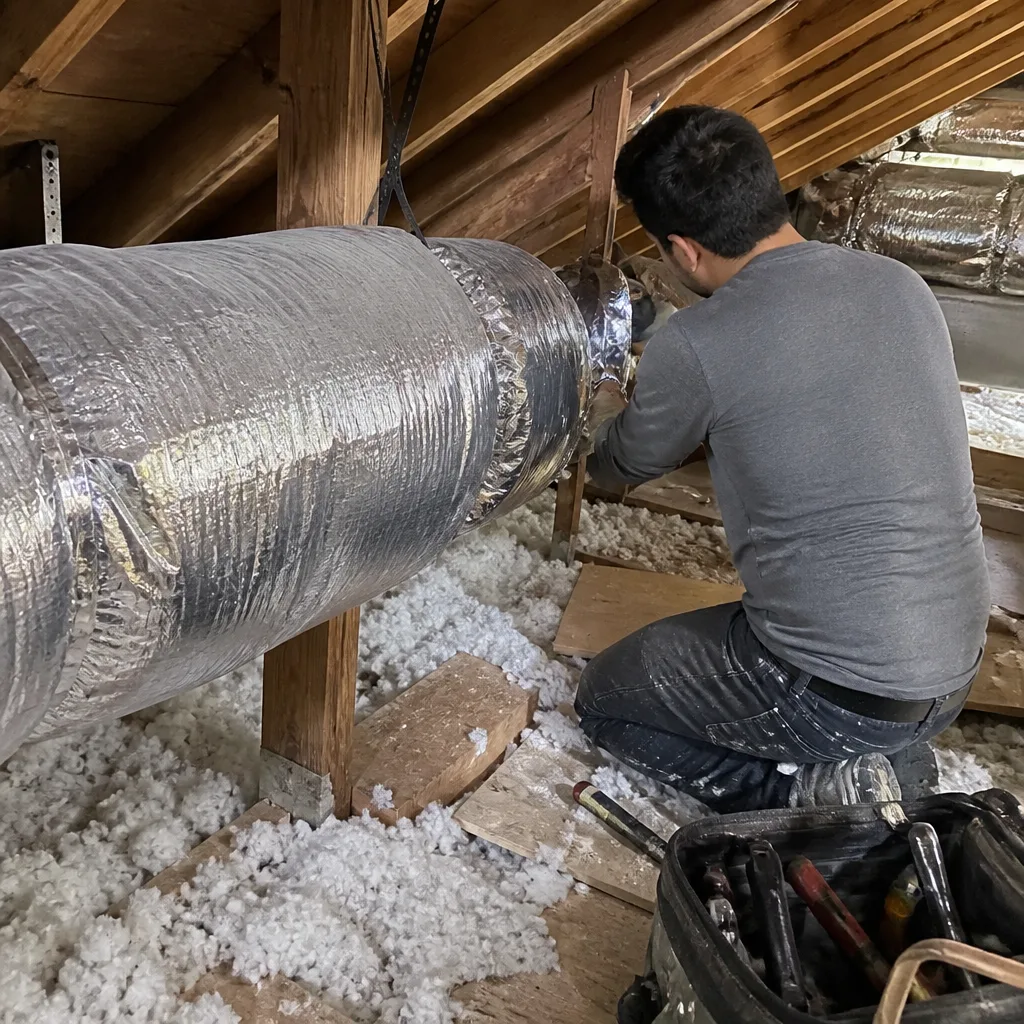 After
AfterReplacement Cost & What’s Included
Most GreenFiber attic insulation jobs in Los Angeles run between $2,800 and $5,400 installed. The low end covers a straightforward open blow over sealed top plates in a 1,200 square foot attic with good access and no removal. The high end includes removal of contaminated or stratified existing material, air sealing of all penetrations with Zestafoam or equivalent, baffles at every soffit vent, and a target R-38 blow at settled depth.
What drives the range: attic square footage, whether we need to build a storage platform or relocate existing boards, the condition of existing insulation, and how many recessed cans or duct boots need sealing before we blow. Every job gets a Written Price Before Any Work Starts - Haven Standard Clause 1 - with line items for removal, air sealing, baffles, insulation, and the blower-door test. We publish before-and-after blower-door numbers on every applicable job so you can verify the air-sealing result in CFM50. The 365-Day Done Right Promise covers all completed work, and you receive a Documented Photo Record plus the product data sheets for the specific GreenFiber batch we installed.
DIY or Call Us?
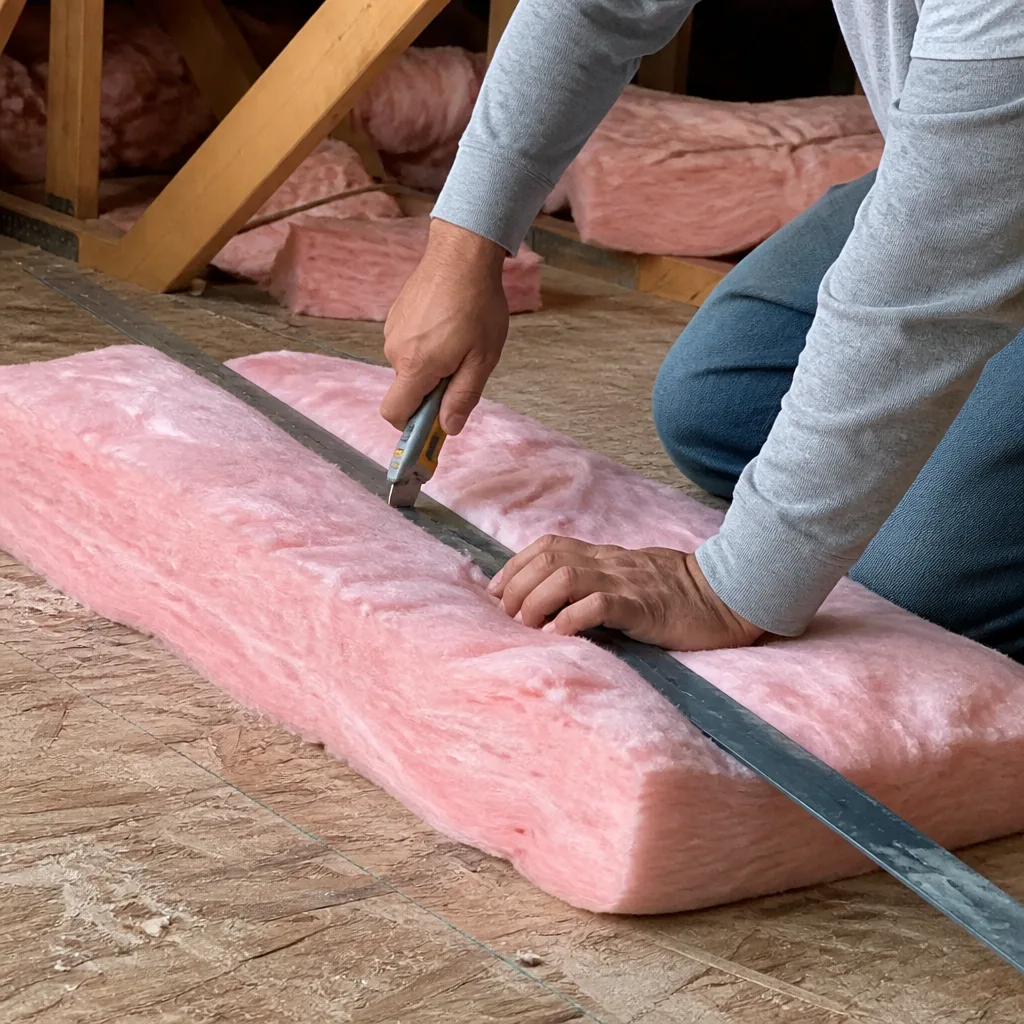
What you can safely check: measure your existing insulation depth with a ruler at three points per attic quadrant, photograph any discoloration or moisture staining, and note whether your recessed can lights are IC-rated (insulation contact) or non-IC with visible gaps. This information saves us time and gets you a tighter estimate.
Where DIY goes wrong: cellulose blowers from rental yards move material at 2,000 CFM and create static clouds that obscure visibility; without a blower-door test first, you’re almost certainly blowing over unsealed leaks and paying for R-value that leaves through the ceiling. GreenFiber also requires specific machine settings - 3.5 to 4.5 PSI at the hopper - to achieve labeled density; underblown cellulose settles to half its designed thickness in six months. And attics in Los Angeles neighborhoods like Leimert Park and Baldwin Hills often contain vermiculite or asbestos-containing material from pre-1990 construction; disturbing it without testing is a health hazard and a liability. Seal the holes first. Then measure the R-value. In that order.
FAQs
GreenFiber cellulose maintains its labeled R-value for 20 to 30 years when installed at proper density and left undisturbed. In Los Angeles, the bigger threat is mechanical damage from HVAC service, rodent activity, or storage traffic rather than chemical degradation. Call (628) 226-1097 for an attic condition assessment - estimates are free.
You can, but we don’t recommend it unless the existing layer is the same material, at uniform depth, and tested clean for contaminants. Mixed materials create thermal boundaries and settling mismatches that show up as cold spots within two years. We quote both options and let you see the price difference. Call (628) 226-1097 and we’ll walk through what we found in your specific attic.
A standard blow-over on a sealed attic takes four to six hours for a two-person crew. Add two to three hours for air sealing, and a full day if we’re removing old material and running the blower-door test before and after. We schedule morning starts and aim to be off-site before dinner. Call (628) 226-1097 to check next-day availability.
We keep Sanctuary and All Borate in our Los Angeles warehouse and on the truck for same-day jobs. For larger homes or R-60 target depths, we may need a next-day material pull, but we never start work without confirming the batch is on hand. Call (628) 226-1097 to verify stock against your attic square footage.
If you’re seeing hot rooms, rising bills, or dust from ceiling penetrations, we can run a blower-door test - a pressurization diagnostic that finds air leakage before a single bag goes in - and give you a written price with scope, warranty, and documentation before anyone lifts a tool. Call (628) 226-1097. A live person answers, 24/7.
Written by Wes Okafor, Owner & Lead Insulation Technician, Topside Attic Insulation Los Angeles at Topside Attic Insulation Los Angeles, serving Los Angeles and nearby areas.