
GreenFiber Crawl Space Encapsulation: The Los Angeles Owner’s Guide
GreenFiber crawl space encapsulation repair in Los Angeles typically runs $2,800-$5,400 for a full replacement depending on square footage and existing moisture damage, and we stock GreenFiber-compatible vapor barriers and seam tape for same-day starts on most jobs. Most owners discover the failure when their crawl space humidity spikes above 65% on a cheap sensor, or when they notice musty air pulling up through floor registers during Santa Ana wind events. The GreenFiber system, a loose-fill cellulose product treated with borate for pest and mold resistance, relies on a continuous polyethylene vapor barrier - usually 6-mil or thicker - sealed at seams and perimeter walls. When that barrier tears at the pier-and-beam interface, or when the tape adhesive degrades from Los Angeles’s UV-shifted temperature swings, the encapsulation fails silently until the symptoms show upstairs.
Which GreenFiber Models This Applies To
GreenFiber doesn’t sell crawl space encapsulation as a branded kit the way some spray-foam manufacturers do. Instead, we see their Sanctuary line - the loose-fill cellulose treated with borate - installed in Los Angeles crawl spaces, often paired with a contractor-supplied vapor barrier that may or may not be spec’d correctly for the application. The compatibility issue isn’t the GreenFiber cellulose itself, which sits above the barrier on the crawl floor or between joists, but the barrier and seam-sealing system that protects it from ground moisture.
To identify what you have, look for the GreenFiber bag stamp - usually a lot number and R-value claim - and check the vapor barrier mil thickness printed on the edge fold. We regularly find 4-mil builder-grade poly in Los Angeles crawl spaces where 10-mil reinforced was needed for the rocky soil and seismic movement common to the area. The OEM-equivalent barrier we stock is a 12-mil woven polyethylene with a 15-year rated adhesive seam tape, which outperforms the 6-mil non-reinforced poly that many original installers used. For GreenFiber Sanctuary installations with borate treatment intact, we can often preserve the existing cellulose and replace only the failed barrier and tape, saving roughly 30-40% versus full removal and reinstallation.
Signs Your GreenFiber Crawl Space Encapsulation Is Failing
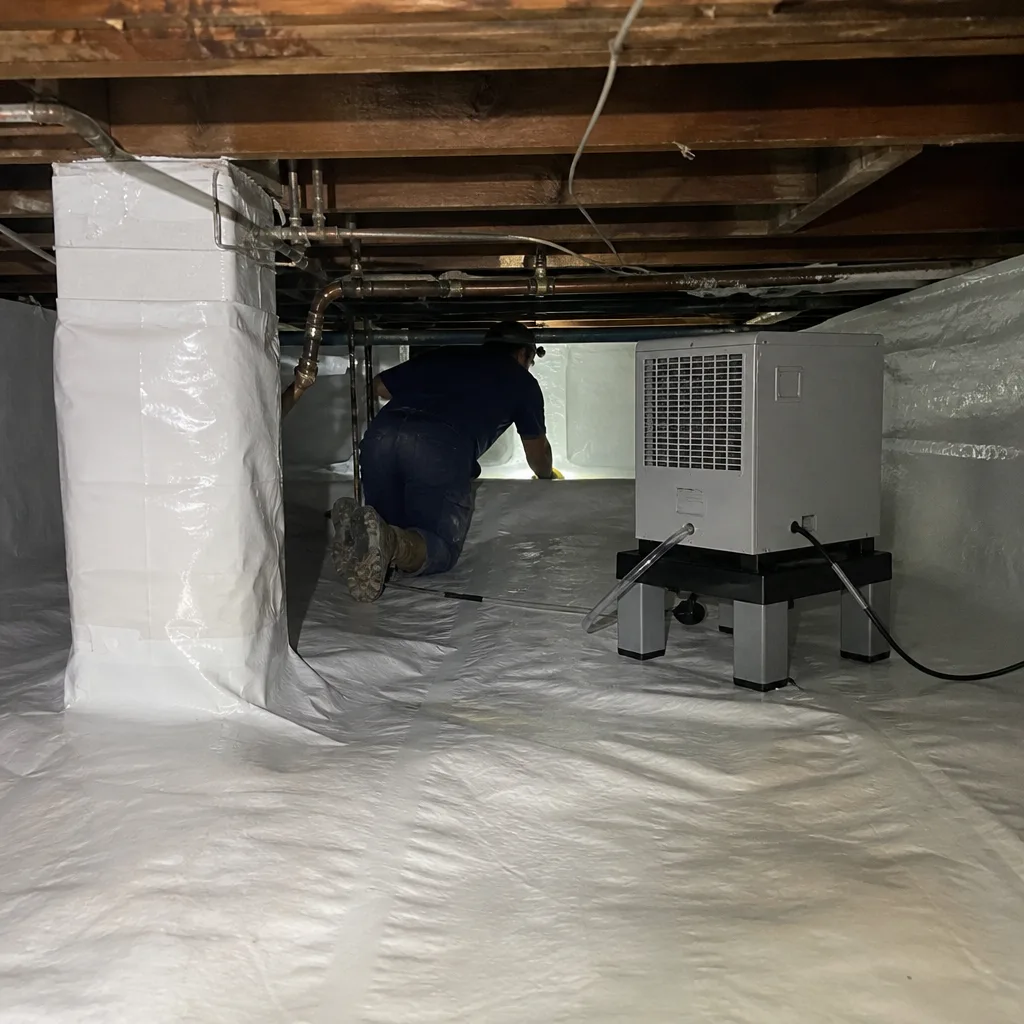
- Humidity readings above 60% on a crawl space hygrometer - even in dry Los Angeles months. The vapor barrier has likely separated at a seam or torn around a pier, letting soil moisture rise directly into the conditioned envelope. We see this most often in Mid-Century ranch homes where the original 6-mil poly has become brittle from decades of Pasadena temperature swings.
- Musty odor detectable at floor registers or baseboards - the stack effect is pulling crawl air upward through plumbing and electrical penetrations. GreenFiber’s borate treatment resists mold, but it doesn’t seal air leaks; once the barrier fails, the cellulose becomes a moisture sponge rather than an insulator.
- Sagging or discolored vapor barrier visible from the crawl entry - water pooling on top of the poly indicates either a ground-water intrusion point or condensation from unsealed ductwork below the dew point. In Los Angeles’s clay-heavy soils, particularly around the Baldwin Hills area, this pooling accelerates tape adhesive failure.
- Increased energy bills without HVAC changes - wet cellulose loses roughly 40% of its R-value, forcing your system to run longer to maintain setpoint. We document this with blower-door and thermal-camera readings that show exactly where the thermal boundary has degraded.
- Pest activity in the crawl space - torn vapor barrier creates entry points. GreenFiber’s borate treatment deters insects, but a gap in the barrier lets rodents and moisture-loving species access the space regardless of the cellulose chemistry.
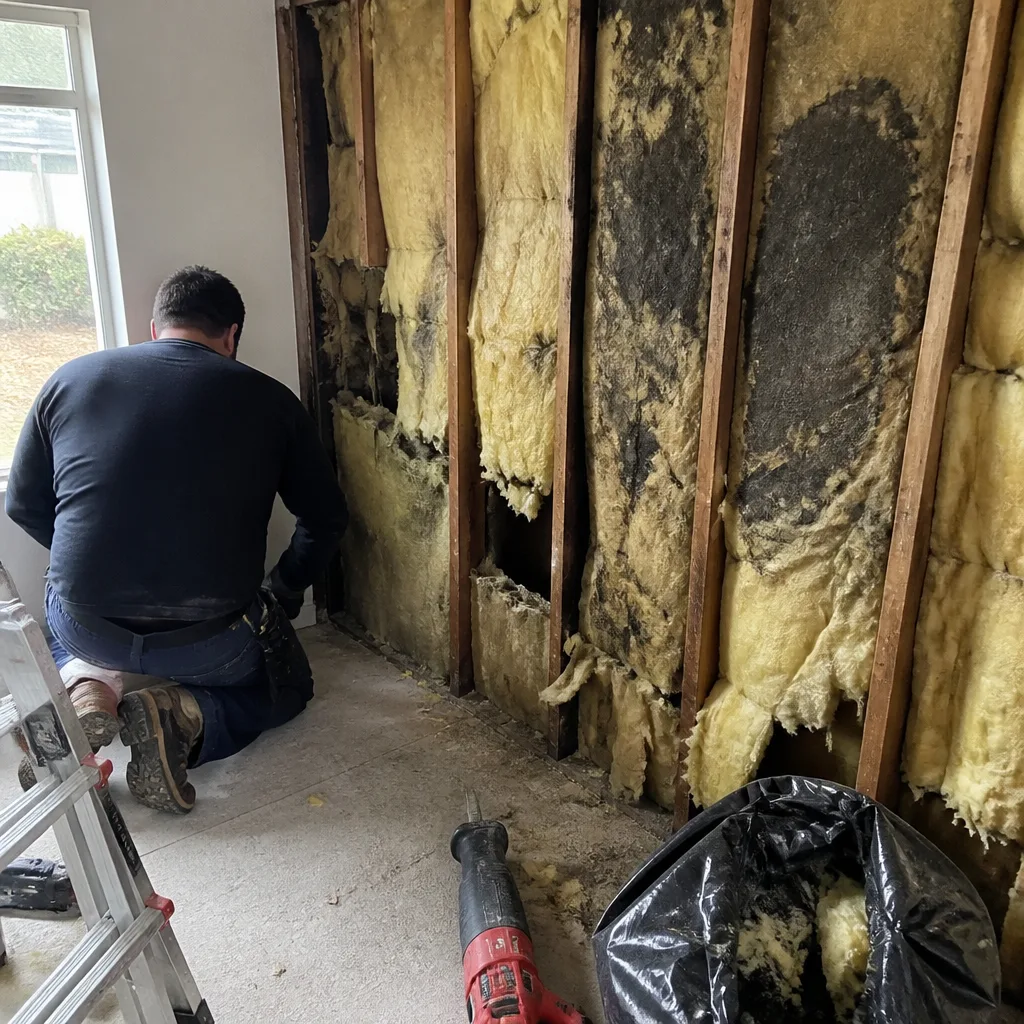 Before
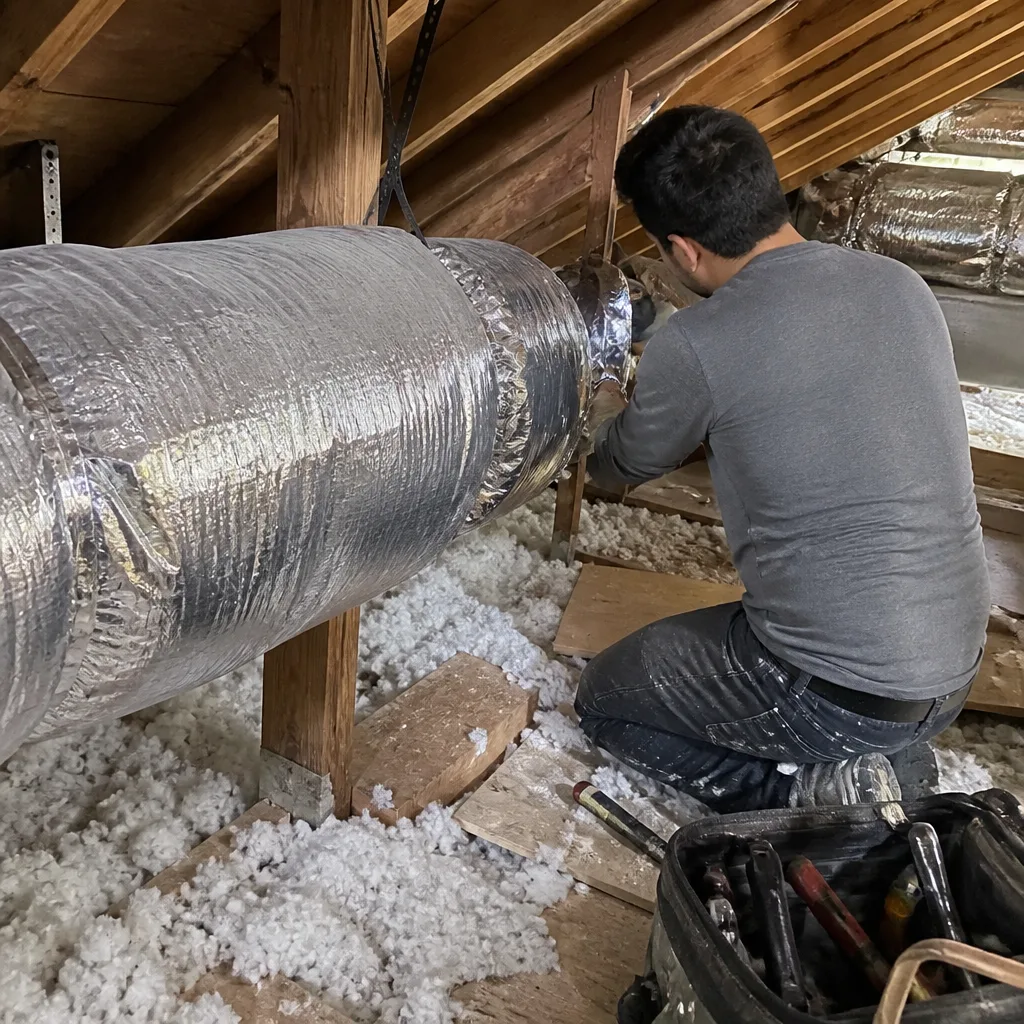 After
AfterReplacement Cost & What’s Included
In Los Angeles, most GreenFiber crawl space encapsulation replacements we perform run $2,800-$5,400 installed. The lower end covers a 600-800 square foot crawl with intact cellulose that only needs barrier and tape replacement; the upper end involves full cellulose removal, mold remediation if borate saturation has failed, 12-mil woven poly installation, perimeter wall sealing, and new conditioned-air supply if the space was previously vented.
| Component | Price Range (Los Angeles) |
|---|---|
| Vapor barrier replacement only (12-mil woven poly, seams, perimeter) | $2,800-$3,600 |
| Full encapsulation with new GreenFiber Sanctuary cellulose | $4,200-$5,400 |
| Conditioned crawl conversion (sealed, dehumidified, supply air) | $6,500-$9,800 |
| Mold remediation add-on (if needed) | $1,200-$2,800 |
What drives the range: crawl height (anything under 18 inches requires specialized equipment), pier count (each pier needs custom barrier cutting and sealing), and whether the existing GreenFiber can be salvaged. Every job gets a written price before work starts, a Documented Photo Record, and our 365-Day Done Right Promise. We also publish before-and-after blower-door numbers on encapsulation jobs where we’re altering the building envelope, so you can verify the air-sealing result in CFM50.
DIY or Call Us?
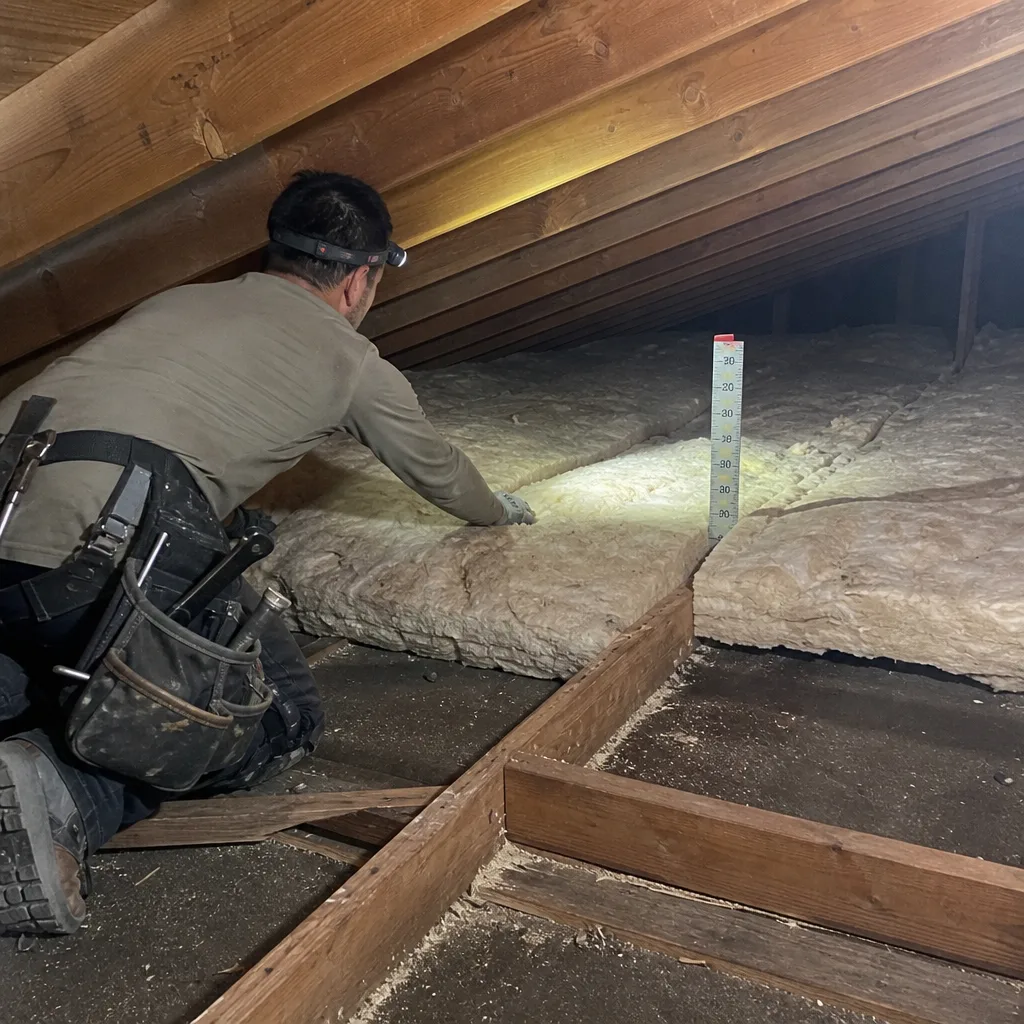
Here’s what you can safely check yourself: the vapor barrier mil rating printed on the edge, whether seams are still taped or have pulled loose, and whether your crawl space hygrometer reads under 55% in October (Los Angeles’s driest month). What goes wrong fast in DIY: working in confined spaces with sharp soil contaminants, improper overlap at seams (industry standard is 12 inches minimum, taped), and installing non-reinforced poly that tears on Los Angeles’s rocky crawl floors within two seasons. The bigger risk is missing the air-sealing step - top plates, plumbing penetrations, and duct boots - that makes the encapsulation actually perform. We seal the holes first. Then measure the R-value. In that order. If your GreenFiber system is failing, call (628) 226-1097 for a free written estimate with no work starting until you approve the scope and price in writing.
FAQs
A properly installed 12-mil woven vapor barrier with reinforced seam tape lasts 15-20 years in Los Angeles’s climate, though the original 6-mil non-reinforced poly we commonly find in local homes often fails at 8-12 years from UV degradation and soil abrasion. The GreenFiber Sanctuary cellulose itself, if kept dry by the barrier, maintains its borate treatment and R-value indefinitely. Call (628) 226-1097 for a free inspection if you’re unsure of your system’s age - estimates are free.
Patching works for isolated tears under 6 inches if the surrounding poly is still pliable, but widespread seam failure or brittle poly indicates the material has reached end of life and patching becomes a recurring expense. We see this often in Los Angeles homes where the original installer used 4-mil builder-grade poly; by year 10, the material is too degraded for reliable repair. Call (628) 226-1097 and we’ll show you the photo evidence before you decide.
Most vapor-barrier-only replacements take one day; full encapsulation with new GreenFiber Sanctuary cellulose and air sealing typically runs two to three days depending on crawl access and pier count. We arrive with the 12-mil woven poly, seam tape, and perimeter sealant already on the truck for Los Angeles jobs. Call (628) 226-1097 to check same-week availability.
We stock 12-mil woven polyethylene vapor barriers, reinforced seam tape rated for 15 years, and GreenFiber Sanctuary cellulose on our Los Angeles trucks; we are an independent service provider and not affiliated with GreenFiber, though we source their materials through authorized distribution. For GreenFiber systems, we also carry compatible aftermarket barriers that meet or exceed OEM specifications at equivalent or lower installed cost. Call (628) 226-1097 to confirm stock for your specific crawl dimensions.
Topside Attic Insulation Los Angeles also stocks parts for Reflectix radiant barrier systems and other building envelope materials.
Written by Wes Okafor, Owner & Lead Insulation Technician, Topside Attic Insulation Los Angeles at Topside Attic Insulation Los Angeles, serving Los Angeles and nearby areas.