
How Much Does Attic Insulation Cost in Los Angeles?
Our Attic Insulation services in Los Angeles typically cost between $1,800 and $4,500 for a standard single-family home, with most jobs landing around $2,400 to $3,200 once air sealing is included. That range covers blown-in fiberglass or cellulose in a 1,200-to-1,800-square-foot attic footprint, brought up to the California Title 24 minimum of R-38, with a written price delivered before any work begins.
If you’re comparing multiple quotes right now, the number to watch is not the per-square-foot rate – it’s whether air sealing of top plates, can lights, and penetrations is included or skipped. Skipping it is how contractors get to a lower number on the estimate and a higher utility bill for you afterward.
Attic Insulation Cost Breakdown (2026)
Most attic insulation jobs in Los Angeles involve at least three line items: preparation and air sealing, the insulation material itself, and disposal of any existing material if a tear-out is needed. Here is what each piece costs in this market as of 2026.
| Service / Line Item | Typical LA Market Range | Notes |
|---|---|---|
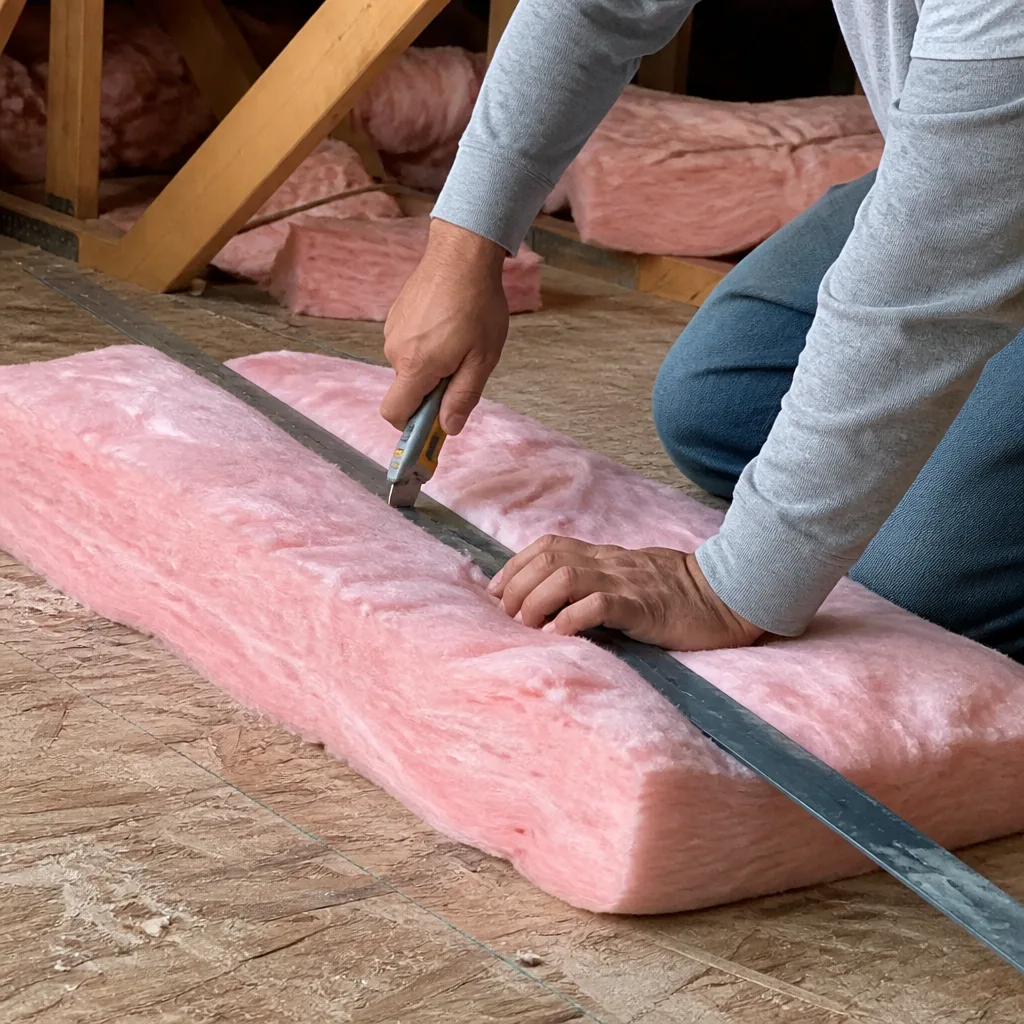
| Blown-in fiberglass (per sq ft, installed) | $1.20 – $2.00 | Most common material for LA attics; reaches R-38 in roughly 12 inches |
| Blown-in cellulose (per sq ft, installed) | $1.30 – $2.20 | Slightly denser air resistance; common in older Craftsman-era homes in areas like Highland Park and Glassell Park |
| Batt insulation – fiberglass (per sq ft, installed) | $1.50 – $2.60 | Used in accessible attics with clear joist bays; less effective where framing is irregular |
| Open-cell spray foam (per sq ft, installed) | $1.80 – $3.50 | Air-seals as it insulates; often used in unvented attic assemblies or cathedral ceilings in newer builds |
| Closed-cell spray foam (per sq ft, installed) | $3.00 – $6.50 | Highest R-value per inch; used for tight spaces, roof decks, or moisture control in coastal LA neighborhoods |
| Radiant barrier (foil, installed) | $0.75 – $1.50 | Stapled to the underside of roof sheathing; significantly reduces radiant heat gain in San Fernando Valley and East LA areas |
| Attic air sealing (top plates, penetrations, can lights) | $400 – $1,200 | Done before any insulation is added; the step that most contractors omit |
| Existing insulation removal (blown-in) | $1.00 – $2.50 per sq ft | Required when existing material is rodent-damaged, moldy, or below R-13; common in pre-1980 homes throughout East Hollywood and Boyle Heights |
| Full-home job: 1,200 sq ft attic, blow-in to R-38, air sealed | $2,100 – $3,400 | No removal; most common project type in LA |
| Full-home job: 1,800 sq ft attic, removal + replacement to R-49 | $4,200 – $6,800 | Includes tear-out, bagging, and disposal; required for heavily degraded or contaminated material |
What Makes These Numbers Move
The square footage of your attic floor is the biggest single driver, but it’s not the only one. In Los Angeles specifically, a few local conditions push costs in one direction or the other.
Existing R-value. California’s Title 24 energy code requires a minimum of R-38 in Climate Zone 9 (most of the LA Basin) and R-49 in Zone 14 (parts of the San Fernando Valley and the foothills). If your attic already has R-11 in place, you’re adding material on top of existing, which reduces labor. If you’re at zero – common in detached garages converted to ADUs in Silver Lake or Palms – you’re starting from scratch.
Access difficulty. A two-story home in Hancock Park with a low-pitch roof and 18 inches of clearance at the knee walls costs more to work in than a single-story ranch in Northridge with a full walk-up attic. Tight access adds labor time, and labor is not cheap in Los Angeles.
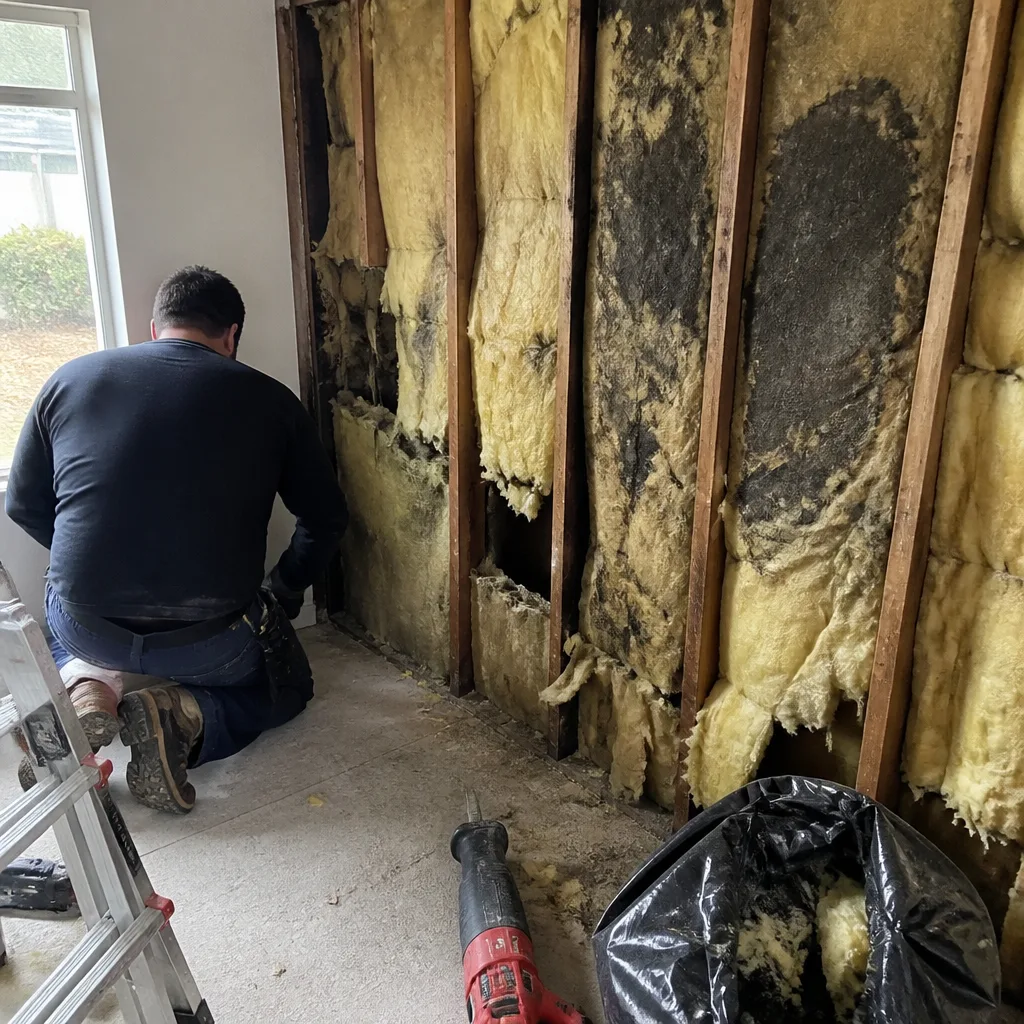
Contamination and tear-out. Rodents are a consistent problem in attics throughout the Hollywood Hills, Mount Washington, and the older bungalows east of downtown. When droppings, urine, or nesting material has saturated the insulation, removal is not optional – it’s a health requirement. Expect to add $1.00 to $2.50 per square foot for that work before new material goes in.
Material choice. Blown-in fiberglass from Owens Corning or Johns Manville, cellulose from GreenFiber, or batts from Knauf or CertainTeed – these are not interchangeable in performance or price. Spray foam from Icynene or Demilec costs more per square foot but may eliminate the need for a separate air-sealing step. The right material depends on your attic assembly, not on which one happens to be on sale.
Whether air sealing is included. This is the line item most Los Angeles homeowners don’t know to ask about. Blow insulation over an unsealed attic floor and you’ve added R-value on paper while leaving the air bypass paths – top plates, electrical penetrations, can lights – completely open. A blower-door test – a pressurization reading that shows, in one number, how much air your building envelope is losing – will confirm whether the work actually changed your home’s performance. We run one before and after on every applicable job and publish both numbers. Most contractors don’t own a blower door.
What Affects Attic Insulation Pricing in Los Angeles
- Attic square footage and geometry. Most LA homes fall between 900 and 2,200 square feet of attic floor area. A larger footprint means more material and more labor hours. Irregular geometry – split-levels, added rooms, low-slope shed roofs common in mid-century homes in Silverlake and Culver City – adds time on top of footage.
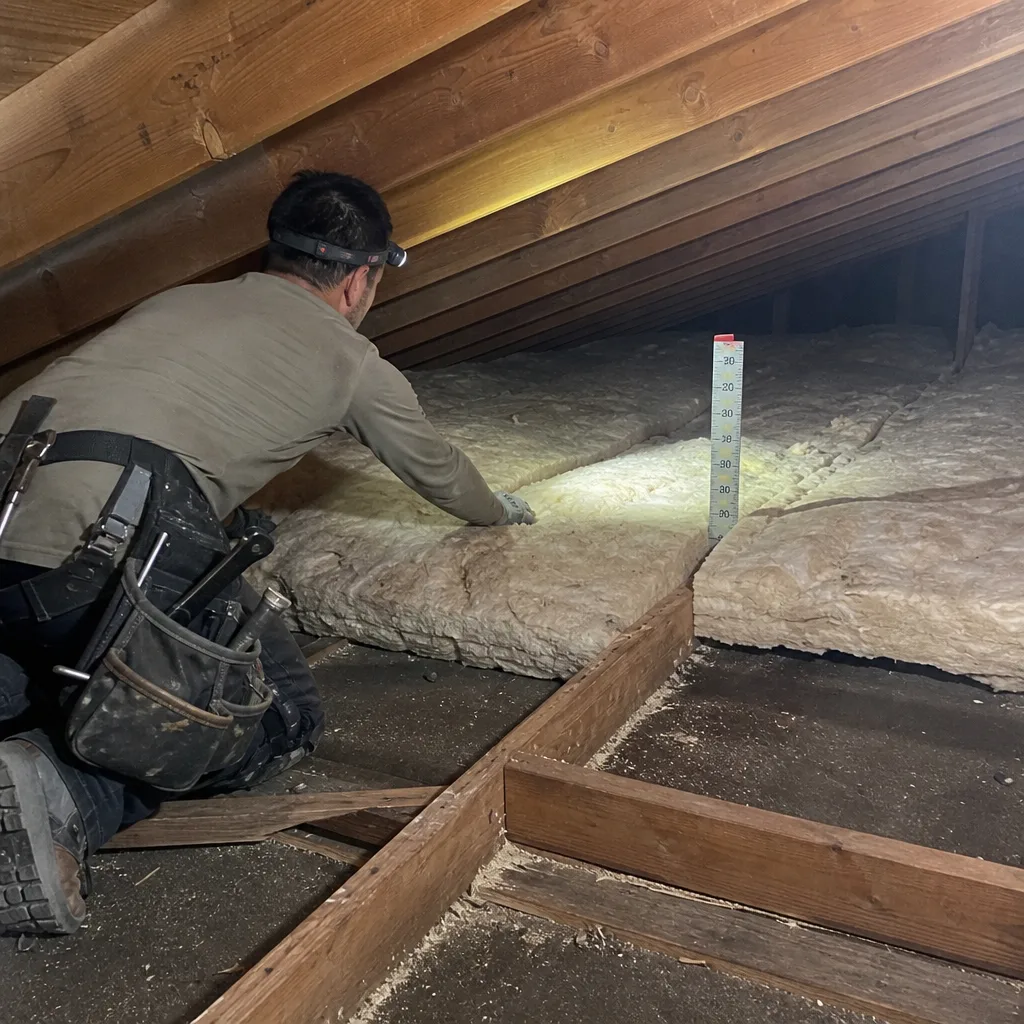
- Current insulation depth and condition. An attic with 3 to 4 inches of old blown-in fiberglass (roughly R-11 to R-15) that is clean and dry can usually be topped off rather than removed. An attic with rodent-damaged or moisture-compromised material needs full removal before anything new goes in. In Los Angeles, rodent activity is the most common reason a simple top-off becomes a full replacement project.
- Climate zone and required R-value. The City of Los Angeles sits mostly in CEC Climate Zone 9, where R-38 is the code minimum for attic insulation. Properties in the northern San Fernando Valley, the Santa Clarita fringe, or the foothill communities can fall into Zone 14, where R-49 is the standard. More R-value means more material, which means a higher job total – but it also means a meaningful difference in summertime attic temperatures and cooling loads.
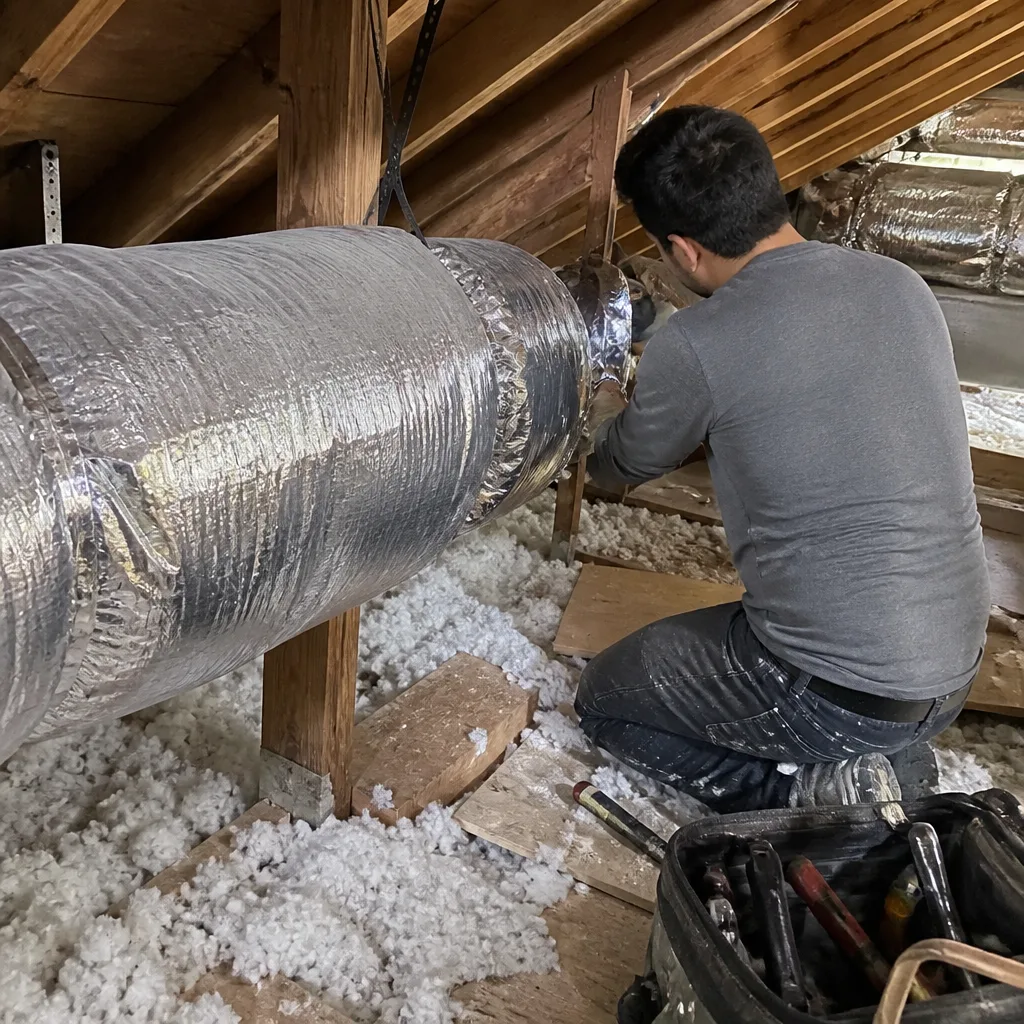
- Access and attic conditions. Scuttle holes barely wide enough to fit a hose, exposed electrical in poor condition, HVAC ducts running through the attic floor – all of these slow the job and raise the price. In older neighborhoods like Jefferson Park, Mid-City, and El Sereno, homes built before 1960 frequently have knob-and-tube wiring remnants or unstrapped ducts that need to be noted before insulation goes in.
- Radiant heat load. The San Fernando Valley – Reseda, Van Nuys, North Hollywood – runs significantly hotter in summer than the coastal side of the hills. Homes in these areas often benefit from a radiant barrier in addition to insulation. A foil radiant barrier stapled to the underside of the roof sheathing can reduce attic temperatures by 20 to 30 degrees Fahrenheit on a 100-degree day. It adds cost but meaningfully reduces cooling demand in these inland ZIP codes.
- Labor market and permit requirements. Los Angeles has some of the highest labor costs in the country. Attic insulation work does not require a permit in most residential applications in the City of LA, but if work is tied to a Title 24 compliance upgrade or an ADU conversion, documentation requirements can add scope. Always confirm with your contractor what is and is not permit-required for your specific project.
 Before
 After
AfterHow to Save on Attic Insulation in Los Angeles
Use Utility Rebates Before They Change
Southern California Edison and SoCalGas both offer rebates for attic insulation upgrades that meet their program requirements, which typically means installation to or above the Title 24 code minimum by a qualifying contractor. Rebate amounts shift regularly – they were ranging from $150 to $400 per project in recent program cycles – so it’s worth checking the current SCE and SoCalGas program pages before you sign anything. The Federal Residential Clean Energy Credit (25C) also applies to insulation and air sealing improvements made in 2026, covering up to 30% of project costs up to applicable caps. That’s a real dollar figure, not a rounding error.
Bundle the Air Sealing and Insulation in One Visit
Air sealing and insulation completed in a single mobilization costs less than scheduling them separately. When a crew is already in the attic to seal top plates and can lights, adding the blow-in to the same visit eliminates a second setup, a second trip charge, and often a second minimum job fee. In Los Angeles, where traffic alone adds real cost to any contractor’s day, a combined visit saves both parties money.
Don’t Skip the Top-Off If Removal Isn’t Needed
If your existing insulation is clean, dry, and rodent-free but simply too thin – say, R-13 in a Valley home that needs R-49 – an Attic Insulation Top-Up with blown-in fiberglass or cellulose over what’s already there is a legitimate, code-compliant option. It costs significantly less than removal plus replacement. A photo record and a depth-check at multiple points in the attic will confirm whether a top-off is appropriate. We document that assessment on every visit.
Get a Second Opinion Before Agreeing to Full Replacement
Some contractors recommend removal when a top-off would perform just as well. We offer a free second opinion on any written estimate – bring us a competing quote and we’ll read it with you, line by line, and tell you what the scope is actually saying. Under Haven Standard Clause 1, you get a flat written price before any work starts, so there are no surprises once you decide to move forward.
Schedule During Late Fall or Winter
Demand for attic work in Los Angeles spikes in late spring and again in August, when homeowners notice the cooling bill for the first time. Scheduling in November through February typically means faster availability and, in some cases, slightly more competitive pricing from contractors who are managing cash flow in the slower season. It’s not a guarantee of a discount, but it is the less-crowded window.
To get a written estimate with no obligation, call (628) 226-1097. We’ll price the job before anyone touches your attic.
FAQs – Attic Insulation Cost in Los Angeles
How much does attic insulation cost in Los Angeles in 2026?
Most attic insulation jobs in Los Angeles run between $1,800 and $4,500, with the midpoint for a typical 1,200-to-1,600-square-foot attic, blown to R-38 with air sealing included, landing around $2,400 to $3,200. Smaller homes or simple top-offs without removal can come in under $2,000. Attic Insulation Replacement with full removal, air sealing, and new material in larger homes – or where rodent damage requires a tear-out – can exceed $5,000. For a flat written price on your specific attic, call (628) 226-1097.
Is it cheaper to add insulation on top of existing insulation or remove and replace?
A top-off is almost always cheaper – often 40 to 60 percent less than full replacement – and it’s a legitimate approach when the existing material is clean, dry, and not contaminated. Removal becomes necessary when existing insulation is rodent-damaged, saturated with moisture, or poses an indoor air quality concern. A photo inspection and a depth measurement at multiple points in the attic will tell you which path makes sense. We document that assessment as part of every visit.
Does attic insulation in Los Angeles require a permit?
In most standard residential cases in the City of Los Angeles, attic insulation work does not require a building permit. Exceptions include work tied to a Title 24 compliance report as part of an ADU conversion, a major remodel pulling other permits, or work on a historically designated property. If your project is part of a larger scope, confirm the permit requirements with your contractor before the work begins. Skipping a required permit in Los Angeles can create complications at resale.
What R-value does Los Angeles require for attic insulation?
California Title 24 requires a minimum of R-38 for attic insulation in CEC Climate Zone 9, which covers most of the LA Basin including the Westside, South Bay, and the neighborhoods east and northeast of downtown. Properties in the northern San Fernando Valley and foothill communities in Climate Zone 14 are held to R-49. If you’re in a zone boundary area – parts of Chatsworth, Granada Hills, or the area around La Crescenta – it’s worth confirming which zone applies to your parcel before ordering materials.
How long does attic insulation last in Los Angeles?
Blown-in fiberglass and cellulose installed correctly typically last 20 to 30 years before settling or degradation meaningfully reduces performance. In Los Angeles, the main factors that shorten that lifespan are not temperature or humidity – our climate is relatively mild – but pest activity and deferred air sealing. When rodents nest in the insulation, the material compresses, soils, and loses its R-value far faster than normal wear. Spray foam, particularly closed-cell, has a longer effective life and is not affected by rodents to the same degree.
What is a blower-door test, and do I need one with attic insulation?
A blower-door test – a pressurization measurement that shows, in a single number (CFM50), how much conditioned air your home’s building envelope is losing – is the only objective way to confirm that air sealing actually worked. Without it, air sealing is an educated guess. We run a blower-door test before and after on every applicable job and provide you with both readings in writing. If a contractor tells you air sealing was completed but can’t show you the before-and-after numbers, you have no way to verify the work performed.
Why the Order of Operations Matters More Than the Price Per Square Foot
Homeowners in Los Angeles researching attic insulation quotes often focus on the per-square-foot rate, which is a reasonable starting point. But the number that more accurately predicts whether the project will actually reduce your energy use is the one on a blower-door readout – not the one on the estimate.
Envelope Insulation Co., operating as Attic Insulation in Los Angeles, treats air sealing as a hard prerequisite, not an optional add-on. The sequence is consistent: seal the top plates, the electrical penetrations, and the can lights first. Then insulate. That order is not negotiable. Blowing insulation over an unsealed attic floor adds R-value on paper. It does not stop conditioned air from bypassing the insulation through every gap in the floor assembly, and in a hot summer in the Valley or a cool winter night in the hills, those bypasses are where the money goes.
Since 2016, Wes Okafor and the Envelope Insulation Co. team have completed this process in more than 9,000 homes across the Los Angeles area, each one with a written price before the work started and a documented photo record when the crew left. On applicable jobs, the before-and-after blower-door readings go to the homeowner in writing. Not because it’s a selling point – because it’s the documentation that tells you whether the work was worth what you paid.
Under the 365-Day Done Right Promise, if anything about the completed work is not right, we make it right. That promise is backed by the written scope and written warranty you receive before anyone lifts a tool – Haven Standard Clause 1, no exceptions.
What You Receive at the End of Every Job
- A written price and written scope delivered before work begins
- A documented photo record of conditions before and after
- Before-and-after blower-door readings on applicable air sealing jobs
- A written warranty covering the 365-Day Done Right Promise
- Material documentation confirming which products were installed (brand, R-value, coverage area)
That’s what leaving looks like, and we describe it before we arrive so there are no ambiguities when the job is done.
Los Angeles Neighborhoods We Regularly Work In
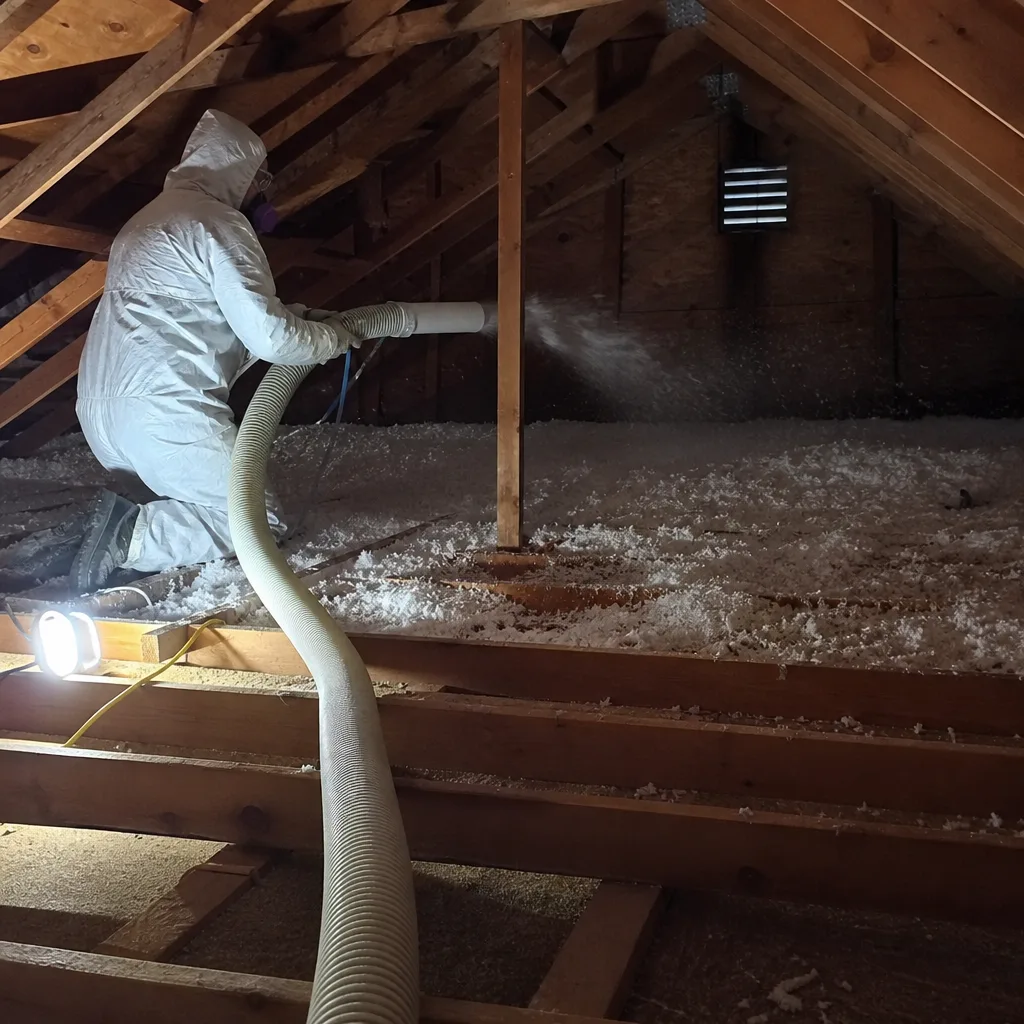
Our crews work throughout the Los Angeles metro, and the attic conditions vary considerably by neighborhood, construction era, and geography.
In the Hollywood Hills and Laurel Canyon, hillside homes with irregular framing and difficult access are the norm. Low-slope roofs, split-level footprints, and scuttle holes positioned in awkward corners add labor time. We account for that in the written price before anyone goes up a ladder.
In the San Fernando Valley – Reseda, Canoga Park, Van Nuys, North Hollywood – the summer heat load is the primary concern. Attic temperatures in this area regularly exceed 140 degrees Fahrenheit on August afternoons. A radiant barrier combined with blown-in insulation to R-49 is the standard recommendation for homes in these ZIP codes, and the before-and-after blower-door numbers in these neighborhoods tend to show some of the largest performance gains we document.
In East Los Angeles, Boyle Heights, and El Sereno, many homes were built between 1920 and 1960 and have had insulation added and re-added over the decades by various owners. Layered materials, intermixed types, and occasional rodent history are common. A thorough inspection before any quote is issued is not optional in these neighborhoods – it’s how we write an accurate price.
In Silver Lake, Echo Park, and Glassell Park, Craftsman and Spanish Revival homes often have very limited attic access and irregular joist bays that don’t fit standard batt widths cleanly. Blown-in cellulose from GreenFiber or blown fiberglass from Owens Corning is typically the more practical choice in these structures because it conforms to irregular framing without gaps.
In Manhattan Beach, Playa del Rey, and El Segundo, coastal moisture is a factor that changes material selection. Fiberglass is inherently non-absorbent and performs well in coastal applications. Cellulose, if properly installed, is treated for moisture resistance, but the coastal air quality argument for closed-cell foam in certain assemblies is more compelling here than it is inland.
For a full overview of our service area and what a Los Angeles attic insulation project looks like start to finish, visit the home page or call (628) 226-1097 to get a written estimate for your specific address.
Key Takeaways
- Attic insulation in Los Angeles costs $1,800 to $4,500 for most single-family homes in 2026, with a typical mid-range project landing at $2,400 to $3,200.
- California Title 24 requires R-38 in most of the LA Basin (Zone 9) and R-49 in hotter inland areas (Zone 14, including parts of the Valley).
- Air sealing – top plates, can lights, and penetrations – should be completed before insulation is added. A blower-door test is the only objective confirmation that it worked.
- Removal is necessary only when existing material is contaminated; a clean top-off is a legitimate and significantly cheaper alternative when conditions allow.
- SCE and SoCalGas rebates plus the federal 25C tax credit can meaningfully reduce your out-of-pocket cost – confirm current program terms before signing a contract.
- Under Haven Standard Clause 1, you receive a flat written price before any work starts. No surprises when the invoice arrives.
- The 365-Day Done Right Promise applies to all completed work: if it’s not right, we make it right.
To get a flat written price for your Los Angeles attic – no obligation, no estimate window measured in business days – call (628) 226-1097. A live person answers. You’ll have a number to compare before anyone sets foot in your attic.
Written by Wes Okafor, Owner at Envelope Insulation Co. (operating as Topside Attic Insulation Los Angeles), serving Los Angeles since 2016. Pricing reflects the Los Angeles market as of 2026. Attic Insulation Near Me in Los Angeles, CA – Topside Attic Insulation Los Angeles offers free estimates; call (628) 226-1097.
What Our Customers Say
"They photographed rodent damage in the old insulation that we had no idea about, and priced the exclusion work separately so we could decide."
- Harriet N."The winter gas bill dropped by about a third. They had estimated a quarter, so they under-promised."
- Genevieve R."Fixed price, clean work, and they hauled the old material away as agreed."
- Todd M.