
How Much Does Blown-In Insulation Cost in Los Angeles?
Blown-In Insulation services in Los Angeles typically cost $1,800 to $4,200 for a standard single-story attic (roughly 1,000-1,500 sq ft), or $1.20 to $2.80 per square foot installed, depending on material, current R-value, and whether air sealing is completed first. Most Los Angeles homeowners we work with land somewhere between $2,200 and $3,400 for a full attic upgrade to R-38 or R-49. Same-day scheduling is available in most areas of the city, and every job starts with a written price before anyone lifts a tool – that’s not a policy we revisit on a case-by-case basis.
Blown-In Insulation Cost Breakdown (2026)
The table below reflects real project pricing from the Los Angeles market as of 2026. Prices assume a clean attic with reasonable access. Removal of old, degraded insulation, rodent damage, or unusually tight access conditions will add cost – those line items are listed separately.
| Service / Material | Typical Price Range (Los Angeles, 2026) | Notes |
|---|---|---|
| Blown-in cellulose (attic, 1,000 sq ft to R-38) | $1,200 – $1,900 | Most cost-effective option for older homes; made largely from recycled content |
| Blown-in cellulose (attic, 1,500 sq ft to R-49) | $1,800 – $2,800 | R-49 is Title 24 compliant for most LA climate zones |
| Blown-in fiberglass (attic, 1,000 sq ft to R-38) | $1,400 – $2,200 | Owens Corning, Johns Manville, or Knauf; lighter settling over time |
| Blown-in fiberglass (attic, 1,500 sq ft to R-49) | $2,100 – $3,400 | Common in San Fernando Valley homes with existing partial insulation |
| Blown-in Rockwool / mineral wool (attic) | $2,400 – $4,200 | Higher material cost; strong fire resistance and noise performance |
| Attic air sealing (top plates, can lights, penetrations) | $400 – $900 | Completed before insulation is added – this is not optional at Envelope |
| Insulation removal (existing degraded or rodent-contaminated material) | $600 – $1,800 | Required before re-insulation when contamination or moisture damage is present |
| Blown-in wall insulation (retrofit, per 100 sq ft of wall) | $300 – $600 | Older Silverlake, Hancock Park, or Echo Park bungalows often need this |
| Blower-door test (before and after air sealing) | $250 – $450 | Produces a CFM50 reading – a single number showing conditioned air loss; included on applicable jobs |
| Full attic upgrade (air seal + blown-in + blower-door documentation) | $2,400 – $4,800 | Most common complete scope for 1,200 – 1,600 sq ft LA home |
What Pushes the Price Up
The biggest single driver in LA is attic access. Houses in the hills – Mount Washington, Glassell Park, Silver Lake – often have low-pitch rooflines with 18 to 22 inches of clearance, and that means slower work and more hours. That adds $200 to $600 to a typical scope depending on how much of the attic is accessible by machine versus by hand.
The second driver is starting depth. If an attic already has 4 inches of settled fiberglass from the 1970s, we’re topping up, not starting from scratch, and the material cost drops. If it’s bare joists – common in pre-1980 homes in Compton, Inglewood, and parts of South LA – the job is a full install, and the price reflects that.
California’s Title 24 code requires R-38 minimum for attic insulation in most Los Angeles climate zones, with many energy auditors now recommending R-49 for homes that run central air conditioning. Upgrading to R-49 when you’re starting from bare joists adds roughly 15 to 20 percent to material cost compared to stopping at R-38.
What Brings the Price Down
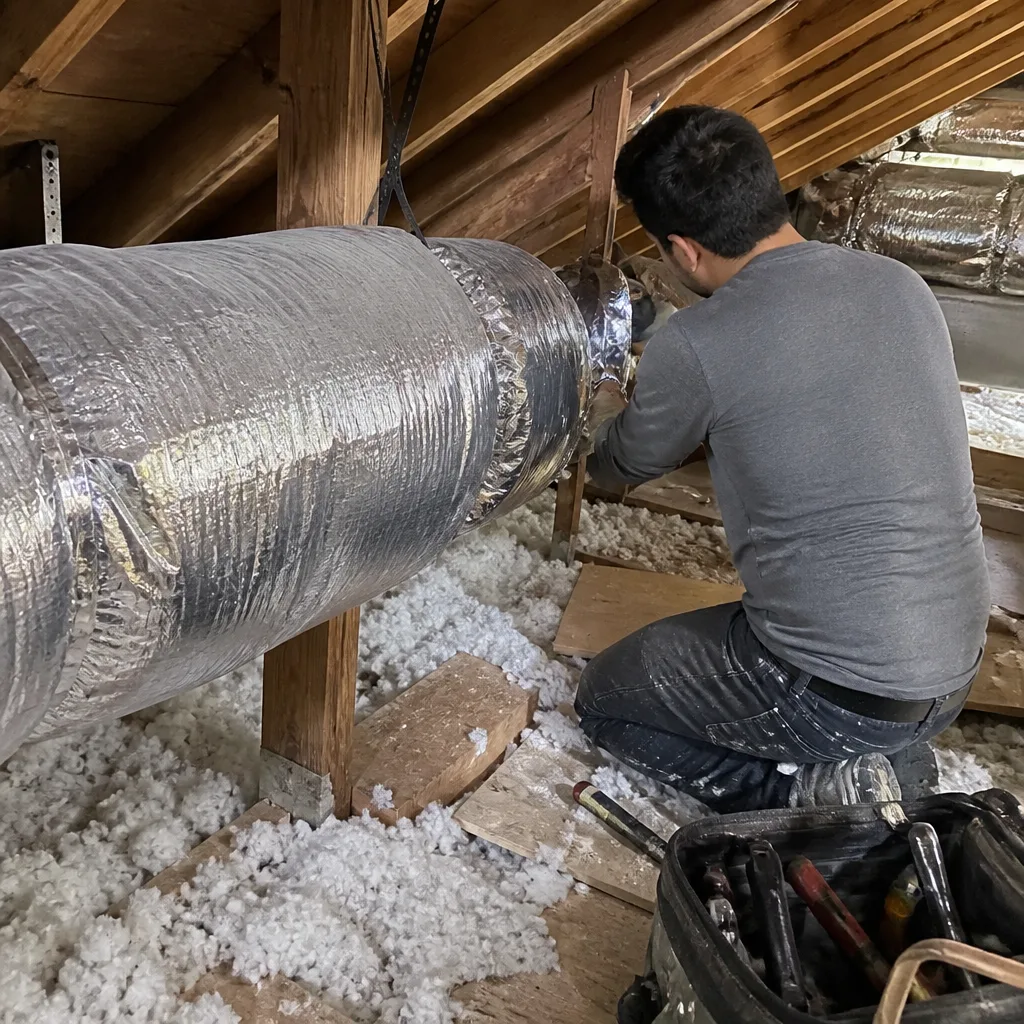
Combination scopes – air sealing and blown-in insulation scheduled together – cost less than two separate mobilizations. Scheduling in the same appointment typically saves $150 to $350 compared to doing the same work in two visits. That’s one reason we build air sealing into the same scope by default: it’s better for the building, and it’s more efficient to price.
California utility rebates through SoCalGas and the LADWP Home Upgrade Program have historically offset $200 to $800 on qualifying insulation projects. The availability and amounts change year to year, so we pull the current program details during the estimate rather than printing a number here that may be outdated by the time you read it.
What Affects Blown-In Insulation Pricing in Los Angeles
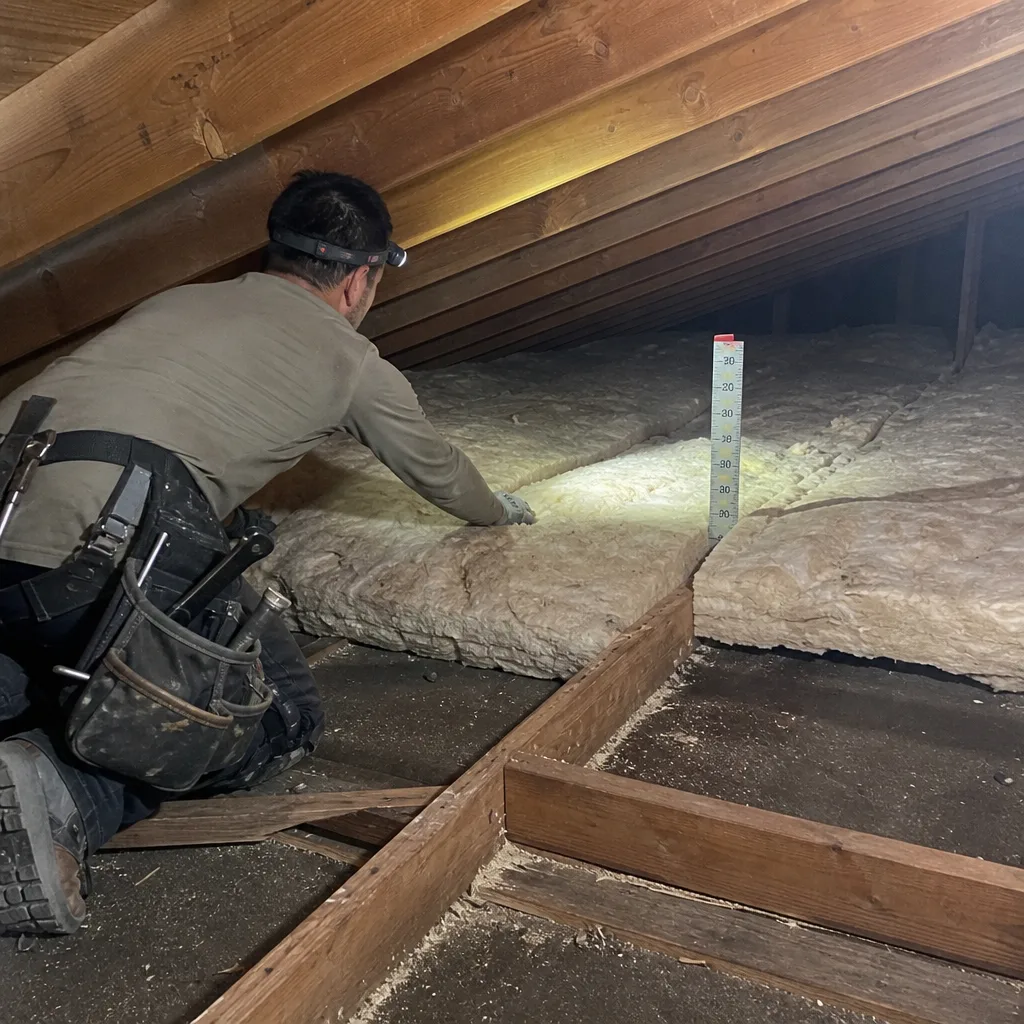
- Attic square footage and geometry: A flat-ceiling 1,200 sq ft ranch in Chatsworth is straightforward. A craftsman bungalow in Highland Park with knee walls, dormers, and a 14-inch clearance over the bathroom costs more to insulate correctly – not because we charge more per bag, but because the crew hours are genuinely higher.
- Material choice – cellulose vs. fiberglass vs. mineral wool: Cellulose (GreenFiber is a common brand we use) runs $0.15 to $0.25 per sq ft cheaper than fiberglass, and $0.60 to $1.00 cheaper than Rockwool per square foot installed. The right choice depends on moisture exposure, existing framing, and whether fire resistance is a priority – attics near the LA wildland-urban interface sometimes warrant mineral wool.
- Current R-value and starting conditions: Homes built before 1980 in Los Angeles often have R-11 or less in the attic. Starting that low means more material. A 2005 home in Torrance that already has R-19 might only need a top-up to reach R-38, which cuts material cost by 30 to 40 percent.
- Air sealing scope required before insulation goes in: A 1960s home in Crenshaw with original can lights, unblocked interior walls, and unsealed top plates might need two to four hours of air sealing before we touch the insulation blower. That’s $400 to $700 of work that genuinely has to happen first – running insulation over unsealed penetrations doesn’t fix the air loss, it hides it.
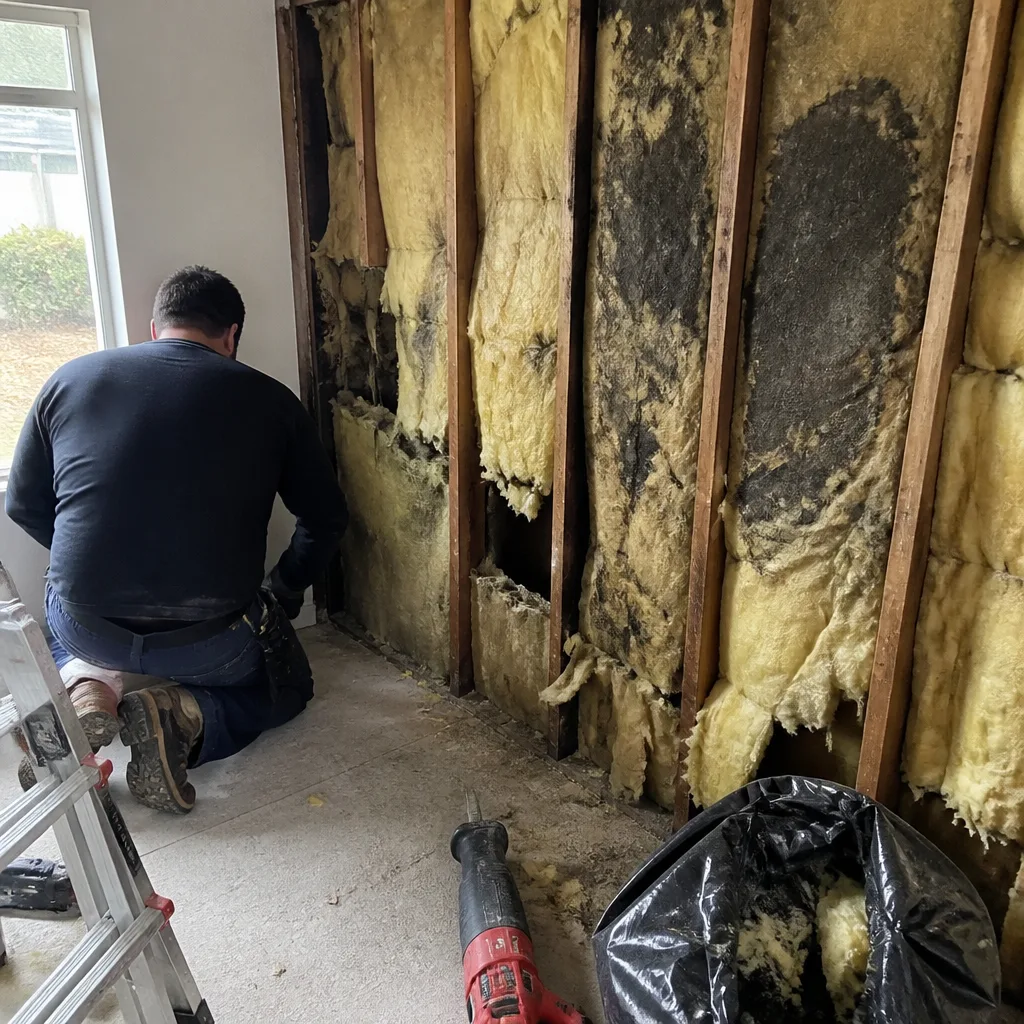
- Removal of existing material: If the attic has rodent-contaminated batt insulation, blown-in cellulose with moisture damage, or vermiculite that needs testing, that material has to come out before new insulation goes in. Removal and haul-away in Los Angeles typically adds $600 to $1,800 depending on depth and contamination level.
- Los Angeles climate zone: LA spans multiple Title 24 climate zones (Zone 9 through Zone 10 cover most of the metro; Zone 6 applies to coastal areas from Malibu to Palos Verdes). Zone 6 homes near the coast often need less R-value to meet code because ambient temperatures are more moderate, which can reduce material depth and cost slightly. Zone 9 and 10 – the Valley, East LA, and the inland neighborhoods – are the hot zones where hitting R-49 pays back the fastest.
 Before
 After
AfterLos Angeles Neighborhood Pricing Notes
Pricing isn’t uniform across the city, and it’s worth naming a few patterns we see repeatedly.
In the San Fernando Valley – Northridge, Reseda, Van Nuys, and Canoga Park – attic temperatures routinely hit 140 to 160 degrees Fahrenheit in July and August. Those extreme temperatures accelerate settling in cellulose and batt insulation, and they also mean the payback period on a full R-49 upgrade is shorter than in coastal neighborhoods. Most Valley homes we work on are post-1950 tract houses with flat ceilings and good attic access, which keeps labor efficient. A typical 1,400 sq ft attic in Northridge runs $2,100 to $3,200 for blown-in fiberglass to R-49 with air sealing included.
In East LA and Boyle Heights, we see a high proportion of pre-1960 homes with older framing and few or no existing top-plate blocks. Air sealing scope is heavier here, and the homes are often smaller (900 to 1,100 sq ft footprints), so total project cost is usually on the lower end – $1,600 to $2,400 – but the air sealing component is proportionally larger.
In Brentwood, Pacific Palisades, and Mar Vista, it’s not uncommon to find homes where a previous contractor installed blown-in insulation over an unsealed attic floor. We’ve pulled blower-door readings on homes in this corridor showing 3,800 to 5,200 CFM50 – well above what the air sealing should have allowed – because the insulation was installed first and the leaks were simply buried. Correcting that requires partial removal, sealing, and reinstallation. That’s a $3,000 to $5,500 scope, and it’s entirely avoidable when the work is done in the right order.
In Compton, Inglewood, and South LA, older housing stock frequently has no attic insulation at all. A full install from bare joists on a 1,100 sq ft attic typically runs $1,800 to $2,600 for cellulose to R-38, plus $400 to $700 for air sealing before the blow.
Cellulose vs. Fiberglass Blown-In: Which Costs Less in LA?
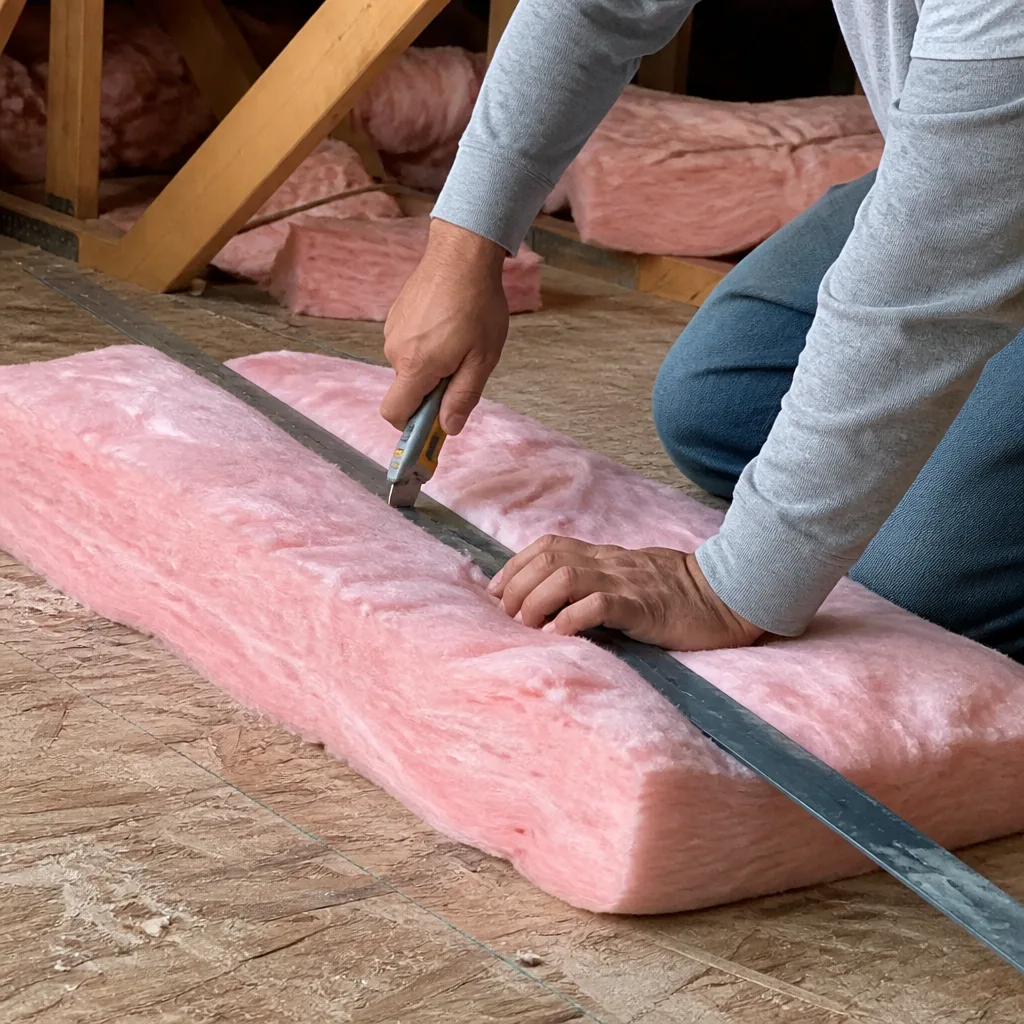
Cellulose costs $0.15 to $0.30 per square foot less than fiberglass in installed price for most attic scopes. On a 1,400 sq ft attic, that’s a $210 to $420 difference – real money, but not always the deciding factor.
Fiberglass (Owens Corning ProPink, Johns Manville Spider, or Knauf EcoStar) settles less over time than cellulose, which means the R-value you install today is closer to the R-value you have five years from now. Cellulose is made from roughly 80 percent recycled content, which matters to a number of homeowners we work with in neighborhoods like Atwater Village and Culver City. Both materials perform well in LA’s climate. Neither is a wrong choice – the right answer depends on budget, moisture exposure, and whether any existing material stays in place.
Rockwool (Rockwool AFB or similar) costs the most – typically $0.60 to $1.00 per square foot more than fiberglass – but provides Class A fire resistance and performs better in attics with any moisture exposure. For homes along the wildland-urban interface in Chatsworth or Sunland-Tujunga, it’s worth discussing.
How to Save on Blown-In Insulation in Los Angeles
Combine air sealing and insulation in a single appointment. We build air sealing in as a standard step, not an add-on, so this happens by default. But if you’ve gotten quotes elsewhere, ask whether air sealing is a separate line item with a separate mobilization fee. Two visits cost more than one.
Check current LADWP and SoCalGas rebate programs before signing anything. The Home Upgrade Program through SoCalGas has paid $200 to $800 on qualifying insulation projects in recent years. Income-qualified programs can cover significantly more. We pull the current rebate schedule during the estimate and apply what’s available – we don’t quote you a number that was true six months ago.
Get a second opinion on any written estimate. We offer a free second opinion on any competing quote in writing. Bring us the other contractor’s scope and price; we’ll read it with you and tell you exactly what’s included, what’s missing, and whether the price reflects the LA market. That’s not a sales tactic – it’s the only way you can actually compare quotes that may be scoping the work differently.
Don’t skip air sealing to save money upfront. We’ve measured the results of skipping it, and they’re not good. A home in Mar Vista we assessed in 2024 had R-38 blown-in cellulose installed by a previous contractor – and a blower-door reading of 4,600 CFM50. That’s a leaky building dressed in insulation. The homeowner paid twice: once for the original blown-in job, and again for partial removal, air sealing, and reinstallation. Doing it right the first time costs less.
Ask for a flat written price before any work starts. Hourly estimates on insulation jobs create the wrong incentive structure. A flat written scope – material, labor, and any auxiliary work – lets you compare bids on equal terms and protects you from scope creep. That’s Haven Standard Clause 1, and it applies to every job we quote.
To get a written price for your Los Angeles home, call (628) 226-1097. The estimate is free, and you’ll have a number in writing before we schedule anything.
What’s Included With Every Envelope Insulation Job
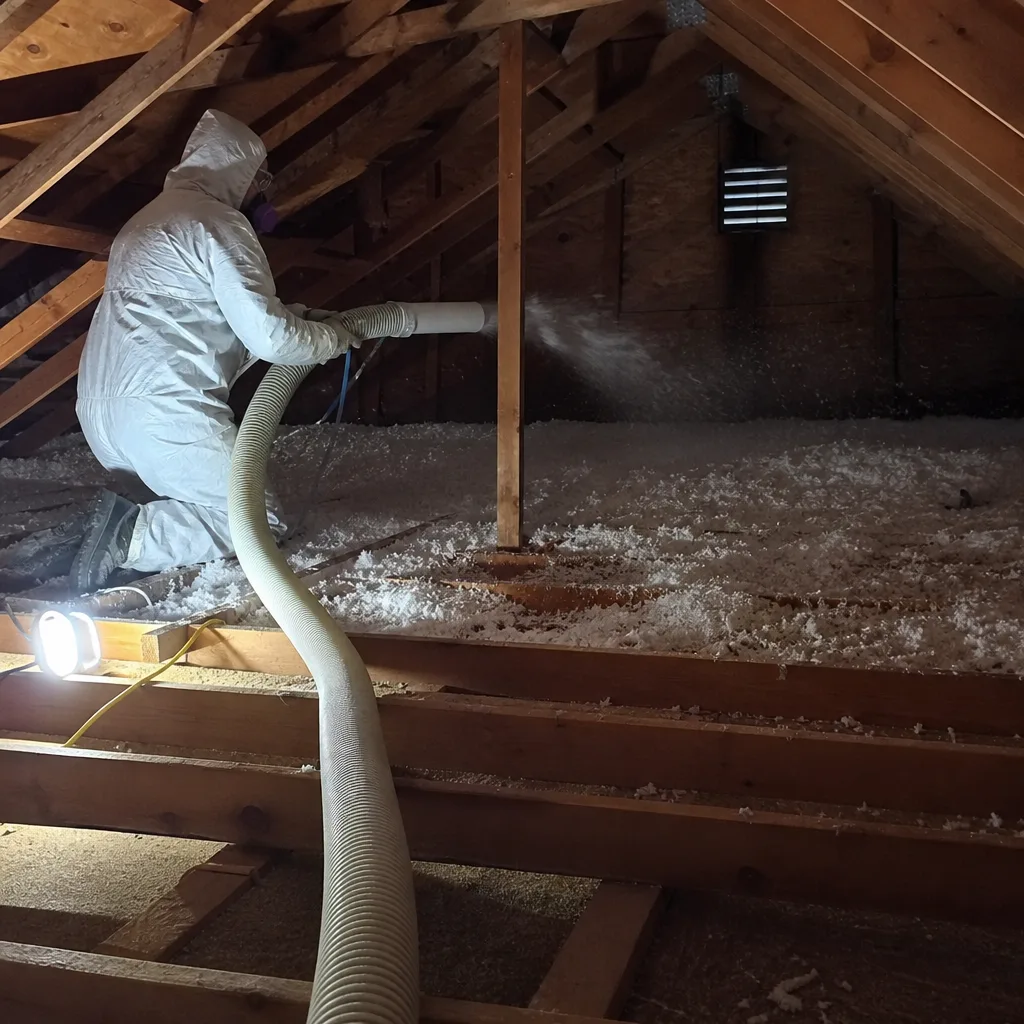
We put this here because pricing comparisons only make sense if you know what’s actually in the price.
- Written price before any work starts – flat scope, written warranty, written materials list. No verbal estimates that shift when the crew arrives.
- Air sealing completed before insulation is added – top plates, can light penetrations, mechanical chases, and any other bypasses the blower-door identified. This is not an upsell. It’s the prerequisite.
- Before-and-after blower-door readings on applicable jobs – a CFM50 measurement taken before sealing and again after, so you have a documented number showing what changed. “We improved your air sealing” is a feeling. “CFM50 went from 3,900 to 1,800” is a fact.
- Documented photo record on every visit – included on every job, not available on request.
- 365-Day Done Right Promise – if the work isn’t right, we make it right. In writing, not over a phone call you have to follow up on.
- Background-checked, uniformed technicians – you get a named technician and a text when they’re on the way, under the Haven Standard: Arrive on Schedule.
Materials sourced from Owens Corning, Johns Manville, Knauf, Rockwool, CertainTeed, Icynene, Demilec, and GreenFiber. No proprietary product lock-in means we spec the right material for your attic, not the one we happen to stock most of.
FAQs – Blown-In Insulation Cost in Los Angeles
How much does blown-in insulation cost per square foot in Los Angeles?
Blown-in insulation in Los Angeles costs $1.20 to $2.80 per square foot installed, with the range driven by material (cellulose is the low end, Rockwool the high end), starting R-value, and attic access conditions. A 1,200 sq ft attic upgraded to R-38 with cellulose typically runs $1,600 to $2,200; the same attic taken to R-49 with fiberglass runs $2,000 to $2,900. For a written price on your specific home, call (628) 226-1097 – the estimate costs nothing.
Is it cheaper to use cellulose or fiberglass blown-in insulation in LA?
Cellulose is $0.15 to $0.30 per square foot cheaper than fiberglass in most Los Angeles attic applications. On a typical 1,300 sq ft attic, that’s $195 to $390 in material savings. Both materials meet Title 24 requirements when installed to the correct depth. Fiberglass settles less over time; cellulose has a higher recycled content. The decision usually comes down to budget and whether any moisture risk is present in the attic space.
Does blown-in insulation cost more in older Los Angeles homes?
Yes, typically $300 to $900 more for pre-1980 construction, primarily because of the air sealing scope. Older homes – Hancock Park Tudors, Echo Park bungalows, Boyle Heights courtyard apartments – have more penetrations, fewer fire-blocks, and original can lights that all need to be sealed before insulation goes in. The insulation material cost is the same; the labor hours on the air sealing side are higher. We measure the air sealing scope during the estimate so that cost is in your written price before any work starts.
Can blown-in insulation be installed in Los Angeles walls, not just the attic?
Yes. Retrofit wall insulation using a blown-in technique (sometimes called BIB or dense-pack) costs $300 to $600 per 100 square feet of wall area in the Los Angeles market. Small holes are drilled into either the interior drywall or exterior sheathing, insulation is blown in at higher density to fill the cavity, and the holes are patched. It’s a common scope in older Silver Lake, Atwater Village, and Los Feliz homes that have no wall insulation at all. Results vary based on cavity depth and framing type; a blower-door test before and after shows the actual air-sealing result.
Are there rebates for blown-in insulation in Los Angeles in 2026?
Yes, potentially $200 to $800 in rebates through LADWP and SoCalGas Home Upgrade programs, with higher amounts available for income-qualified households. The exact figures change based on program funding cycles, which is why we pull current rebate availability during the estimate rather than printing a number that may no longer apply. Federal tax credits under the Inflation Reduction Act have also applied to qualifying insulation improvements – consult a tax professional for your specific situation, as those credits have income and project requirements that vary. Call (628) 226-1097 and we’ll tell you what’s currently available for your address.
How long does blown-in insulation last in a Los Angeles attic?
Cellulose blown-in insulation lasts 20 to 30 years in a properly sealed Los Angeles attic before settling meaningfully affects R-value performance. Fiberglass blown-in lasts somewhat longer before measurable R-value loss – often 30 years or more. The bigger risk in LA attics isn’t material degradation: it’s rodent activity, moisture from a roof leak, or HVAC condensation that contaminates the insulation and requires earlier replacement. A documented photo record on installation gives you a baseline to compare if you suspect a problem years later.
Why Air Sealing Comes First – and Why It Affects Your Total Cost
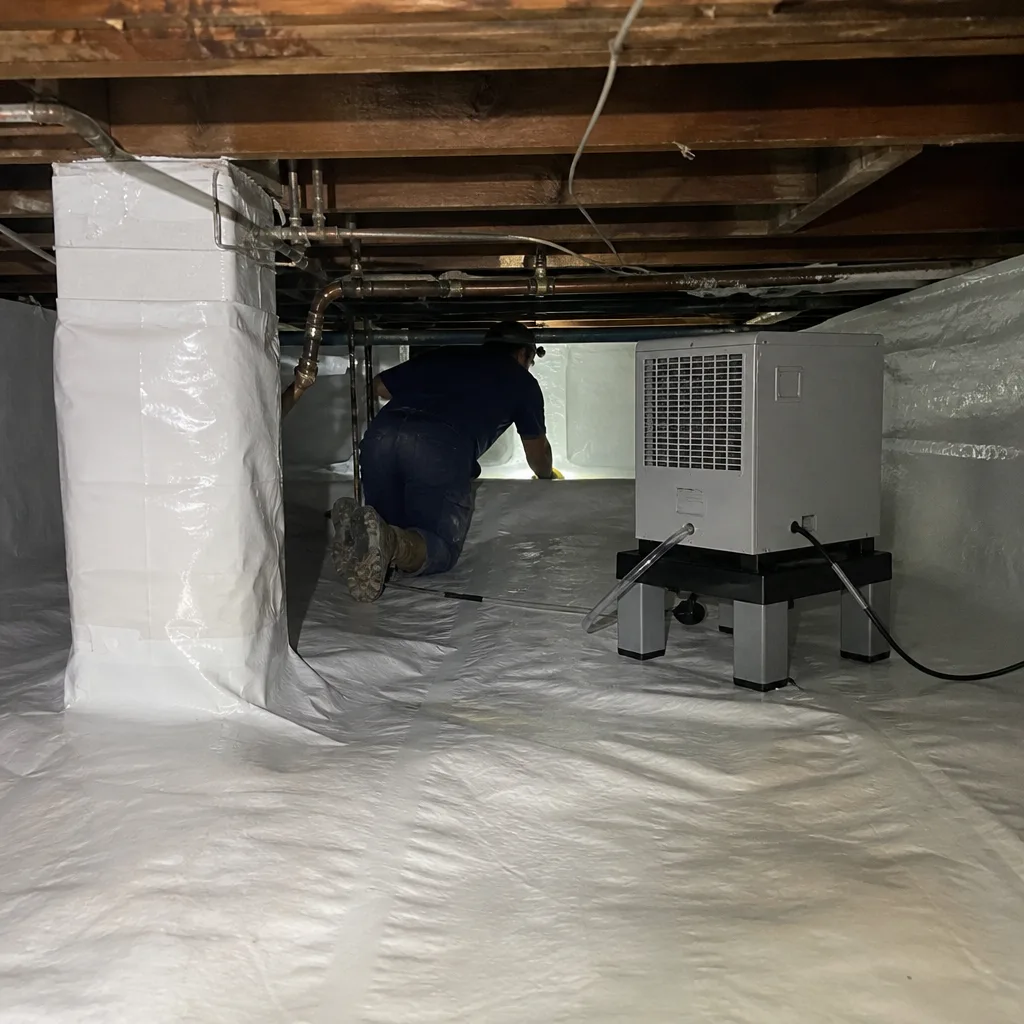
The single most common mistake in attic insulation – in Los Angeles and everywhere else – is blowing insulation over an attic floor that still has open top plates, unblocked can lights, and unsealed mechanical penetrations. Those leaks don’t disappear under 12 inches of cellulose. Conditioned air from your living space still rises through them and exhausts into the attic. You’ve added R-value but you haven’t fixed the air exchange, and in a Los Angeles home running air conditioning from May through October, that’s a meaningful monthly cost.
We measure this with a blower-door test – a pressurization reading that tells us, in a single number (CFM50, or cubic feet per minute at 50 pascals of pressure), how much air the building envelope is losing. We take that reading before sealing and after. The difference is the documented result of the air sealing work.
In Natomas-style tract homes (a California build pattern also common in parts of the East Valley), we regularly see blower-door readings of 3,500 to 5,000 CFM50 before air sealing. After properly sealing top plates, blocking can lights, and addressing mechanical chases, that number typically drops to 1,500 to 2,500 CFM50. That’s not a rough estimate – that’s a measured result, delivered in writing before we leave. You can read more about this process on our Blown-In Insulation in Los Angeles page.
Air sealing adds $400 to $900 to a typical Los Angeles attic scope. It’s the most cost-effective work we do on any given job. The blower-door numbers show it. We publish them precisely because “trust us, it works” isn’t documentation.
How We Price Blown-In Insulation at Envelope Insulation Co.
Every quote starts with a site visit. We measure the attic, take an access inventory, check current R-value with a probe, and run a preliminary blower-door reading if the customer hasn’t had one done recently. From that, we build a flat written scope: material, R-value target, air sealing line items, removal if needed, and any auxiliary work like attic cleaning or radiant barrier. That scope has a single price attached to it.
You see the price before anyone schedules a crew. Not a range. Not “starting at.” A number, in writing, with a written warranty attached. That’s Haven Standard Clause 1, and we’ve operated that way since Wes Okafor started the company in 2016. Across more than 9,000 homes sealed and insulated in the Los Angeles area, we haven’t found a good reason to change it.
If you have a competing quote from another contractor, bring it. We’ll read the scope with you and tell you what it includes, what it doesn’t, and whether the pricing is consistent with the current LA market. That’s the free second opinion offer – no strings, no pressure to book with us afterward.
The goal is that you walk away from every interaction with a better understanding of what work your home actually needs and what it actually costs, whether you hire us or not. Wes Okafor built Envelope around that idea, and it’s the clearest thing that separates how we operate from how most insulation contractors quote work in this market.
Key Takeaways
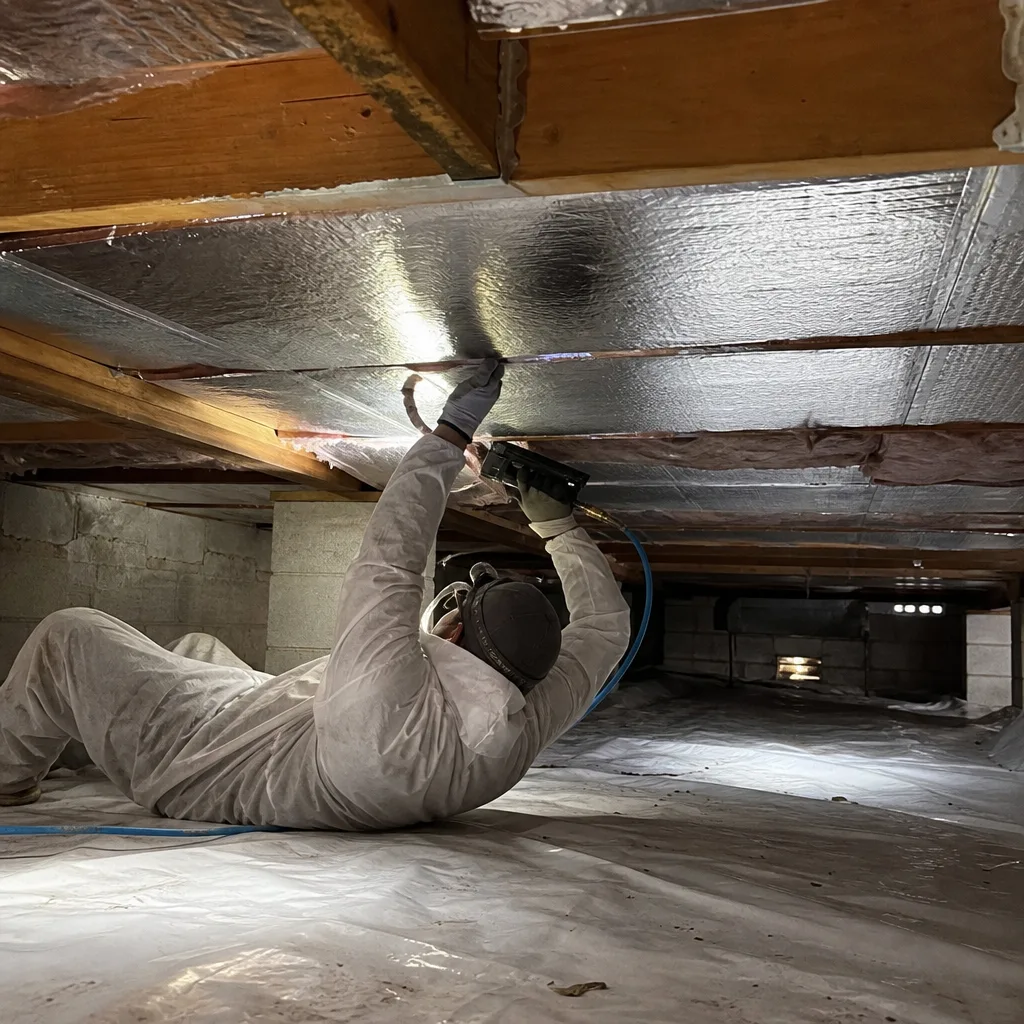
- Blown-in insulation in Los Angeles costs $1.20 to $2.80 per square foot installed; most full attic upgrades run $2,200 to $3,800 for a 1,200 to 1,600 sq ft home.
- Cellulose is the least expensive material; Rockwool is the most. Fiberglass sits in the middle and settles less than cellulose over time.
- Air sealing ($400 to $900) must be completed before insulation is added. Skipping it leaves the air leaks in place and the insulation’s R-value doing less work than it should.
- California Title 24 requires R-38 minimum in most LA climate zones; R-49 is the current best practice for homes in the San Fernando Valley and other Zone 9/10 areas that run central air.
- LADWP and SoCalGas rebates may offset $200 to $800; income-qualified programs can cover more. Check current availability at the time of your estimate, not at the time of this article.
- A before-and-after blower-door test is the only way to verify that air sealing actually reduced air loss. Ask any contractor whether they provide documented CFM50 readings – before and after, in writing.
- Every Envelope job starts with a written flat price and ends with a documented photo record and written warranty. The 365-Day Done Right Promise applies to all completed work.
Get a Written Price for Your Los Angeles Home
If you want to know what blown-in insulation will actually cost for your specific attic – not a range, not a rough number, but a flat price in writing with a scope attached – call (628) 226-1097. A live person answers, not voicemail. We’ll schedule a site visit, measure the space, and give you a written price before anything is scheduled. The estimate is free. The home page has more on the full range of building-envelope services we cover if you want to understand what a complete energy assessment looks like.
If you have a quote from another contractor, bring it. We’ll review it with you at no charge and help you understand what you’re actually comparing.
Written by Wes Okafor, Owner at Envelope Insulation Co. / Topside Attic Insulation Los Angeles, serving Los Angeles since 2016.
Pricing reflects the Los Angeles market as of 2026. Topside Attic Insulation Los Angeles offers free estimates – call (628) 226-1097.
What Our Customers Say
"They photographed rodent damage in the old insulation that we had no idea about, and priced the exclusion work separately so we could decide."
- Harriet N."The winter gas bill dropped by about a third. They had estimated a quarter, so they under-promised."
- Genevieve R."Fixed price, clean work, and they hauled the old material away as agreed."
- Todd M.