
CertainTeed Radiant Barrier Installation: The Los Angeles Owner’s Guide
Most CertainTeed radiant barrier installations in Los Angeles run between $2,400 and $4,800 for a typical 1,200-2,000 square foot attic, with same-day starts available when we have your roof geometry on file. We stock CertainTeed-compatible radiant barrier rolls and foil-faced sheathing products on our trucks, and we measure every joist bay before cutting to avoid the waste that drives up material costs. Homeowners usually notice the problem when their second-floor rooms won’t cool below 78°F even after sunset, or when their July electric bill jumps 30% year-over-year despite no change in thermostat setting.
Which CertainTeed Models This Applies To
CertainTeed manufactures radiant barrier products under two main lines: the CertainTeed Solaris reflective roof sheathing line, which is pre-laminated plywood with a foil-facing bonded at the factory, and the CertainTeed MemBrain smart vapor retarder series, which is sometimes paired with standalone radiant barrier foil in hybrid attic systems. The Solaris sheathing is stamped with a lot number and “ASTM C1313″ on the foil face; if that stamp has oxidized to illegibility, check the edge of the panel for a printed date code. The standalone foil rolls carry a CertainTeed logo repeating every 24 inches along one edge, plus a thickness marking - .0018″ or .0025” - that determines whether it is the standard or heavy-duty grade.
We do not use generic foil as a direct substitute for Solaris sheathing because the fire-rating assembly listing is tied to the bonded product. For standalone foil replacements, we will match your existing thickness exactly; mixing .0018″ and .0025″ in the same attic creates uneven reflectivity that shows up as hot spots on an infrared camera. We also stock Reflectix double-reflective insulation as an alternative for certain retrofit applications where the original CertainTeed product is discontinued.
Topside Attic Insulation Los Angeles is an independent service provider and is not affiliated with CertainTeed Corporation.
Signs Your CertainTeed Radiant Barrier Installation Is Failing
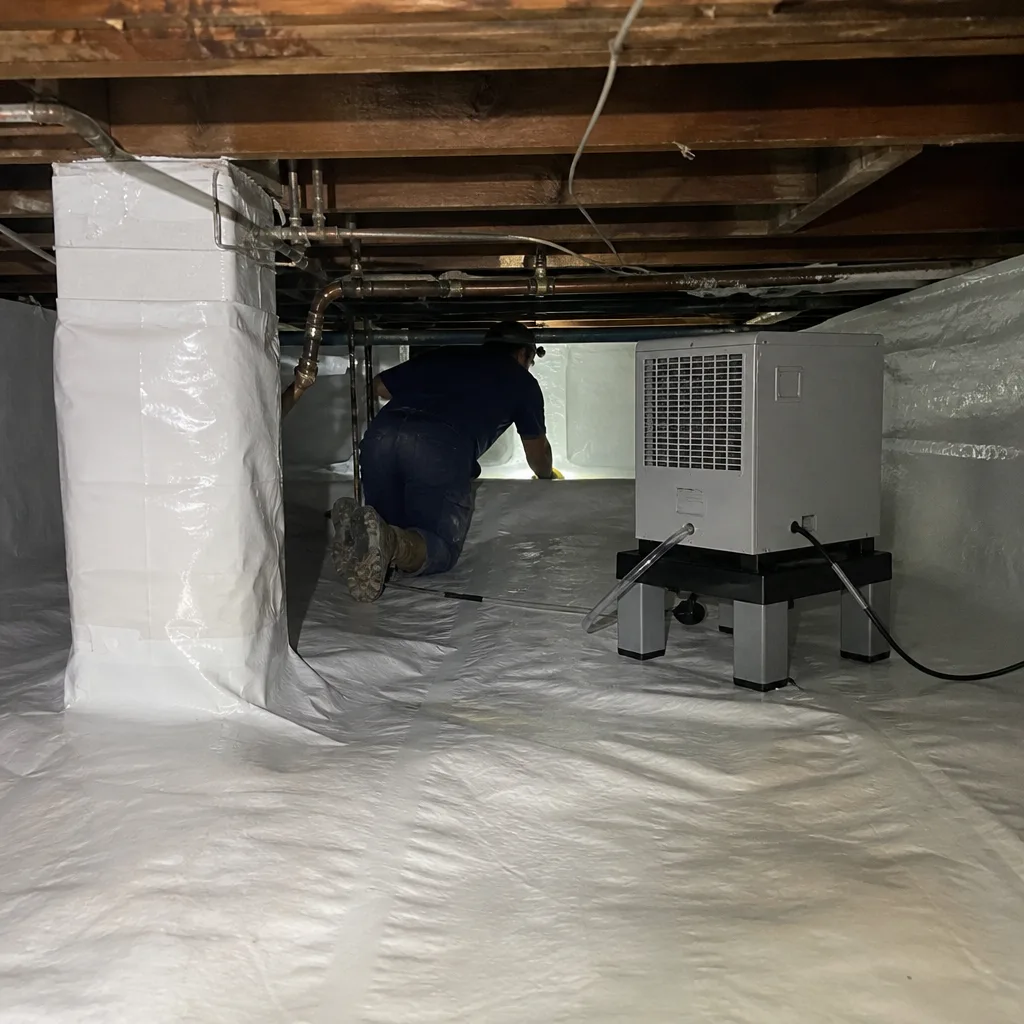
- Surface oxidation visible from the attic hatch. The reflective foil has dulled to a matte gray or chalky white, often starting at the ridge line where summer attic temperatures in Los Angeles exceed 150°F. Once emissivity rises above 0.10, the barrier is reflecting less than 90% of radiant heat and working as expensive attic decoration.
- Dust accumulation forming a uniform gray film. Fine particulate from vented soffits or unsealed top plates settles on the foil face; in Los Angeles, this is often wildfire ash or freeway particulate that infiltrates through gaps the original installer skipped. A blower-door test - a pressurization reading that shows, in one number, how much air your building envelope is losing - will typically reveal 2,500+ CFM50 of extraneous attic ventilation on homes with this pattern.
- Moisture staining or delamination at the panel edges. Solaris sheathing relies on the foil-to-wood bond; when attic humidity spikes during Santa Ana wind reversals or after a roof leak, the adhesive fails starting at the corners. We see this most often in Mid-Century ranch homes with original cedar shake roofs and inadequate eave ventilation.
- Hot ceiling patches directly below skipped bays. The original installer ran short on material and left every third rafter bay unlined, or cut around obstructions without returning to patch. An infrared scan shows these as 12-18°F warmer strips on the drywall below; in Los Angeles, this is common above hallway transitions where framers packed ducts tight to the roof deck.
- Animal damage with nesting material packed against the foil. Roof rats and squirrels pull at loose edges to access the cavity behind; their urine accelerates oxidation and introduces compressed insulation that eliminates the critical air gap. We document this with photos, remove the contamination, and install rodent-proof screening as part of the replacement scope.
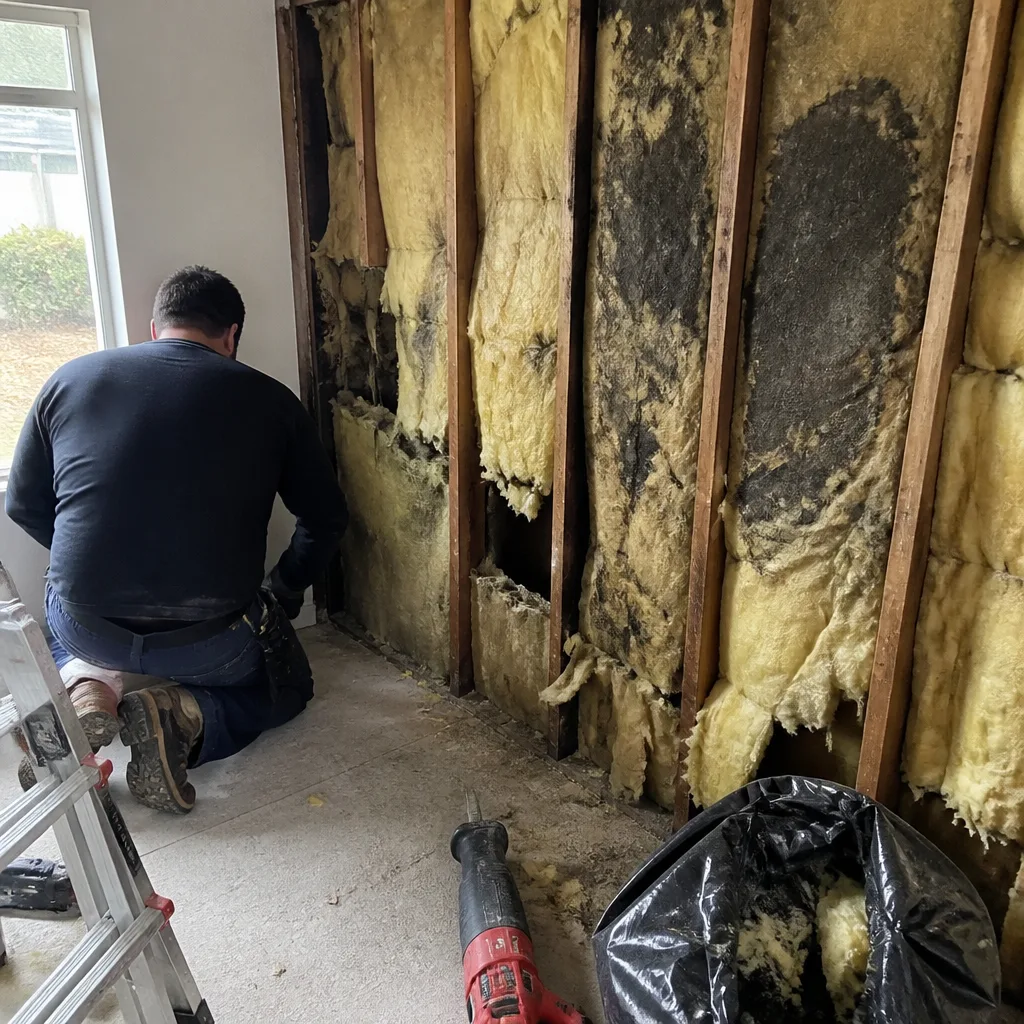 Before
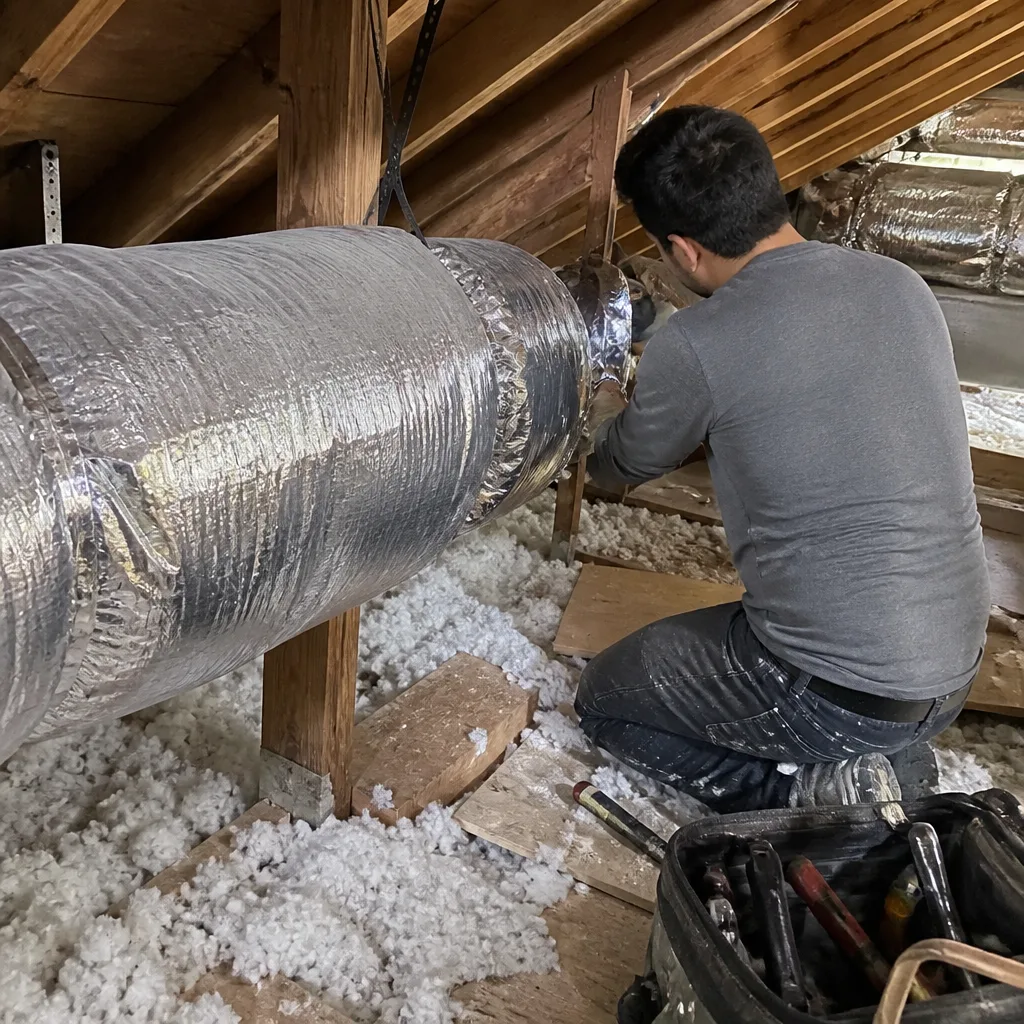 After
AfterReplacement Cost & What’s Included
| Component | Typical Range (Los Angeles) |
|---|---|
| Standalone foil replacement, 1,200 sq ft attic | $2,400 - $3,400 |
| Solaris sheathing panel replacement, partial | $3,200 - $4,800 |
| Full attic with air sealing + radiant barrier | $4,800 - $7,200 |
| Additional blower-door verification | Included |
What moves a job toward the higher end: roof pitch above 8/12 requiring scaffold or roof jacks, existing insulation that must be removed first, or fire-damaged sheathing that needs structural repair before the new barrier goes in. Every written scope includes the exact square footage to be covered, the product specification by ASTM number, and the installed air-gap depth. Under Haven Standard Clause 1, you get that written price before any work starts - flat, not time-and-materials. The 365-Day Done Right Promise covers labor and material defects; product warranties pass through from CertainTeed or Reflectix at their stated terms.
DIY or Call Us?
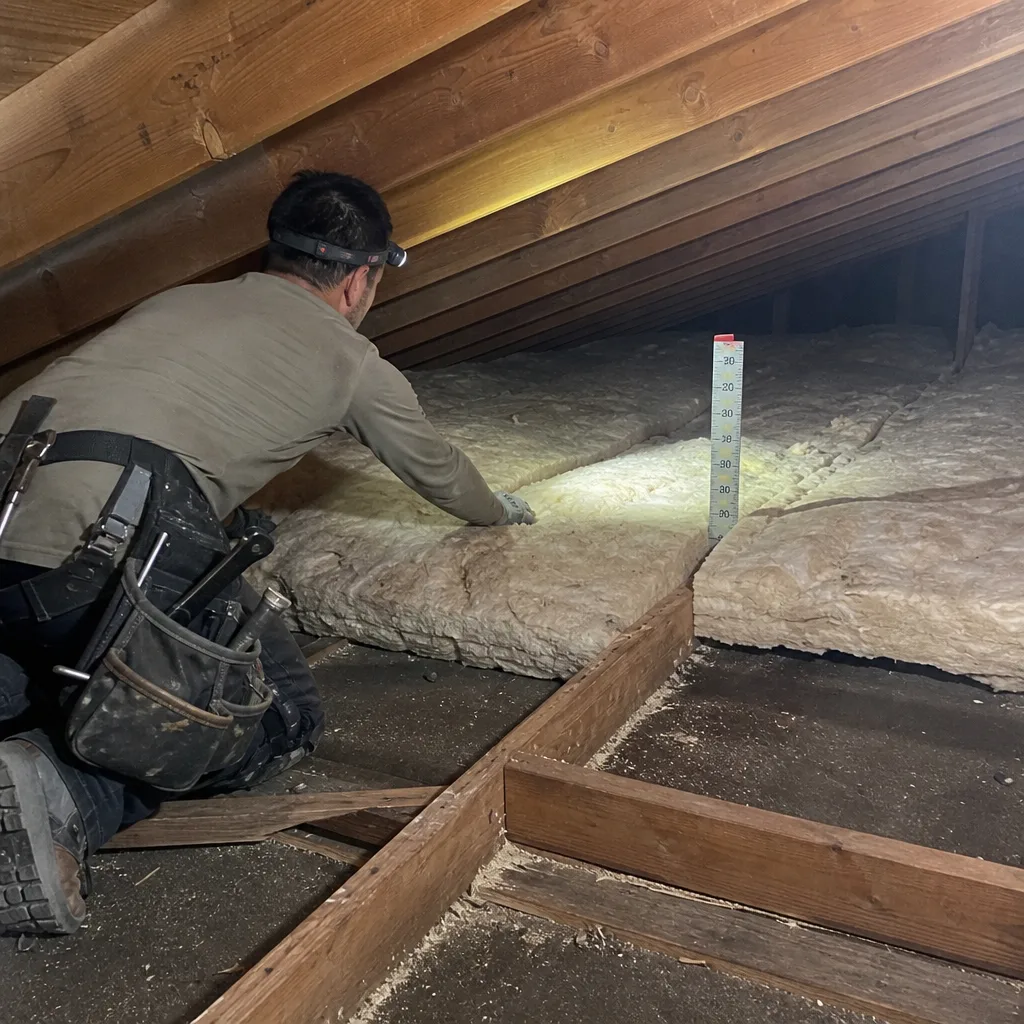
You can safely verify what you have: photograph the product stamp, measure one full sheet or roll width, and check the attic for the five symptoms above. Do not attempt to install or replace radiant barrier foil yourself if your attic has active knob-and-tube wiring, if the pitch exceeds 6/12, or if you are working within 18 inches of a gas flue or masonry chimney - the foil is conductive and creates both fire and shock hazards when it contacts energized or hot surfaces.
The failure we see most from DIY attempts is compressing the product against the roof deck or existing insulation, which eliminates the air gap that makes the physics work. A radiant barrier needs a minimum 3/4″ clear space on at least one side; without it, conduction overwhelms reflection and your attic performs worse than before. We carry the proper standoff clips and spacers on every truck, and we verify the gap with a feeler gauge before we leave. Seal the holes first. Then measure the R-value. In that order.
For a written price on your CertainTeed radiant barrier replacement in Los Angeles, call (628) 226-1097. Estimates are free, and we stock the common widths on our trucks for same-week starts.
FAQs
In Los Angeles, a properly installed standalone foil barrier lasts 15-25 years before oxidation reduces performance below 80% reflectivity; Solaris sheathing typically outlasts the roof covering itself. Proximity to the coast accelerates salt-air corrosion, while inland valley installations see faster dust accumulation. Call (628) 226-1097 and we will assess your specific attic conditions.
Localized delamination or small tears can be patched with matching foil tape if the surrounding material still tests above 85% reflectivity, but oxidation and widespread dust infiltration require full replacement. We test reflectivity with a handheld meter during our estimate and show you the reading. Call (628) 226-1097 for a free assessment.
A standalone foil replacement in a 1,500 square foot Los Angeles attic takes one day for a two-person crew; full sheathing replacement adds a second day for structural fastening and inspection. We schedule start times with a named technician and text you when they are on the way.
We carry 48″ and 60″ width rolls of .0025″ foil, plus Solaris-compatible sheathing panels in 4×8 dimensions, on every Los Angeles service vehicle. Less common widths or the discontinued .0018″ heavy-duty grade require a 24-48 hour pull from our distributor in Vernon. We confirm material availability when we deliver your written price.
Written by Wes Okafor, Owner & Lead Insulation Technician, Topside Attic Insulation Los Angeles at Topside Attic Insulation Los Angeles, serving Los Angeles and nearby areas.