
Knauf Vapor Barrier Installation: The Los Angeles Owner’s Guide
Knauf vapor barrier installation in Los Angeles typically runs $1,800-$3,400 for a full crawl space or attic application, and we stock Knauf Insulation Faced Batts and EcoSeal-compatible vapor retarder membranes on our trucks for same-day starts. Most homeowners in Los Angeles discover the failure after a musty smell won’t clear, their energy bill jumps 15-30% in a single summer, or a home inspector flags condensation staining during a refinance. The polyethylene or kraft-facing has torn, delaminated, or was never continuous at the seams to begin with.
Which Knauf Models This Applies To
Knauf manufactures vapor retarder products across three lines we install regularly in Los Angeles: Faced Batts with kraft paper facing (R-13 through R-38, standard and high-density), EcoSeal System components (the water-based elastomeric sealant paired with unfaced batts), and Insulation Membrane Plus (IMP) for crawl space encapsulation. The critical compatibility gotcha: Knauf’s kraft-facing is not a true vapor barrier in climate zone 3B where Los Angeles sits; it’s a vapor retarder rated at roughly 1.0 perm. For crawl spaces or unvented assemblies, you need a supplemental 6-mil polyethylene sheet or Knauf’s IMP product, not just the batt facing alone.
To identify what you have, check the facing label for “ASTM C665 Type II” (kraft-faced) or look for the Knauf logo and R-value printed on the fiberglass itself if the facing has degraded. We also install Reflectix vapor barrier products where radiant heat rejection matters, typically in attic knee walls. Topside Attic Insulation Los Angeles is an independent service provider, not affiliated with Knauf.
Signs Your Knauf Vapor Barrier Installation Is Failing
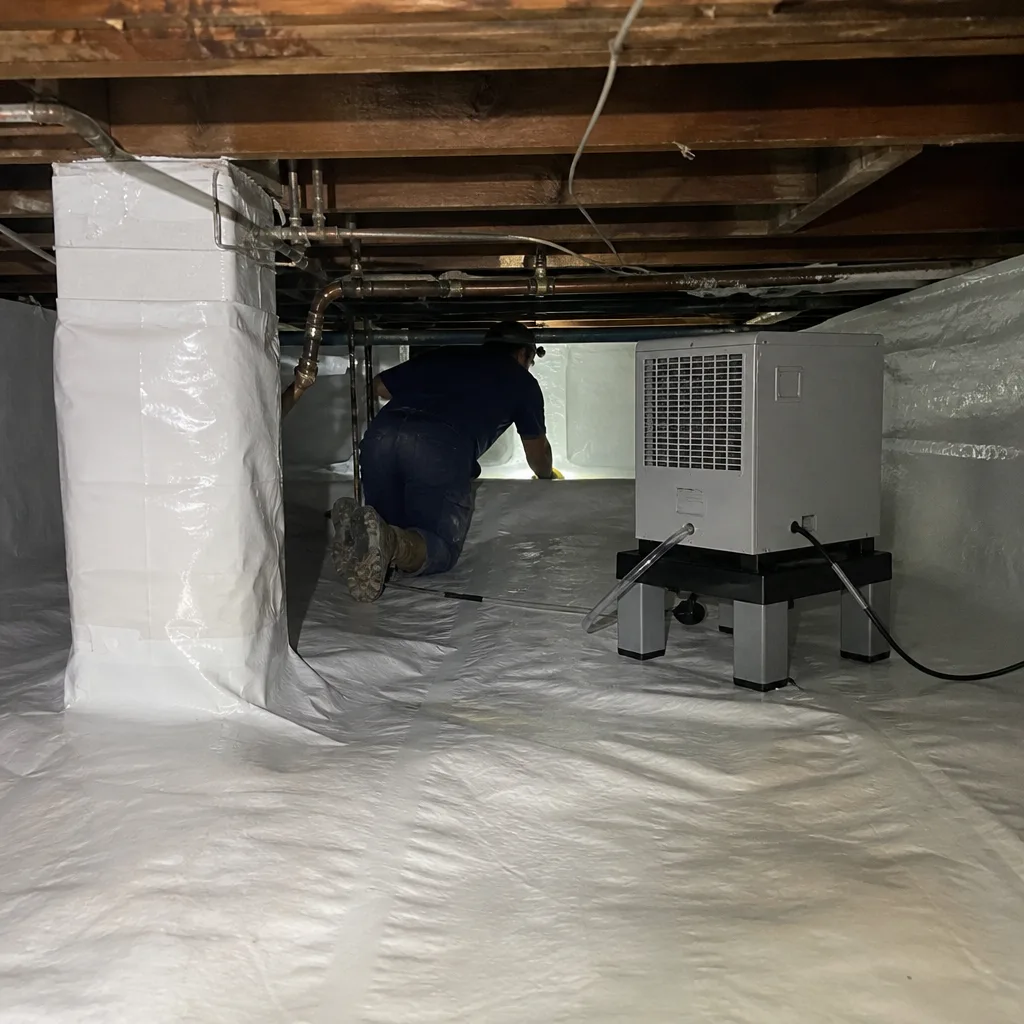
- Musty odors that return within 48 hours of cleaning. This means moisture is passing through a torn or unseamed vapor retarder and condensing on cooler surfaces. In Los Angeles, this accelerates during Santa Ana wind events when relative humidity swings rapidly.
- Condensation on ductwork or plumbing in the crawl space. The vapor barrier’s perm rating has been exceeded or the polyethylene has punctured. Knauf’s 6-mil poly should read zero perm when intact; a single 1/4-inch tear can raise localized moisture vapor transmission by 40%.
- Insulation sagging or dropping from floor joists. The kraft facing has lost its adhesive bond to the batt, usually from prolonged humidity exposure above 70% RH. This is common in Mid-Century homes near the Los Angeles River basin where groundwater tables sit higher than owners realize.
- Wood rot at rim joists or sill plates. Liquid water is reaching framing members because the vapor barrier terminates short of the foundation wall or was never sealed at the perimeter with acoustic sealant. We see this in 1960s ranch homes in the Leimert Park corridor where original installs stopped at the center of the crawl space.
- Mold spots on the facing itself. Organic kraft paper facing has become a food source once moisture breached the asphalt coating. Knauf’s unfaced batts with separate poly sheeting avoid this failure mode entirely.
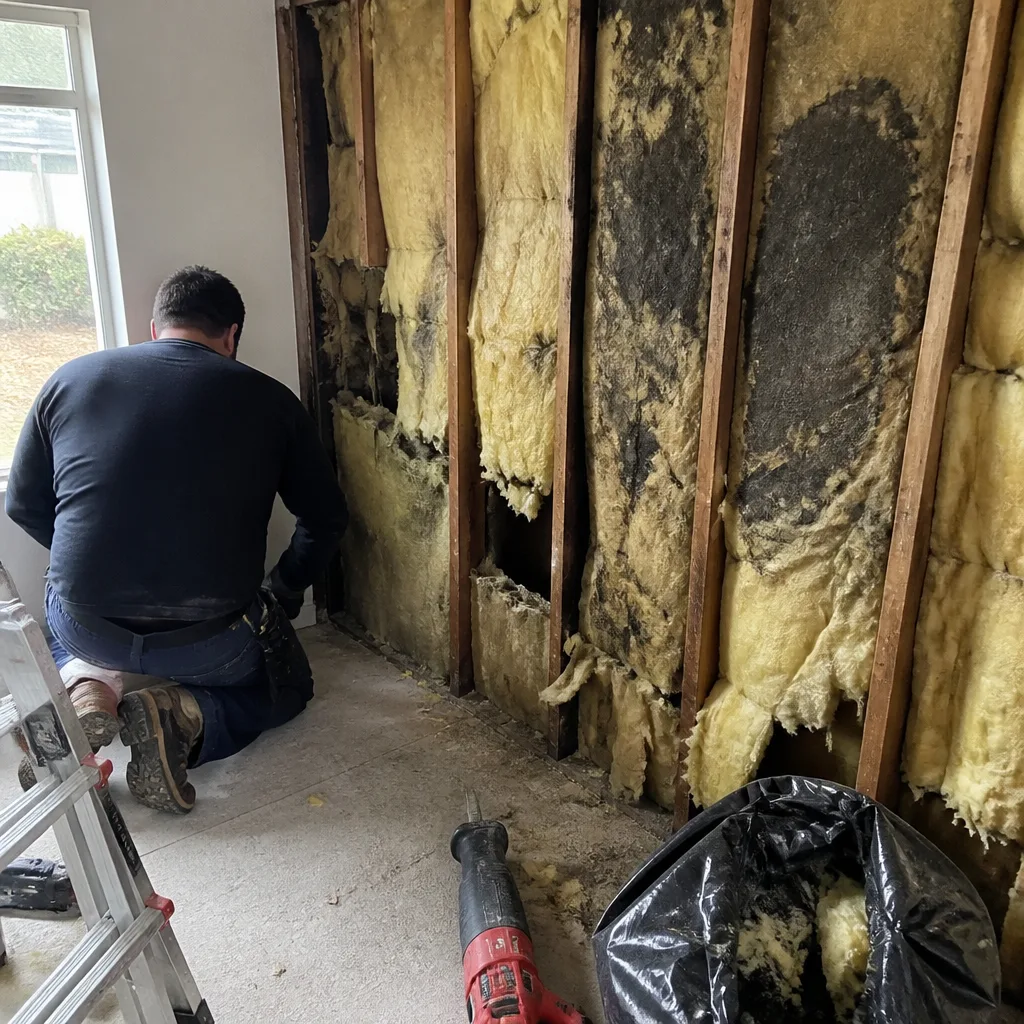 Before
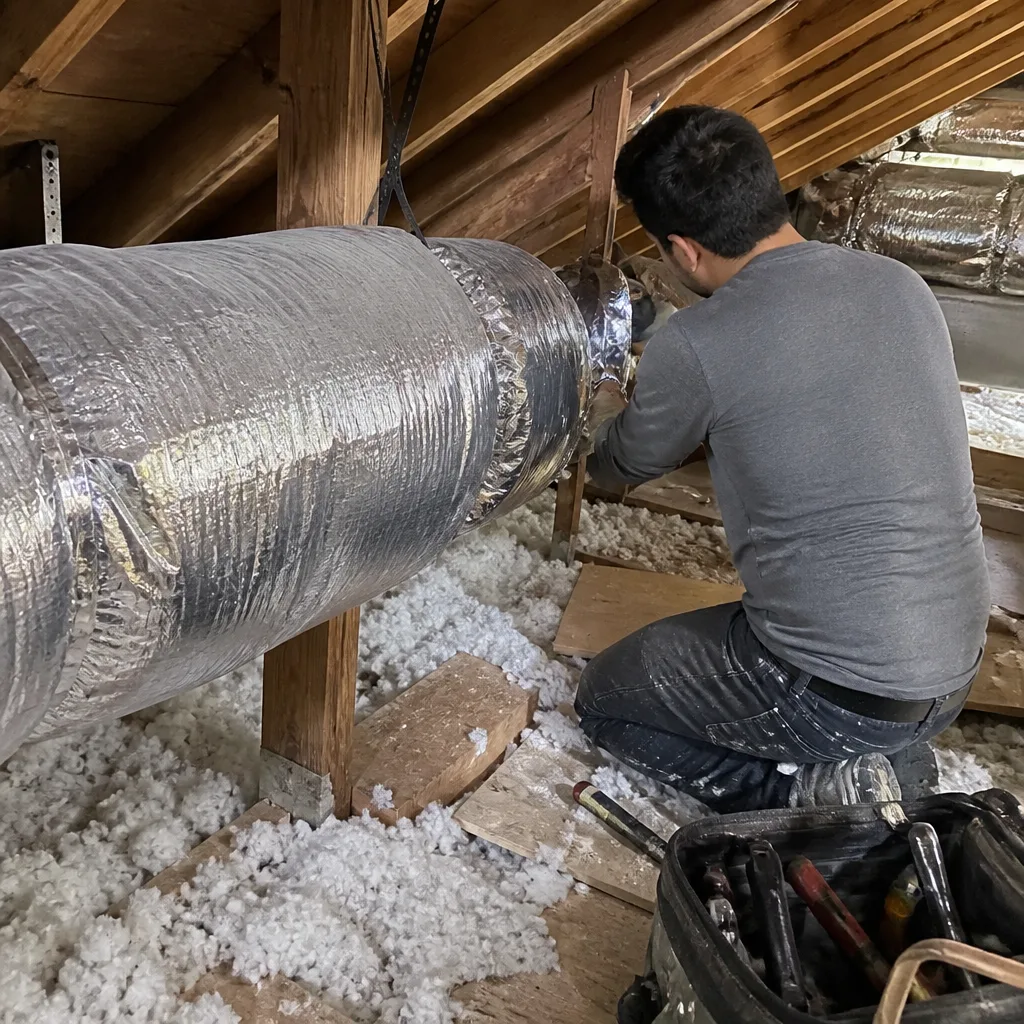 After
AfterReplacement Cost & What’s Included
In Los Angeles, most Knauf vapor barrier replacements fall between $1,800 and $3,400. The low end covers a straightforward crawl space re-sheet with 6-mil polyethylene over existing clean ground, perimeter-sealed to foundation walls. The high end involves full removal of degraded kraft-faced batts, HEPA vacuuming of the substrate, installation of Knauf unfaced batts with separate IMP membrane, and taping of all seams with Knauf-recommended acrylic adhesive tape.
What drives the range: square footage, accessibility (crawl spaces under 18 inches add labor), existing contamination requiring remediation, and whether we need to install mechanical dehumidification. Every job includes our Documented Photo Record, and on full envelope jobs we run a blower-door test - a pressurization reading that shows, in one number, how much air your building envelope was losing before and after our work. The 365-Day Done Right Promise applies. Written price before any work starts, always.
DIY or Call Us?
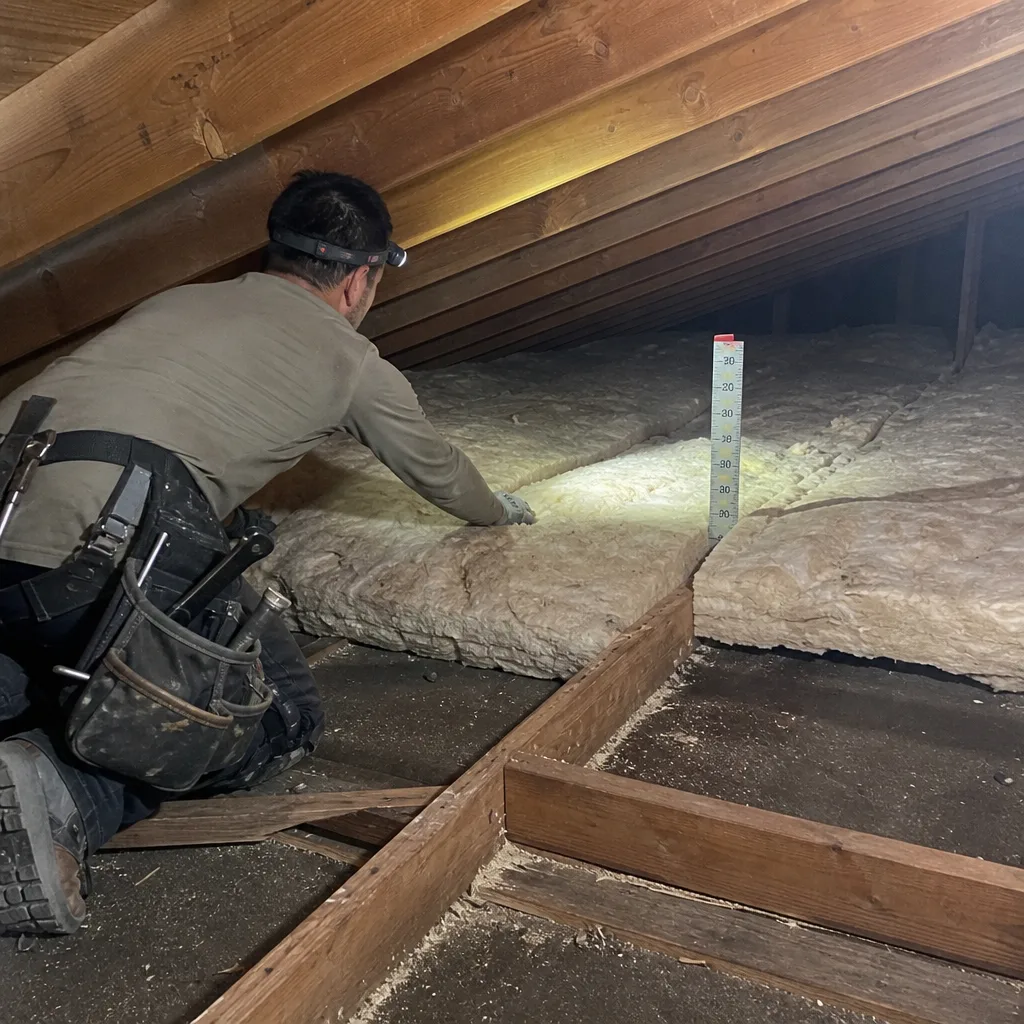
An owner can safely inspect: look for tears, measure how far the poly extends to foundation walls, and photograph any mold for documentation. Do not enter a crawl space with active sewage leaks, compromised structural members, or without a respirator rated for fiberglass and mold.
Where DIY goes wrong: vapor barrier installation is not a laying-flat job. Seams must overlap 12 inches minimum and be taped; termination at walls requires mechanical fastening and acoustic sealant; and in Los Angeles’s mixed-dry climate, getting the perm rating wrong for your specific assembly (vented crawl vs. unvented attic vs. conditioned basement) traps moisture rather than managing it. We have removed homeowner-installed 6-mil poly that created a swimming pool underneath because the ground wasn’t graded and no dehumidifier was specified. Seal the holes first. Then measure the R-value. In that order.
Call (628) 226-1097 for a written price before any work starts.
FAQs
A properly installed 6-mil polyethylene vapor barrier lasts 15-25 years in Los Angeles’s climate zone 3B, though kraft-facing on older batts degrades in 10-15 years due to thermal cycling and occasional humidity spikes. Call (628) 226-1097 for an exact quote on replacement - estimates are free.
Small punctures under 2 inches can be patched with acrylic vapor-barrier tape if the surrounding material is still supple, but widespread embrittlement, seam failures, or incorrect original perm rating means full replacement. We assess this during our free estimate and document it in the photo record.
Most residential vapor barrier replacements in Los Angeles take one day for crawl spaces under 1,500 square feet, or two days if insulation removal and air sealing are included. We arrive with Knauf materials on the truck and do not leave until the Documented Photo Record is complete.
Yes - we carry Knauf 6-mil polyethylene sheeting, Knauf Insulation Membrane Plus, and compatible acrylic seam tape on every truck, plus Reflectix products where radiant barrier integration is needed. Same-day starts are available for standard crawl space and attic applications in Los Angeles.
Written by Wes Okafor, Owner & Lead Insulation Technician, Topside Attic Insulation Los Angeles at Topside Attic Insulation Los Angeles, serving Los Angeles and nearby areas.