
Owens Corning Crawl Space Encapsulation: The Los Angeles Owner’s Guide
Most Owens Corning crawl space encapsulation retrofits in Los Angeles run between $3,800 and $7,200 installed, depending on crawl square footage, existing moisture damage, and whether the foundation needs active dehumidification. We stock Owens Corning-compatible vapor barriers, seam tapes, and closed-cell spray foam on every truck and can typically start same-day or next-day across Los Angeles, from the Valley to the basin. Homeowners usually discover a failure when they smell mustiness seeping into the first floor, notice buckling hardwood near exterior walls, or find their dehumidifier running continuously without dropping relative humidity below 65%.
Which Owens Corning Models This Applies To
Owens Corning does not manufacture a branded crawl space encapsulation “system” in the way some competitors do. Instead, the name appears on the individual components: the Foamular NGX rigid foam board (the pink extruded polystyrene panels used to insulate foundation walls), ProPink loose-fill or batt products sometimes found in vented crawl floor joists, and the EnergyComplete sealant line used at rim joists and penetrations. If your previous installer specified Owens Corning materials, the documentation you received should list the product code, typically starting with “FOAMULAR” followed by a compressive strength rating, 25 or 40 PSI.
To identify what you actually have, check the pink board for an embossed stamp reading “FOAMULAR 150 NGX” or similar. Measure the thickness: 1-inch, 1.5-inch, and 2-inch are standard for crawl walls in Los Angeles, though we have pulled 3-inch boards in hillside homes from Silver Lake to Mt. Washington where the original designer oversized for thermal bridging. The aftermarket decision here is straightforward: Owens Corning Foamular is widely available through distribution, but for vapor barriers we often source equivalent 12-mil or 20-mil reinforced polyethylene, seam-taped with Owens Corning JointSealR foam tape or a compatible acrylic pressure-sensitive tape rated for damp substrates. The compatibility gotcha in Los Angeles is the NGX formulation, introduced in 2021 to replace HBCD flame retardant with a polymeric alternative. NGX boards are not chemically identical to pre-2021 stock, and if you are patching a partial failure, the old and new boards will not bond identically at cut edges without a compatible transition tape.
Signs Your Owens Corning Crawl Space Encapsulation Is Failing
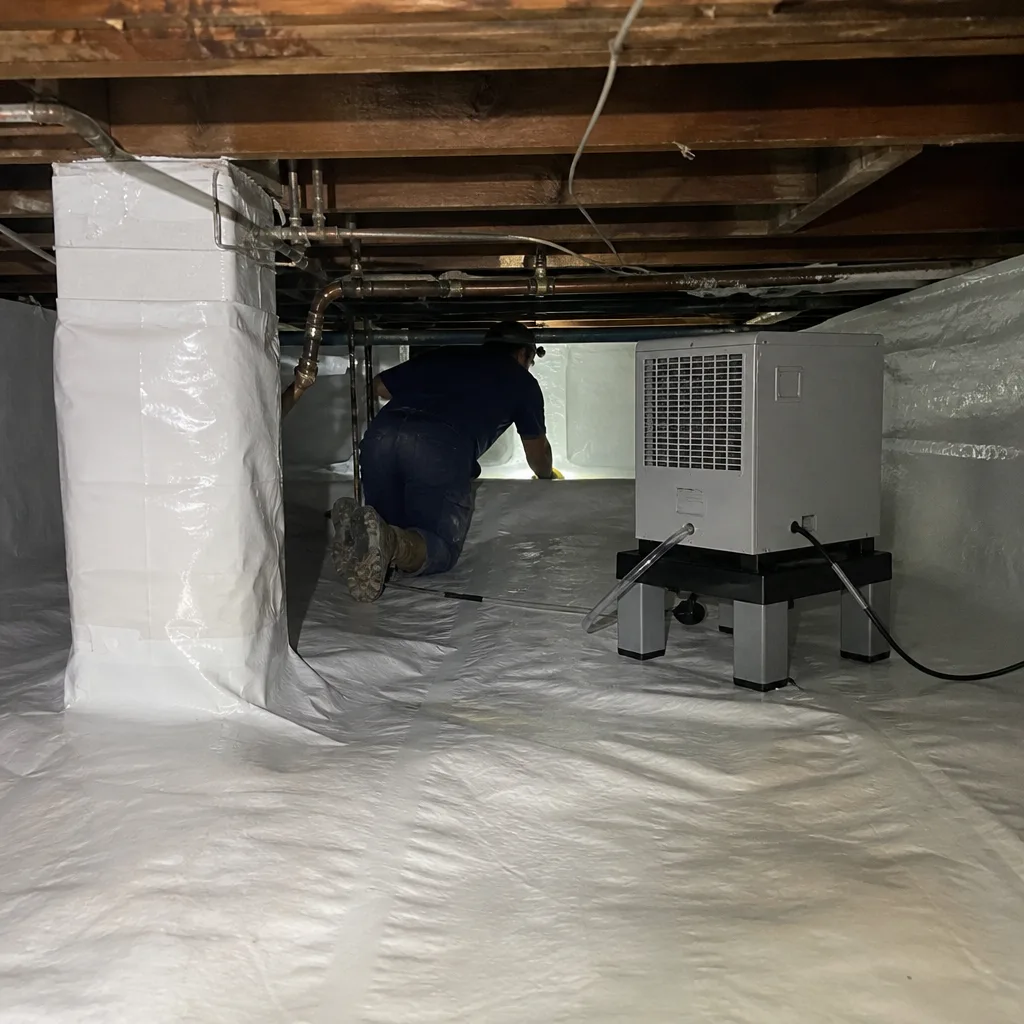
- Musty odor rising through floor registers. This means your vapor barrier has separated at seams or the wall foam has pulled away from the foundation, allowing soil moisture to evaporate into the crawl and migrate upward through the subfloor. In Los Angeles, this accelerates after winter rains when the clay-heavy soils in neighborhoods like Baldwin Hills hold moisture for weeks.
- Condensation on ductwork or plumbing lines. When the dew point inside the crawl exceeds the surface temperature of cold supply ducts, water beads and drips. This happens when the dehumidifier is undersized, failed, or missing entirely, or when the vapor barrier coverage is incomplete at piers and footings.
- Buckling or cupping hardwood floors. Wood absorbs moisture from below faster than it releases it above. If your floorboards are crowned across the grain, the crawl relative humidity is likely sustained above 70%, overwhelming the vapor retarder capacity of standard poly sheeting.
- Visible mold on floor joists or sill plates. Surface mold, typically Cladosporium or Aspergillus in our climate, appears as dark spotting on wood. It means the encapsulation has been compromised long enough for wood moisture content to exceed 20%, the threshold for fungal growth.
- Increased energy bills with no HVAC explanation. Wet insulation conducts heat faster than dry. If your Foamular boards are waterlogged from a ground-water intrusion event, or if batt insulation in the joists has compressed from moisture weight, the thermal boundary is effectively gone and your HVAC works harder to maintain setpoint.
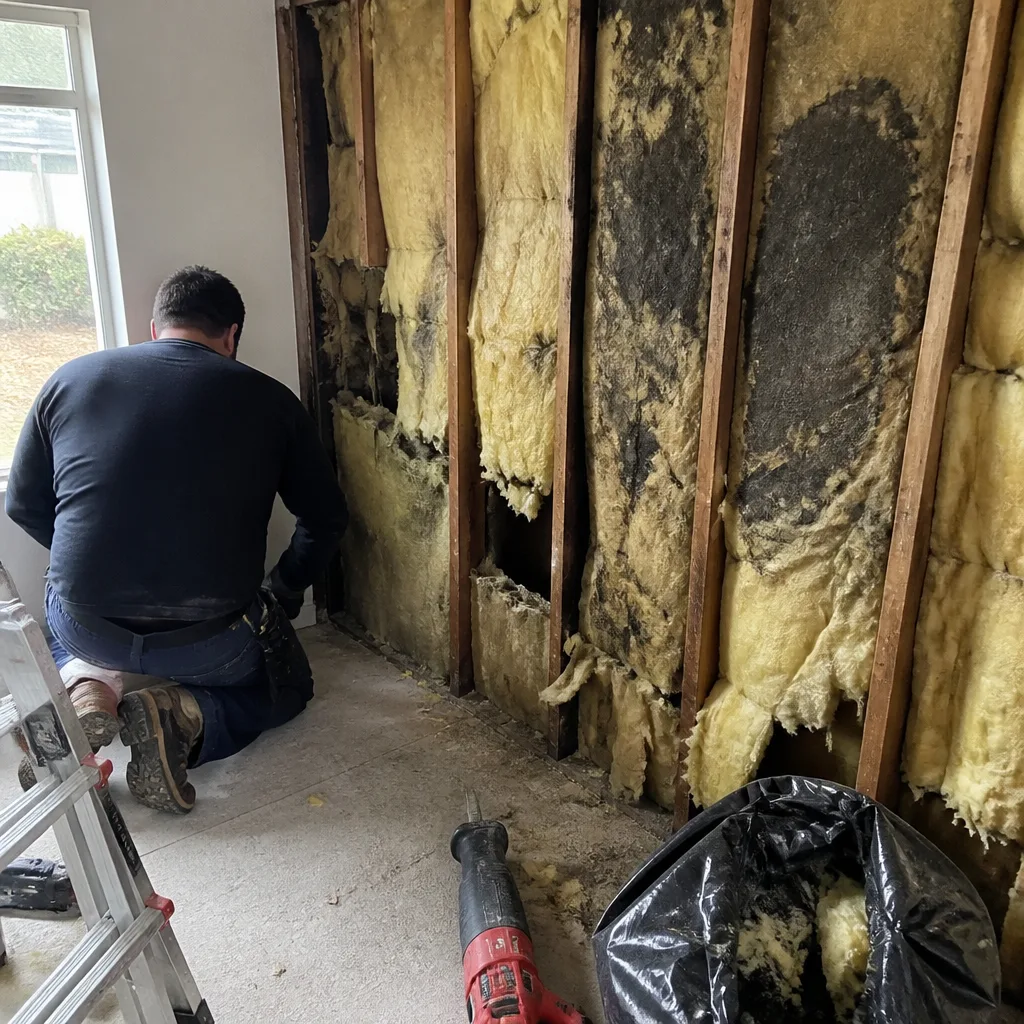 Before
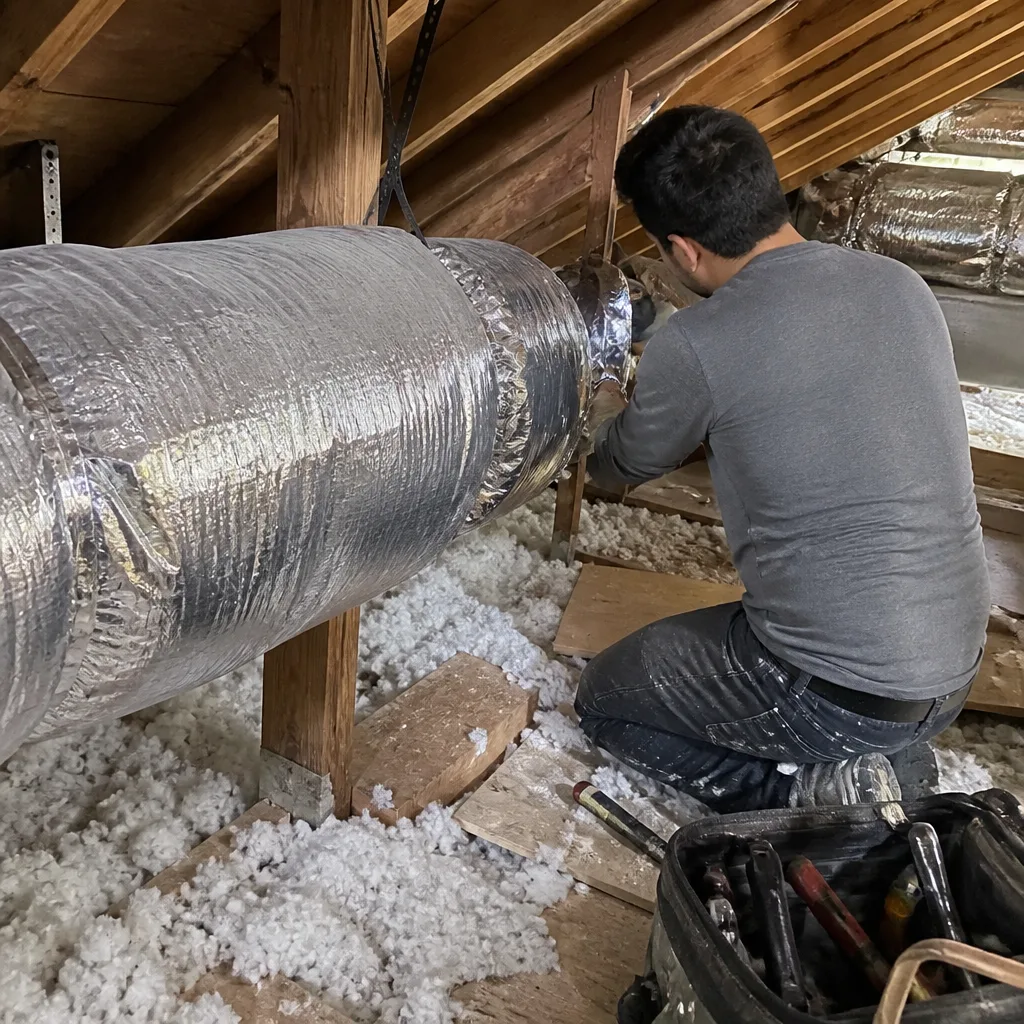 After
AfterReplacement Cost & What’s Included
For a typical 1,200-square-foot crawl in Los Angeles, full encapsulation with Owens Corning-compatible materials runs $3,800 to $5,400. Larger crawls, those with height restrictions below 18 inches requiring rotated installation, or those needing sump pump or dehumidifier additions, push toward $6,500 to $7,200. The range driver is labor access, not the materials themselves: a crawl with adequate clearance and a single entry point takes a crew one day; a hillside home with stepped foundations, multiple small access hatches, and active rodent damage can stretch to three.
What the price includes: removal of failed or contaminated materials, installation of new reinforced vapor barrier with mechanical fastening at walls and piers, Owens Corning Foamular NGX board cut and sealed to foundation walls, rim joist air sealing with closed-cell spray foam or compatible sealant, and seam taping with pressure-sensitive acrylic tape rated for the application. We do not start without a written scope and a flat price. Every job closes with a Documented Photo Record showing before, during, and after conditions. The 365-Day Done Right Promise applies to all completed encapsulation work.
DIY or Call Us?
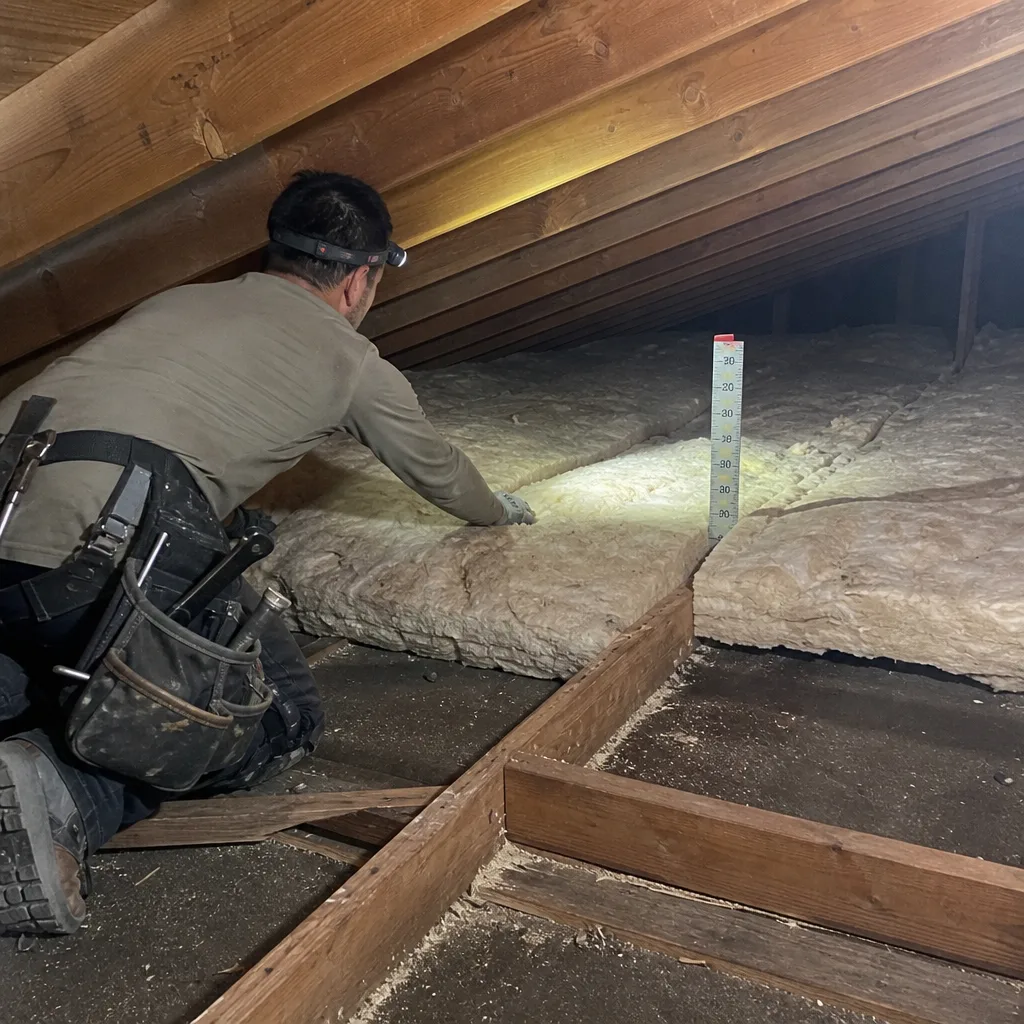
There is no high-tension danger in crawl space encapsulation, but there are genuine health and structural risks worth naming. What a homeowner can safely check: the crawl access hatch for standing water, the dehumidifier reservoir or drain line for function, and the vapor barrier surface for obvious tears or rodent damage. What goes wrong with DIY: inadequate surface preparation before tape adhesion, which fails within one season; missing the thermal bypass at rim joists, which defeats the entire project; and installing a vapor barrier without addressing bulk water intrusion first, which traps moisture against the foundation.
We have pulled out homeowner-installed 6-mil poly from big-box stores that degraded to shreds in under three years. The material specification matters. If you are unsure what you are looking at, call (628) 226-1097. We offer a Free Second Opinion on any written estimate, and we will read the scope with you before you commit to anything.
FAQs
Properly installed encapsulation with 12-mil or thicker reinforced polyethylene and closed-cell rim joist sealant typically lasts 15 to 20 years in Los Angeles, though the dehumidifier unit itself will need replacement at 7 to 10 years. The mild climate helps, but the extended dry season creates its own problem: tape adhesives can desiccate and lose tack at seam edges if the crawl runs too dry for months, then fail when winter moisture arrives. Call (628) 226-1097 for an exact quote on your crawl, estimates are free.
Localized patching is possible if the original barrier is 12-mil or thicker and the damage is limited to less than 10% of total surface area. We cut a patch, overlap six inches in all directions, and tape with acrylic pressure-sensitive tape rated for damp substrates. If the original material is 6-mil, degraded, or rodent-compromised across multiple areas, full replacement is the only durable fix. Call (628) 226-1097 for an exact quote, estimates are free.
Most complete encapsulations take one to two working days for a standard Los Angeles crawl up to 1,500 square feet with clear access. Complicating factors, active water intrusion requiring a sump pit, foundation repairs, or sub-18-inch clearance, can extend to three days. We stock Owens Corning-compatible Foamular NGX, reinforced poly, and seam tapes on every truck, so material lead time is never the delay. Call (628) 226-1097 to schedule, we can usually start same-day or next-day.
We stock Owens Corning Foamular NGX in 1-inch, 1.5-inch, and 2-inch thicknesses, JointSealR foam tape, and compatible reinforced vapor barriers on every service truck. We are an independent service provider, not affiliated with Owens Corning, and we also stock Reflectix radiant barrier products for hybrid crawl applications where foundation insulation needs a radiant component. If your original installation used a specific Owens Corning product we do not routinely carry, we can source it within 24 to 48 hours through Los Angeles distribution. Call (628) 226-1097 to confirm compatibility with your existing materials.
Seal the holes first. Then measure the R-value. In that order.
Topside Attic Insulation Los Angeles is independently owned and operated under The Haven Standard since 2016. We have sealed and insulated more than 9,000 homes, every one with a written price before work started and a documented record when the crew left. Our materials come from Owens Corning, Johns Manville, Knauf, Rockwool, CertainTeed, Icynene, Demilec, and GreenFiber, no proprietary lock-in. Wes Okafor, who learned the trade at Richard J. Daley College on Chicago’s South Side and has been running blower-door tests for over two decades, leads every crew with the same standard: pressurize the house, find the leaks, seal them, then insulate. The before-and-after numbers go to the homeowner in writing.
Written by Wes Okafor, Owner & Lead Insulation Technician, Topside Attic Insulation Los Angeles at Topside Attic Insulation Los Angeles, serving Los Angeles and nearby areas.