
Owens Corning Vapor Barrier Installation: The Los Angeles Owner’s Guide
We stock and install Owens Corning-compatible vapor barriers in Los Angeles, with most crawl space and attic floor jobs running $1,800 to $3,400 installed depending on square footage and existing conditions. Same-day installation is available when we have your dimensions and access details by 10 a.m. Most Los Angeles homeowners discover their vapor barrier has failed when they spot condensation dripping from ductwork in a Carson or Torrance crawl space, or when a home inspector flags torn polyethylene during a resale in the San Fernando Valley.
Which Owens Corning Models This Applies To
Owens Corning does not manufacture a standalone vapor barrier product line under its own name, but their insulation systems, particularly the EcoTouch PINK Fiberglass and AttiCat blown-in lines, are engineered to work with specific vapor retarder assemblies. The critical match is between the facing material on faced batts and the separate polyethylene sheeting used below attic floors or over crawl space dirt. Owens Corning faced batts carry either a kraft paper facing, which acts as a Class II vapor retarder, or a foil facing for Class I performance in high-humidity zones.
To identify what you have, check the facing label on any existing batt: it will read “ECOTOUCH” followed by a code that includes the facing type. For separate polyethylene barriers in crawl spaces, the mil thickness matters more than brand. We see 6-mil poly installed in Los Angeles homes from the 1980s and 1990s that has degraded to the point of shredding, while 10-mil and 12-mil reinforced polyethylene, which we stock on our trucks, holds up to rodent traffic and the seasonal expansion-contraction cycle of clay soils in the Baldwin Hills and Ladera Heights areas. We also carry Reflectix as an alternative radiant barrier plus vapor retarder hybrid for specific applications.
Topside Attic Insulation Los Angeles is an independent service provider, not affiliated with Owens Corning. We source materials from Owens Corning, Johns Manville, Knauf, Rockwool, CertainTeed, Icynene, Demilec, and GreenFiber, which means we match the product to the condition rather than forcing a brand fit.
Signs Your Owens Corning Vapor Barrier Installation Is Failing
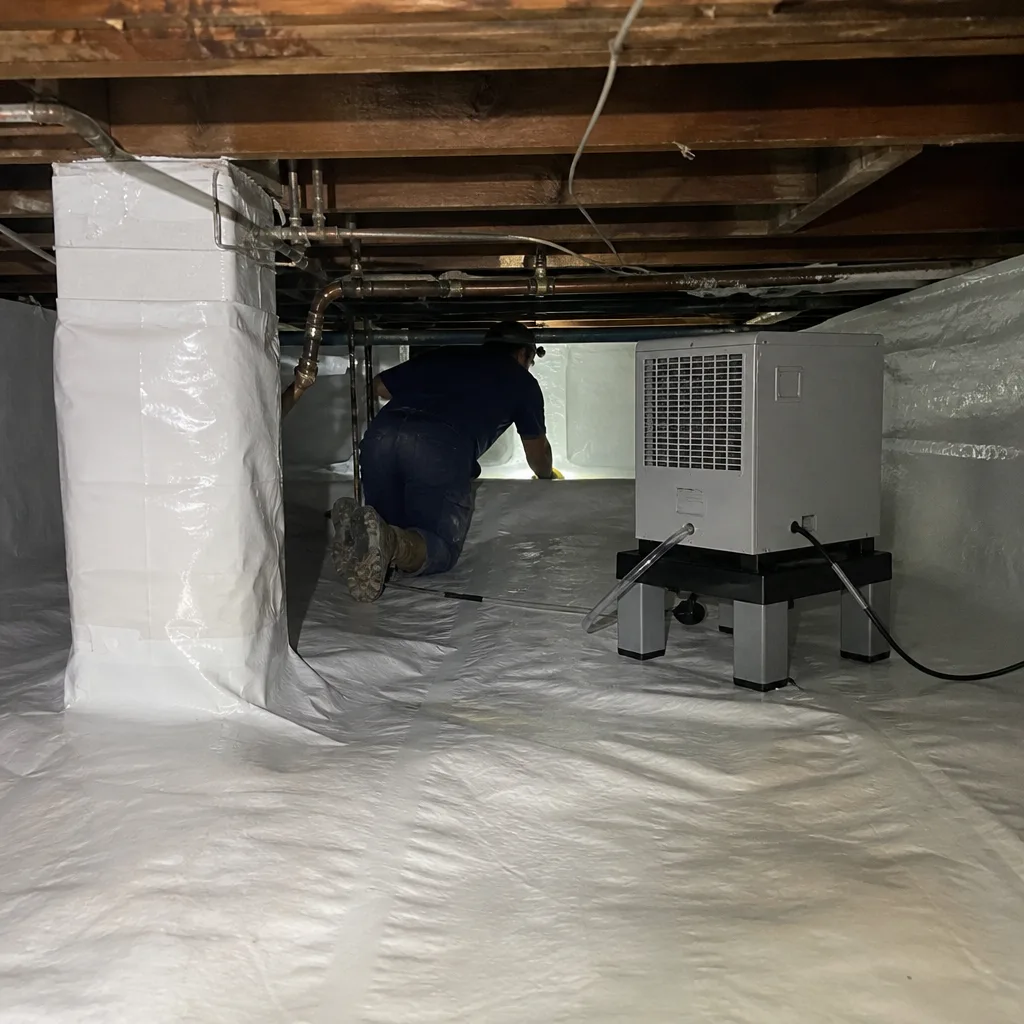
- Condensation on ductwork or joists in the crawl space. Warm, humid Los Angeles air hits the cooler surface of air-conditioned ducts, and without an intact vapor barrier, that moisture has nowhere to go but into the wood. In coastal neighborhoods like Venice and Playa del Rey, we see this accelerate where morning marine layer humidity sits above 80 percent for hours.
- Musty odor rising through floor registers. The nose detects what the eyes miss: mold metabolites off-gassing from damp subfloor sheathing. This happens when the vapor barrier has pulled away from perimeter walls or has been torn by maintenance workers crawling over it.
- Visible tears, pooling water, or displaced poly sheeting. A vapor barrier should lie flat and continuous. In the earthquake-prone areas of Los Angeles, soil settling creates low spots where water collects, and the weight of that water stretches and splits 6-mil poly within three to five years.
- Insulation sagging or discolored above the crawl space. When the vapor barrier fails, moisture migrates upward into fiberglass batts, causing them to compress and lose R-value. Owens Corning PINK Fiberglass that has turned gray or yellow at the bottom edge is telling you the barrier beneath it has been compromised for months.
- Increased energy bills with no change in thermostat setting. Wet insulation conducts heat rather than resisting it. We have measured attic floor assemblies in Los Angeles where failed vapor barriers dropped the effective R-value from R-30 to R-12, forcing the HVAC system to run 30 to 40 percent longer.
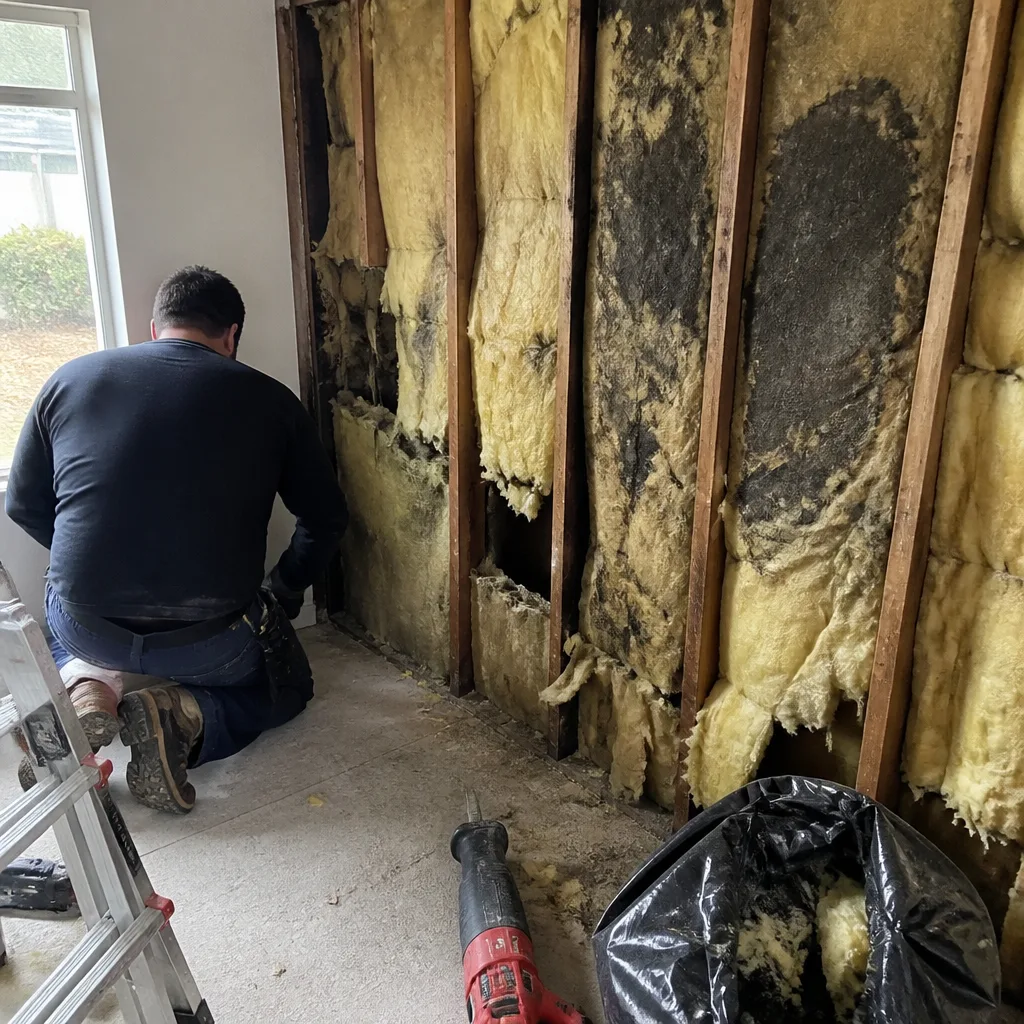 Before
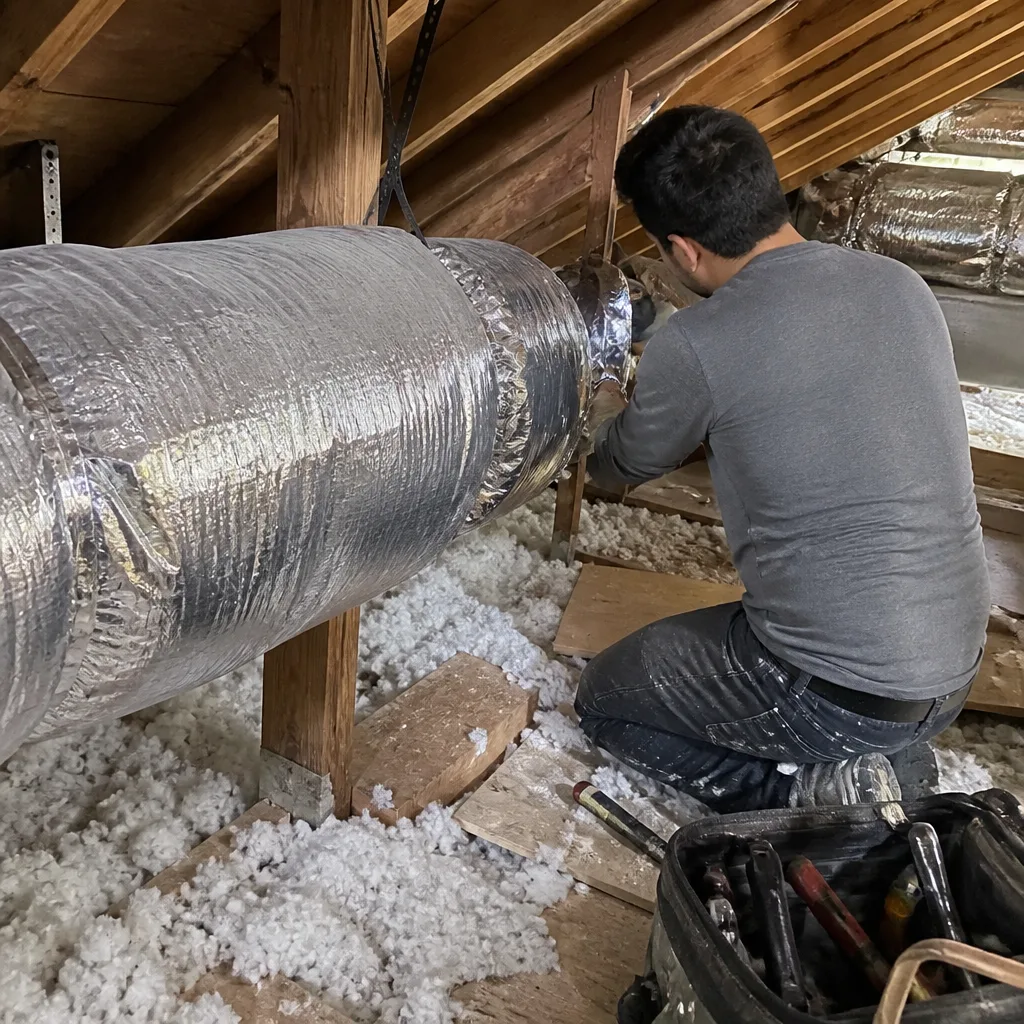 After
AfterReplacement Cost & What’s Included
For a typical Los Angeles crawl space, vapor barrier replacement runs $1,800 to $3,400 installed. The lower end covers a clean, rectangular space under 1,000 square feet with good access and intact perimeter fastening. The upper end reflects cut-up spaces with multiple piers, HVAC ducts that must be temporarily supported, or existing mold remediation needs in older homes near the Los Angeles River floodplain where water tables run higher.
Every job includes removal of existing degraded poly, surface prep and grading, installation of new 10-mil or 12-mil reinforced polyethylene with sealed seams and mechanical fastening to foundation walls, and a Documented Photo Record showing before, during, and after. Under Haven Standard Clause 1, you receive a written price before any work starts, a written scope, and a written warranty. The 365-Day Done Right Promise applies to all completed work. On jobs where the vapor barrier ties into attic air sealing, we provide before-and-after blower-door numbers so you can verify the envelope performance change.
DIY or Call Us?
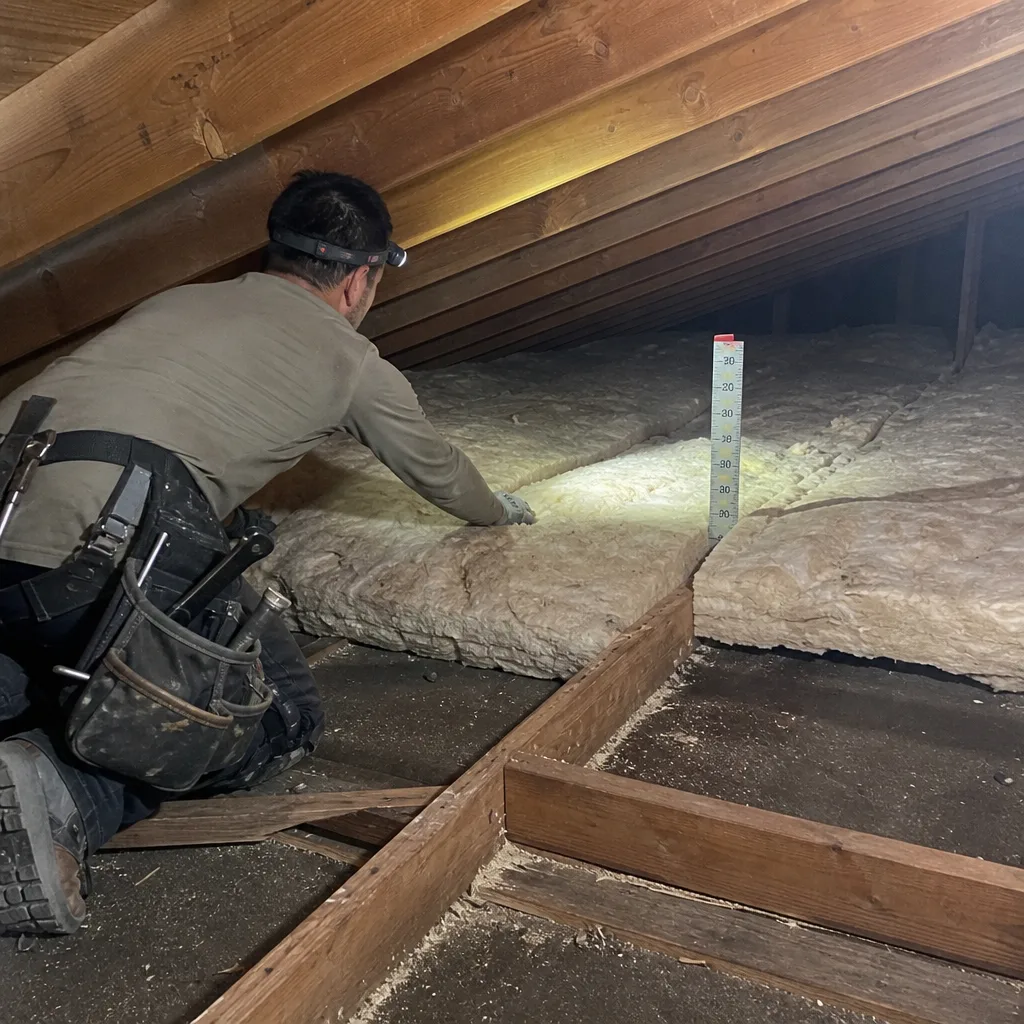
A homeowner can safely inspect their own crawl space for obvious tears or pooling, but the actual replacement involves risks that warrant a trained crew. Crawl spaces in Los Angeles often contain deteriorated duct wrap with fiberglass particulate, spider and rodent debris, and limited egress points. More critically, proper vapor barrier installation requires seam sealing with compatible tape, mechanical fastening to resist soil movement, and integration with existing insulation systems so you do not create a double vapor barrier that traps moisture in the wall or floor assembly.
We have found homeowners in Los Angeles who laid new poly over old, or who taped seams with duct tape that fails in six months, or who stopped the barrier short of the foundation wall. Seal the holes first. Then measure the R-value. In that order. If your inspection reveals anything beyond a clean, continuous sheet in good condition, call (628) 226-1097 and we will walk through what we see on a free estimate.
FAQs
In Los Angeles, a properly installed 10-mil or 12-mil reinforced polyethylene vapor barrier lasts 15 to 20 years in most conditions. The combination of mild winters, low freeze-thaw cycling, and drier overall climate extends lifespan compared to the Gulf Coast or Midwest, but coastal salt air and clay soil expansion in neighborhoods like Pacific Palisades and View Park can stress seams and wall attachments sooner. Call (628) 226-1097 for an exact assessment of your specific conditions.
Small punctures under two inches can be patched with compatible polyethylene tape if the surrounding material is still supple and the tear is not at a seam or high-traffic area. We do not recommend patching when the poly has become brittle, when multiple tears exist, or when the original material is 6-mil or thinner, which describes most Los Angeles homes built before 2005. Replacement is the only fix that restores the continuous seal the building envelope requires. Call (628) 226-1097 for a free second opinion on any written estimate you have received.
Most residential crawl spaces in Los Angeles are completed in one working day, typically four to six hours for spaces under 1,500 square feet with clear access. Cut-up spaces with low clearance, extensive ductwork, or debris removal add time. We schedule arrival windows and text when the technician is en route, under Haven Standard: Arrive on schedule, you get a named technician.
We stock 10-mil and 12-mil reinforced polyethylene vapor barriers, seam tape, mechanical fasteners, and termination bars on every truck, along with Reflectix for hybrid applications. While Owens Corning does not produce a dedicated vapor barrier product, our materials are specified for compatibility with Owens Corning insulation systems and meet or exceed the vapor retarder requirements of the Los Angeles Building Code and Title 24 energy standards. Same-day installation is available when we have your dimensions and access conditions confirmed by 10 a.m.
Written by Wes Okafor, Owner & Lead Insulation Technician, Topside Attic Insulation Los Angeles at Topside Attic Insulation Los Angeles, serving Los Angeles and nearby areas.