
Reflectix Insulation in Los Angeles, CA | Topside Attic Insulation Los Angeles
Reflectix radiant barrier installation in Los Angeles typically runs $1.80-$3.20 per square foot of attic floor, with most single-family retrofits falling between $1,400 and $2,800 depending on roof complexity and whether your attic needs air-sealing first. We’re an independent contractor - not affiliated with or authorized by Reflectix - and we’ve installed and serviced their foil products across hundreds of pre-WWII and post-war homes in the LA basin. Call (628) 226-1097 for a written price before any work starts.
Why Los Angeles Residents Choose Us for Reflectix Service
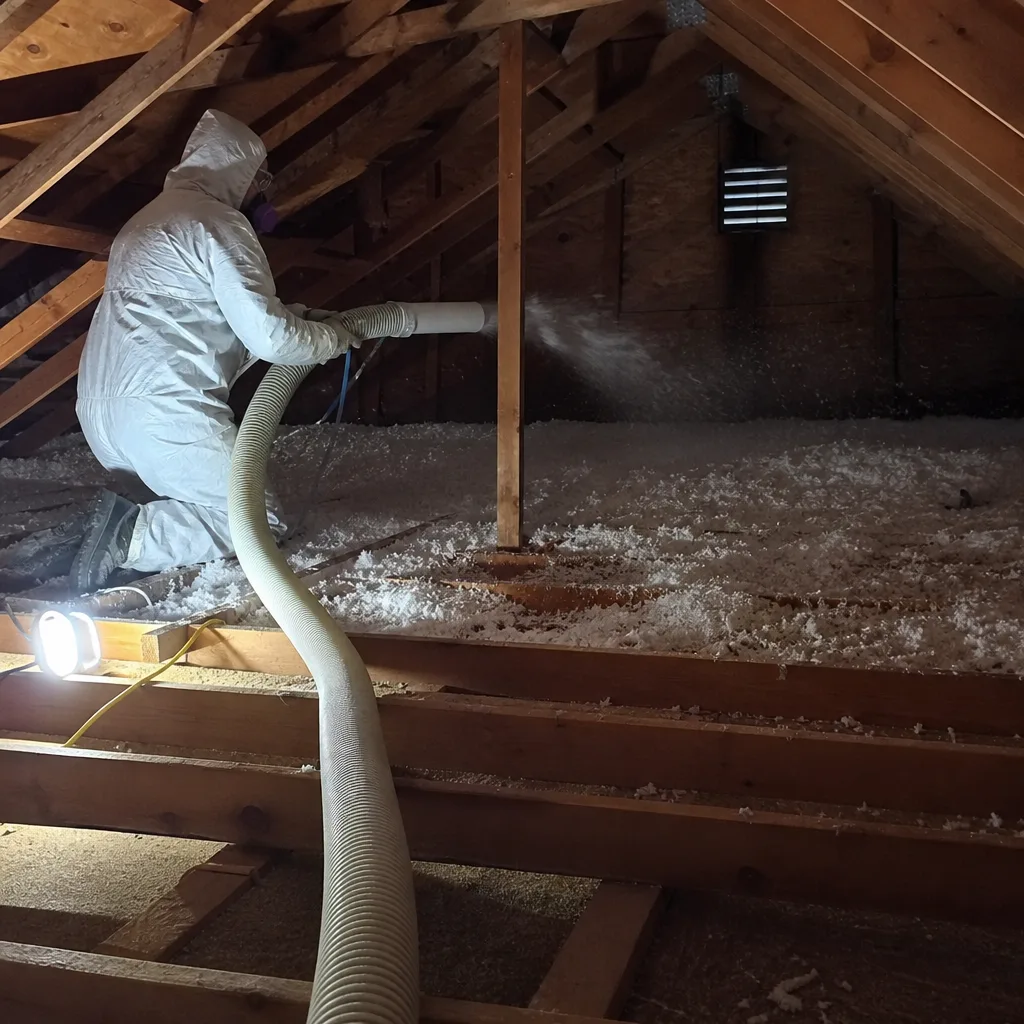
Wes Okafor, our owner and lead technician, learned the trade at Richard J. Daley College in Chicago and has been measuring, air-sealing, and blowing attic assemblies for over two decades. He and our crew have spent the past several years working across Los Angeles - including retrofits on older ranch-style homes in the Leimert Park corridor where unvented knee walls and bypassed soffit chases are still the norm - on projects ranging from our Attic Insulation in Los Angeles to complex air-sealing retrofits. Wes runs a blower-door test, a pressurization diagnostic that finds air leakage before a single bag of cellulose or batt goes in, and hands every customer a written summary showing before and after ACH50 numbers, installed R-value, and product data sheets.
We carry genuine Reflectix rolls in our Los Angeles warehouse - the BP48010, BP48025, BP24010, and RFT51025 model lines - plus equivalent ASTM-rated radiant barrier products when roll width, perforation, or fire rating better fits a specific roof deck. Our Reflectix sales & service team stocks what we need for same-week turnaround on most jobs. We publish before-and-after blower-door numbers on every applicable job so homeowners can verify the air-sealing result they paid for. Under our Haven Standard, every job begins with a written price and ends with a documented photo record. No exceptions.
Common Reflectix Insulation Problems We Solve in Los Angeles
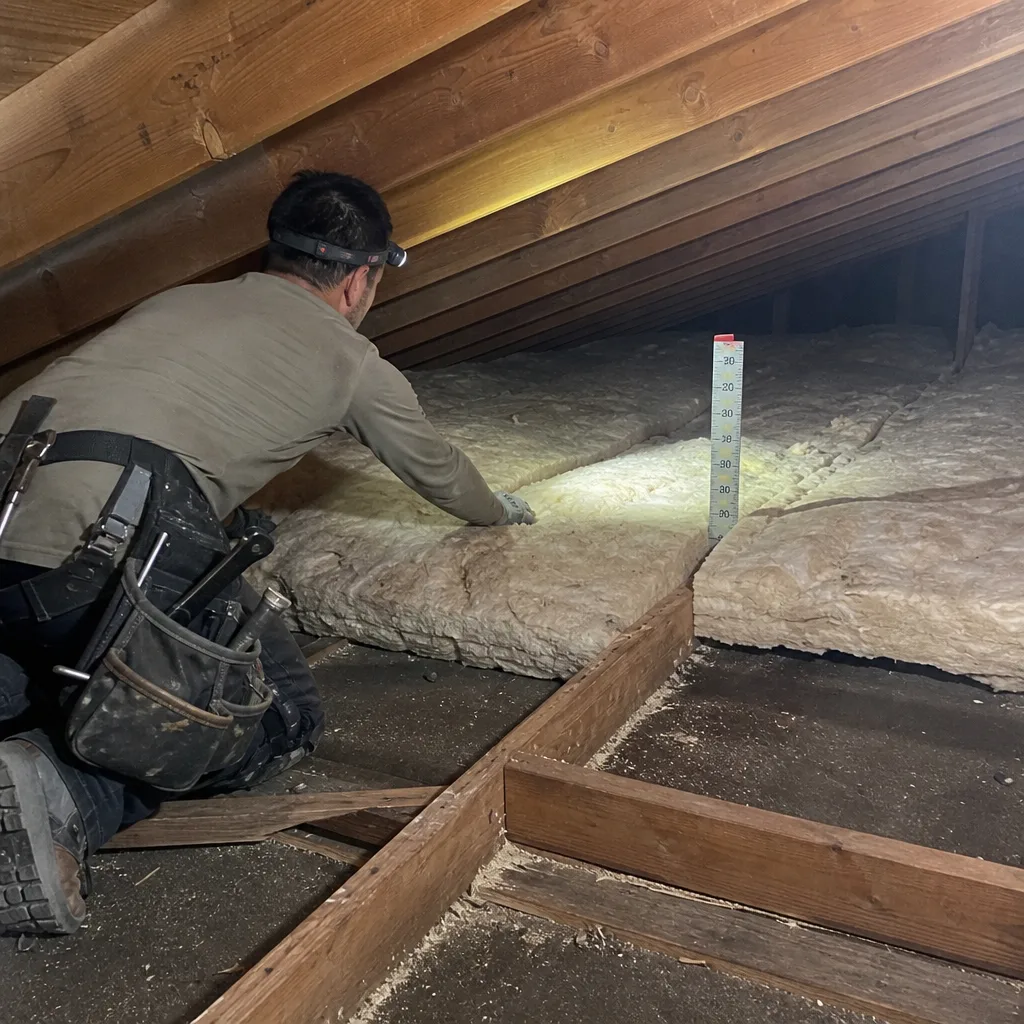
- Radiant barrier stapled flat to roof rafters with no air gap. This creates a double vapor barrier that traps heat and moisture against the roof deck. On the low-slope and flat roofs common across Los Angeles - especially in Mid-City and Koreatown - this accelerates plywood delamination and shingle failure. We remove the old foil, install baffles to maintain the manufacturer-required air space, and rehang properly.
- Dust, ash, and smog-film accumulation on reflective surfaces. Los Angeles attics collect particulate from wildfire smoke, freeway proximity, and Santa Ana wind events. A reflective surface that reads 0.05 emissivity when clean can climb to 0.35 or higher once filmed over, effectively turning the radiant barrier into a dull grey heat sink. We see this in Valley homes near the 101 and 405 corridors within three to four summers.
- Tape seams and edge staples failing after hot seasons. Attic temperatures in Woodland Hills and Canoga Park regularly exceed 140°F during late-August heat events. The acrylic tape Reflectix specifies softens, the staples pull through, and the foil sags into the insulation below - destroying the continuous low-emissivity plane. We use mechanical fastening with proper tension relief and check it during annual service calls.
- Installation directly over old, compacted fiberglass batts with no air space. In 1950s San Fernando Valley tract homes, we regularly find three inches of degraded blown fiberglass sitting directly on top of unsealed recessed-can penetrations - with Reflectix foil laid on top like a blanket. The manufacturer requires an air gap. Without it, the product does almost nothing. We pull the old assembly, seal the penetrations, top up the bulk insulation, and install the radiant barrier with proper standoff.
- Fire hazard severity zone non-compliance in WUI areas. Homes in Topanga, Altadena, and parts of the Hollywood Hills sit in mapped Wildland-Urban Interface zones where standard foil-faced products may not meet local amendment requirements. We substitute fire-rated mineral wool or perforated, ignition-resistant radiant barrier where code demands it - a specialty consideration that doesn’t apply in flat, urban Long Beach or Burbank.
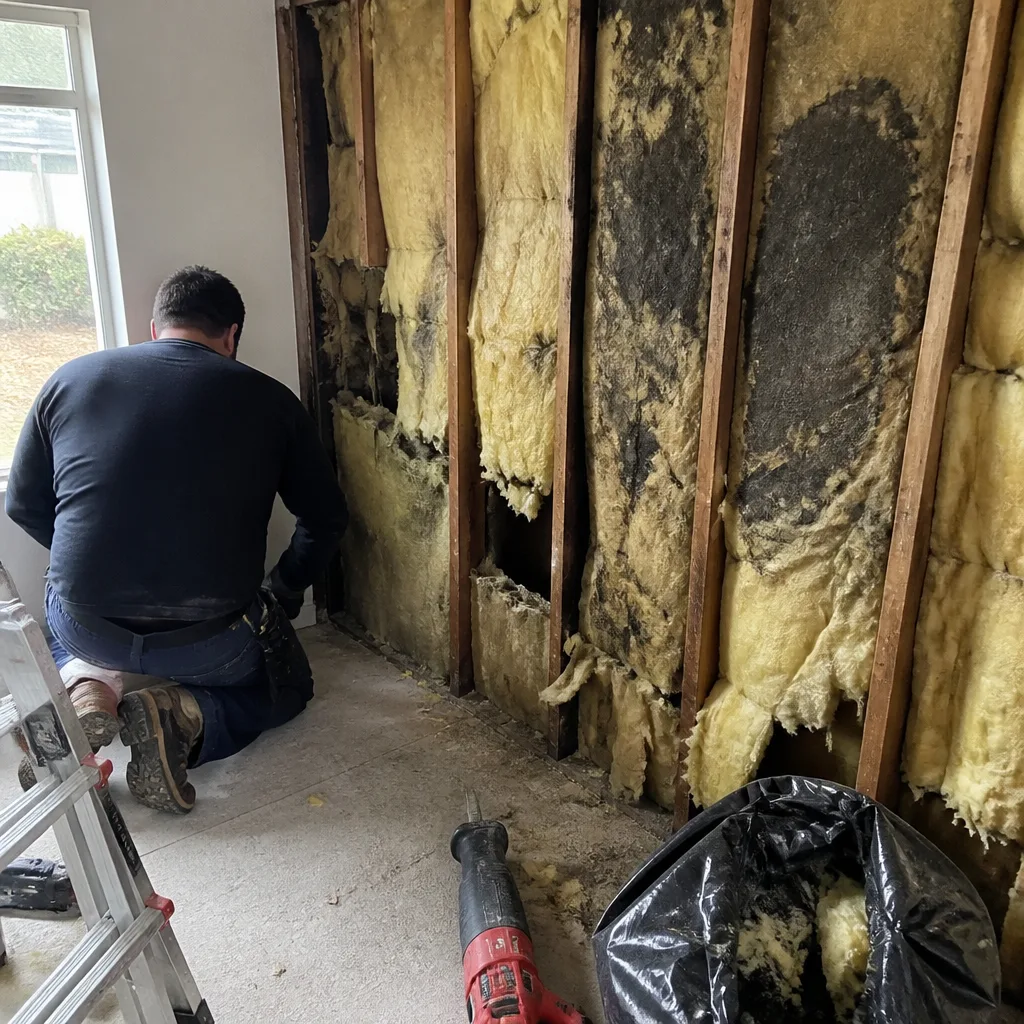 Before
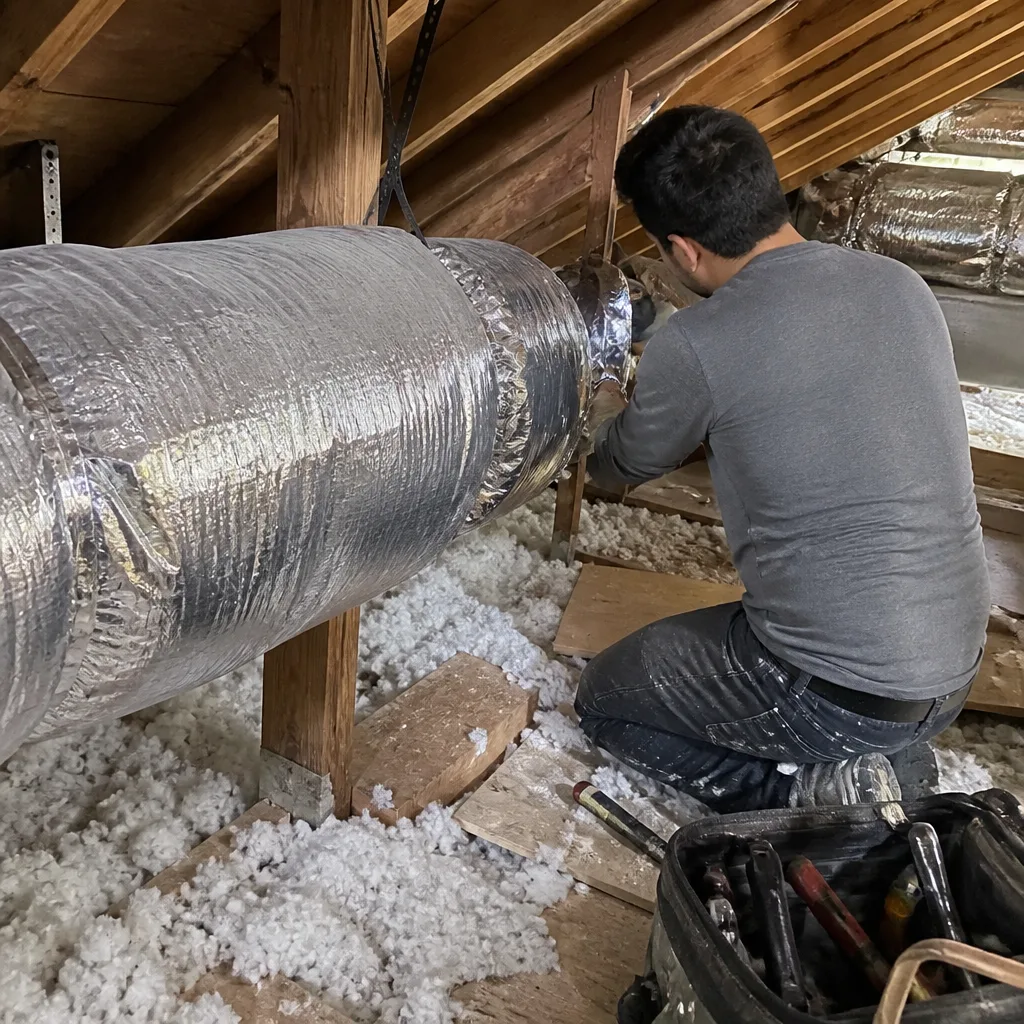 After
AfterReflectix Service in Los Angeles: What Local Conditions Mean for Your Equipment
Los Angeles contains one of the largest concentrations of pre-WWII housing in the western US - Craftsman bungalows, Spanish Colonial Revival duplexes, and early stucco flats built when the city’s “perfect weather” mythology meant insulation was considered unnecessary. Retrofitting these homes to meet California’s Title 24 energy code, the strictest in the nation, is complicated by original plaster walls that require injection or dense-pack techniques rather than standard batt installs. For Reflectix radiant barrier work specifically, this means the attic is often the only accessible envelope surface - the walls are sealed cavities with no retrofit access short of major demolition. A radiant barrier retrofit in a 1920s Highland Park bungalow or a 1930s Spanish Revival in Echo Park has to deliver its entire cooling-load reduction through the roof assembly, because the walls are essentially untouchable. This concentrates the performance burden on getting the attic details exactly right: proper air gap, clean reflective surface, sealed top plates and can lights, and adequate bulk insulation beneath. We’ve learned to run our blower-door test with extra attention to ceiling plane leakage in these homes, because the attic is doing work that would normally be shared with the wall cavity.
Reflectix Models & Products We Service in Los Angeles
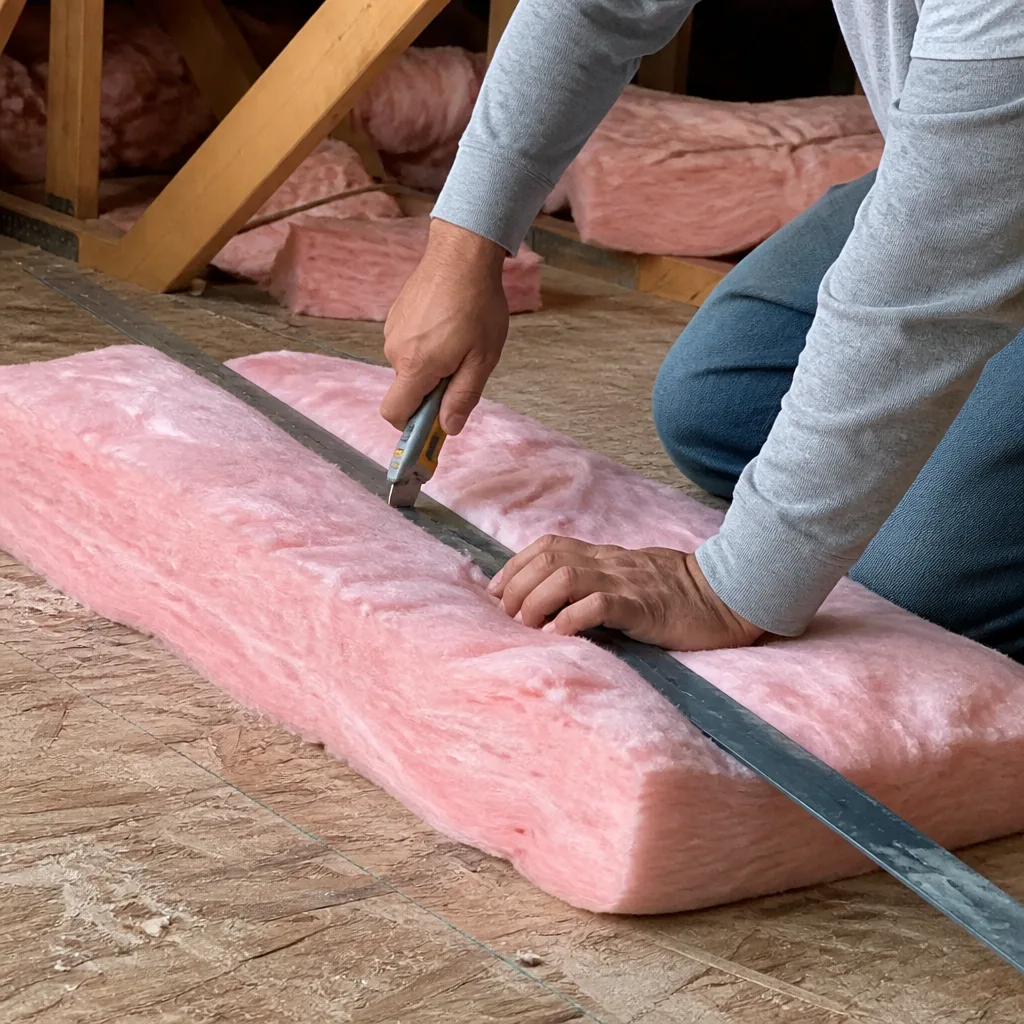
We stock and install four primary Reflectix product lines from our Los Angeles service area warehouse:
- BP48010 - Double Reflective Insulation Roll, 48 in. x 10 ft., for small attic sections and knee-wall applications
- BP48025 - Double Reflective Insulation Roll, 48 in. x 25 ft., our standard stock size for full attic retrofits
- BP24010 - Double Reflective Foil Insulation, 24 in. x 10 ft., for narrow rafter bays and dormer applications
- RFT51025 - Reflective Foam Core Insulation, 16 in. x 25 ft., for applications requiring both radiant barrier and minimal R-value contribution
We use genuine Reflectix rolls when homeowners specifically request the brand name, but we also install equivalent ASTM-rated radiant barrier products when roll width, perforation, or fire rating better fits a specific roof deck. Radiant barrier is almost always a complement, not a replacement. If your attic is under-insulated, we top up the bulk insulation first and then add Reflectix, because a radiant barrier alone won’t meet Title 24 prescriptive requirements. Seal the holes first. Then measure the R-value. In that order.
Reflectix Service Pricing in Los Angeles
Most Reflectix radiant barrier installations in Los Angeles run between $1,400 and $2,800 for a typical single-family attic, with per-square-foot pricing at $1.80-$3.20 depending on roof pitch, existing insulation condition, and whether air-sealing is required first. What drives the cost:
- Attic square footage and accessibility (steep pitches, tight scuttles, or truss obstructions add labor)
- Condition of existing insulation - removal and disposal of compacted old batts runs $0.75-$1.50 per square foot additional
- Air-sealing scope - top plates, can lights, penetrations, and soffit chases must be sealed before radiant barrier goes in
- Fire-rated product upgrades for WUI zones in hillside communities
Our free estimate includes a blower-door test, attic inspection with photo documentation, and a written price before any work starts. Call (628) 226-1097 for an exact quote - estimates are free, and we offer a Free Second Opinion on any written estimate from another contractor.
Serving Los Angeles, CA - Our Local Coverage Area
We’re based in the Los Angeles area and know this community well. Use the map below to see our service coverage - if you’re nearby, we can almost certainly help.
FAQs - Reflectix Insulation in Los Angeles
Yes, but only if the radiant barrier is installed with a proper air gap and your attic is air-sealed first. Old fiberglass batts in Los Angeles - especially in San Fernando Valley tract homes - are often compacted, displaced by pest treatments, and laid over unsealed penetrations that let conditioned air escape. We top up the bulk insulation - often with our Spray Foam Insulation in Los Angeles where gaps are severe - seal the leaks, then add Reflectix with manufacturer-required standoff. Call (628) 226-1097 for a blower-door test and written estimate.
Yes, but the installation method changes. Flat and low-slope roofs - common in Mid-City, Koreatown, and much of central Los Angeles - require baffles or spacers to maintain the air gap, and the radiant barrier must be perforated to avoid trapping moisture. We inspect the roof deck condition first and specify the appropriate product variant. Call (628) 226-1097 to schedule an attic inspection.
Reflectix radiant barrier contributes to the overall envelope performance but does not, by itself, satisfy Title 24 prescriptive insulation requirements. The code mandates minimum R-values for attic and wall assemblies; radiant barrier is a supplement that reduces radiant heat gain, not a substitute for bulk insulation. We design every Los Angeles retrofit to meet or exceed Title 24 and document the installed R-value and product specifications in your written summary.
The walls and attic are separate scopes in a lathe-and-plaster home. The attic radiant barrier is straightforward access; the walls require dense-pack cellulose injection through the plaster, a completely different crew and equipment set. We coordinate both phases but price them separately so you can phase the work if needed. We’ve done this pairing on numerous pre-WWII homes in Highland Park and Echo Park where the plaster cavities were still intact.
Properly installed Reflectix with maintained air gap and periodic cleaning can perform for 15-20 years, but Los Angeles conditions shorten that window if neglected. Dust, ash, and smog film degrade reflectivity within 3-5 years on some Valley sites; tape and staple failure is common after 2-3 hot seasons in unvented attics. We recommend inspection every 3-5 years and include photo documentation of condition at every visit. Call (628) 226-1097 to schedule a condition check.
Service Areas Near Los Angeles
We serve homeowners throughout the LA basin and surrounding communities. Our crew runs regular routes to Reflectix service in Culver City for the mid-century homes near Carlson Park, Reflectix service in Santa Monica for the flat-roof apartments and condos along Wilshire, plus Beverly Hills, West Hollywood, and Inglewood. Each neighborhood brings its own roof type and code considerations, and we adjust our product specification accordingly.
Book Your Reflectix Service in Los Angeles Today
Call (628) 226-1097 to speak with a live person - we answer 24/7, no voicemail loops. We’ll schedule a free attic inspection with blower-door test, deliver a written price before any work starts, and leave you with a documented photo record and before-and-after performance numbers when the job is done. Same-week availability on most Los Angeles calls.
Written by Wes Okafor, Owner at Topside Attic Insulation Los Angeles, serving Los Angeles since 2016.