
Rockwool Vapor Barrier Installation: The Los Angeles Owner’s Guide
Rockwool vapor barrier installation in Los Angeles typically runs $1,800-$3,400 for a full attic assembly, depending on square footage and whether we’re working over existing insulation or stripping down to the deck. Most Rockwool Comfortbatt and Comfortboard installations we complete are done same-day once the air sealing is finished. Homeowners usually discover the problem when they pull back insulation and find black-stained OSB, rusted nail heads, or a sagging poly sheet that has pulled free from the top plates - moisture that made it past a failed or missing vapor barrier, then got trapped against the roof deck during one of Los Angeles’s Santa Ana-driven humidity swings.
Which Rockwool Models This Applies To
We install vapor barriers compatible with Rockwool’s full residential line: Comfortbatt (standard wall and attic batts, available in R-15 through R-30), Comfortboard 80 and 110 (rigid exterior and interior board stock), and AFB (acoustic fire batt) assemblies where a Class A vapor retarder is spec’d. The critical identifier is the facing: unfaced Rockwool requires a separate vapor barrier, typically 6-mil poly or a smart membrane like CertainTeed MemBrain, while faced Comfortbatt with its kraft paper vapor retarder is only rated for specific climate zones and may not satisfy Los Angeles’s mixed-dry to marine requirements depending on your elevation and proximity to the coast.
Here’s the compatibility gotcha we see weekly in Los Angeles: Rockwool Comfortboard installed as exterior continuous insulation, common on the hillside modern builds in Silver Lake and Echo Park, demands a vapor-open assembly to the outside. Slapping standard 6-mil poly behind it creates a double-vapor-barrier trap. We verify the assembly with a hygrothermal analysis before specifying the retarder class. For OEM-versus-aftermarket, Rockwool does not manufacture its own vapor barrier film; we source compatible membranes from Carlisle, CertainTeed, and Stego, all with published permeance ratings that match the assembly design.
Signs Your Rockwool Vapor Barrier Installation Is Failing
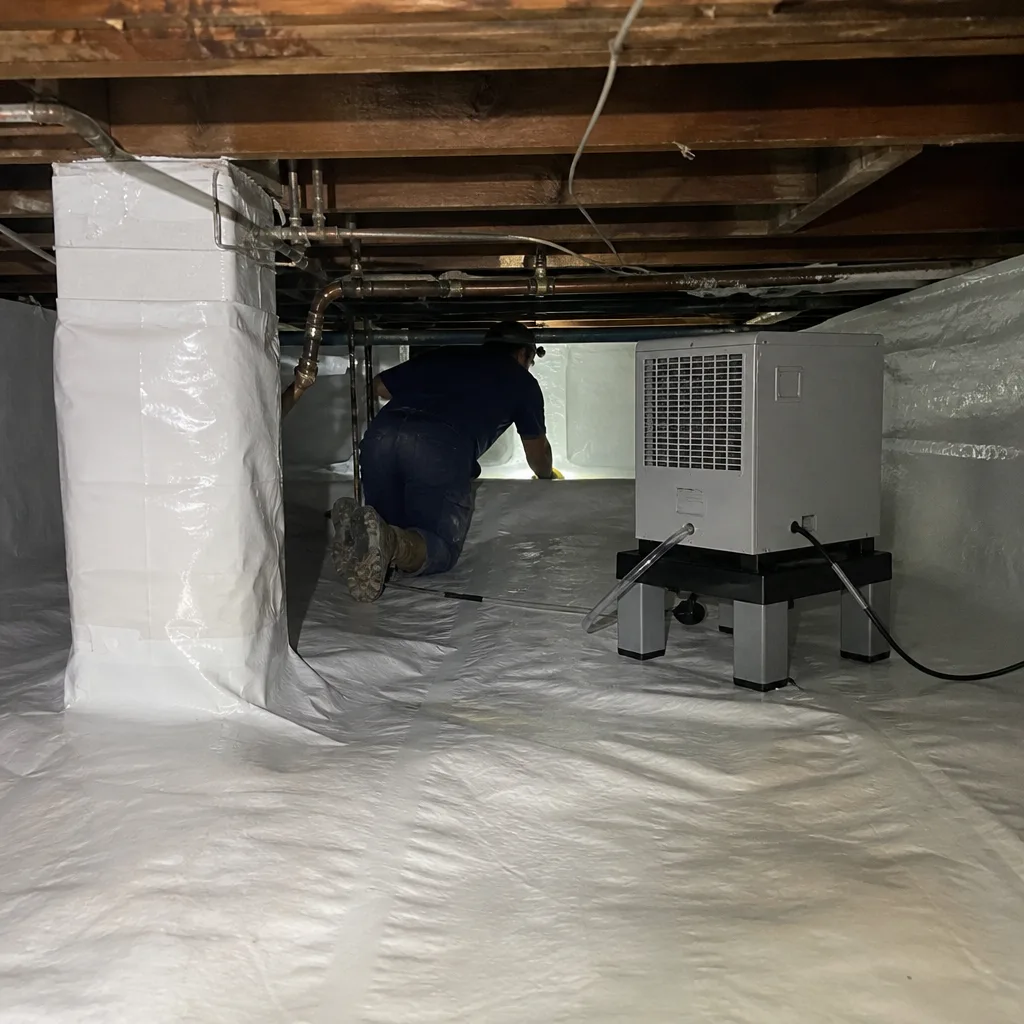
- Black or gray staining on the roof deck or top chords. This is condensation that reached the wood because the vapor barrier has tears at penetrations, pulled staples, or was never sealed at the perimeter. In Los Angeles, this accelerates during May and June when marine layer moisture meets attic heat.
- Insulation that feels damp or clumps when compressed. Rockwool is hydrophobic and won’t hold water like fiberglass, but it will channel moisture to the nearest cold surface. If your batts feel heavy or the paper facing is delaminating, the barrier failed upstream.
- Rust on steel ductwork or nail heads poking through the deck. Metal corrosion in an attic means sustained relative humidity above 70 percent. The vapor barrier’s job is to stop that migration; rust is proof it hasn’t.
- Mold or mildew odor detected at ceiling penetrations. We find this most often in mid-century ranch homes around Leimert Park where original construction had no vapor barrier at all, and a later retrofit added Rockwool without addressing the omission.
- Peeling ceiling paint or plaster “pops” below bathrooms or kitchens. These are moisture drive locations. If the vapor barrier wasn’t detailed around plumbing vents or the chase wasn’t sealed before Rockwool went in, humid interior air finds the path of least resistance straight to the attic.
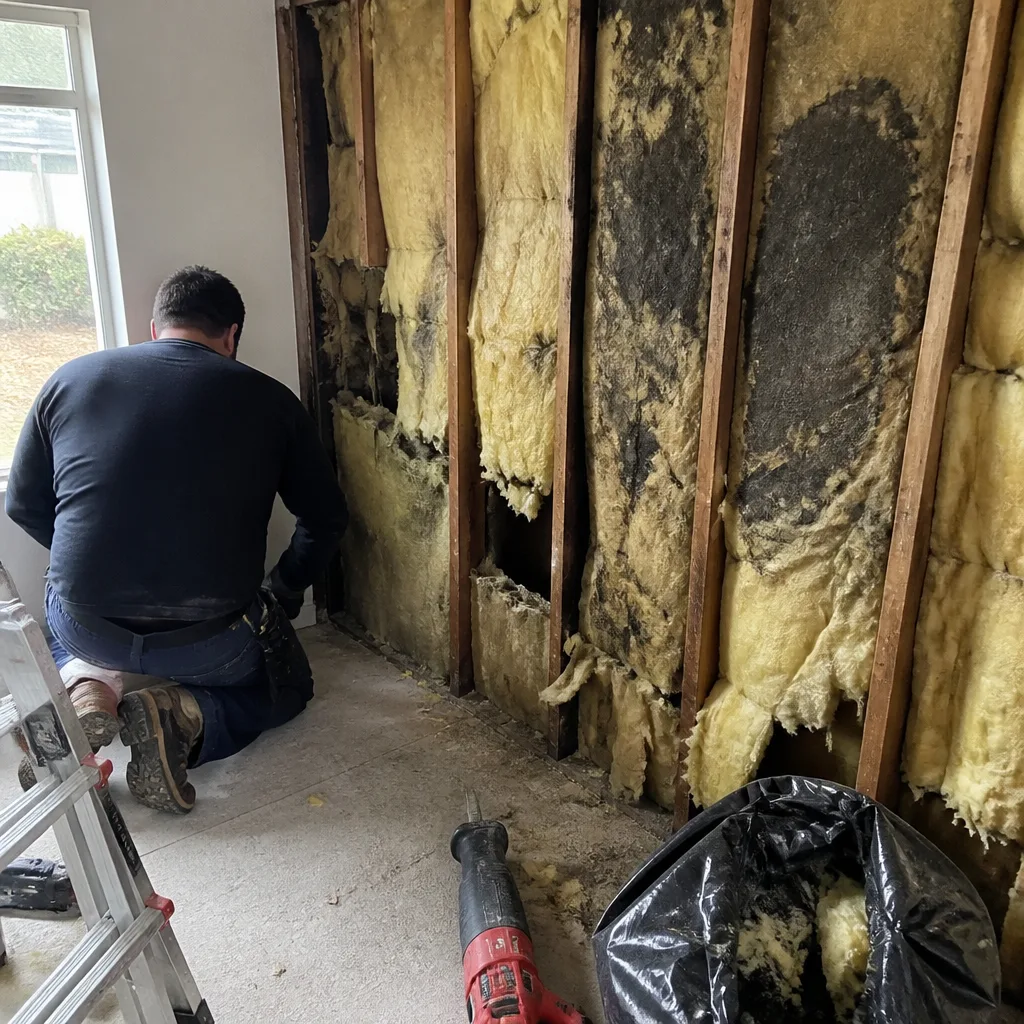 Before
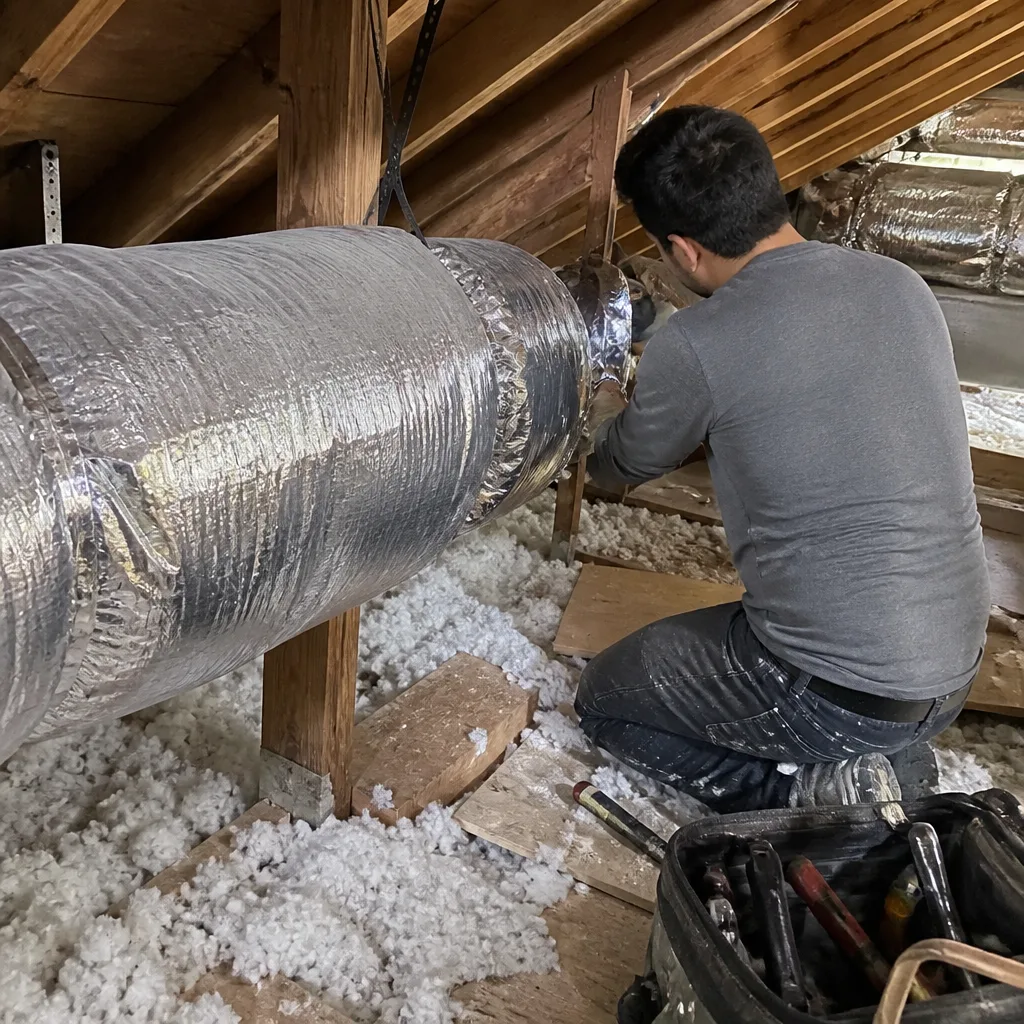 After
AfterReplacement Cost & What’s Included
Most full Rockwool vapor barrier installations in Los Angeles run between $1,800 and $3,400. The low end covers a straightforward attic with open access, intact existing Rockwool we can work over, and standard 6-mil poly with acoustic sealant at penetrations. The high end reflects stripped-to-deck work, smart membrane upgrade (MemBrain or similar), extensive top-plate and can-light sealing, and steep pitches over 8/12 that slow crew movement.
Every job includes: air sealing of all top plates, electrical penetrations, and chase openings before the barrier goes down; new vapor barrier material cut and sealed to the assembly; perimeter sealing to the wall top plates; and a Documented Photo Record of the completed work. On jobs where we also run the blower-door test, you’ll receive before-and-after CFM50 readings showing the air-leakage reduction. Our 365-Day Done Right Promise applies to all vapor barrier work, and the written scope with flat price is delivered before anyone enters the attic.
DIY or Call Us?
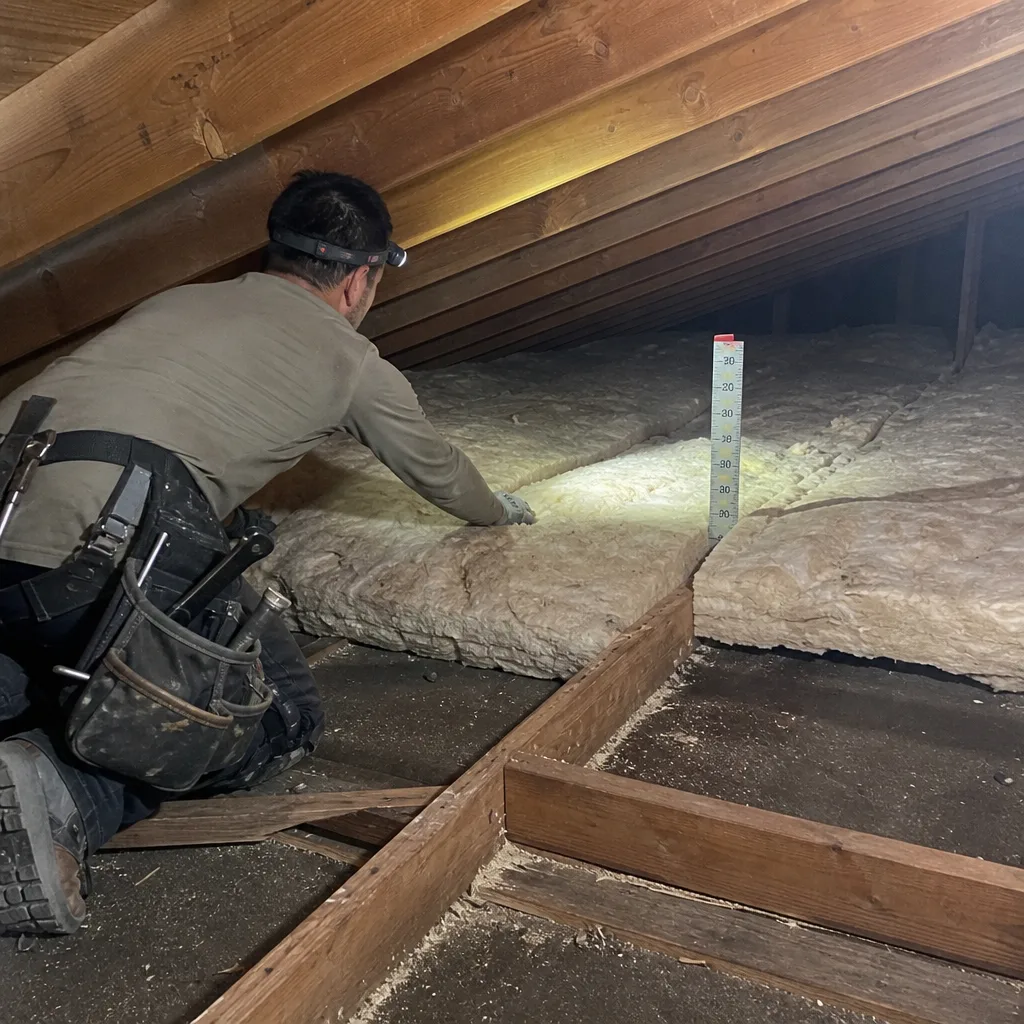
An owner can safely inspect their own attic for the symptoms above. Bring a flashlight, check the roof deck color, and look for poly sheeting that has pulled loose or torn around fixtures. Do not, however, attempt to install or replace a vapor barrier yourself if the attic contains active knob-and-tube wiring, if you’re working within 3 feet of a combustion vent, or if the pitch exceeds 6/12 - falls from attic height are the leading cause of serious injury in residential insulation work.
Where DIY goes wrong: vapor barrier installation is not a materials-only job. The critical failure point is always the detail work - sealing around the hundred-plus penetrations in a typical Los Angeles attic, maintaining continuity at partition walls, and specifying the correct permeance for the assembly. We’ve stripped out homeowner-installed poly that trapped moisture and accelerated deck rot because the wrong retarder class was chosen for the climate zone. If you’ve already purchased Rockwool and need the barrier layer completed correctly, call (628) 226-1097. We’ll read your existing estimate with you under our Free Second Opinion offer, and you’ll get a written price before any work starts.
FAQs
A properly installed 6-mil poly vapor barrier should last 20-30 years, but we regularly find failures at 8-12 years in Los Angeles due to UV degradation through gable vents, rodent damage, or original installation that missed the top-plate seal. Smart membranes like MemBrain have longer effective lifespans because they adapt to seasonal humidity direction. Call (628) 226-1097 for an attic inspection - estimates are free.
Spot repair is possible for isolated tears or pulled sections if the original material is otherwise intact and the failure cause is addressed. We do not recommend patching over widespread embrittlement, rodent contamination, or poly that was incorrectly specified from the start - the labor to patch often exceeds replacement, and the warranty is stronger on a full install. Call (628) 226-1097 and we’ll show you both options with a written price for each.
Most residential Rockwool vapor barrier installations in Los Angeles are completed in one day, assuming the attic has been cleared for access and the air sealing is done in the same visit. Larger homes over 3,000 square feet, or jobs requiring existing insulation removal first, may extend to a second day. We schedule a named technician and text when they’re en route - Haven Standard: Arrive on schedule.
Yes. We carry 6-mil poly, reinforced poly, and smart membranes (MemBrain, Stego Wrap) on every vehicle, plus the acoustic sealant, tapes, and fire-stop caulk required for a complete assembly. We do not stock Rockwool insulation itself on the truck - we order to the specific R-value and dimension after measuring your bays - but the vapor barrier layer is always ready. Call (628) 226-1097 to confirm same-day availability for your job.
Topside Attic Insulation Los Angeles is an independent service provider and is not affiliated with Rockwool. We also stock and install vapor barrier systems compatible with Reflectix and other major insulation brands.
Seal the holes first. Then measure the R-value. In that order.
Written by Wes Okafor, Owner & Lead Insulation Technician, Topside Attic Insulation Los Angeles at Topside Attic Insulation Los Angeles, serving Los Angeles and nearby areas.