
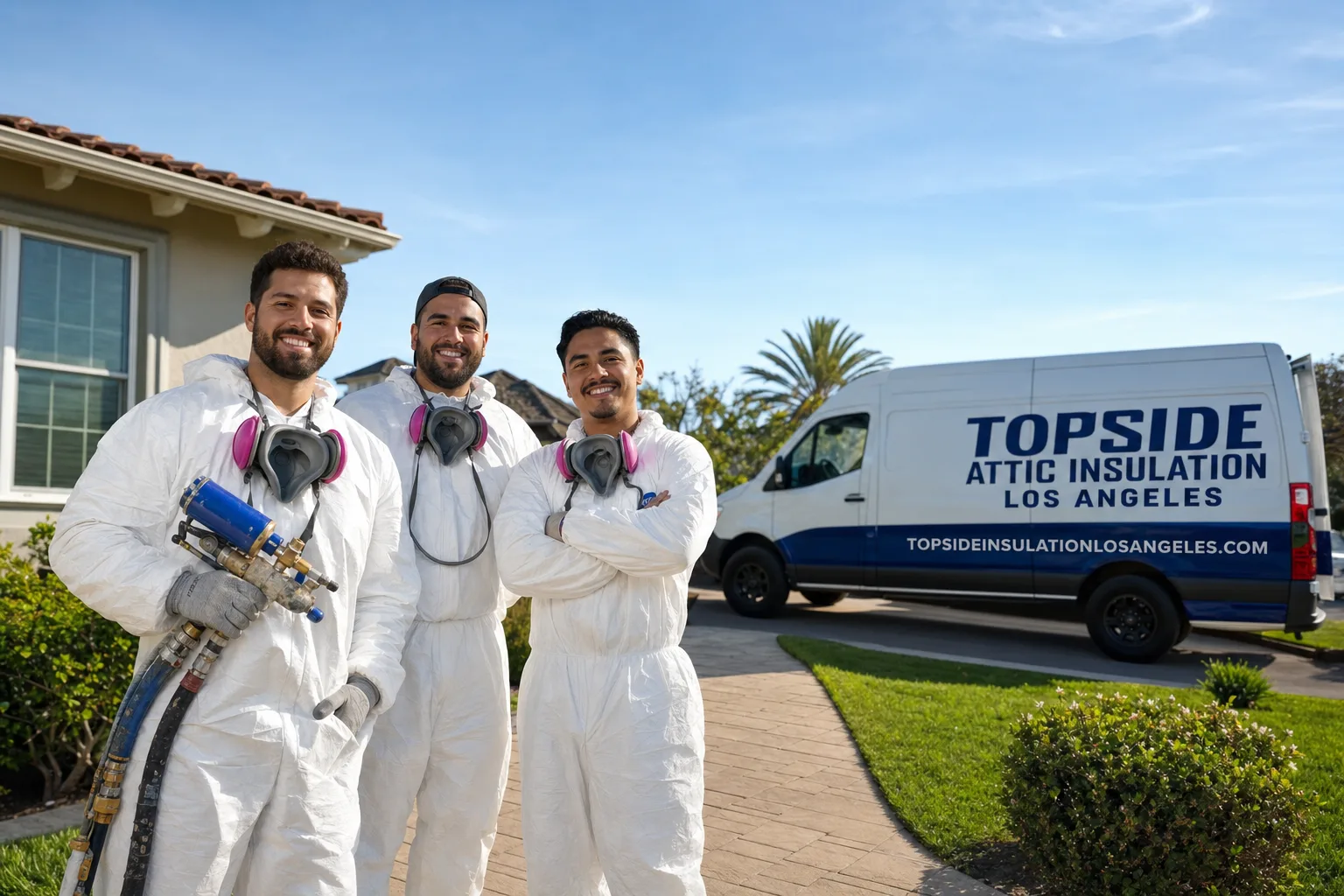
How Much Does Wall Insulation Cost in Los Angeles?
Wall insulation in Los Angeles typically costs between $1.50 and $4.50 per square foot of wall area, with most single-family homes in the metro running $1,800 to $6,500 for a full-house wall insulation job. The wide range reflects real differences: insulation type, whether walls are open (new construction or gut renovation) or closed (existing walls needing injection or dense-pack), and the labor rates that come with working in the LA market.
Wall Insulation Cost Breakdown (2026)
The numbers below are based on what Wes Okafor and the team at Envelope Insulation Co. see in Los Angeles homes week to week in 2026. These are installed costs – material plus labor – not material-only figures you’d see at a big-box store.
| Insulation Type | Method | Cost Per Sq Ft (Installed) | Typical Whole-House Range (1,500-2,500 sq ft home) |
|---|---|---|---|
| Fiberglass Batt | Open-wall (new build or gut reno) | $0.90 - $1.80 | $1,200 - $3,200 |
| Mineral Wool / Rockwool Batt | Open-wall | $1.40 - $2.60 | $1,900 - $4,800 |
| Dense-Pack Blown Cellulose | Closed-wall (no drywall removal) | $2.00 - $3.50 | $2,800 - $6,500 |
| Dense-Pack Fiberglass | Closed-wall (no drywall removal) | $2.20 - $3.75 | $3,000 - $6,800 |
| Open-Cell Spray Foam | Open-wall (sprayed in cavity) | $1.80 - $3.20 | $2,500 - $5,900 |
| Closed-Cell Spray Foam | Open-wall or partial cavity | $3.50 - $5.50 | $4,800 - $10,000+ |
| Injection Foam (RetroFoam-style) | Closed-wall via small holes | $2.50 - $4.50 | $3,500 - $8,200 |
A note on how to read those ranges: the low end assumes straightforward access, standard 2×4 framing, and no existing insulation that needs removal. The high end reflects older Los Angeles construction – homes in Silver Lake, Echo Park, and Highland Park frequently have 2×3 or even balloon-frame walls that take more time to work around, older batt material that needs to come out first, and sometimes knob-and-tube wiring behind the drywall that has to be documented before anyone adds anything.
Dense-pack and injection methods cost more than open-wall batt because the labor is slower and more precise. A crew drilling 1.5-inch access holes, packing cellulose to 3.5 lbs per cubic foot density, and patching every hole cleanly is doing meaningfully more work than stapling batts between exposed studs. That labor premium is real, and it shows up in the quote.
What Affects Wall Insulation Pricing in Los Angeles
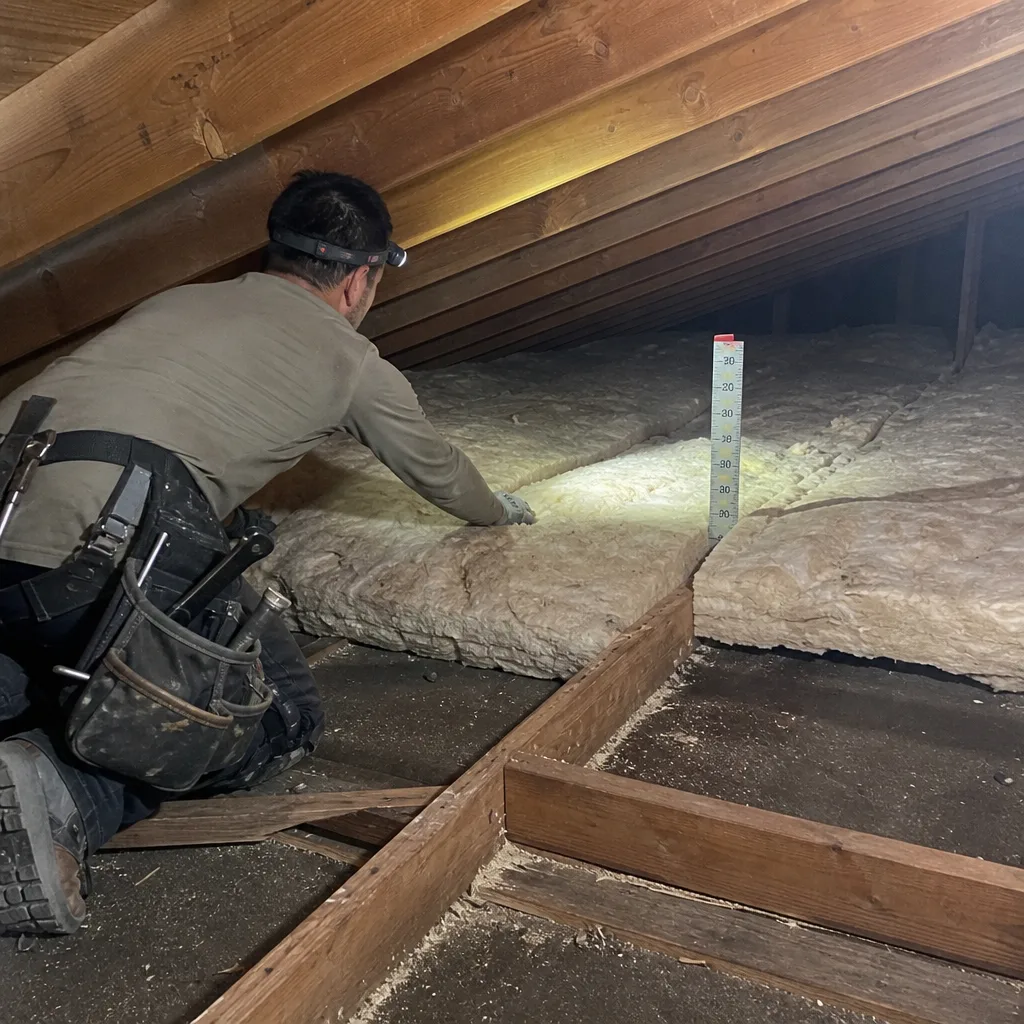
- Open vs. closed walls. If drywall is already up – which is the case in almost every existing home – you’re looking at injection or dense-pack methods that don’t require tearing walls open. These cost more per square foot but avoid a full drywall repair bill. In Los Angeles homes built before 1978, this distinction matters more because disturbing those walls can also raise lead paint and asbestos questions that need to be addressed before work starts.
- Existing insulation (or lack of it). A significant share of the pre-1960 homes we work on in neighborhoods like Leimert Park, Jefferson Park, and West Adams have no wall insulation at all. That’s actually the simpler scenario for dense-pack – an empty cavity is easier to fill than one with degraded batt sitting in the lower half. If there’s old, settled, or pest-damaged fiberglass in the wall, removal adds cost before any new material goes in.
- Wall height and framing type. Standard 8-foot ceilings with 16-inch on-center stud spacing take less time than the vaulted or 10-foot walls you’ll find in newer construction in Playa Vista or some of the renovated Craftsmans in Pasadena. Balloon framing – where the studs run continuously from foundation to roof without blocking – requires a different drill pattern and takes more material and time.
- Air sealing requirements. This one genuinely changes the outcome. In Los Angeles, a blower-door test on a typical 1,950-square-foot home built in the 1970s often reads between 3,500 and 5,500 CFM50 before any work is done. Adding insulation to walls without first sealing the top-plate penetrations, outlet boxes, and wall-to-floor connections doesn’t close that number meaningfully – it mostly traps air rather than stopping it. At Envelope Insulation Co., air sealing is completed before insulation is added, not offered as an add-on afterward. That affects the scope and total cost, but it also means the blower-door reading actually changes when the job is done.
- Square footage and home layout. A 1,400-square-foot bungalow in Culver City with a simple rectangular footprint has less lineal wall footage per heated square foot than a 2,000-square-foot ranch in Northridge with a garage conversion and multiple bump-outs. More corners and jogs mean more stud bays to locate, more holes to drill, and more patches to finish.
- Material choice and R-value target. California’s Title 24 energy code requires a minimum of R-13 in 2×4 walls and R-20 or R-13+5 in 2×6 walls for new construction in Los Angeles’s climate zone (Climate Zone 9 for most of the central city; Climate Zone 10 for the hotter inland valleys like the San Fernando Valley). Hitting those numbers with a single product versus a flash-and-batt approach (a thin layer of closed-cell spray foam plus fiberglass batt) changes both material cost and labor complexity.
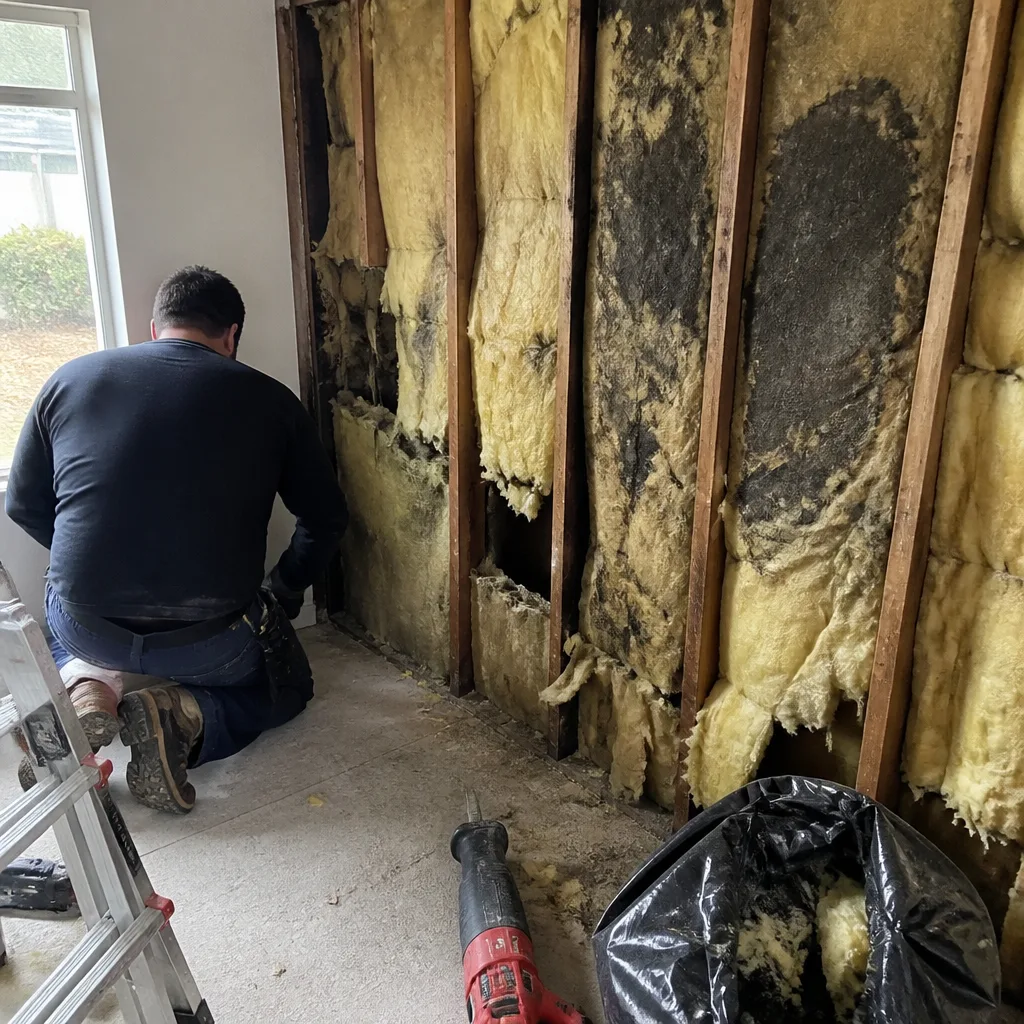 Before
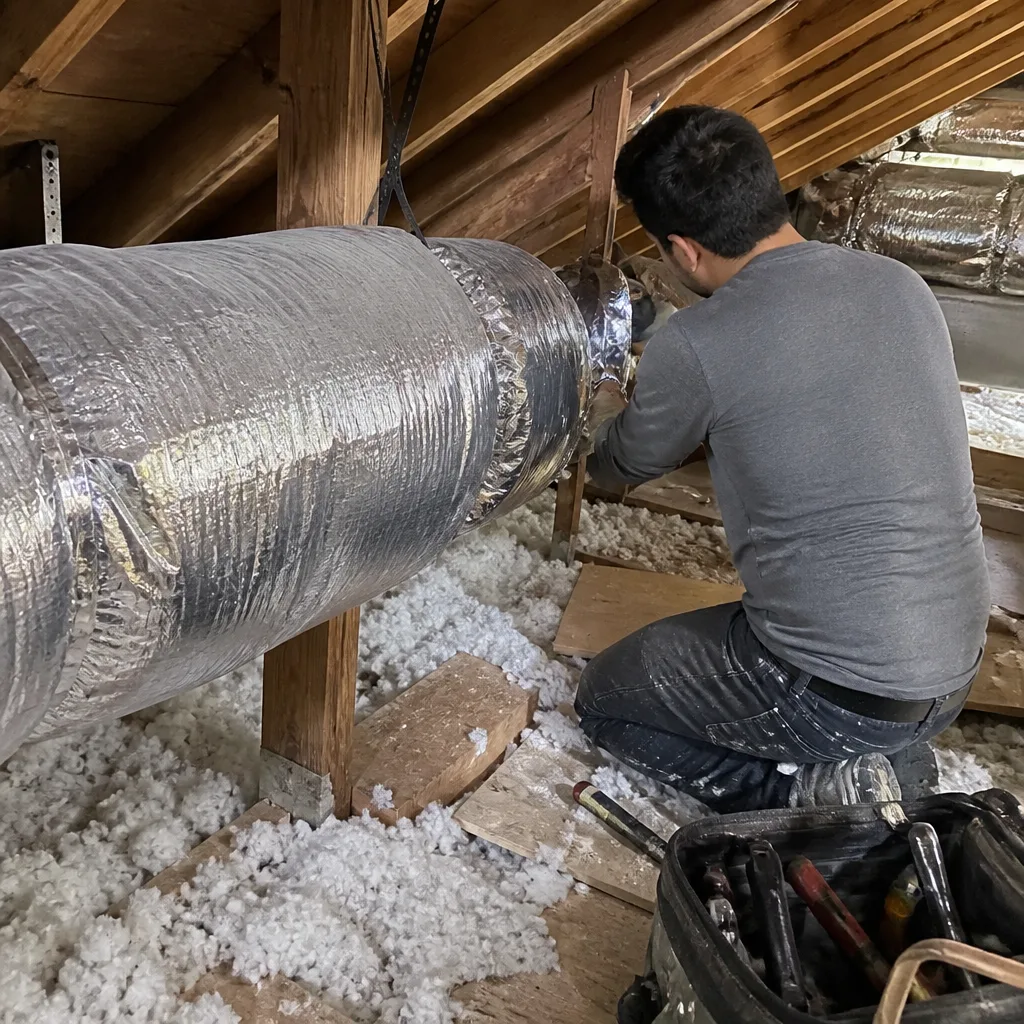 After
AfterWall Insulation in Los Angeles: What the Local Market Actually Looks Like
Los Angeles has a housing stock that doesn’t behave like the national average. About 60 percent of the single-family homes in the city were built before 1970, and a large portion of those were built before California had any meaningful residential energy code at all. That means a lot of homes – particularly in the older flatlands of East LA, in the hillside neighborhoods of Mt. Washington and Glassell Park, and across much of the South Bay – are sitting on essentially empty wall cavities.
The climate here also creates a different cost-benefit math than you’d do in Chicago or Minneapolis. Los Angeles doesn’t have the brutal heating loads that make payback calculations straightforward in colder climates. What it does have is a wide daily temperature swing – particularly in the inland neighborhoods – and an increasingly hot summer cooling season. In the San Fernando Valley, July and August afternoons regularly push past 100°F, and uninsulated west-facing walls absorb and radiate that heat into the home for hours after sunset. We see this pattern consistently in Sherman Oaks, Van Nuys, and Reseda, where homeowners report that their west and south rooms stay unbearably warm until well past 10 PM even with the AC running.
That’s the practical context for wall insulation in this market: it’s less about heating and more about reducing the solar gain that overloads air conditioning systems and makes parts of the house uncomfortable from June through October.
For more on how wall insulation fits into a complete building-envelope approach, see our main page on Wall Insulation in Los Angeles.
Open-Wall vs. Closed-Wall: Which Method Is Right for Your Home?
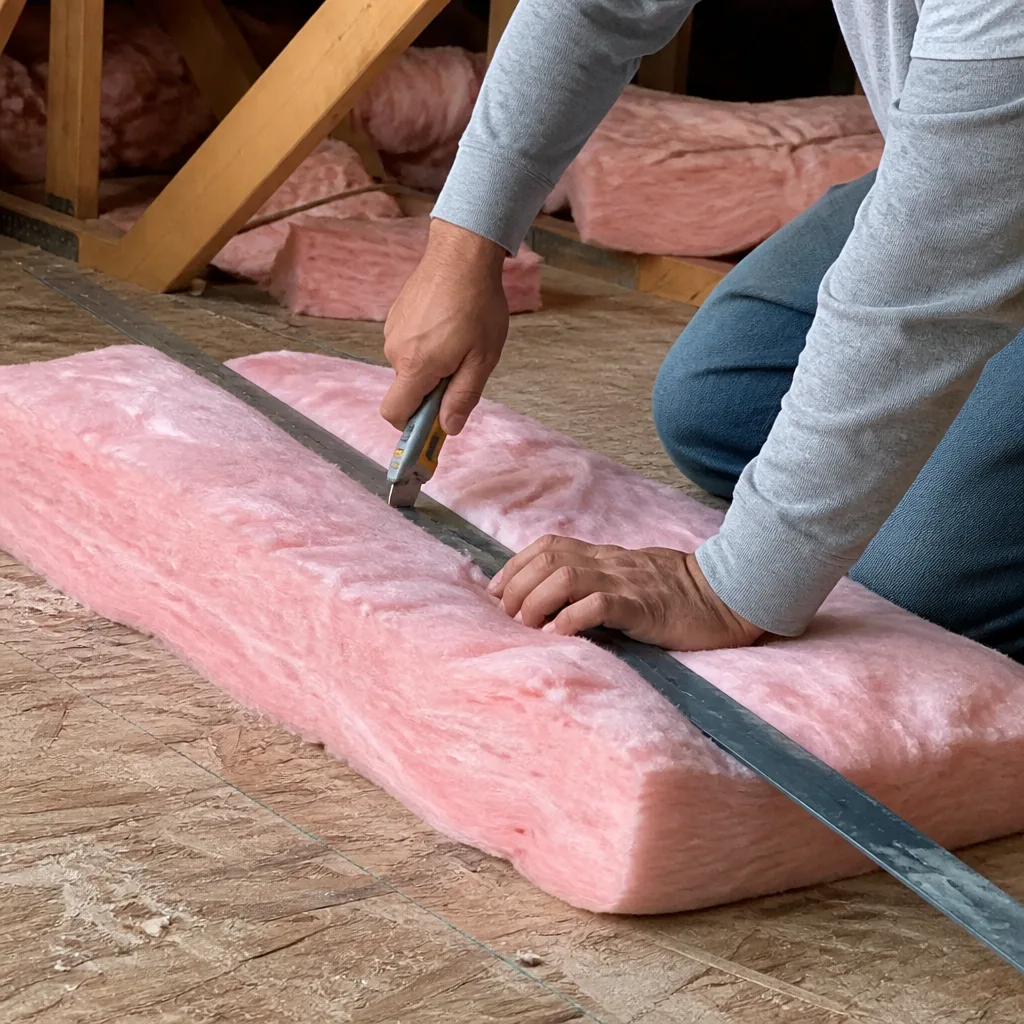
Open-Wall Insulation
Open-wall methods – batt fiberglass, mineral wool, or open-cell spray foam installed between exposed studs – only make sense when the wall cavity is already accessible. This is new construction, a gut renovation where drywall has been removed, or an addition. In these situations, fiberglass batt from Owens Corning or Johns Manville at R-15 (in a 2×4 cavity) is often the cost-effective choice. Rockwool batts cost more but add meaningful fire resistance and sound attenuation – relevant in denser neighborhoods like Koreatown or Hollywood where party walls and street noise are real considerations.
Closed-Wall Methods: Dense-Pack and Injection
For existing homes where drywall is in place and in good condition, dense-pack blown cellulose or injection foam are the standard approaches. Dense-pack cellulose from GreenFiber is installed by drilling a series of holes (typically from the exterior through the siding, or from the interior through drywall), inserting a fill tube, and packing cellulose to a density that keeps it from settling over time. When done correctly, you end up with a wall cavity packed to roughly 3.5 lbs per cubic foot – dense enough that it won’t shift or drop over years of seasonal movement.
Injection foam works similarly but uses a two-part foam that expands to fill irregular cavities. It’s particularly useful in older homes where there’s blocking mid-wall or where the cavity geometry isn’t uniform. The access holes for injection methods are typically smaller (around 5/8 inch versus 1.5 to 2 inches for dense-pack), which means a cleaner patch job – relevant if the exterior is stucco, which is the predominant cladding type across most of Los Angeles.
What About Spray Foam in Walls?
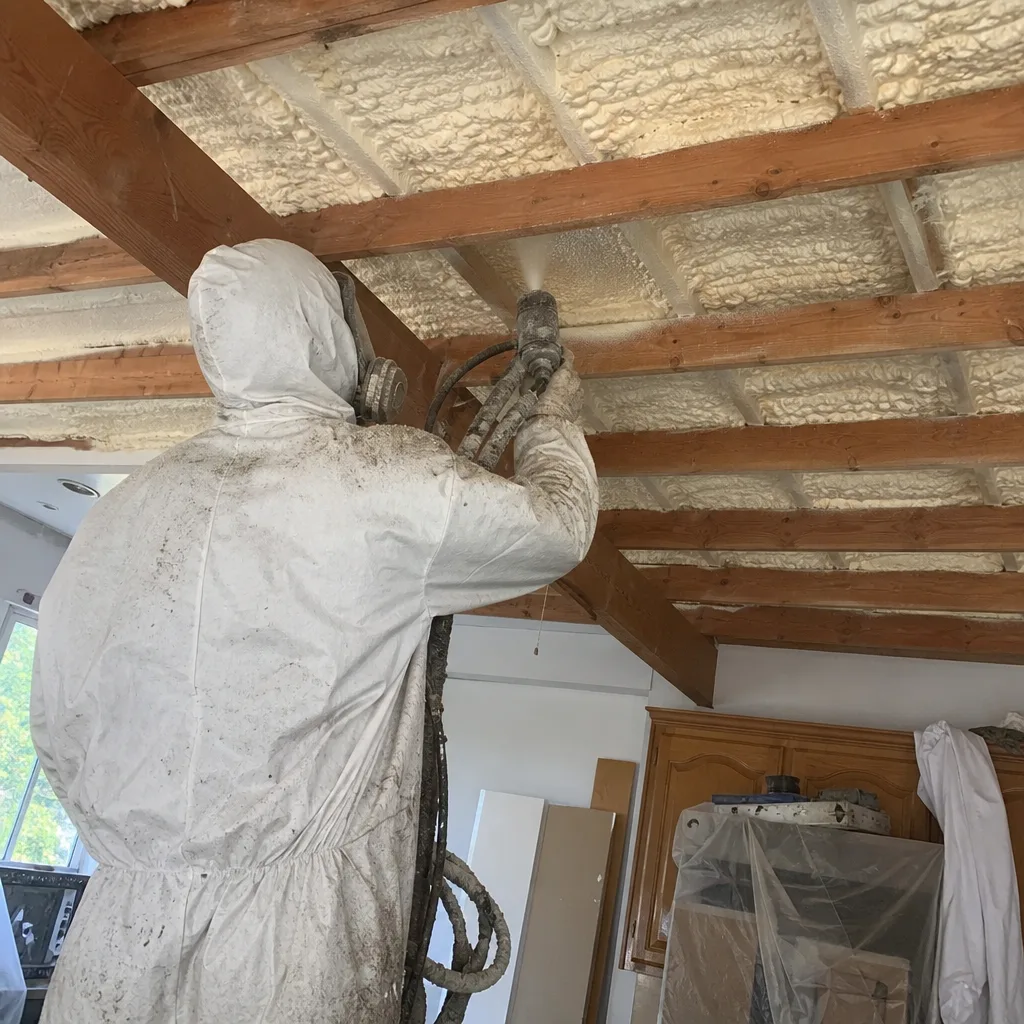
Closed-cell spray foam in walls is sometimes the right answer, but it’s used selectively. At 6.5 cents per board foot in material cost and higher application complexity, it’s typically reserved for situations where you need both insulation and an air barrier in a very thin profile – like a 2×3 framed wall with no room for anything else, or where moisture management is a specific concern. Icynene and Demilec are the products we use in those applications.
How to Save on Wall Insulation in Los Angeles
There are a few concrete ways to reduce what you pay for wall insulation in Los Angeles without compromising the result.
- Combine wall and attic work in one visit. Mobilization – getting a crew, truck, and equipment to your address – is a fixed cost. If you’re already having attic insulation addressed, scheduling wall insulation in the same visit eliminates one mobilization charge. For a 1,700-square-foot home in Glendale, combining work in a single visit can save between $300 and $600 compared to scheduling two separate jobs.
- Get a written second opinion before you sign. We offer a free second opinion on any written estimate you’ve already received. Bring us the quote and we’ll read through it with you – line by line, material by material. The point isn’t to match a number; it’s to make sure you understand what you’re actually being quoted for. An estimate that leaves out air sealing or includes materials that won’t meet Title 24 isn’t a bargain.
- Check LADWP and SoCalGas rebates before scheduling. The Los Angeles Department of Water and Power and Southern California Gas Company both run rebate programs for wall and attic insulation that can offset between $200 and $700 on a qualifying job, depending on the scope and R-value improvement. Program terms change, so check current offerings at ladwp.com and socalgas.com directly. We can tell you at the estimate whether the job scope is likely to qualify.
- Time the job with a planned exterior renovation. If you’re planning to reside or re-stucco your home in the next two years, that’s the ideal window to add wall insulation from the exterior side – because the cavity is accessible without touching interior drywall. In Larchmont Village and Hancock Park, where homeowners are frequently doing full exterior renovations on older Craftsman and Spanish Colonial homes, coordinating with your general contractor to schedule insulation during the re-siding phase can cut the total labor cost substantially.
- Choose the method that fits your wall, not the most expensive option. Dense-pack cellulose in a standard 2×4 stud bay delivers R-13 to R-14 at a lower installed cost than injection foam, and it performs well in Los Angeles’s relatively mild climate. If the goal is meeting Title 24 and reducing thermal gain – not achieving passive-house performance – dense-pack cellulose is usually the appropriate and cost-effective choice.
For a written price specific to your home’s walls, call Envelope Insulation Co. at (628) 226-1097. Estimates are free, the price is written before any work starts, and you’ll know the exact scope before anyone shows up with equipment.
The Air Sealing Piece: Why It Affects Your Wall Insulation Budget
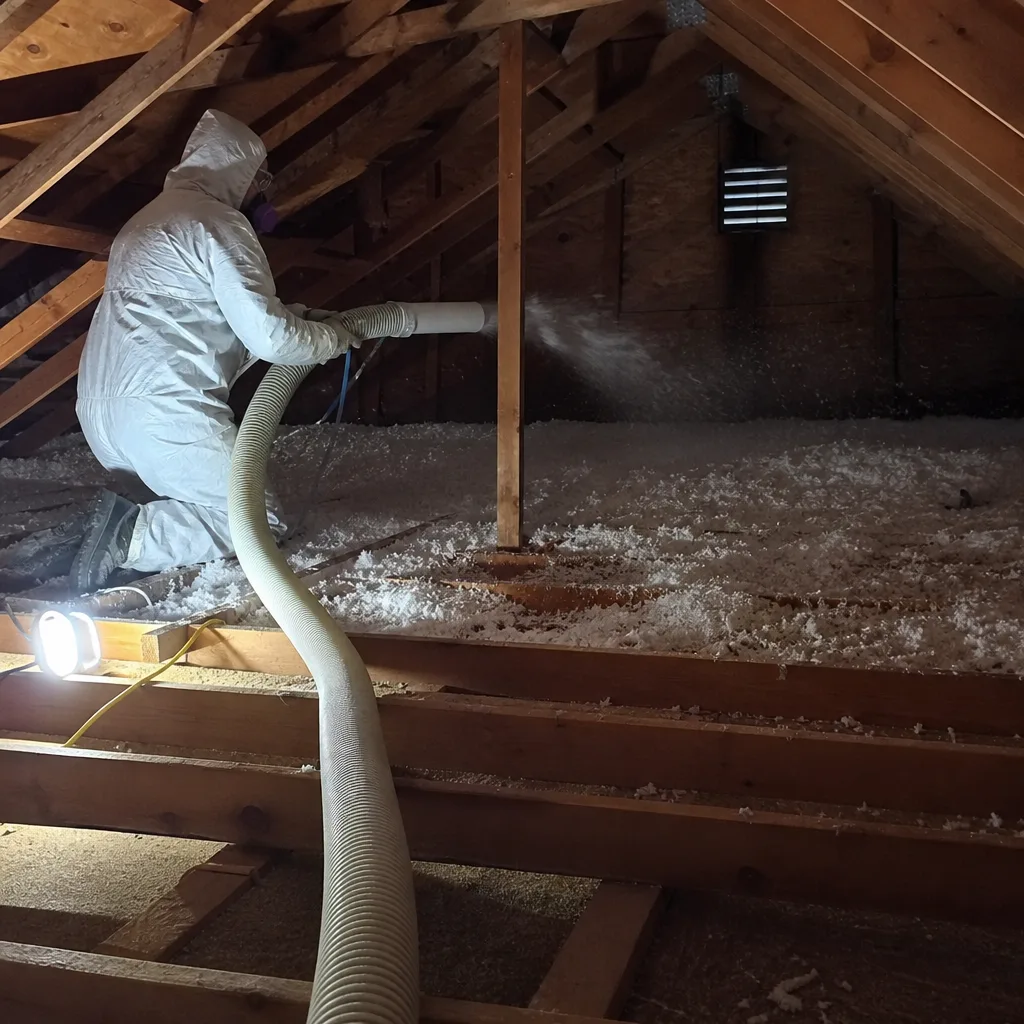
This point is worth addressing directly because it shows up in pricing conversations regularly. Some bids you get for wall insulation will be lower because they don’t include air sealing. The insulation goes in, the holes get patched, and the job is done. A blower-door reading afterward often shows very little change in the home’s air leakage rate – because the insulation didn’t close the gaps, it just covered them.
At Envelope Insulation Co., air sealing is completed before insulation is installed. That means sealing top-plate penetrations, electrical outlets and switches on exterior walls, and any visible bypasses in the wall cavity before the dense-pack hose or batt goes in. This adds time and cost to the job scope – it’s not a rounding error. But it’s also why our before-and-after blower-door numbers actually move. A job we completed in Eagle Rock in late 2024 went from a pre-job reading of 4,650 CFM50 to a post-job reading of 2,190 CFM50 after combined wall and attic air sealing and insulation. Those two numbers, written on the job documentation the homeowner received, are the evidence that something actually changed.
Wes Okafor has been running jobs under this protocol since Envelope Insulation Co. was founded in 2016. In 9,000-plus homes over that period, the pattern is consistent: insulation without prior air sealing moves the comfort needle less than the homeowner expected, and the call-back rate on those jobs is higher. The written price you receive from us will include the air sealing scope, and the blower-door numbers will be on your job record when we leave.
Los Angeles Neighborhoods and What We Typically Find
Wall insulation work varies by neighborhood partly because the housing stock varies. Here’s what we see in practice:
- The Eastside (Boyle Heights, East LA, El Sereno): Heavy concentration of pre-1950 homes with empty 2×4 stud bays and exterior stucco. Dense-pack cellulose from the exterior (through the stucco) is standard here. Budget $2,800 to $4,500 for a typical 1,200-1,600 square foot home, depending on existing condition.
- The Westside (Culver City, Mar Vista, Palms): More post-war 1950s-60s construction with some fiberglass batt already in place but often degraded. Removal plus replacement with dense-pack runs $3,500 to $5,500 for a standard-size home. These neighborhoods also tend to have more garage conversions (ADUs) where wall insulation is often an afterthought and a specific concern.
- The San Fernando Valley (Encino, Tarzana, Reseda, North Hills): Larger footprints, hotter summer climate (Climate Zone 10), more urgent cooling load argument for wall insulation. A 2,000-square-foot ranch with 2×4 framing runs $4,000 to $6,500 for full dense-pack. The climate argument for wall insulation is probably strongest in the Valley, where west-facing walls are genuinely brutal from June through September.
- Northeast LA (Glassell Park, Mt. Washington, Highland Park): Older craftsman and bungalow stock, some balloon framing, often knob-and-tube. Wall insulation in balloon-framed homes requires fire blocking to be installed or confirmed before the cavity is filled. Budget accordingly – these jobs can run 15 to 25 percent above a standard closed-wall job.
- The South Bay (Torrance, Hawthorne, Inglewood): Post-war tract construction, relatively uniform 2×4 framing, good access from exterior in many cases. Dense-pack pricing here tends to come in at the middle of the range: $2,500 to $4,800 for most single-family homes.
FAQs: Wall Insulation Cost in Los Angeles
How much does wall insulation cost in Los Angeles for an average home?
Most single-family homes in Los Angeles run between $2,500 and $6,500 for a full-house wall insulation job using dense-pack cellulose or injection foam in closed walls. Smaller homes (under 1,200 square feet) can come in below $2,500; larger homes with complex layouts or older framing can exceed $7,000. The honest answer is that it depends on wall configuration and method – which is why we write a specific price for each home before any work starts. Call (628) 226-1097 for a free written estimate.
What is the cheapest type of wall insulation in Los Angeles?
Fiberglass batt insulation in open walls runs $0.90 to $1.80 per square foot installed – the lowest cost per square foot of any method. The catch is that it only works when walls are already open. For existing homes with drywall in place, dense-pack cellulose at $2.00 to $3.50 per square foot is typically the most cost-effective closed-wall option. Call (628) 226-1097 and we can confirm which method your walls are suited for.
Does wall insulation require a permit in Los Angeles?
Adding insulation to existing walls generally does not require a permit in Los Angeles under the LA Department of Building and Safety rules, as long as you’re not removing and replacing drywall and the work doesn’t affect structural or electrical systems. However, if existing knob-and-tube wiring is present in the wall cavity, most licensed contractors will not add insulation over it – and LADBS inspectors may flag it. This is something we document and communicate before any work begins. The written scope you receive from us will note any conditions we identify during the estimate.
How long does wall insulation take in Los Angeles?
A typical single-family home in Los Angeles – 1,500 to 2,000 square feet with standard 2×4 stud framing and exterior stucco – takes one full day for a two-person crew doing dense-pack from the exterior. Larger homes, balloon-frame construction, or jobs that include air sealing and blower-door testing may run into a second day. We give you a written timeline in the job scope before work starts.
Is wall insulation worth it in Los Angeles’s mild climate?
For most of coastal Los Angeles, the payback on wall insulation is longer than it would be in a heating-dominated climate – but the comfort argument is real and measurable. In the San Fernando Valley and other inland areas, uninsulated west-facing walls can radiate enough heat to keep rooms 8 to 12°F warmer than the thermostat set point well into the evening, which drives cooling costs and comfort complaints that wall insulation directly addresses. We can run a blower-door test before and after the job so you have a documented measurement of what changed, not just a sense of it. For a written estimate, call (628) 226-1097.
Can wall insulation be added without removing drywall?
Yes – dense-pack blown cellulose and injection foam both install through small holes drilled into the siding or drywall, without tearing walls open. The holes are patched and finished after installation. For stucco exteriors (the most common cladding in Los Angeles), the repair is typically done with color-matched stucco and is barely visible within a few weeks as the patch weathers. This is the standard approach for existing homes and accounts for the majority of wall insulation work we do across the LA metro.
What You Receive When the Job Is Done
Under the Haven Standard that governs every Envelope Insulation Co. job, the documentation you receive is part of what you’re paying for. When a wall insulation job closes, you get a Documented Photo Record of the access points, the patched holes, and any conditions found during work. On jobs that include air sealing, you receive before-and-after blower-door readings – a pressurization measurement that shows, in a single number, how much conditioned air the building envelope was losing before and after. You also get the written warranty that was part of your written price before work started, plus the 365-Day Done Right Promise: if something isn’t right, we make it right.
That’s not a sales promise – it’s what the written scope says before anyone lifts a tool.
If you’ve already received a quote from another contractor, bring it to us. We offer a free second opinion on any written estimate: we’ll read through it with you, explain what you’re looking at, and tell you whether the scope includes what it should. No obligation to book anything with us afterward.
For context on the full range of building-envelope services we offer, the home page covers everything from attic insulation and crawl space encapsulation to radiant barrier installation and home energy audits – all under the same written-price, documented-result standard.
Key Takeaways: Wall Insulation Cost in Los Angeles
- Most LA homes pay $1,800 to $6,500 for wall insulation, with $2,500 to $5,000 covering the majority of standard single-family jobs.
- The method – open-wall batt, dense-pack, or injection foam – drives cost as much as square footage does. Closed-wall methods cost more per square foot but avoid a drywall tearout.
- Los Angeles’s climate zones (Zone 9 for the city core, Zone 10 for inland valleys) affect both Title 24 requirements and the practical case for wall insulation.
- Air sealing before insulation installation is the difference between a job that changes the blower-door number and one that doesn’t. Ask any contractor you’re considering what the before-and-after blower-door readings will be.
- LADWP and SoCalGas rebate programs can offset $200 to $700 on qualifying jobs.
- A written price before work starts is non-negotiable. If a contractor quotes you verbally or says “it depends, we’ll know when we open the wall,” ask for a written scope before signing anything.
Get a Written Price for Your Los Angeles Home
If you want a specific number for your home’s walls – not a range, not a rough estimate, but a written price with a defined scope – call Envelope Insulation Co. at (628) 226-1097. Estimates are free. A live person will answer. Under Haven Standard Clause 1, you’ll have a written price and written scope before anyone does any work. Wes Okafor and the team have been completing wall insulation jobs across Los Angeles since 2016, with before-and-after documentation on every applicable job and a 365-Day Done Right Promise on every completed project.
If you’ve already received a written estimate from someone else, bring it along. We’ll read it with you for free.
Pricing reflects the Los Angeles market as of 2026. Topside Attic Insulation Los Angeles offers free estimates – call (628) 226-1097.
Written by Wes Okafor, Owner at Envelope Insulation Co., serving Los Angeles since 2016.
What Our Customers Say
"The winter gas bill dropped by about a third. They had estimated a quarter, so they under-promised."
- Genevieve R."Fixed price, clean work, and they hauled the old material away as agreed."
- Todd M."Crawl space encapsulation done properly. Photographs of the vapour barrier at every seam, and the damp smell in the hallway is gone."
- Ainsley P.