
Last updated September 22, 2026
Insulation Cost Breakdown: The Los Angeles Homeowner’s Reference for 2026
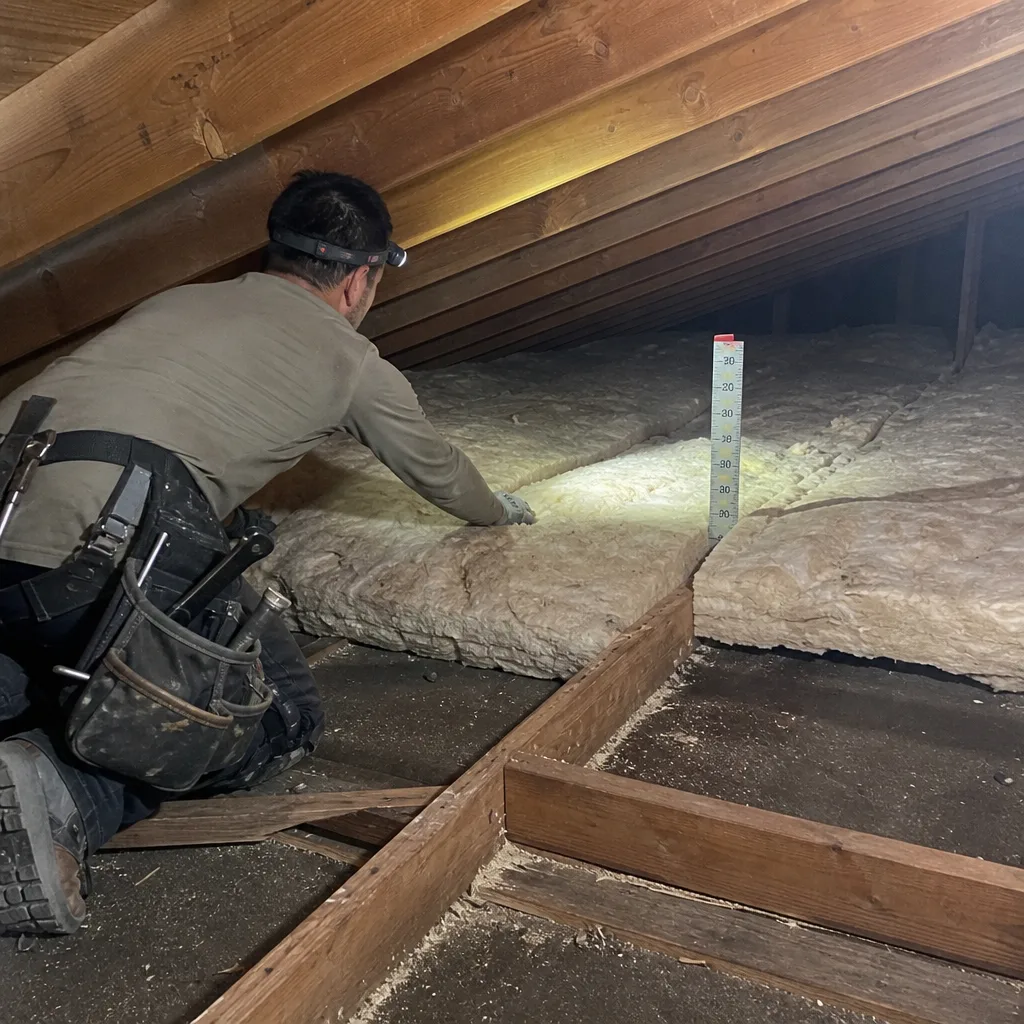
Two bids for “R-38 blown insulation, 1,200 sq ft attic” landed on the same Burbank kitchen table in 2024: $1,100 and $3,400. The lower price covered material only, blown over existing insulation with no depth verification and no air sealing. The higher price included a blower-door test, 14 documented bypass locations sealed, and a post-job pressurization reading. They were not the same product. In Los Angeles, insulation quotes for nominally identical scopes routinely vary by 300% because the industry has no standard unit of measurement. One contractor quotes per square foot of material, another per inch of depth, another per bag, and most omit the air-sealing labor that determines whether the insulation actually performs. This guide gives you the line-item framework to make bids comparable, and you can find more guides & resources on our blog.
Quick Answer
Complete attic insulation in Los Angeles in 2026 typically runs $2.20-$4.80 per square foot installed, depending on insulation type, air-sealing scope, and whether blower-door verification is included. A standard 1,200 sq ft attic with blown cellulose to R-38, proper air sealing, and documented before-and-after testing generally costs $2,600-$5,800. Wall insulation, spray foam at rim joists, and dense-pack retrofits follow different pricing structures that this guide breaks down line by line.
Table of Contents
- Why Los Angeles Insulation Quotes Vary by 300% for the Same Scope
- 2026 Cost Ranges by Insulation Type and Assembly
- The Air-Sealing Line Item: What Disappears from Low Bids
- Blower-Door Testing: What It Costs and What You Get
- Title 24 Compliance: When a HERS Rater Is Mandatory
- The Three Numbers to Demand Before Accepting Any Bid
- Material Selection: What the Brand Names Actually Mean
- Common Mistakes to Avoid
- When to Call a Professional
- Frequently Asked Questions
- The Bottom Line
 Before
 After
AfterWhy Los Angeles Insulation Quotes Vary by 300% for the Same Scope
The insulation industry quotes like the flooring industry would if one contractor priced by the plank, another by the square foot installed, and a third by the hour with no estimate of hours. Homeowners in Los Angeles receive bids that use incompatible units, making direct comparison nearly impossible without conversion work the customer rarely knows to perform.
Here’s how the same attic scope gets priced three different ways:
- Per square foot of material coverage: The contractor quotes $1.10/sq ft for “R-38 blown cellulose” but does not specify installed depth at the eaves versus the center, does not account for slope losses in a 4:12 roof, and treats air sealing as a separate, later conversation.
- Per inch of depth: The contractor quotes $0.45 per inch per square foot, which sounds precise but allows R-value drift, insulation settling, and incomplete coverage at the perimeter where depth is hardest to verify.
- Per bag of material: Common with loose-fill fiberglass, this unit obscures labor entirely and incentivizes rapid, unverified installation. A bag covers approximately 40 sq ft at R-38, but coverage varies 25% based on hose pressure and installer technique.
The Los Angeles market compounds this problem. Our mild climate means many contractors have never worked in a jurisdiction with strict blower-door requirements, so air sealing is treated as optional. Our large immigrant contractor workforce includes skilled technicians and others who learned the trade informally, with no standardized training in building science. Our housing stock spans 1920s bungalows in Highland Park, 1960s tract homes in the San Fernando Valley, and 1990s stucco boxes in the Inland Empire adjacencies, each with different attic access, existing insulation conditions, and code-triggering renovation thresholds. For details on compliance, see Insulation Permits, Codes & Inspections in CA: What You Need to Know.
At Topside Attic Insulation Los Angeles home, we publish before-and-after blower-door numbers on every applicable job because the number is the only common currency. A pre-test reading of 4,200 CFM50 and a post-test reading of 2,100 CFM50 tells you exactly what you paid for, regardless of how the bid was structured.
2026 Cost Ranges by Insulation Type and Assembly
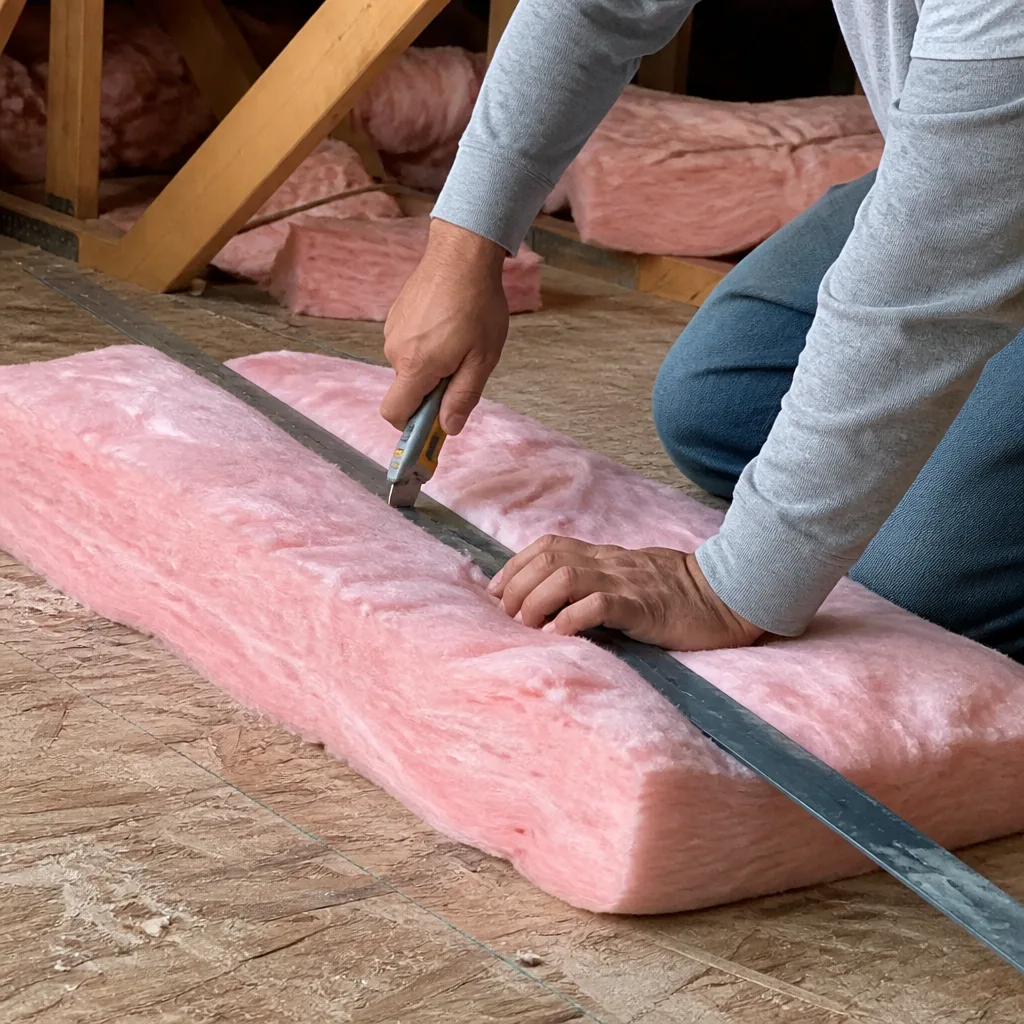
These ranges reflect installed pricing in the Los Angeles market as of early 2026, including material, labor, and basic equipment. They do not include air sealing, blower-door testing, or HERS rater fees, which are itemized separately below. Prices assume standard attic access, no hazardous material remediation, and no structural modifications.
| Assembly | Insulation Type | Unit | 2026 Range | Labor % of Total |
|---|---|---|---|---|
| Open attic floor | Blown cellulose to R-38 | Per sq ft | $1.80-$3.20 | 55-65% |
| Open attic floor | Blown fiberglass to R-38 | Per sq ft | $1.60-$2.90 | 55-65% |
| Open attic floor | Spray foam (open cell, R-38 equivalent) | Per sq ft | $4.50-$7.80 | 40-50% |
| Knee walls / vertical attic | Fiberglass batts, R-21 | Per sq ft | $2.40-$4.10 | 60-70% |
| Exterior walls (new construction) | Fiberglass batts, R-15 | Per sq ft | $1.40-$2.60 | 65-75% |
| Exterior walls (retrofit) | Dense-pack cellulose | Per sq ft | $3.20-$5.50 | 60-70% |
| Rim joists / band joists | Closed-cell spray foam, 2 inches | Per linear ft | $18-$32 | 45-55% |
| Crawl space walls | Rigid foam board, R-10 | Per sq ft | $3.80-$6.40 | 50-60% |
Several Los Angeles-specific factors push pricing to the high or low end of these ranges:
- Attic access difficulty: A scuttle hole in a closet versus a full staircase changes labor hours by 30-50%. Homes in Los Feliz and Silver Lake with original 1920s access hatches often require temporary access cutting.
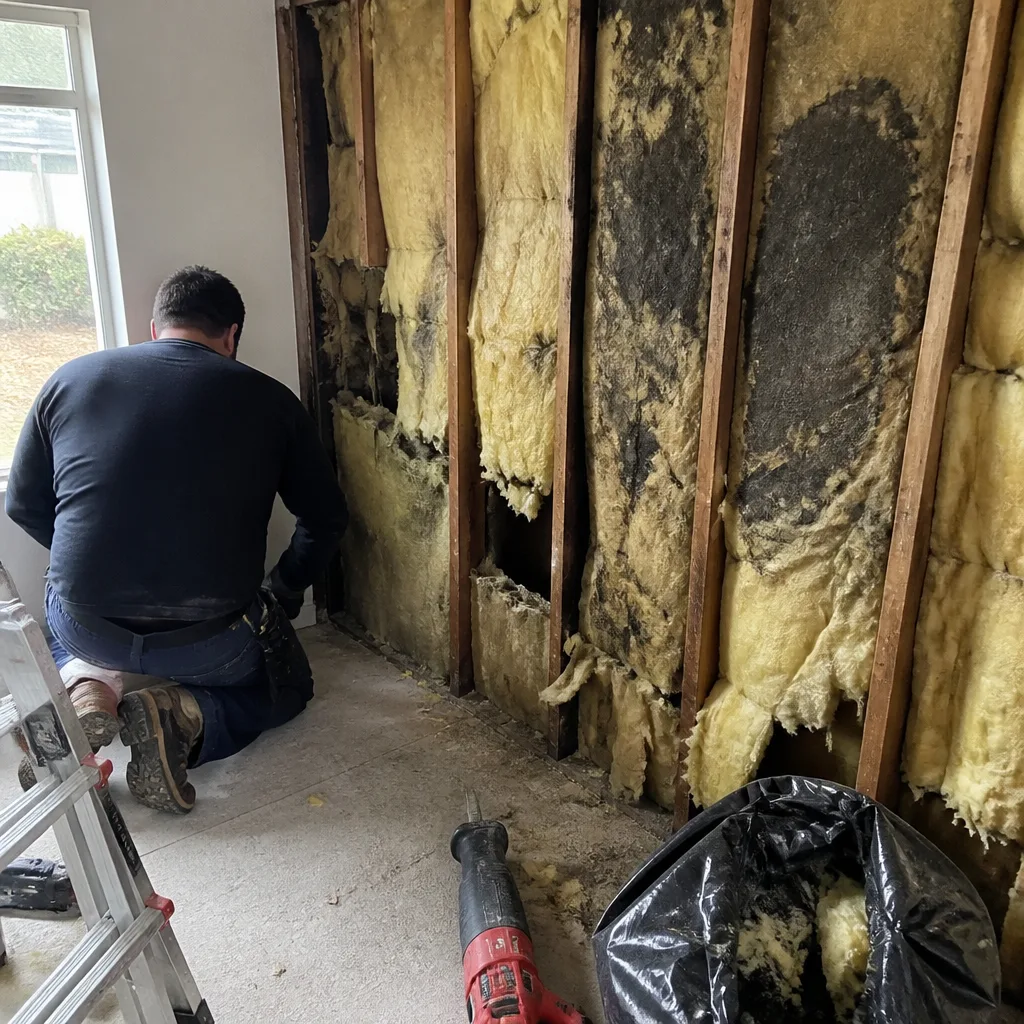
- Existing insulation condition: Removal and disposal of degraded fiberglass or rodent-compromised cellulose adds $0.80-$1.50 per square foot. We see this frequently in pre-1970s homes in South Los Angeles and unincorporated county areas.
- Roof pitch and truss design: A 12:12 pitch with scissors trusses can double labor time versus a 4:12 pitch with conventional framing. The steep roofs in the Hollywood Hills and Pacific Palisades are not priced the same as Valley ranch homes.
- Seasonal demand: September through November sees 20-30% higher demand in Los Angeles as homeowners prepare for winter gas bills, though our mild climate means less seasonality than Midwest markets.
The labor-to-material ratio matters because it reveals what you’re actually buying. A bid with 35% labor and 65% material suggests bulk material with minimal installation care. A bid with 60% labor and 40% material suggests detailed work with verified coverage. Neither is automatically better, but they are different products and should be evaluated as such.
The Air-Sealing Line Item: What Disappears from Low Bids
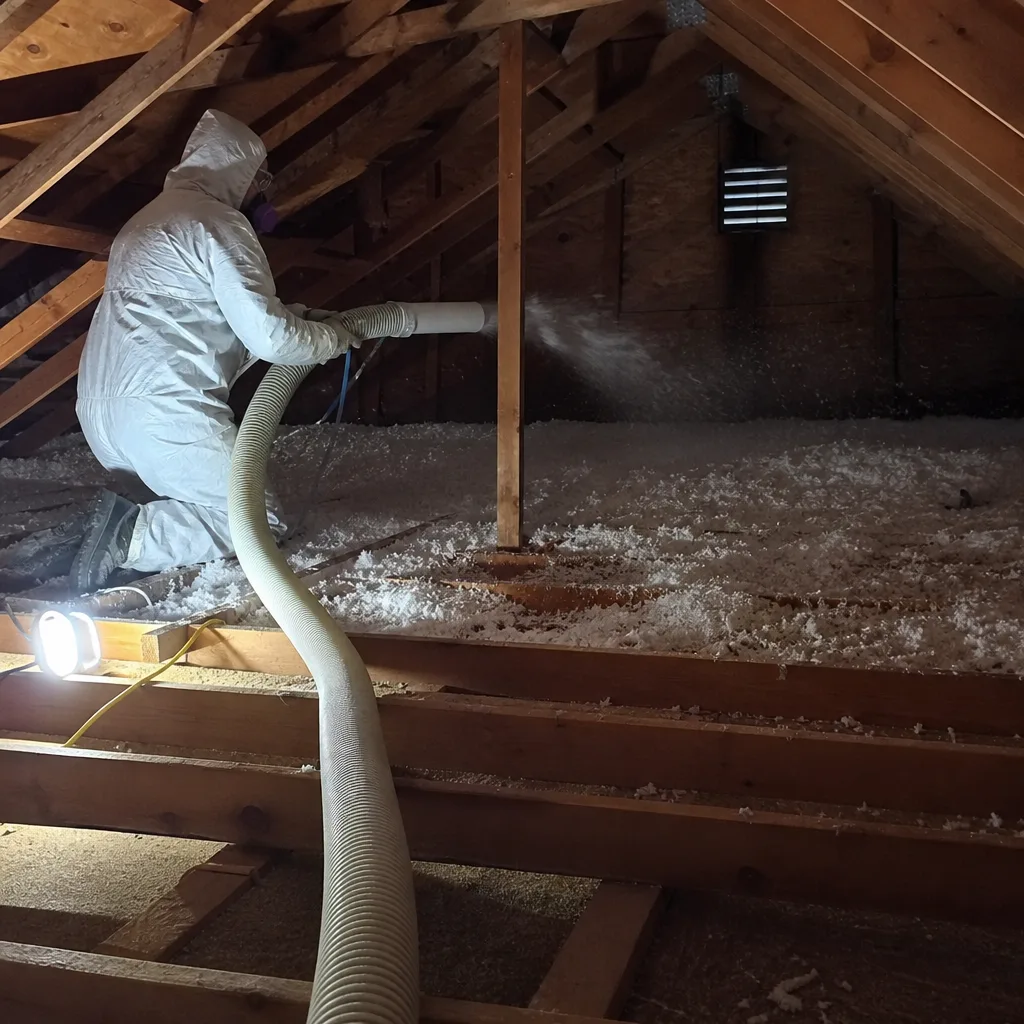
Air sealing is the work that happens before insulation goes in, and it is the line item most commonly omitted from low bids. A contractor can quote $1,100 for “R-38 blown insulation” by skipping this step entirely. The insulation performs poorly, but the homeowner has no mechanism to discover the failure until energy bills arrive, a future home inspection reveals the gap, or they consult Insulation Warning Signs: A Los Angeles Homeowner’s Reference Guide.
In our experience across 9,000+ homes since 2016, a typical Los Angeles attic air-sealing scope includes:
- Top plate sealing: 8-14 linear feet of accessible top plates, where the wall framing meets the ceiling drywall. These joints leak continuously because they are rarely sealed during original construction.
- Penetration sealing: 4-12 locations including plumbing vent stacks, electrical boxes, recessed can lights, chimney chases, and HVAC duct boots. Each penetration is a designed hole in the pressure boundary.
- Dam and barrier construction: Insulation dams at attic access hatches, around combustion appliance flues, and at dropped soffits to prevent wind-washing and maintain fire clearance.
The cost of this scope, performed with fire-rated caulk, expanding foam rated for the application, and rigid blocking where required, typically runs $650-$1,400 for a standard Los Angeles attic. This represents 20-35% of a complete job’s total cost. When it disappears from a bid, one of three things is happening: the contractor does not perform air sealing as standard practice; the contractor plans to “blow over” existing leaks and hope the homeowner does not notice; or the contractor intends to present air sealing as a surprise upcharge after work begins.
At Envelope Insulation Co., we will not blow insulation over an unsealed attic floor. The Haven Standard requires air sealing of top plates, can lights, and penetrations before any insulation is added. This is not an upsell. It is the prerequisite that makes the insulation perform.
Homeowners in Los Angeles should specifically ask: “What is the linear footage of top-plate sealing included, and how many penetration locations are in the scope?” A contractor who cannot answer in writing is not planning to do the work.
Blower-Door Testing: What It Costs and What You Get
A blower-door test is a pressurization reading that shows, in one number, how much air your building envelope is losing. The equipment is a calibrated fan mounted in an exterior door, combined with pressure sensors that measure the airflow required to maintain a 50 Pascal pressure difference between inside and outside. The result is expressed in CFM50 - cubic feet per minute at 50 Pascals - or in ACH50, air changes per hour at 50 Pascals.
Here’s how blower-door testing integrates into a Los Angeles insulation job:
- Pre-test: Conducted before any work begins, establishing the baseline air leakage rate. This identifies the magnitude of the problem and guides the air-sealing priority list. Cost when billed separately: $350-$550. Often absorbed into complete job pricing when air sealing is included.
- Post-test: Conducted after air sealing and insulation are complete, documenting the performance change. This is the number that proves what you paid for. Cost when billed separately: $250-$400. Typically included in complete job pricing at Envelope Insulation Co.
- HERS rater involvement: Required for Title 24 compliance in certain renovation scopes. Adds $150-$300 to the testing cost but produces a certified report accepted by building departments and recognized at resale. More on this in the next section.
When is blower-door testing absorbed into the job versus billed separately? In our pricing, the pre-test and post-test are included on any job where air sealing is performed, because the test is how we verify our work. A contractor who charges separately for testing on a job that includes air sealing is either pricing transparently or, more commonly, using the test as a margin recovery tool on a bid that was artificially low without it.
What you receive as documentation varies by contractor. At minimum, you should receive:
- The pre-test CFM50 or ACH50 number
- The post-test CFM50 or ACH50 number
- The percentage reduction achieved
- A written interpretation of what those numbers mean for your specific home
We publish before-and-after blower-door numbers on every applicable job. A typical Los Angeles home built between 1960 and 1990 tests at 3,500-6,000 CFM50 before work and 2,000-3,500 CFM50 after comprehensive air sealing and insulation. Older homes in neighborhoods like West Adams or Echo Park may start higher; newer homes in Playa Vista or the Arts District may start lower but still benefit from targeted sealing at known failure points.
Title 24 Compliance: When a HERS Rater Is Mandatory
California’s Title 24 Building Energy Efficiency Standards create a compliance layer that affects insulation jobs in Los Angeles more than in most U.S. markets. A HERS rater - a Home Energy Rating System certified third party - is required to verify certain energy efficiency measures when they are triggered by the scope of work.
A HERS rater becomes mandatory in these common Los Angeles scenarios:
- Alterations exceeding 1,000 sq ft of conditioned space: A whole-house re-insulation project or major addition typically triggers this threshold.
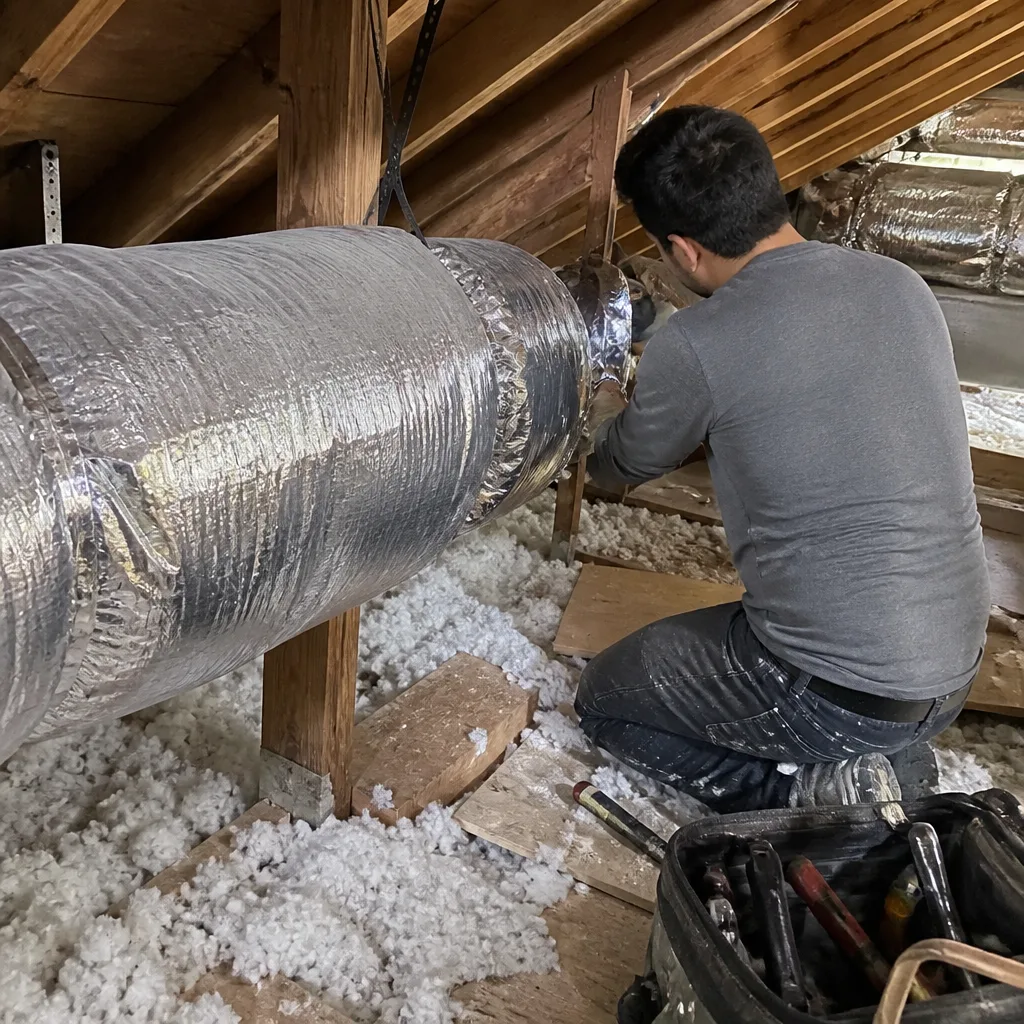
- HVAC changeouts with ductwork in unconditioned space: Very common in Los Angeles, where furnaces and air handlers live in attics. If you’re replacing a system and touching ducts, HERS verification of insulation and sealing is required.
- New construction and additions: Full HERS rating required, with insulation and air sealing verified by infrared inspection and blower-door test.
- Prescriptive path compliance for renovations: When the performance path is not used, individual measures must be HERS-verified.
The cost impact is $400-$800 added to the job budget, depending on rater travel distance, number of verification visits required, and whether infrared thermography is included. In Los Angeles, HERS raters are concentrated on the Westside and in the San Fernando Valley; travel to outlying areas like the Antelope Valley or eastern county pockets may push costs toward the high end.
Skipping HERS compliance when it is required creates a documented deficiency that surfaces at resale. Los Angeles County’s building permit records are digitized and searchable; a home sale with unpermitted energy work can trigger re-inspection requirements, delayed closings, or buyer credits that exceed the original HERS cost. The savings at installation are typically $400-$800. The cost at resale, in our observation, ranges from a delayed closing to a $3,000-$8,000 re-negotiation.
We coordinate HERS rater scheduling as part of our standard process when Title 24 compliance is triggered. The homeowner receives the certified HERS report as part of the Documented Photo Record delivered at job completion.
The Three Numbers to Demand Before Accepting Any Bid
Every insulation bid in Los Angeles should be reducible to three verifiable numbers. If a contractor will not commit to these in writing before work starts, the bid is not comparable to one that does.
- Installed depth at center-of-cavity and edge: Insulation depth is not uniform across an attic. Wind, installer movement, and roof geometry create shallow spots at the eaves and perimeter. A bid that specifies “R-38” without stating depth at center and edge allows a contractor to average the depth mathematically while leaving thin spots that underperform. Demand: “Installed cellulose depth of 10 inches minimum at center-of-cavity and 8 inches minimum within 24 inches of the eave edge,” or equivalent for your target R-value and material.
- Linear feet of air-sealing included: This number forces the contractor to quantify the pressure-boundary work. A typical Los Angeles attic should include 8-14 linear feet of top-plate sealing and 4-12 penetration seals. A bid with “air sealing included” but no footage is a bid with undefined scope.
- Post-job measurement the contractor commits to in writing: This is typically a blower-door test with a target ACH50 or CFM50, or a specific percentage reduction from the pre-test baseline. Without this number, there is no performance accountability. We commit to a 30% minimum reduction in CFM50 on air-sealing-inclusive jobs, with most Los Angeles homes achieving 40-50%.
These three numbers make bids comparable across pricing structures. A $1,100 bid with no depth specification, no air-sealing footage, and no post-job measurement is not a lower price for the same work. It is a different product entirely.
Material Selection: What the Brand Names Actually Mean
The insulation industry has consolidated around a handful of manufacturers, but brand names do not indicate equivalent performance across product types. A homeowner selecting materials should understand what the brand produces, not treat the name as a generic quality signal.
Owens Corning dominates fiberglass production, with the Pink Panther product line familiar from big-box retail. Their blown fiberglass and batts are widely available in Los Angeles, and their certification programs for installers create some quality consistency. We source Owens Corning fiberglass for batt applications where the specification calls for it.
Johns Manville and Knauf are the other major fiberglass producers, with Knauf’s EcoSeal system integrating air-sealing adhesive with batt installation. These are specification-grade products more common in commercial and high-end residential work than in retrofit attic jobs.
GreenFiber produces cellulose insulation manufactured from recycled paper with borate fire retardant. Cellulose has higher installed density than fiberglass, which reduces air movement within the insulation layer and can improve performance in leaky structures. We use GreenFiber cellulose for dense-pack wall applications and attic jobs where the homeowner prioritizes recycled content.
Icynene and Demilec are spray foam manufacturers with distinct chemistries. Icynene’s open-cell formulations are water-blown and have lower embodied energy than petroleum-based alternatives. Demilec’s Heatlok series includes closed-cell products with higher R-value per inch and vapor barrier properties. Spray foam requires certified installer training; the brand matters less than the installer’s certification status and the specific product’s HFC-blowing-agent status, which affects California compliance.
We do not use proprietary product lock-in. Materials are sourced from Owens Corning, Johns Manville, Knauf, Rockwool, CertainTeed, Icynene, Demilec, and GreenFiber based on the specification that serves the specific assembly and the homeowner’s priorities. No manufacturer pays for preferential placement.
Common Mistakes to Avoid
- Comparing bids with different units of measurement. A per-bag quote and a per-square-foot quote require conversion to compare. Ask every bidder to restate their price in installed cost per square foot at specified depth.
- Accepting “R-38” without depth verification. R-value is a laboratory measurement per inch. Installed performance depends on actual depth, which settles 5-15% in the first year. Specify minimum installed depth, not target R-value alone.
- Ignoring the air-sealing prerequisite. In Los Angeles, attic bypasses around chimneys and duct chases can leak as much conditioned air as an open window. Insulation without sealing is a blanket on a sieve.
- Skipping permit and HERS requirements for triggered work. Unpermitted energy work in Los Angeles creates a disclosure obligation at sale and can invalidate insurance claims related to the modified systems.
- Choosing spray foam based on R-value per inch alone. Closed-cell spray foam at 2 inches achieves R-14, but if the assembly needs drying capacity, the impermeable foam can trap moisture. Building science context matters more than the number.
- Assuming all contractors carry the same insurance. Verify general liability and workers compensation coverage before work begins. Los Angeles County requires workers comp for all employees, including day laborers, and uninsured contractor injuries can become homeowner liability.
When to Call a Professional
Call a professional when you cannot verify the three numbers in writing, when the project triggers Title 24 HERS requirements, or when the attic contains hazardous materials like asbestos-containing vermiculite or active rodent infestation. Call when the blower-door test reveals leakage you cannot locate visually, or when spray foam is specified and the installer cannot produce manufacturer certification. Call when you’re comparing bids that vary by more than 50% and need an independent interpretation of the scope differences.
Attic Insulation in Los Angeles is our core service, and we extend that expertise to wall retrofits, Crawl Space Encapsulation & Vapor Barrier in Los Angeles, and Spray Foam Insulation in Los Angeles. Topside Attic Insulation Los Angeles offers free estimates in Los Angeles - call (628) 226-1097. We will read your existing estimates with you as part of our Free Second Opinion on Any Written Estimate, and every job begins with a Written Price Before Any Work Starts.
Frequently Asked Questions
Complete attic insulation with blown cellulose to R-38, including air sealing and blower-door verification, typically costs $2.60-$5.80 per square foot in the Los Angeles market. A 1,200 sq ft attic runs $3,100-$6,900 total, with the lower end representing straightforward access, clean existing conditions, and minimal air-sealing scope. Call (628) 226-1097 for a written price on your specific home - estimates are free.
Repair is rarely cost-effective for attic insulation older than 15 years or compromised by moisture, rodents, or compression. Spot repair of isolated areas runs $400-$900, but matching existing density and material is difficult, and the thermal boundary ends up uneven. Full removal and replacement of degraded insulation, at $1.40-$2.80 per square foot for removal plus new installation, typically delivers better performance per dollar. We assess existing conditions during our initial inspection and document our recommendation with photos.
Same-day installation is not available because every job requires a pre-work inspection to establish the written price, identify hazardous conditions, and perform the pre-test blower-door reading if air sealing is included. We can typically schedule inspection within 48 hours and installation within 5-10 business days in Los Angeles. Emergency service is available for insulation-related hazards like exposed electrical in attic spaces. Call (628) 226-1097 to schedule.
A standalone attic insulation retrofit in existing residential construction typically does not require a permit in Los Angeles if no electrical, plumbing, or structural work is performed. However, if the work is part of a larger alteration exceeding 1,000 sq ft, involves HVAC changeout, or triggers Title 24 compliance, permitting and HERS verification are mandatory. We identify permit requirements during our initial scope and handle submission as part of our standard process when required.
Blown cellulose and fiberglass insulation maintain their R-value for 20-30 years when installed correctly in a dry, sealed attic. In Los Angeles, the primary degradation factors are roof leaks, which compress and displace insulation, and rodent activity, which tunnels through and contaminates the material. Annual attic inspection, which we recommend and perform, catches these issues before they compromise performance. For a maintenance calendar, see Seasonal Insulation Care for Los Angeles: Year-Round Homeowner’s Guide. Our 365-Day Done Right Promise covers installation defects; material longevity depends on roof and pest maintenance.
The Haven Standard is the operating framework Envelope Insulation Co. has used since 2016, consisting of written commitments delivered before work begins. Haven Standard Clause 1 requires a flat price, written scope, and written warranty before anyone lifts a tool. Other clauses cover on-schedule arrival with named technician notification, background-checked and uniformed technicians, and the Documented Photo Record delivered at job completion. It is not a marketing phrase. It is the documentation you receive.
The Bottom Line
Insulation cost in Los Angeles is not a single number. It is a stack of line items - material, labor, air sealing, testing, and compliance - that contractors combine in different ways, some transparent and some obscured. The homeowner who demands installed depth at center and edge, linear feet of air-sealing scope, and a post-job blower-door number in writing can compare any bid accurately. The homeowner who accepts “R-38, $1,100” as sufficient description is buying an undefined product. Since 2016, we’ve completed 9,000+ homes with a written price before work started and a documented record when the crew left. The numbers are the proof.
Written by Wes Okafor, Owner at Topside Attic Insulation Los Angeles, serving Los Angeles since 2016.