
Last updated September 22, 2026
Seasonal Insulation Care for Los Angeles: Year-Round Homeowner’s Guide
The worst time to discover your attic insulation has shifted away from the eaves is August 28th at 108°F in Woodland Hills. By then, the failure is visible as a ceiling temperature difference on your infrared thermometer, but the heat dome has already peaked and contractors are booked three weeks out. Los Angeles does not have four textbook seasons, but it does have four distinct thermal and humidity regimes that stress a building envelope differently. In this guide, you’ll learn how to read those regimes, when to inspect for what, and how to catch performance drift before it shows up on your utility bill. For a broader overview, see our Complete Guide to Insulation in Los Angeles.
Quick Answer
Seasonal insulation care in Los Angeles means inspecting and adjusting your building envelope four times yearly, timed to the region’s actual climate stressors: pre-heat-dome depth verification in June, post-rain moisture checks in April, pre-Santa Ana air-sealing review in September, and winter radiative-cooling assessment in January. Most Los Angeles homes built between 1945 and 1995 have insulation that performs 30-50% below labeled R-value due to settlement, air bypasses, or moisture cycling, and this drift is detectable through utility-bill tracking before it becomes uncomfortable. See our Attic Insulation Maintenance Checklist for Los Angeles Homeowners for a step-by-step schedule.
Table of Contents
- Los Angeles’s Four Thermal Regimes (Not Four Seasons)
- June: Pre-Heat-Dome Depth Verification and Marine Layer Humidity
- September: Pre-Santa Ana Air-Sealing Check
- January: Winter Radiative Cooling and Ceiling Heat Loss
- April: Post-Rain Moisture Inspection
- The One Metric: Tracking Cost Per Square Foot
- Common Mistakes to Avoid
- When to Call a Professional
- Frequently Asked Questions
- The Bottom Line
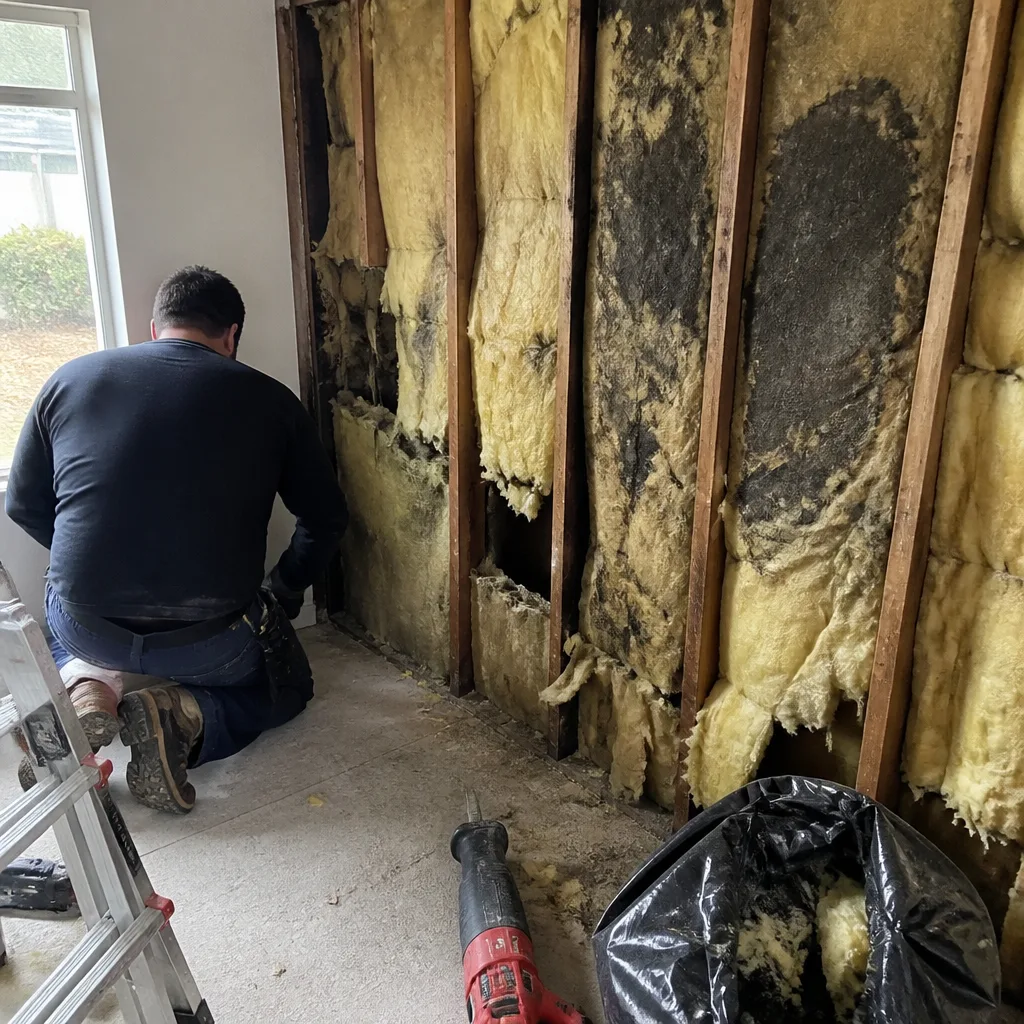 Before
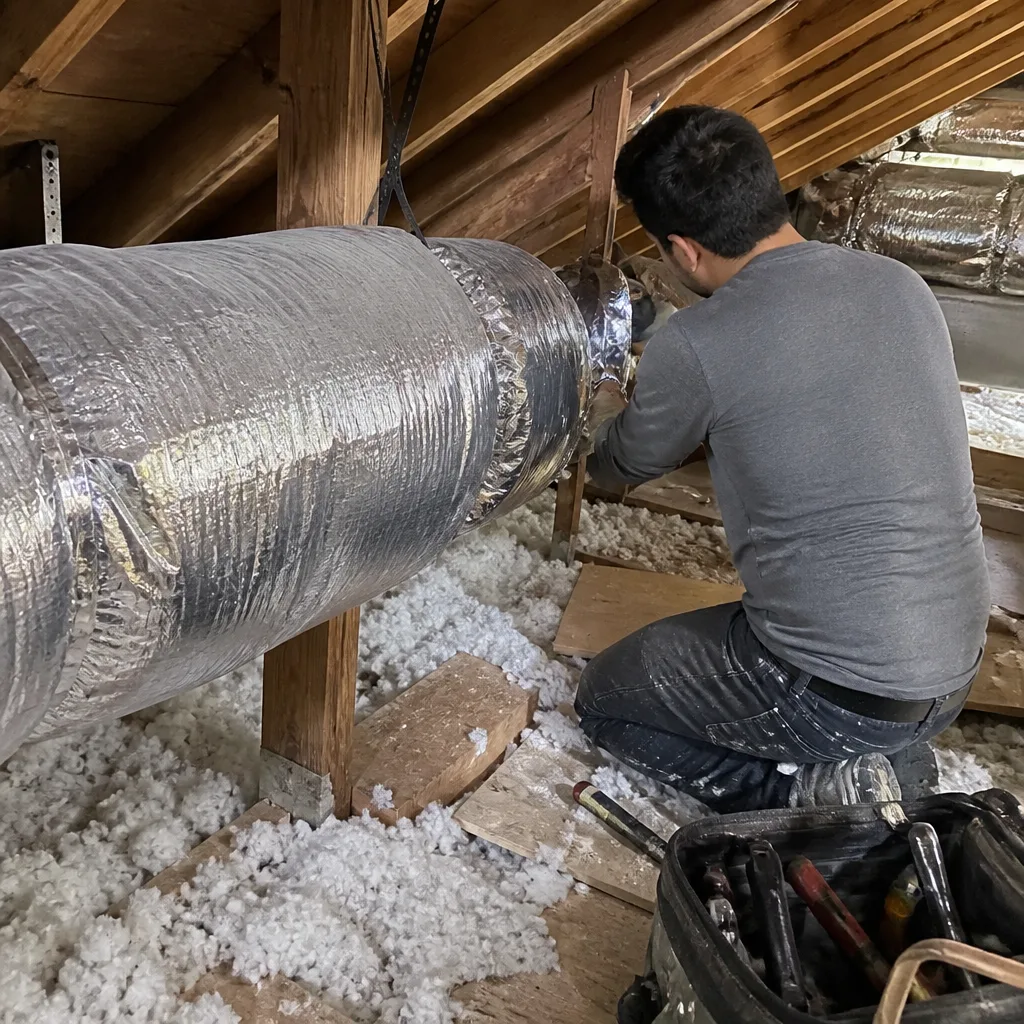 After
AfterLos Angeles’s Four Thermal Regimes (Not Four Seasons)
Los Angeles homeowners who follow generic “fall/winter/spring/summer” insulation advice miss the actual physics of this climate. The region’s insulation stressors do not align with the calendar.
Regime 1: June Gloom Marine Layer (May through mid-July)
Moisture-laden marine air pushes inland overnight, raising relative humidity in vented attics from 40% to 75% between 2 a.m. and 8 a.m. Fiberglass batts and blown cellulose absorb this moisture, temporarily depressing R-value. A batt rated R-30 can perform at R-22 until the sun burns off the layer and the attic dries. This is normal, but repeated wet-dry cycling without adequate drying time causes binder breakdown in cellulose and dusting in fiberglass.
Regime 2: Santa Ana Wind Events (September through November)
Hot, dry, high-velocity winds from the northeast create negative pressure on the leeward side of homes, pulling conditioned air out through ceiling penetrations and drawing dust, pollen, and fine particulate through attic bypasses. We’ve found settled insulation density changes of 10-15% in Santa Clarita and Pasadena attics after major Santa Ana events, as fine particles infiltrate and alter the matrix.
Regime 3: Winter Radiative Cooling (December through February)
Clear desert nights in Los Angeles produce a sky temperature of 40-50°F even when ambient air reads 55-65°F. An under-insulated ceiling radiates heat directly to that cold sky, producing a cooling effect that feels like a draft even with windows closed. Homeowners in Silver Lake and Los Feliz call us in January complaining of “cold rooms” despite mild thermostats; the ceiling is the culprit.
Regime 4: September Heat Dome (August through early October)
The inland valleys, Woodland Hills, and the San Fernando Basin see sustained triple-digit temperatures. Attic temperatures reach 140-160°F. Insulation that was marginal in June fails completely now, and the lag time for contractor availability means September discoveries become October fixes.
Each regime demands a specific inspection focus. The sections below map those inspections to the calendar month that precedes the stressor, so you have time to act. For additional guidance, explore our more guides & resources.
June: Pre-Heat-Dome Depth Verification and Marine Layer Humidity
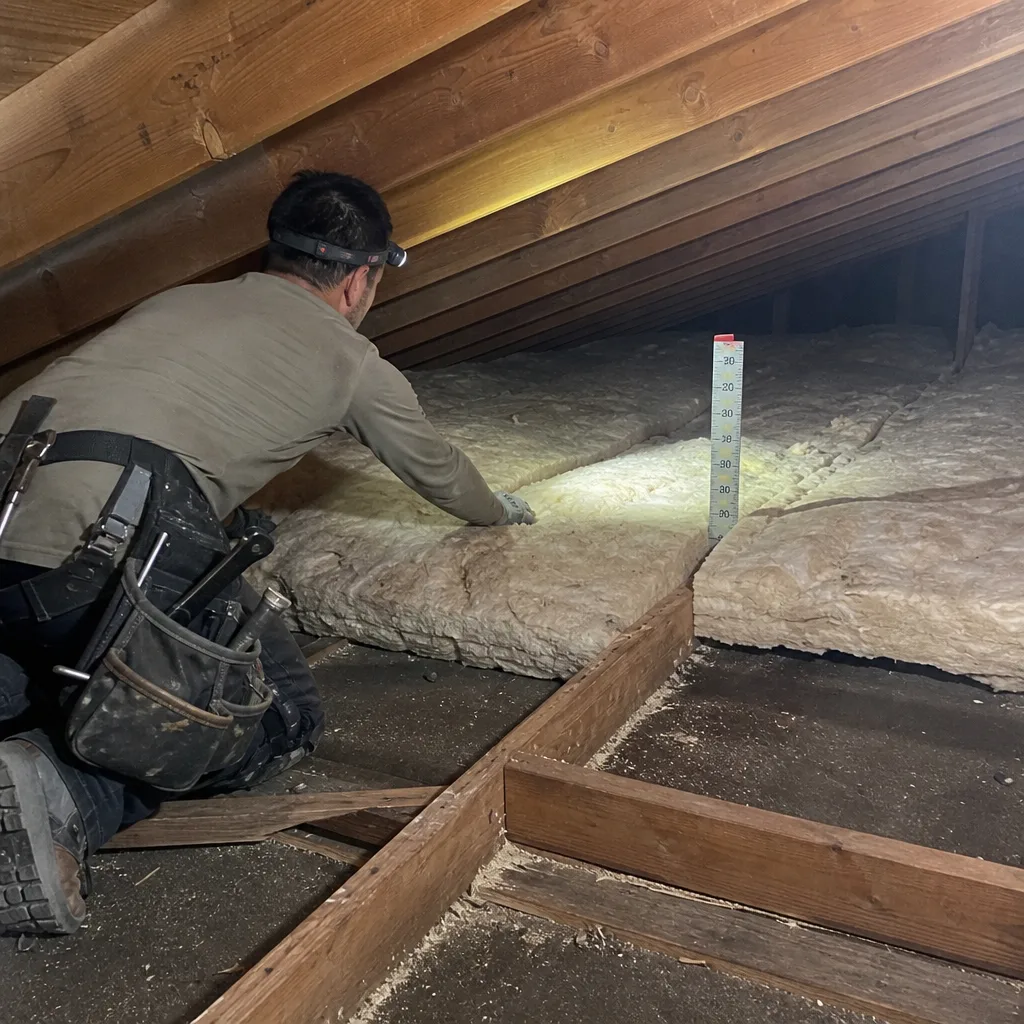
By early June, the marine layer is already cycling. This is your window to verify insulation depth before the September heat dome arrives.
What to Measure
Use a yardstick or depth gauge at six points: the attic center, two points midway to the eaves, and three points within 24 inches of the eave edge. Los Angeles building code calls for R-38 to R-49 in attics (approximately 12-15 inches of blown fiberglass or 10-13 inches of blown cellulose), but depth alone is misleading. Settlement, foot traffic from prior HVAC work, and wind-washing at eaves reduce effective depth.
Record each measurement. A 30% variance between center and edge indicates wind-washing, where incoming air has scoured material away from the perimeter. This is common in homes near the 405 corridor where traffic vibration accelerates settlement.
What June Humidity Does to Materials
Blown cellulose, made from recycled paper with borate fire retardant, absorbs up to 15% moisture by weight during marine layer events. The borate inhibits mold, but repeated swelling and contraction breaks down the fiber structure. We’ve removed 12-year-old cellulose in Redondo Beach attics that had dusted to half its original density.
Fiberglass, including Knauf and CertainTeed products we install, is hydrophobic and does not absorb liquid water, but surface moisture traps dust and reduces air film resistance. The R-value depression is temporary and recovers with drying, though repeated cycling degrades the facing on batts.
Rockwool (mineral wool) handles marine layer humidity best: it is vapor-open, does not support mold growth, and its R-value is essentially unaffected by moisture cycling. In coastal Los Angeles neighborhoods from Venice to San Pedro, we specify Rockwool where budget allows.
June Action Checklist
- Measure depth at six points; photograph each with your phone for year-over-year comparison.
- Check eave baffles (cardboard or foam channels that keep insulation back from soffit vents) for collapse or blockage. Squirrels in Griffith Park-adjacent neighborhoods often nest in baffles.
- Look for dark streaking on insulation surface, indicating filtered dust from air leaks. This predicts Santa Ana infiltration vulnerability.
- If depth is uniform and within 10% of labeled thickness, note it and wait for September. If variance exceeds 30% or depth is below R-38 equivalent, schedule correction before August.
September: Pre-Santa Ana Air-Sealing Check
Santa Ana winds typically arrive in late September. The week before is your last chance to seal attic bypasses that will become infiltration highways once the pressure differential hits.
What Santa Ana Winds Do to an Unsealed Attic
A Santa Ana event can sustain 40-60 mph gusts for 48-72 hours. The pressure differential between the conditioned space and attic, normally minimal, reverses and intensifies. Conditioned air is pulled out through ceiling penetrations; hot, dusty air is drawn in through eave vents and any gaps in the envelope.
We’ve documented this with blower-door tests in Altadena and La Canada Flintridge homes. A home reading 3,800 CFM50 (cubic feet per minute at 50 pascals pressure) in calm conditions can leak 5,200 CFM50 during a Santa Ana, equivalent to leaving a window open six inches. The dust load in the attic after a major event can exceed normal annual accumulation in a single weekend.
Critical Penetrations to Inspect
- Top plates (the horizontal framing member where wall studs meet the ceiling): These are the most common bypass in Los Angeles tract homes built 1945-1985. A gap of 1/8 inch running the perimeter of a 1,200 square foot home equals a 6-inch diameter hole.
- Can light housings: Older non-IC (insulation contact) fixtures are essentially chimneys. Even IC-rated LED retrofits often have gaps at the trim ring.
- Plumbing and electrical penetrations: The vent stack for your plumbing exits through the attic floor; the sealant is often a 40-year-old glob of dried caulk.
- Chimney chases and framing voids: Balloon-framed walls in pre-1960 Los Angeles homes create continuous channels from basement to attic.
What You Can Check Yourself
Turn off attic lights and look for daylight at penetrations. Run a bathroom exhaust fan on high and feel for suction at gaps with your hand. Mark locations with masking tape. Do not seal recessed can lights yourself if they are not IC-rated; the fire hazard is real and the code violation is expensive to remediate.
What you find in September predicts your January comfort. A home that leaks during Santa Ana pressure events is losing heat to the winter sky through the same bypasses.
January: Winter Radiative Cooling and Ceiling Heat Loss
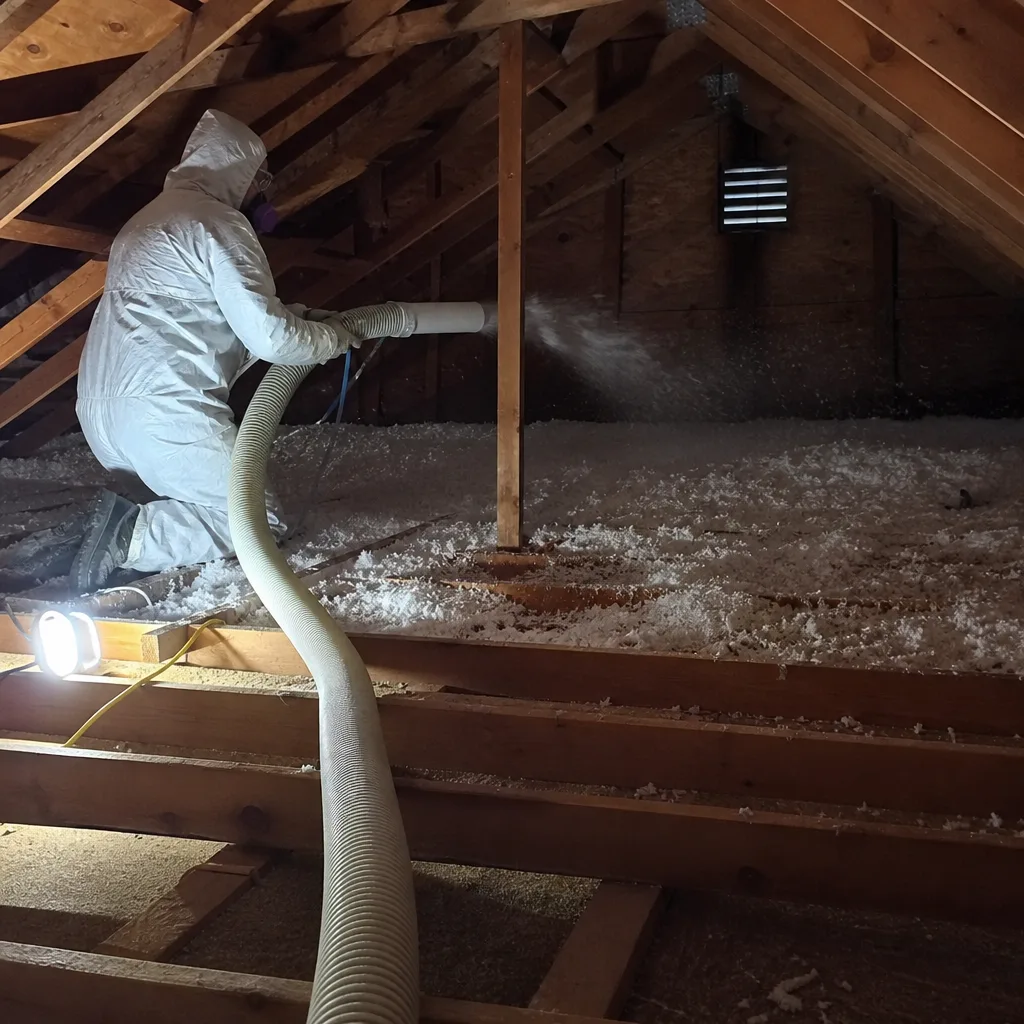
Los Angeles homeowners are often surprised by January heating bills. The thermostat reads 68°F, the outdoor sensor reads 58°F, yet the gas bill spikes. The cause is radiative cooling to a clear night sky.
The Physics Los Angeles Ignores
Heat transfers three ways: conduction (through solids), convection (through air movement), and radiation (electromagnetic waves, no medium required). On a clear January night in Los Angeles, your ceiling radiates infrared energy upward to a sky temperature of approximately 45°F. The outdoor air at 58°F does not stop this; radiation passes through air. The ceiling surface temperature drops, convective currents form in the room, and occupants feel a draft despite still air.
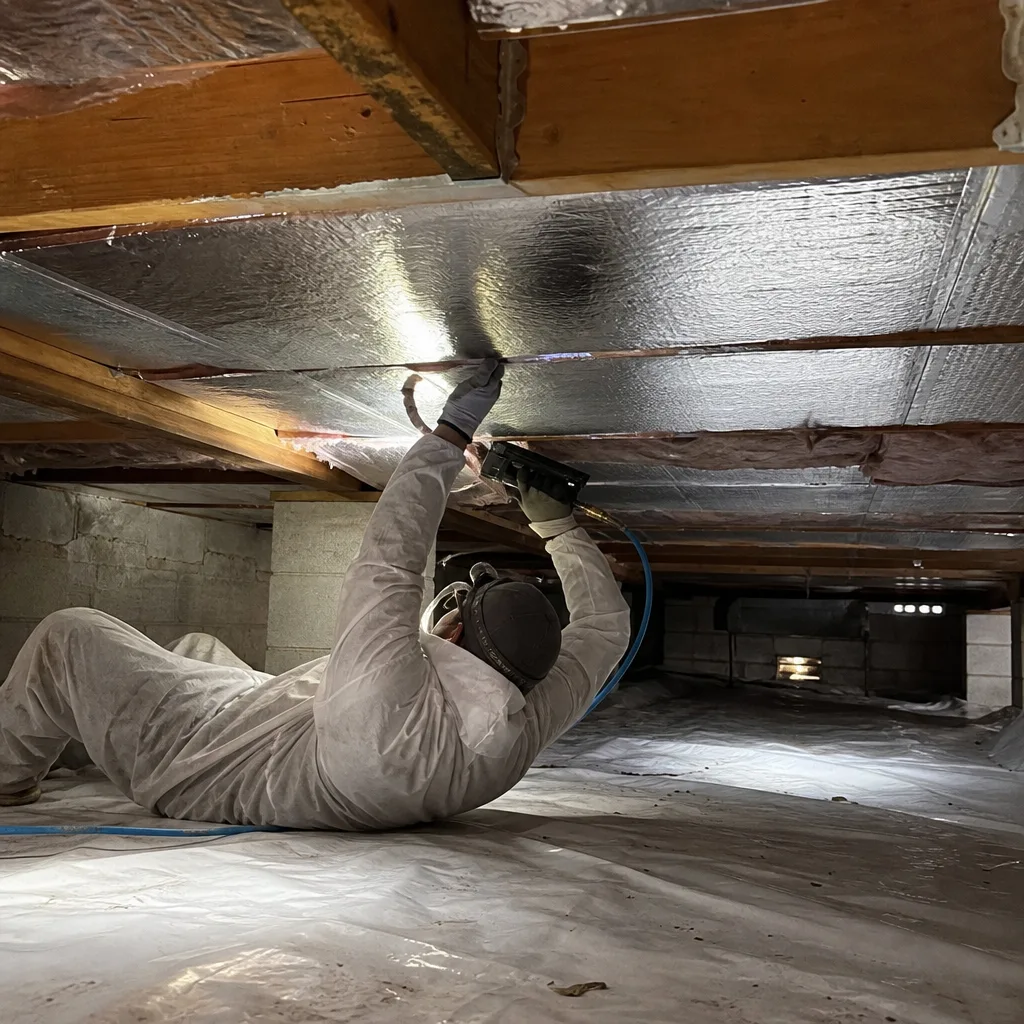
Insulation slows conduction but does not stop radiation. A radiant barrier, properly installed facing an air gap, reflects infrared back to the living space. In attic insulation in Los Angeles, we see the best January performance from combined systems: air-sealed attic floor with adequate R-value, plus radiant barrier on the roof deck or across rafters.
How to Detect Radiative Cooling Problems
- On a clear January night, point an infrared thermometer at your ceiling in multiple locations. Surface temperatures below 65°F when the room is 70°F indicate excessive heat loss.
- Check for thermal bridging: ceiling joists will read 3-5°F colder than the insulated bays between them. This is normal; differences exceeding 8°F indicate missing or compressed insulation.
- Note which rooms are worst. South-facing rooms with cathedral ceilings (common in Los Angeles mid-century moderns) are most vulnerable because they have the largest ceiling area and often the least insulation depth at the slope.
When to Add vs. When to Seal
A common error is adding insulation over an unsealed attic floor. The new material simply filters the escaping air, and the R-value improvement is partial. At Topside Attic Insulation Los Angeles home, we seal first, then insulate, in that order. Air sealing of top plates, can lights, and penetrations is completed before any insulation is added. The blower-door test confirms the result: a pressurization reading that shows, in one number, how much conditioned air the building envelope was losing before and after the work.
For January comfort, the priority is: seal bypasses, verify depth, then consider radiant barrier if the roof deck is accessible.
April: Post-Rain Moisture Inspection
Los Angeles receives 85% of its annual rainfall between November and March, concentrated in atmospheric river events. By April, the attic has completed its wet season, and any moisture problems are now visible.
What April Moisture Looks Like
Healthy attic insulation is dry, uniform in color, and springs back when compressed. Compromised insulation shows:
- Staining or mottling: Water tracks from roof leaks, often following rafter lines. In Los Angeles, tile roof homes in the hills (Hollywood Hills, Laurel Canyon, Mount Washington) see this where wind-driven rain enters at broken tiles or failed underlayment.
- Compaction: Wet cellulose loses loft permanently. A depth reading in April that reads 2-3 inches below your June measurement indicates moisture damage, not settlement.
- Biological growth: Even in dry Los Angeles, prolonged wetting of organic dust on fiberglass can support mold. The growth is typically on the dust layer, not the glass fibers themselves.
- Corroded fasteners and hangers: HVAC duct straps, electrical junction boxes, and rafter nails with rust indicate chronic humidity above 70%.
The Crawl Space Connection
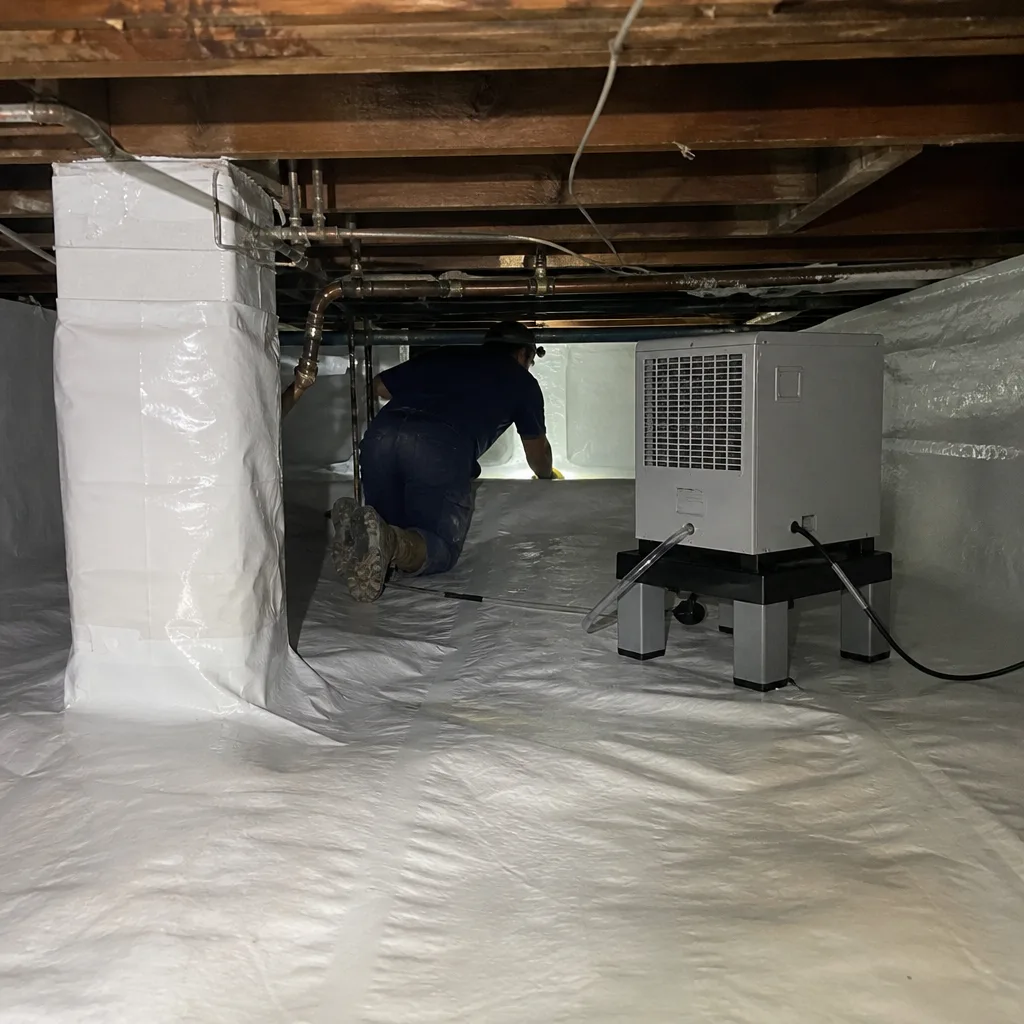
Homes in Los Angeles with raised foundations, particularly in older neighborhoods like Koreatown, Echo Park, and parts of the West Adams historic district, often have moisture migration from crawl space to attic through the wall cavity. A damp crawl space in March becomes a humid attic in April as stack effect draws that moisture upward.
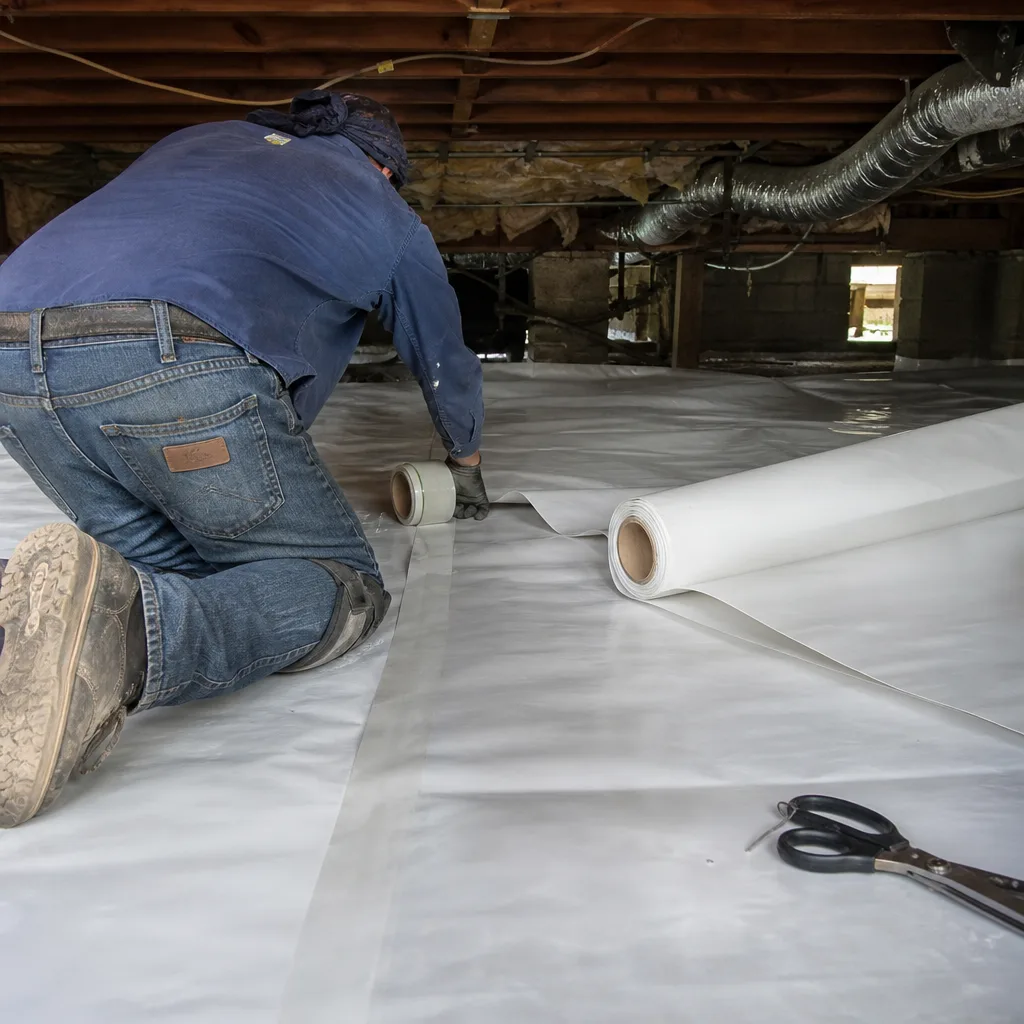
Crawl space encapsulation and vapor barrier in Los Angeles addresses this at the source. A sealed crawl space with proper vapor barrier stops the moisture before it enters the building envelope. We inspect both spaces together in April; treating one without the other is incomplete diagnosis.
April Action Items
- Photograph insulation condition at the same six points measured in June.
- Check roof sheathing for water stains, particularly at valleys, penetrations, and near the ridgeline where tile roofs often fail first.
- Verify bathroom exhaust fans vent to exterior, not into attic space. This is a code violation we find in approximately 30% of pre-1980 Los Angeles homes.
- If moisture damage is localized, remove and replace that section. If widespread, full removal and replacement with documented photo record is warranted.
The One Metric: Tracking Cost Per Square Foot
You do not need a blower door, an infrared camera, or a contractor visit to detect insulation performance drift. You need your utility bills and your home’s square footage.
The 12-Month Rolling Average
Calculate: (Total electricity + gas cost for 12 months) / (Conditioned square footage). Track this monthly, updating the rolling window. A rising trend indicates envelope degradation, HVAC inefficiency, or both. In Los Angeles, with our mild climate, insulation drift is often the largest single factor.
Baseline ranges we observe in Los Angeles:
| Home Era | Cost/SF/Year (Good Envelope) | Cost/SF/Year (Degraded Envelope) |
|---|---|---|
| Pre-1960, uninsulated or original | $1.80-$2.40 | $2.80-$3.60 |
| 1960-1990, original insulation | $1.40-$1.90 | $2.20-$2.80 |
| 1990-2010, upgraded insulation | $1.10-$1.50 | $1.70-$2.20 |
| 2010+, code-compliant envelope | $0.90-$1.20 | $1.40-$1.80 |
A 20% increase over 18 months, with no change in occupancy or thermostat setting, strongly suggests insulation or air-sealing degradation. The metric is not precise enough to distinguish between them, but it is precise enough to justify a professional assessment before comfort suffers.
We provide this calculation to every homeowner who requests a spray foam insulation in Los Angeles estimate, comparing their trailing 12 months to homes of similar age and size in our dataset of 9,000+ homes sealed and insulated since 2016.
Common Mistakes to Avoid
- Adding insulation over an unsealed attic floor. New material filters escaping air but does not stop it. The effective R-value increase is 30-50% of what the label promises. Seal first, then insulate.
- Ignoring the eave edge. Wind-washing at soffit vents scours insulation back 18-24 inches from the perimeter. The center of your attic may read R-38 while the edges, where heat loss concentrates, read R-19.
- Blocking soffit vents with insulation. Los Angeles attics need ventilation to dry marine layer moisture. Insulation pushed against the roof deck or soffit blocks airflow and traps humidity.
- Assuming “Los Angeles doesn’t need insulation.” The heating degree days in the San Fernando Valley exceed those in Atlanta. Winter gas bills in poorly insulated Valley homes regularly exceed $300/month.
- DIY spray foam in enclosed rafter bays. Spray foam insulation requires controlled thickness, temperature, and ventilation. Improper application traps moisture against roof sheathing, voids shingle warranties, and creates off-gassing hazards. This is not a weekend project.
- Replacing insulation without finding the moisture source. Wet insulation is a symptom. Roof leak, exhaust fan misrouting, or crawl space vapor intrusion is the disease. Replace insulation after repair, not before diagnosis.
- Trusting depth labels on old insulation. “R-30” stamped on a 1985 batt assumes full loft at installation. Forty years of compression, foot traffic, and rodent activity have reduced most original batts to R-15 equivalent or lower.
When to Call a Professional
Some conditions require trained assessment and equipment you do not own. Call a contractor when you find: moisture staining or mold growth of any extent; insulation depth below R-30 in a home built after 1978; visible gaps or daylight at top plates, chimney chases, or framing voids; post-Santa Ana dust infiltration that has visibly altered insulation color; or a 20% rise in your 12-month rolling cost per square foot with no other explanation.
Topside Attic Insulation Los Angeles offers free estimates in Los Angeles. Our process begins with a written price before any work starts, always, under Haven Standard Clause 1. We bring a blower door to applicable assessments so you see the pressurization number, not a sales pitch. Call (628) 226-1097 to schedule. Every completed job includes a Documented Photo Record; on air-sealing work, before-and-after blower-door readings are published so you verify the result.
Frequently Asked Questions
Four times yearly, timed to the climate stressors: June for pre-heat-dome depth verification, September for pre-Santa Ana air-sealing review, January for winter radiative cooling assessment, and April for post-rain moisture inspection. This calendar catches degradation before it affects comfort or cost.
No, if the attic ventilates adequately and the material is appropriate. Fiberglass and Rockwool recover full R-value when dried. Cellulose tolerates moderate cycling but degrades after repeated wet-dry events without adequate drying time. Persistent humidity above 70% for more than 48 hours risks mold on organic dust accumulation.
Negative pressure pulls conditioned air out through ceiling bypasses and draws hot, dusty air in through eave vents. Fine particles infiltrate insulation, altering settled density and reducing effectiveness. Post-event inspection should check for visible dust loading and verify air-seal integrity at penetrations.
Your ceiling is radiating heat to a clear night sky at 40-50°F. Insulation slows conductive loss but does not stop radiative loss. A radiant barrier, properly installed facing an air gap, reflects infrared back to the living space. Under-insulated ceilings in Los Angeles lose more heat this way than most homeowners expect.
Adding over dry, uncompacted existing insulation is cost-effective when depth is the only issue. Replacement is necessary when insulation is wet, mold-contaminated, or so compacted that new material cannot achieve full loft. A professional assessment with moisture probing and density testing determines which path applies. Not sure whether to tackle it yourself? Read our DIY vs Professional Insulation: The Los Angeles Homeowner’s Decision Guide first, then call (628) 226-1097 for an exact evaluation; estimates are free.
Visible gaps at top plates, can lights, or framing voids indicate inadequate sealing. A blower-door test provides the definitive measurement: a reading below 2,500 CFM50 for a 2,000 square foot Los Angeles home indicates good envelope tightness; above 4,000 CFM50 suggests significant bypasses. We publish before-and-after blower-door numbers on every applicable job so homeowners see the change.
The Bottom Line
Los Angeles insulation care is not about four seasons. It is about four stressors: marine layer humidity, Santa Ana infiltration, winter radiative cooling, and heat dome peaks. Inspect in June, September, January, and April. Track your 12-month rolling cost per square foot. Seal before you insulate. And when the numbers drift, act before the comfort fails. The ceiling you ignore in May becomes the 108°F problem you cannot fix in August.
Written by Wes Okafor, Owner at Topside Attic Insulation Los Angeles, serving Los Angeles since 2016.