
Attic Baffles & Ventilation Prep in Los Angeles, CA
Attic baffles – also called rafter vents or vent chutes – are rigid channels installed between roof rafters to keep soffit airflow open after insulation is blown in or laid down. Without them, blown-in insulation migrates toward the eaves and seals off the soffit vents that every Los Angeles attic depends on for year-round airflow. Ventilation prep means confirming that intake and exhaust vents are correctly matched, unobstructed, and ready to work before a single bag of insulation is opened.
If you’re looking at an attic in a home built between the 1950s and early 2000s anywhere from Silver Lake to Woodland Hills, there’s a reasonable chance the baffles were never installed, or the ones that were installed decades ago have collapsed. Calling us at (628) 226-1097 is one way to find out; so is scheduling a free on-site assessment where we put eyes and a camera on the actual soffit channels before quoting anything. This work sits under our full Attic Insulation in Los Angeles service, and it always comes with a written price before anyone lifts a tool – no exceptions, no “we’ll figure it out once we’re up there.”
Wes Okafor and the Topside Attic Insulation services Los Angeles crew have been doing this specific prep work since 2016. In that time, we’ve documented what Los Angeles attics actually look like before insulation goes in – which is frequently more complicated than what the attic access hatch suggests.
When You Need Attic Baffles & Ventilation Prep
Not every attic needs new baffles. Some do, urgently. Here are the clearest signals:
- You’re adding or replacing blown-in insulation and the existing soffit baffles are absent or crushed. Loose-fill products like GreenFiber cellulose and Owens Corning fiberglass will pack into open rafter bays within a few years of installation if there’s nothing holding the airflow channel open. Once that happens, the soffit vents are functionally blocked even though they look fine from outside.
- Your home runs hot along the roofline in summer, even after the HVAC was serviced. Los Angeles summers put sustained heat on roofs for months. When soffit-to-ridge airflow is blocked, heat pools in the attic and transfers into the conditioned space. In neighborhoods like Reseda or North Hollywood, where homes sit in valleys and see afternoon temperatures above 100°F regularly, a blocked airflow path can push attic temps past 150°F.
- You’re seeing moisture staining or mold near the eaves. Blocked soffits trap humid air against the sheathing. In coastal areas – Mar Vista, Playa del Rey, Culver City – marine layer moisture has nowhere to escape and the sheathing absorbs it.
- The attic has inadequate or mismatched ventilation ratios. California Title 24 requires a net free ventilation area of at least 1/150 of the attic floor area, reduced to 1/300 if at least half the ventilation is at the ridge. Many older Los Angeles homes were built before those ratios were codified and have never been corrected.
- A previous contractor blew insulation without installing baffles first. We see this regularly in Koreatown and Mid-City, often on homes that received quick insulation upgrades during utility rebate periods. The insulation is there; the airflow channel isn’t.
- Your energy audit flagged high ACH50 numbers and attic-stack-effect losses. A blower-door test – a pressurized measurement that quantifies how much conditioned air your home is losing per hour – sometimes reveals that attic bypasses are a significant contributor. Sealing those bypasses and confirming ventilation is functioning correctly are part of the same prep conversation.
Our Attic Baffles & Ventilation Prep Process
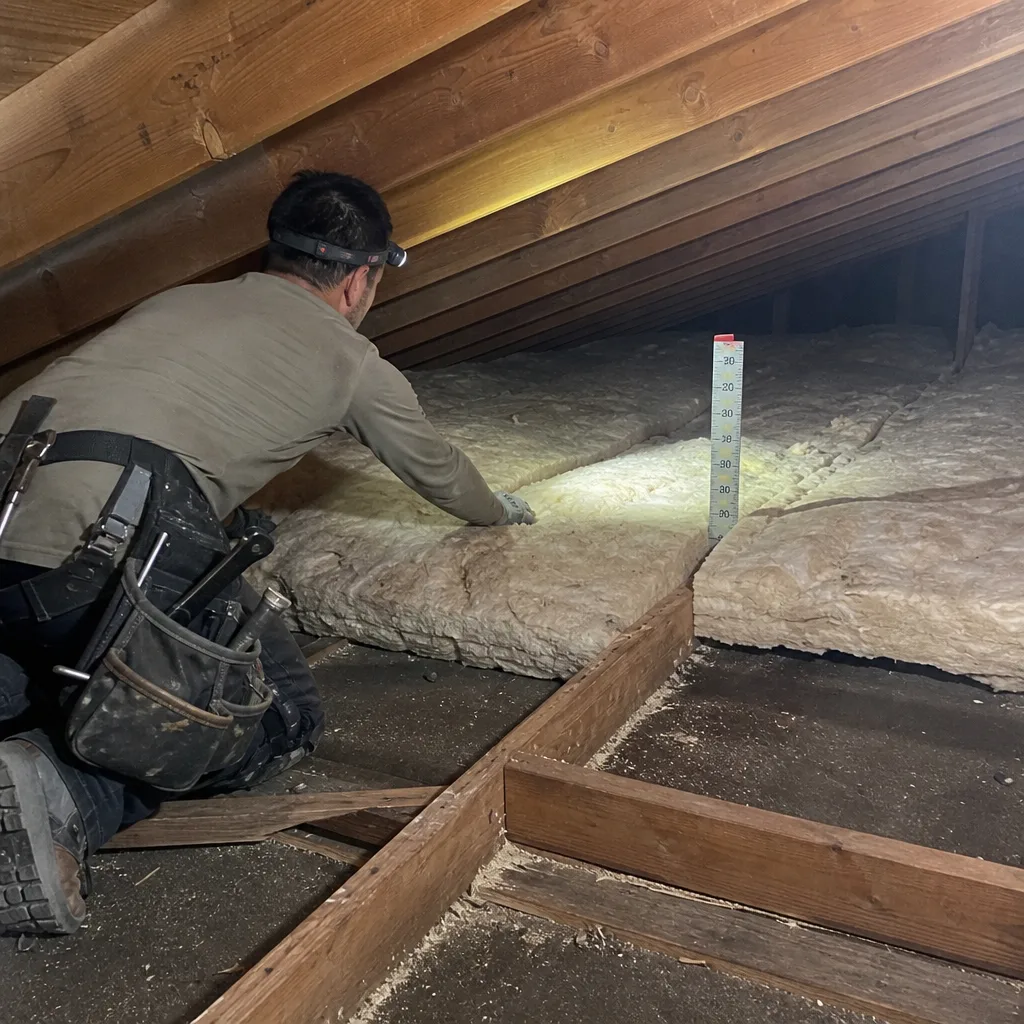
We don’t start installing baffles until we know what we’re working with. The process below is the sequence we follow on every job, written the same way we’d explain it standing at your attic hatch.
- Free on-site assessment and written scope. Before anything is quoted, a technician goes into the attic with a light and camera – not just a flashlight scan from the hatch. We document what’s there: existing baffle condition, soffit vent placement and sizing, ridge vent or gable vent configuration, and any obvious air-sealing deficiencies. You get a written scope and flat price before we schedule any work. Under Haven Standard Clause 1, that written price does not change unless the scope changes – and if the scope changes, we tell you first.
- Air sealing of attic floor penetrations, completed before insulation or baffles. Top plates, can lights, plumbing chases, and electrical penetrations get sealed with the appropriate material – foam, caulk, or rigid blocking depending on gap size – before any insulation is added. This is a hard prerequisite at Topside Attic Insulation Los Angeles, not an optional add-on. Blowing insulation over unsealed penetrations fills the space but does nothing about the air bypasses moving conditioned air into the attic. We record blower-door readings before and after sealing so you can see the change in one number.
- Verification of soffit vent sizing and net free area. We measure the actual net free area of the existing soffit vents against the attic floor square footage and compare it to the California Title 24 ventilation ratio. If the ratio is short – which is common in additions built without permit coordination – we document the gap and discuss the correction options with you before proceeding.
- Baffle installation at each rafter bay, from soffit to a point above the insulation plane. We use rigid foam or polypropylene baffles sized to the rafter bay. Each baffle is stapled to the roof deck and extends from the soffit vent upward far enough that the insulation will not encroach on the airflow channel at its final depth. On homes with 2×4 or 2×6 rafters – common in older Silver Lake and Echo Park craftsman builds – bay dimensions are tighter and the baffle selection matters more. We’re specific about which product goes where rather than running one type throughout.
- Ridge or exhaust vent check and clearance confirmation. A functioning soffit-to-ridge system needs both ends open. We confirm the ridge vent or gable vent is unobstructed and correctly positioned relative to the intake. If the attic has a power attic ventilator (PAV) that was previously depressurizing conditioned space – a problem common in older Encino and Van Nuys homes – we flag it in writing and discuss whether it should be decommissioned or rebalanced.
- Documented photo record, delivered before the crew leaves. Every attic visit closes with a photo set: pre-work baffle condition, air-sealing work completed, baffle installation, and vent clearance confirmation. You receive this on the same day – not as a PDF available on request three weeks later. Where a blower-door test was performed, the before and after CFM50 numbers are included in the record. This is what “documented evidence” actually means at Topside Attic Insulation Los Angeles.
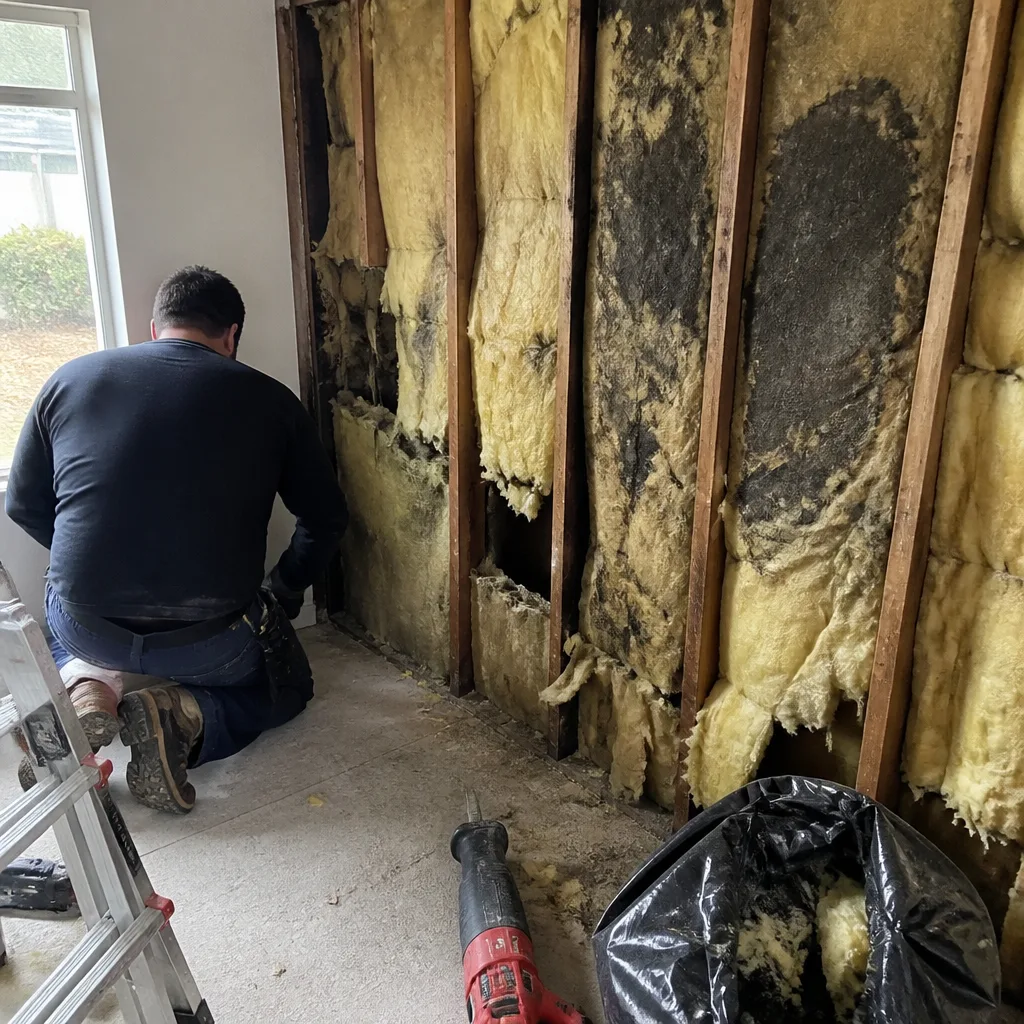 Before
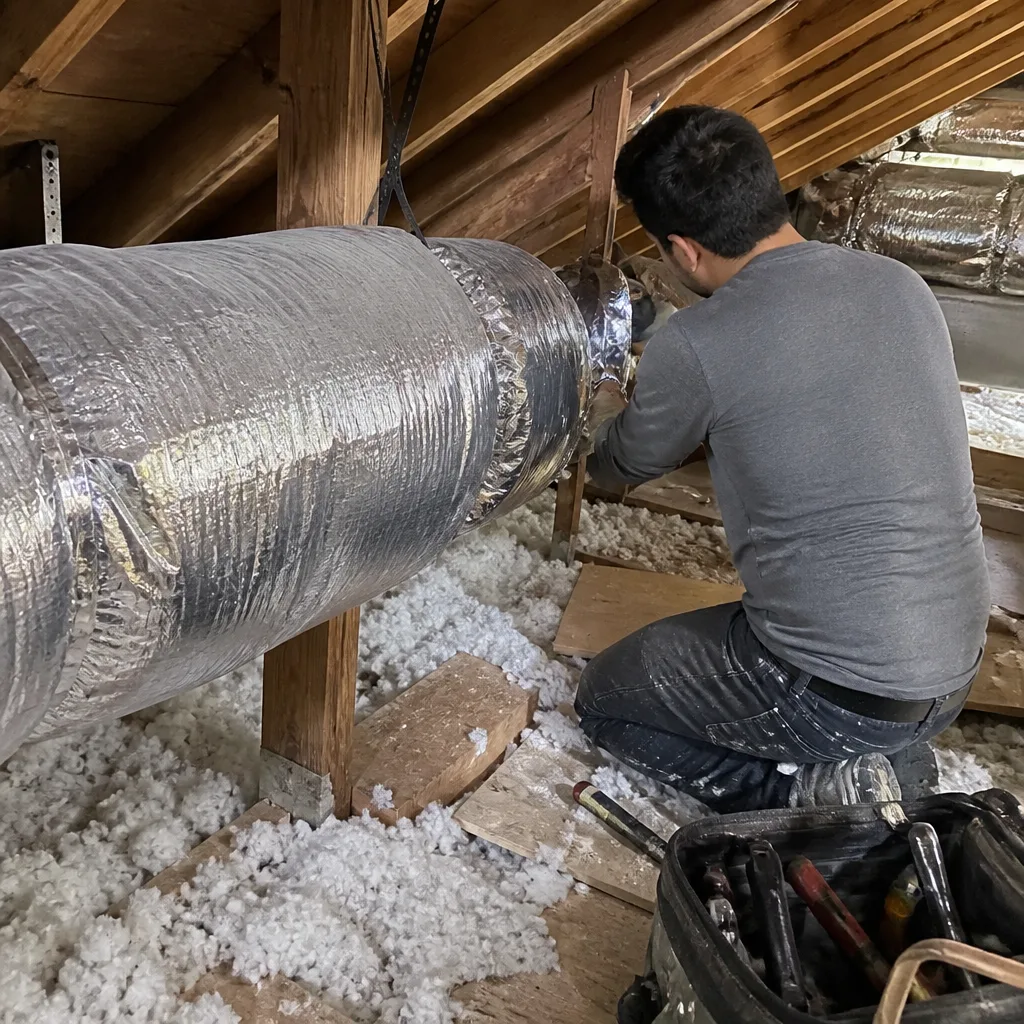 After
AfterAttic Baffles & Ventilation Prep Pricing in Los Angeles
How Much Does Attic Insulation Cost? (2026 Price Guide) - Los Angeles, CA: Attic baffle and ventilation prep costs in Los Angeles typically run between $350 and $900 for the baffle installation work alone, on a standard single-story home with an attic footprint under 1,500 square feet. When this work is combined with full attic air sealing, the total prep package before insulation is added generally falls between $600 and $1,800, depending on the factors below.
| Scope | Typical Range (Los Angeles) |
|---|---|
| Baffle installation only (standard attic, baffles present but damaged) | $350 – $600 |
| Baffle installation – no existing baffles, full rafter-bay coverage | $550 – $900 |
| Air sealing of attic floor penetrations (top plates, can lights, chases) | $400 – $1,100 |
| Combined ventilation prep + air sealing (pre-insulation package) | $600 – $1,800 |
| Soffit vent addition or enlargement (per vent, permit may apply) | $90 – $220 |
What moves the price
- Attic square footage and rafter bay count. A 1,200 sq ft attic in a Sherman Oaks ranch home has more bays to cover than a 700 sq ft bungalow attic in Highland Park. More bays means more baffles and more labor time.
- Attic access and headroom. Hip roofs with shallow pitches – common in post-war construction in Palms and Mar Vista – leave very little working height at the eaves. That slows installation and affects labor cost.
- Degree of existing air-sealing work needed. An attic with recessed can lights throughout (pre-2012 construction is full of them) requires considerably more sealing time than one with a clean, uninterrupted ceiling plane.
- Whether ventilation corrections are required. If soffit vents need to be added or enlarged, that work is permitted separately and priced as a distinct line item – never bundled invisibly into the baffle quote.
- Material selected. Rigid polypropylene baffles, Johns Manville foam baffles, and custom-cut rigid foam board each carry slightly different material costs. We tell you which we’re using and why before the job starts.
Every price is flat and written. If you have a competing written estimate, bring it to us – we’ll read it with you line by line. That’s our Free Second Opinion offer, and it applies to any written quote you’ve received. Reach us at (628) 226-1097 to schedule the on-site assessment, which is free and comes with no obligation to book.
FAQs – Attic Baffles & Ventilation Prep
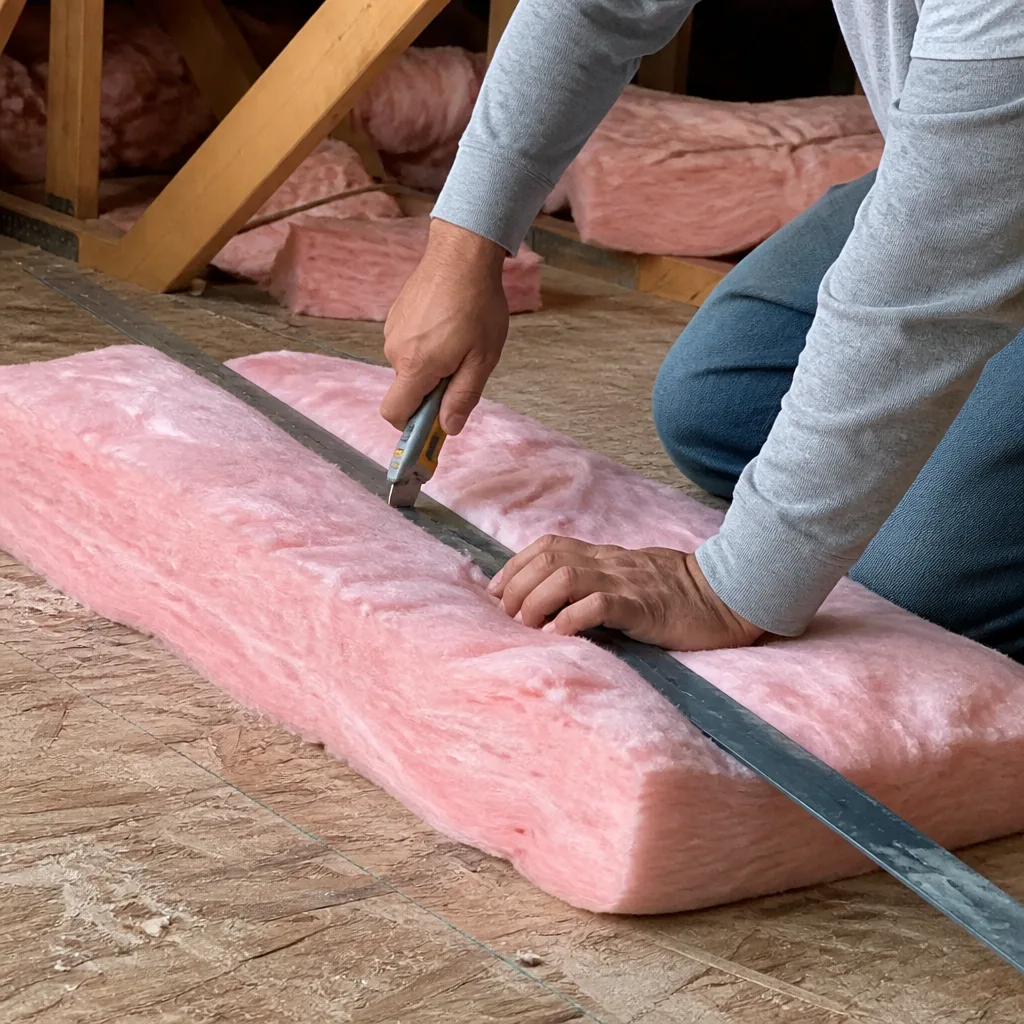
What exactly is an attic baffle and why does it matter in Los Angeles specifically?
An attic baffle is a rigid channel – typically made from polypropylene or foam board – that holds a clear airflow path between the soffit vent and the open attic above the insulation plane. Without one, blown-in insulation migrates to the eaves and blocks the soffit opening. In Los Angeles, this matters more than in cooler climates because attic temperatures here can exceed 140-150°F during a July heat event, and blocked soffit vents are one of the primary reasons conditioned air doesn’t stay conditioned. Homes in the San Fernando Valley and the foothills around Sunland and Tujunga are particularly affected during extended heat waves. Call (628) 226-1097 for a free assessment if you’re not sure whether your soffits are clear.
Does ventilation prep have to happen before insulation is installed?
Yes – and this isn’t a sales tactic, it’s a sequencing reality. Baffles have to be installed from inside the attic, running from the soffit upward before insulation covers the rafter bays. Once insulation is blown in, accessing each individual rafter bay at the eave is either very difficult or effectively impossible without removing insulation first. At Topside Attic Insulation Los Angeles, we will not begin Attic Batt Insulation until baffle work and attic floor air sealing are complete. That’s the same sequence we’ve followed on every applicable job since 2016, and the reason the blower-door numbers we record after sealing are meaningful – the air bypasses are actually closed before the R-value gets added on top.
How do I know if my Los Angeles home already has attic baffles?
The fastest answer: a technician looks into the rafter bays at the eaves with a light and camera. From the exterior, you can sometimes see whether soffit vents are open or packed with insulation, but you can’t determine baffle presence or condition from ground level. Most Los Angeles homes built before 1990 were not built with baffles as standard, and many homes that received insulation upgrades during utility-rebate programs in the 2000s had insulation added without baffle work. If your home falls into either category, assume an assessment is worth scheduling. We document what we find with photos, so you have a record of the starting condition regardless of what we recommend next.
Is baffle installation covered under the 365-Day Done Right Promise?
Yes. Every completed scope of work at Topside Attic Insulation Los Angeles – including baffle installation and ventilation prep – is covered by the 365-Day Done Right Promise: if it’s not done right, we make it right. The warranty is written, not verbal, and you receive it before work begins. The scope, price, and warranty are all part of the same pre-work document package delivered under Haven Standard Clause 1. If a baffle fails, shifts, or an airflow channel closes within the warranty period, we return and correct it at no charge – with the same photo documentation we provided on the original visit. Call (628) 226-1097 with any questions about what the warranty covers before you book.
Why This Step Shouldn’t Be Skipped
There’s a reason Topside Attic Insulation Los Angeles consistently sees the same problem in attics across Los Angeles: insulation was added, but the prep work wasn’t done first. The attic looks insulated. The energy bills don’t improve the way they should. The blower-door number – if anyone ever takes one – hasn’t moved much. The R-value is there on paper; the airflow channel is blocked and the bypasses in the ceiling plane are still moving conditioned air.
Since 2016, the Topside crew has documented this across more than 9,000 homes. The pattern is consistent enough that Wes Okafor built the sequencing rule into every job from the start: air sealing first, ventilation confirmed, baffles in place, then insulation. It adds time and it adds cost to the prep phase. It’s also the reason the before-and-after blower-door readings we publish show actual change rather than marginal improvement.
If you’re researching home energy upgrades for a property in Los Angeles and you’ve already had someone quote insulation without asking about baffle condition or soffit vent ratios, that’s worth a second look. Bring the written estimate to us – we’ll read it with you and tell you exactly what the scope does and doesn’t include.
For a free, no-obligation on-site assessment in Los Angeles, call Topside Attic Insulation Near Me in Los Angeles, CA at (628) 226-1097. You’ll get a named technician, a text when they’re on the way, and a written price before any work is scheduled. That’s how every job starts here.
Written by Wes Okafor, Owner at Topside Attic Insulation Los Angeles, serving Los Angeles.