
Crawl Space Insulation in Los Angeles, CA
Crawl space insulation in Los Angeles typically runs between $1,800 and $5,500 depending on square footage, existing material condition, and whether air sealing is needed first – and at Topside Attic Insulation Los Angeles, air sealing always comes first. We don’t install insulation over an unsealed crawl space floor; that sequence produces a warm, damp blanket over an air leak, which solves nothing. For homes that need full moisture control, we also offer Crawl Space Encapsulation & Vapor Barrier solutions. Every job starts with a written price before anyone touches your home, and ends with a documented photo record and, on applicable jobs, before-and-after blower-door readings so you can see the actual performance change in a single number.
This page covers our crawl space insulation work specifically. If you’re weighing the full scope – vapor barriers, encapsulation, drainage, and humidity control – our Crawl Space Encapsulation & Vapor Barrier in Los Angeles page walks through how those services connect. Questions before you read? Call (628) 226-1097 – a live person picks up, every time.
When You Need Crawl Space Insulation
Los Angeles homeowners don’t always think of crawl space insulation as a pressing issue – the winters are mild, and the crawl space is easy to ignore. But the building physics don’t care about the weather outside; they care about the temperature and pressure difference between your living space and whatever is underneath it. Here’s what we see in Los Angeles homes that tells us the crawl space insulation is failing or was never done right:
- Floors that feel cold in January and February, especially in hillside homes in Silver Lake, Echo Park, or Mount Washington. Los Angeles nights regularly drop into the low 40s from December through February, and an uninsulated or poorly insulated crawl space sends that cold directly through your subfloor. If you’re wearing socks in your own living room, the crawl space is often where to look first.
- HVAC running longer cycles than it used to. When conditioned air migrates out through an uninsulated or leaky crawl space floor, your system compensates by running longer. We see this pattern frequently in homes built in the 1950s through 1980s in neighborhoods like Leimert Park, Palms, and Highland Park – ductwork running through a crawl space with no insulation around it is a common culprit.
- Visible gaps, hanging batts, or missing sections of insulation. Kraft-faced fiberglass batts installed between floor joists have a mechanical failure mode: they sag, compress, and fall. Once they’re no longer in contact with the subfloor above, they provide almost no thermal resistance. We see this in a large portion of pre-1990 Los Angeles homes.
- Musty odors reaching the living space. A crawl space with inadequate insulation and no vapor barrier creates the humidity gradient that mold needs. The air pressure dynamics of a typical Los Angeles home – stack effect pulling air up from below – means whatever is in the crawl space eventually reaches your nose. Insulation is part of the fix, but not the first step; the moisture source comes first.
- A recent energy audit or home inspection flagged the crawl space. If a blower-door test – a pressurization measurement that shows, in one number, how much conditioned air your building envelope is losing – identified your crawl space floor as a major leakage zone, the next step is air sealing those penetrations before insulation goes in. That’s not an optional sequence for us; it’s the only sequence we do.
- You’re preparing to sell or refinance, and the home is flagged for energy efficiency. Los Angeles County appraisers and buyers’ inspectors increasingly flag inadequate crawl space insulation as a deficiency. Getting the work documented – with photos and, where applicable, before-and-after blower-door numbers – gives you something concrete to hand to the buyer’s agent.
Our Crawl Space Insulation Process
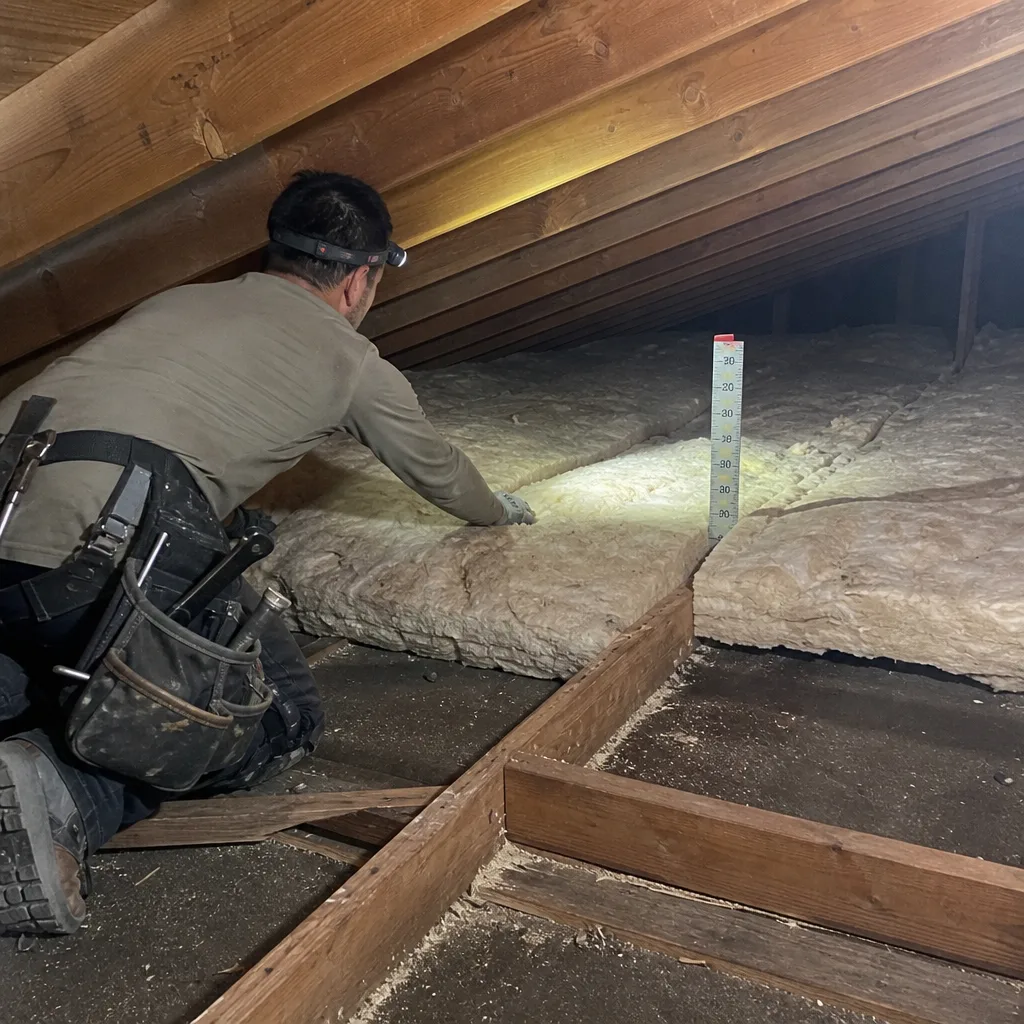
We’ve insulated crawl spaces in more than 9,000 Los Angeles-area homes since 2016, and the process is consistent because the physics don’t vary by neighborhood. What varies is what we find when we get down there. Here’s how every job runs:
- Written scope and price before any work starts. Under Haven Standard Clause 1, you receive a flat written price and a written scope of work before we lift a single tool. No “we’ll know more once we’re in there” pricing. If we discover something unexpected once we open the access hatch – collapsed vapor barrier, rodent intrusion, active moisture – we document it with photos and present a revised written price before proceeding. You decide.
- Crawl space inspection and blower-door baseline (where applicable). Before any material goes in, a technician enters the crawl space with a moisture meter, a flashlight, and a camera. We check the existing insulation condition, subfloor integrity, vapor barrier status, and visible penetrations. On homes where air sealing will be performed, we establish a blower-door baseline – a pressurization reading taken before any sealing – so we have a number to compare against at the end.
- Air sealing of penetrations, rim joists, and subfloor gaps. This step runs before any insulation is installed. We seal plumbing penetrations, electrical chase points, HVAC boot connections, and rim joist cavities using two-part spray foam and caulk appropriate to the application. In older Los Angeles homes – particularly the 1940s and 1950s bungalows that dominate neighborhoods like Jefferson Park and Glassell Park – this step alone can cut measured air leakage by 20 to 40 percent before a single inch of insulation goes in.
- Removal of existing failed insulation (when present). Sagging, compressed, or moisture-damaged batts come out before new material goes in. Insulating over degraded material traps moisture and negates the R-value of whatever you install on top. We bag and haul the removed material the same day.
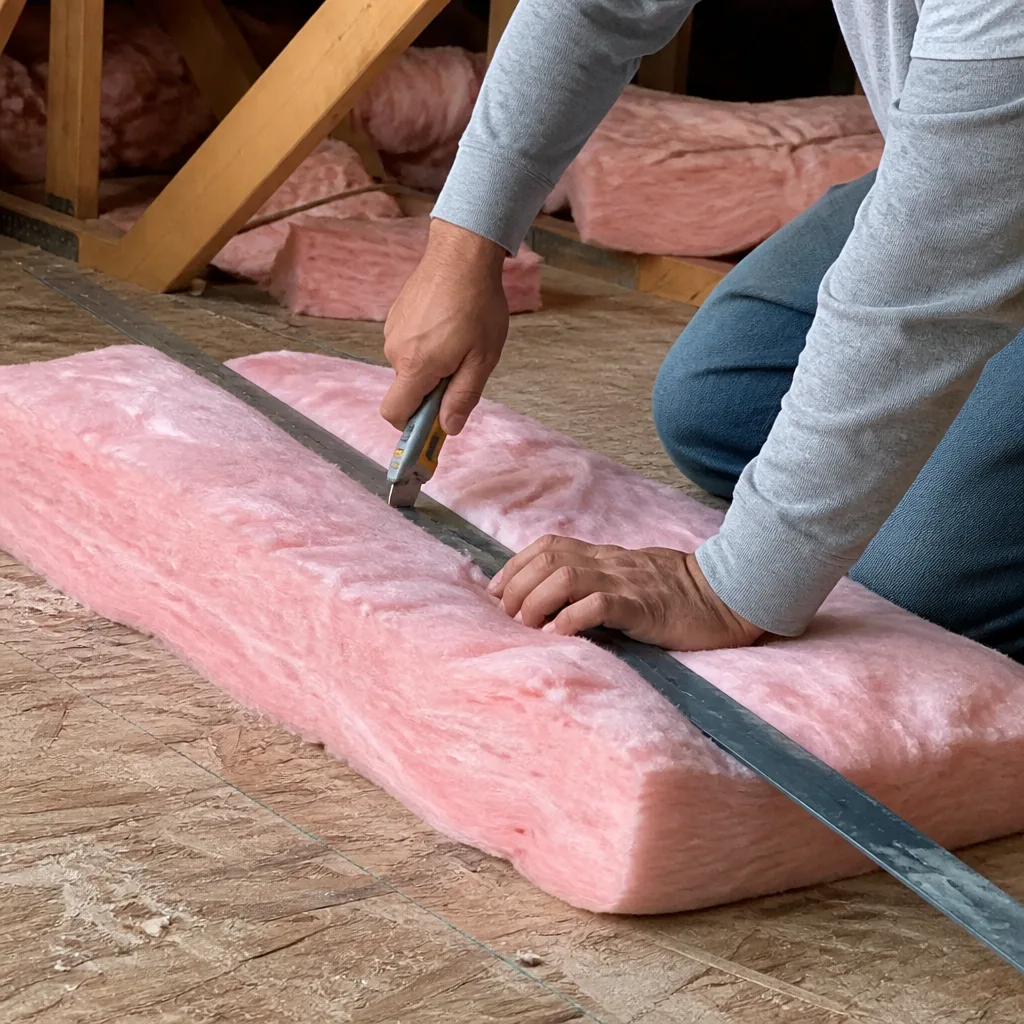
- Installation of new insulation to current California Title 24 requirements. For most Los Angeles crawl spaces, that means R-19 minimum between floor joists using faced fiberglass batts or, on homes with irregular joist spacing or high moisture exposure, open-cell spray foam for an air barrier that doubles as insulation. We source materials from Owens Corning and Johns Manville, selected for the specific application – not because of any exclusive arrangement, but because the product performance data holds up in field conditions. The insulation is installed friction-fit against the subfloor above, with kraft facing down toward the crawl space, which is the correct vapor-retarder orientation for Los Angeles’s climate zone.
- Post-work documentation: photos, blower-door reading, written warranty. When the crew leaves, you receive a documented photo record of the completed work – every section, every joist bay, before and after. On jobs where blower-door measurements were taken, the before-and-after readings are included in writing so you can see exactly what changed. Your 365-Day Done Right Promise is attached to the written scope you already have. If anything isn’t right within a year, we come back and make it right – no dispute, no conditions.
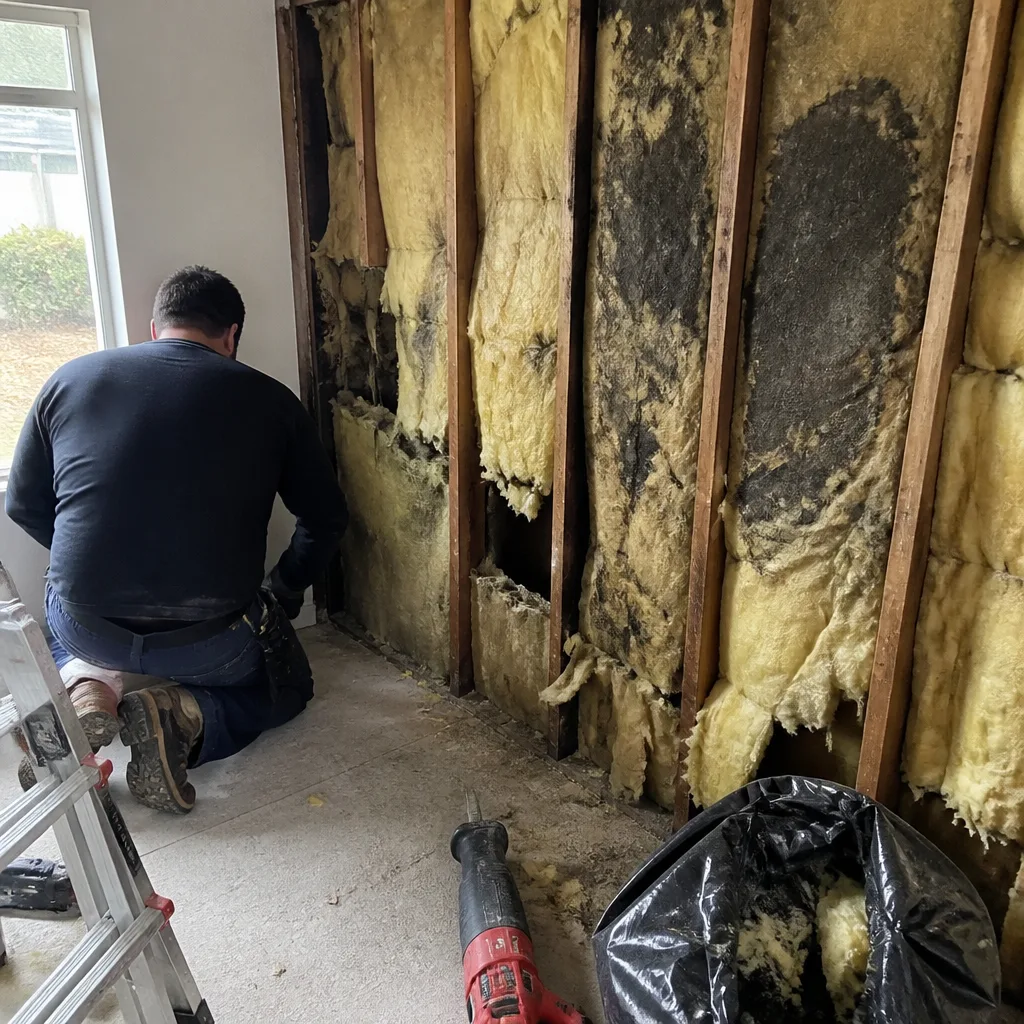 Before
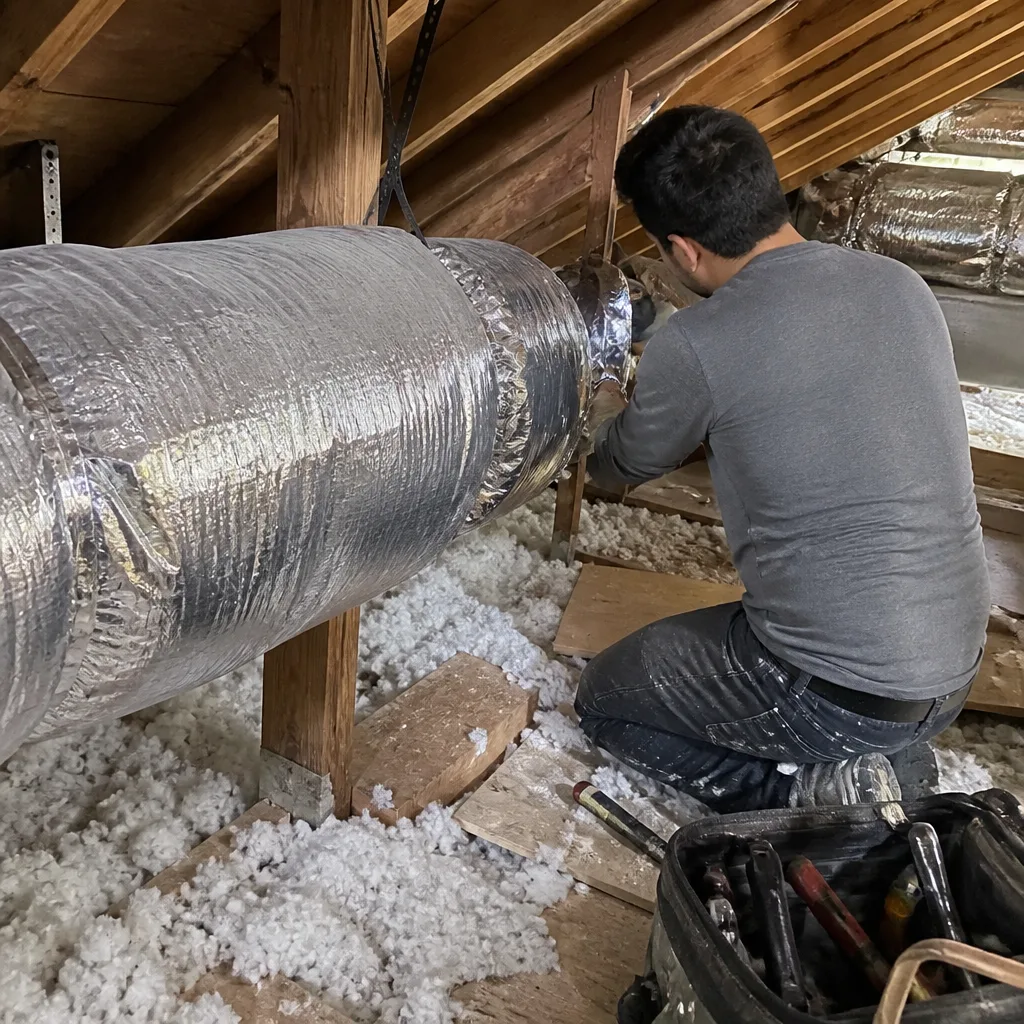 After
AfterCrawl Space Insulation Pricing in Los Angeles
Most crawl space insulation jobs in Los Angeles fall between $1,800 and $5,500 for a single-family home, though adding a Crawl Space Vapor Barrier will adjust the total. The range is wide because the variables are real: crawl space square footage, access difficulty, existing insulation condition, whether air sealing is part of the scope, and material selection all move the number. Below is a breakdown of the line items that drive cost:
| Scope Item | Typical Range (Los Angeles) |
|---|---|
| Insulation only – batts, under 1,000 sq ft crawl space | $1,800 – $2,600 |
| Insulation only – batts, 1,000 – 1,800 sq ft crawl space | $2,400 – $3,600 |
| Air sealing + insulation (combined scope) | $2,800 – $4,500 |
| Spray foam crawl space insulation (rim joists + floor) | $3,200 – $5,500 |
| Failed batt removal and disposal (per job) | $400 – $900 |
| Blower-door test (before + after, documented) | Included on applicable jobs |
A few cost factors specific to Los Angeles homes:
- Access difficulty. Many hillside properties in Los Feliz, Eagle Rock, and the Hollywood Hills have crawl spaces with access hatches under decks, inside closets, or on steep slopes. Tight or awkward access adds labor time and affects the price.
- Existing vapor barrier condition. If the ground vapor barrier is absent or damaged, addressing that before insulation installation is the correct sequence – and that work is priced separately. A wet crawl space with no ground cover is not ready for new insulation.
- California Title 24 compliance. Los Angeles is in Climate Zone 9 (coastal and inland valley portions) and Climate Zone 10 (inland areas including parts of the San Fernando Valley). The minimum insulation R-value required differs by zone, and we price to meet the applicable standard – not to a generic national minimum.
- Knauf or Owens Corning material selection. For jobs where batts are appropriate, both Knauf EcoStar and Owens Corning faced batts meet California requirements; material cost differences are included in the written scope so you can see exactly what you’re paying for.
Under Haven Standard Clause 1, you receive a written price before any work begins – that price doesn’t change unless you change the scope. If you have a competing written estimate, bring it to us. We offer a free second opinion on any written quote: we’ll read it with you, line by line, and tell you what it does and doesn’t include.
FAQs – Crawl Space Insulation
Does crawl space insulation make a measurable difference in a Los Angeles home?
Yes, and we can show you the number. On homes where we run a blower-door test before and after air sealing the crawl space floor, the measured air leakage typically drops by 15 to 35 percent on homes built before 1990. That reduction translates directly to longer HVAC runtimes becoming shorter HVAC runtimes – your system isn’t working as hard to maintain temperature. The blower-door reading we give you at the end of the job is the documented evidence of that change, not a claim we’re asking you to take on faith. Call (628) 226-1097 to get a written price for your home – estimates are free.
What R-value does my Los Angeles crawl space need?
California Title 24 requires a minimum of R-19 for floor insulation in most of Los Angeles, which covers Climate Zones 9 and 10. Homes in the higher-elevation portions of the Santa Monica Mountains or the San Gabriel foothills may fall in Climate Zone 14, where the requirement climbs to R-30. We confirm your climate zone before we price the job, and the written scope specifies the R-value being installed – not a generic “R-19 or better” fudge. If your current insulation is below the applicable minimum, we can document that too, which matters if you’re refinancing or selling. Call (628) 226-1097 for a free written estimate.
Can you insulate the crawl space without doing full encapsulation?
Yes. Crawl space insulation and full encapsulation are separate scopes, and we price them separately. Insulation between floor joists addresses heat transfer through your subfloor. Full encapsulation – adding a heavy-duty ground vapor barrier, sealing the foundation vents, and conditioning the crawl space air – addresses the moisture source itself. If your ground is dry, your existing vapor barrier is intact, and your only problem is thermal performance, insulation alone may be the right scope. We’ll tell you which is appropriate after inspecting the space, and the written price will reflect only what’s needed. For the full picture of how these scopes interact, see our Crawl Space Encapsulation & Vapor Barrier in Los Angeles page.
How long does crawl space insulation installation take in a typical Los Angeles home?
Most single-family jobs in Los Angeles are completed in one day. A 1,200-square-foot crawl space with straightforward access, no material removal, and batt insulation installation typically runs four to six hours including air sealing. Spray foam jobs and jobs with difficult access – common in hillside neighborhoods like Beachwood Canyon or Laurel Canyon – can extend to a full day or occasionally require a two-day scope. Your written estimate will include the expected timeframe so there are no scheduling surprises. Call (628) 226-1097 and we can usually give you a same-week inspection slot.
Why Topside Attic Insulation Los Angeles for Crawl Space Work
We’re part of Topside Attic Insulation Los Angeles, independently owned and operated under The Haven Standard since 2016. That means every job starts with a written price and a named technician who shows up in a uniform on the day they said they would – and sends you a text when they’re on the way. It means the photo record is included, not an upgrade. It means the blower-door numbers are published because we’d rather show you evidence than describe our enthusiasm.
Since 2016, we’ve completed work in more than 9,000 Los Angeles-area homes. We work in crawl spaces in Culver City and Koreatown on the same day we’re working in Mar Vista and East Hollywood. The physics are the same; what changes is the age of the home, the access situation, and what the previous contractor left behind. We document all of it.
The 365-Day Done Right Promise applies to every crawl space insulation job we complete. If the insulation isn’t performing the way the written scope described, we come back and make it right. That promise is in writing before we start – not something we tell you after there’s a problem.
Key Takeaways
- Crawl space insulation in Los Angeles typically costs $1,800 to $5,500 depending on scope, access, and materials.
- Air sealing happens before insulation – every time, no exceptions.
- California Title 24 requires R-19 minimum in most of Los Angeles; some zones require R-30.
- You receive a written price before work starts, a documented photo record when it ends, and before-and-after blower-door readings on applicable jobs.
- The 365-Day Done Right Promise is in writing from day one.
- A live person answers at (628) 226-1097 – no voicemail, no callback windows.
Get a Written Estimate for Your Los Angeles Crawl Space
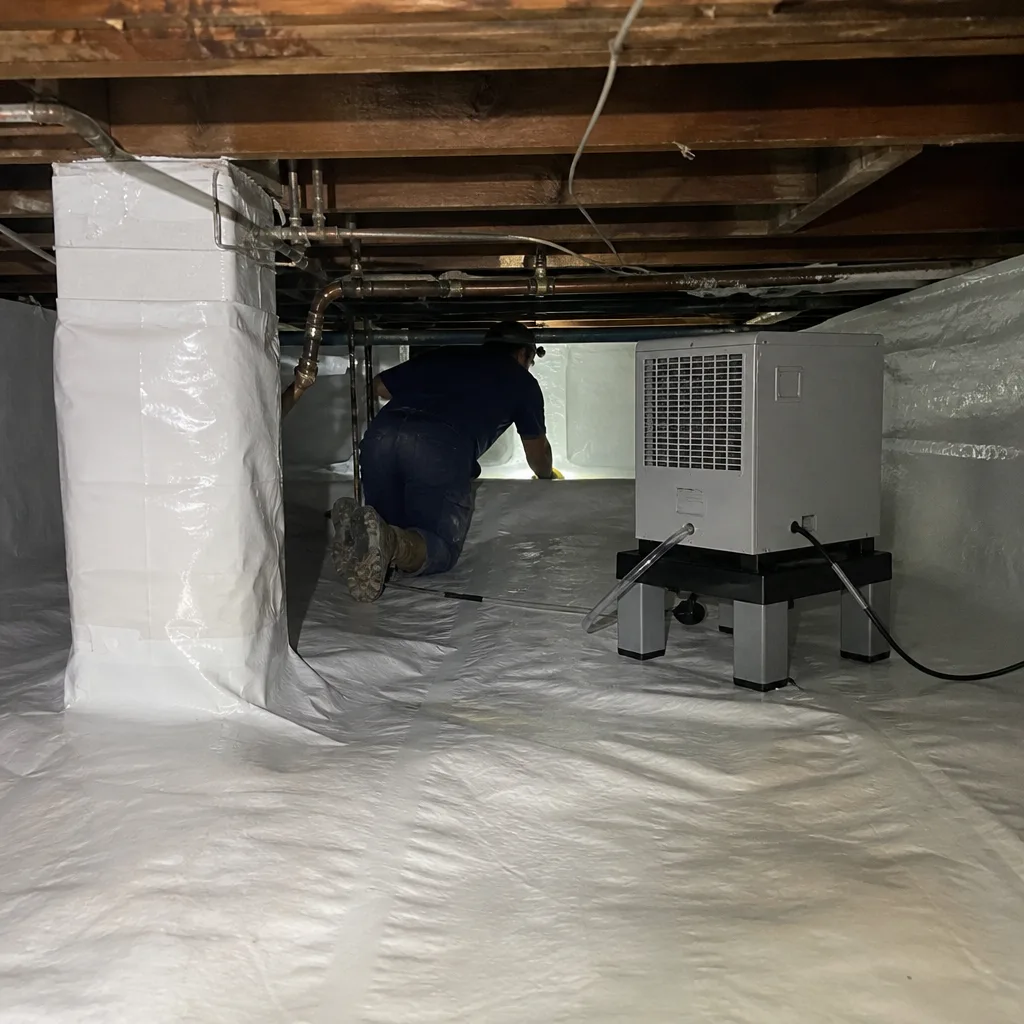
If your floors run cold in winter, your HVAC cycles are longer than they used to be, or a home inspection flagged your crawl space insulation, the next step is a documented look at what’s down there. We’ll give you a written price before any work starts – flat, no surprises – and if you already have a competing estimate in hand, we’ll review it with you at no charge.
Call (628) 226-1097 to schedule a free crawl space insulation estimate in Los Angeles. A live person answers every call.
Written by Wes Okafor, Owner at Topside Attic Insulation Los Angeles, serving Los Angeles since 2016.