
Last updated September 22, 2026
Insulation Permits, Codes & Inspections in CA: What You Need to Know
A homeowner in Silver Lake discovered during escrow that the attic insulation installed in 2019 - paid for, photographed, and visually complete - had no CF3R field-verification form on file with the state. The sale paused for six weeks while a HERS rater was retained to retroactively inspect what they could still access. In Los Angeles, insulation work triggers a web of overlapping rules: city permits, county health codes, state energy standards, and documentation that lives in databases most homeowners never know exist. This guide - along with our more guides & resources - explains what permits you actually need, what paperwork must follow the work, and how to verify your insulation job won’t surface as a problem years later.
Quick Answer
Most insulation work in California requires a building permit when it alters the thermal envelope or increases R-value, and certain projects trigger mandatory HERS rater verification through CF2R and CF3R forms filed with the California Energy Commission. In the City of Los Angeles, even unpermitted attic insulation must comply with Title 24 Part 6 vapor retarder rules and knob-and-tube prohibitions, while the 2022 alteration rules mandate three specific upgrades whenever any insulation work is performed. Missing documentation can stall a home sale, delay a refinance appraisal, or require destructive re-inspection years after the work is complete.
Table of Contents
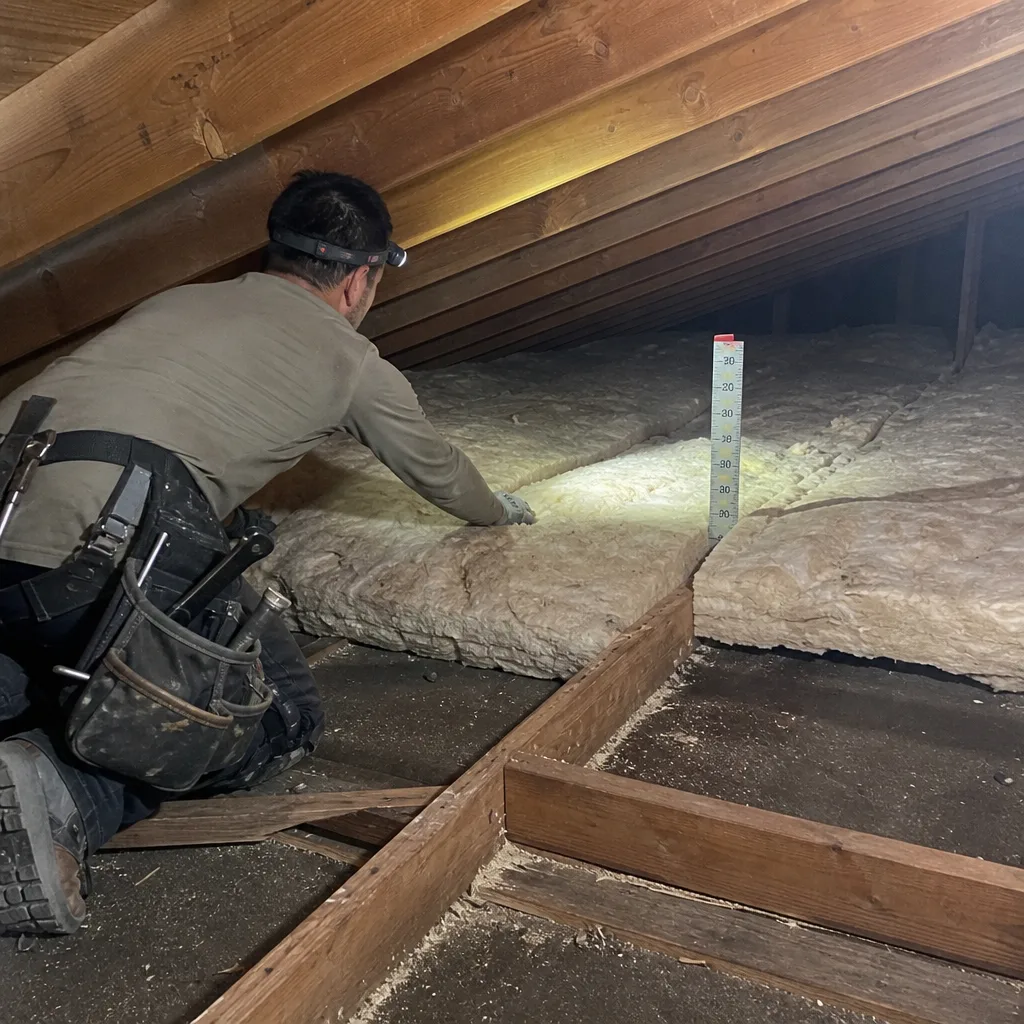
- When Is a Building Permit Required for Insulation Work?
- City of Los Angeles vs. LA County Unincorporated: Different Rules
- The CF2R/CF3R Compliance Chain: Forms That Follow the Work
- Title 24 Part 6 Requirements That Apply Even Without a Permit
- Three Attic Conditions That Trigger Mandatory Upgrades
- How to Pull Your Property’s Permit History from LADBS
- Common Mistakes to Avoid
- When to Call a Professional
- Frequently Asked Questions
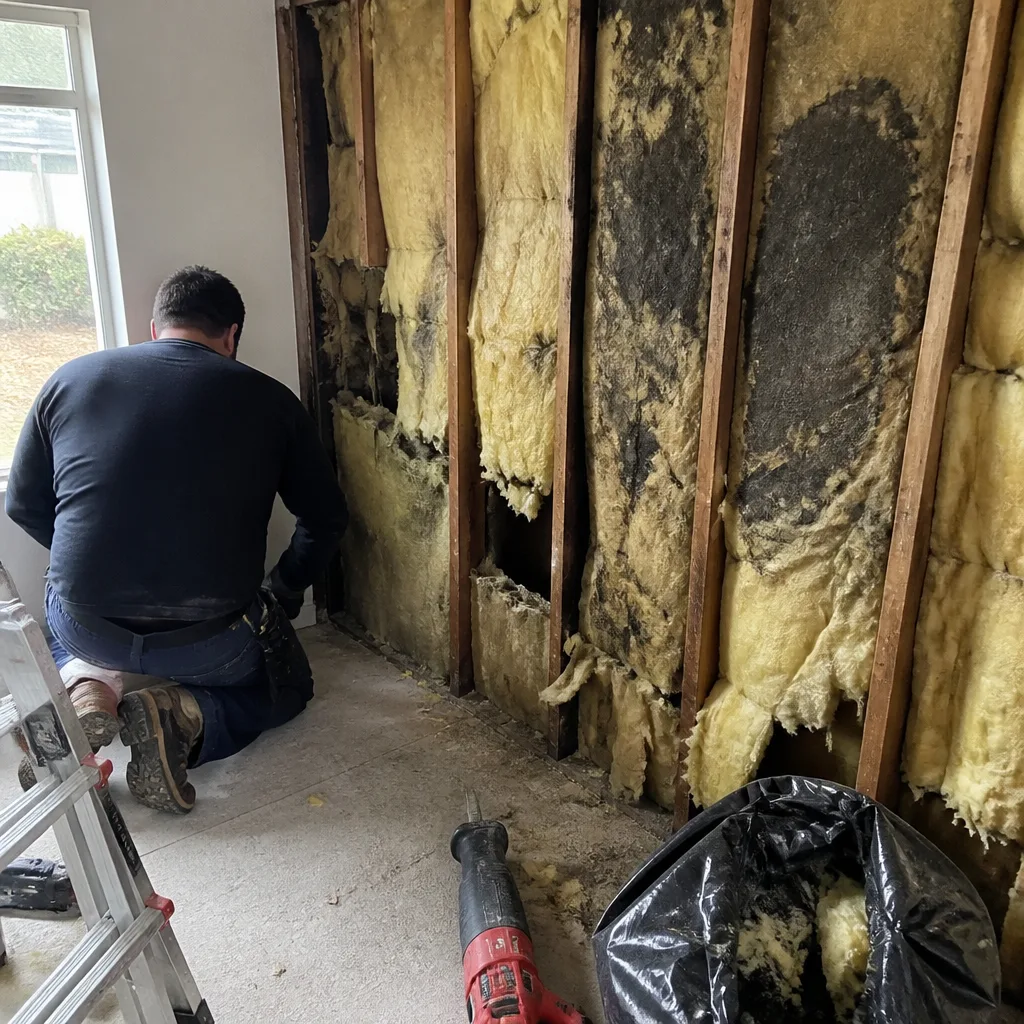 Before
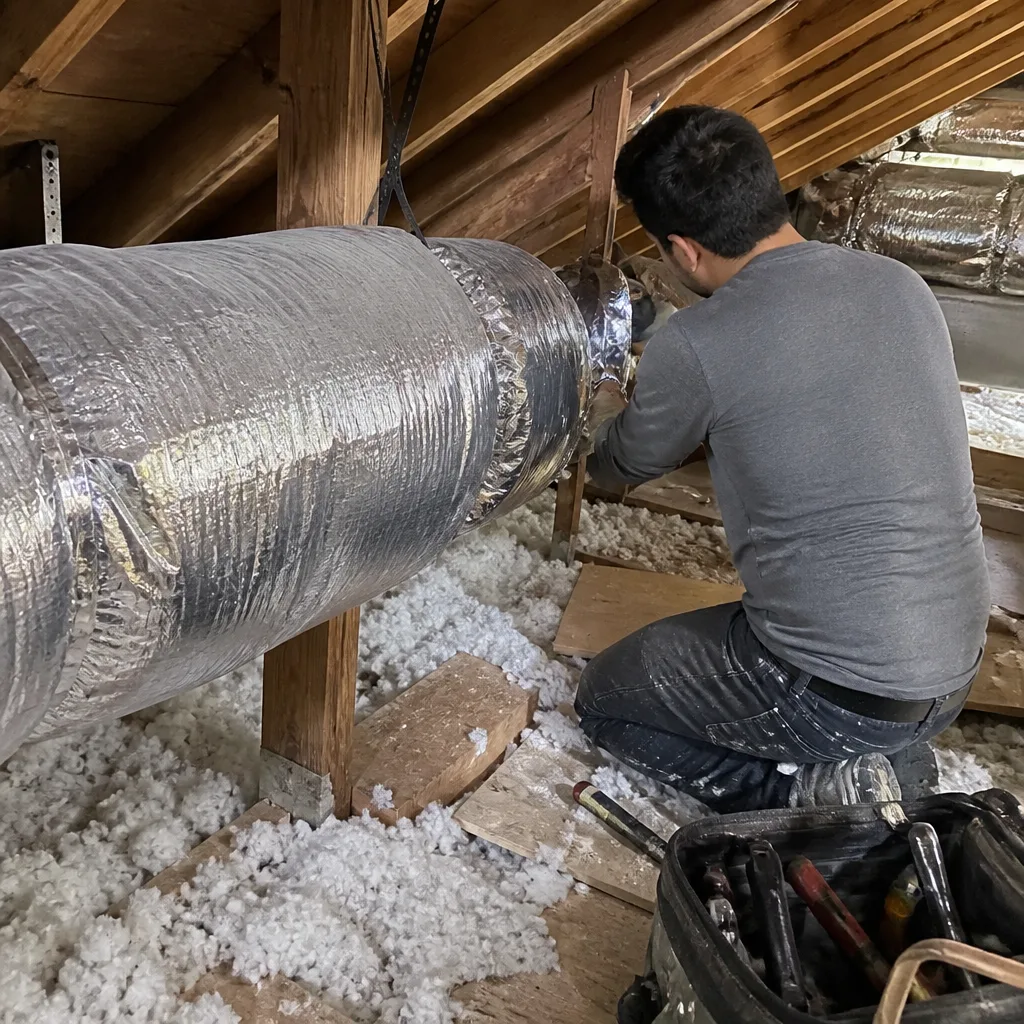 After
AfterWhen Is a Building Permit Required for Insulation Work?
California building code draws a sharp line between like-for-like replacement and anything that changes the thermal performance of the building envelope. Understanding where your project falls determines whether you need a permit, an inspection, or both.
Work Categories and Permit Thresholds
Like-for-like replacement: Removing damaged insulation and reinstalling the same R-value in the same location typically does not require a permit. This assumes no structural modification, no change to the assembly’s vapor profile, and no electrical or mechanical work in the same space.
Increased R-value: Adding insulation that raises the thermal resistance above what was previously installed triggers a permit in virtually every California jurisdiction. The logic is straightforward: higher R-value changes the dew point location within the assembly, which affects moisture management and potentially structural integrity.
New construction and additions: All insulation in new building assemblies requires permit and inspection. No exceptions.
Alterations to existing buildings: The 2022 Title 24 rules expanded this category significantly. In Los Angeles, any insulation work that involves the attic, crawl space, or exterior walls now falls under alteration rules with specific mandatory upgrades we’ll detail below.
Change of insulation type: Switching from batt to spray foam, or from blown-in cellulose to mineral wool, requires a permit even at the same nominal R-value. The material properties - density, air permeability, moisture storage - change how the assembly performs.
What the Permit Actually Covers
A building permit for insulation work in Los Angeles includes:
- Verification that the specified R-value matches the approved plans
- Inspection of vapor retarder placement and permeance rating
- Confirmation that insulation does not contact non-IC-rated recessed can lights
- Documentation of clearance around combustion appliances and venting
- Electrical sign-off when insulation covers or abuts wiring
The permit does not, by itself, satisfy the HERS rater requirements that apply to many projects. That is a separate compliance path running through the California Energy Commission.
City of Los Angeles vs. LA County Unincorporated: Different Rules
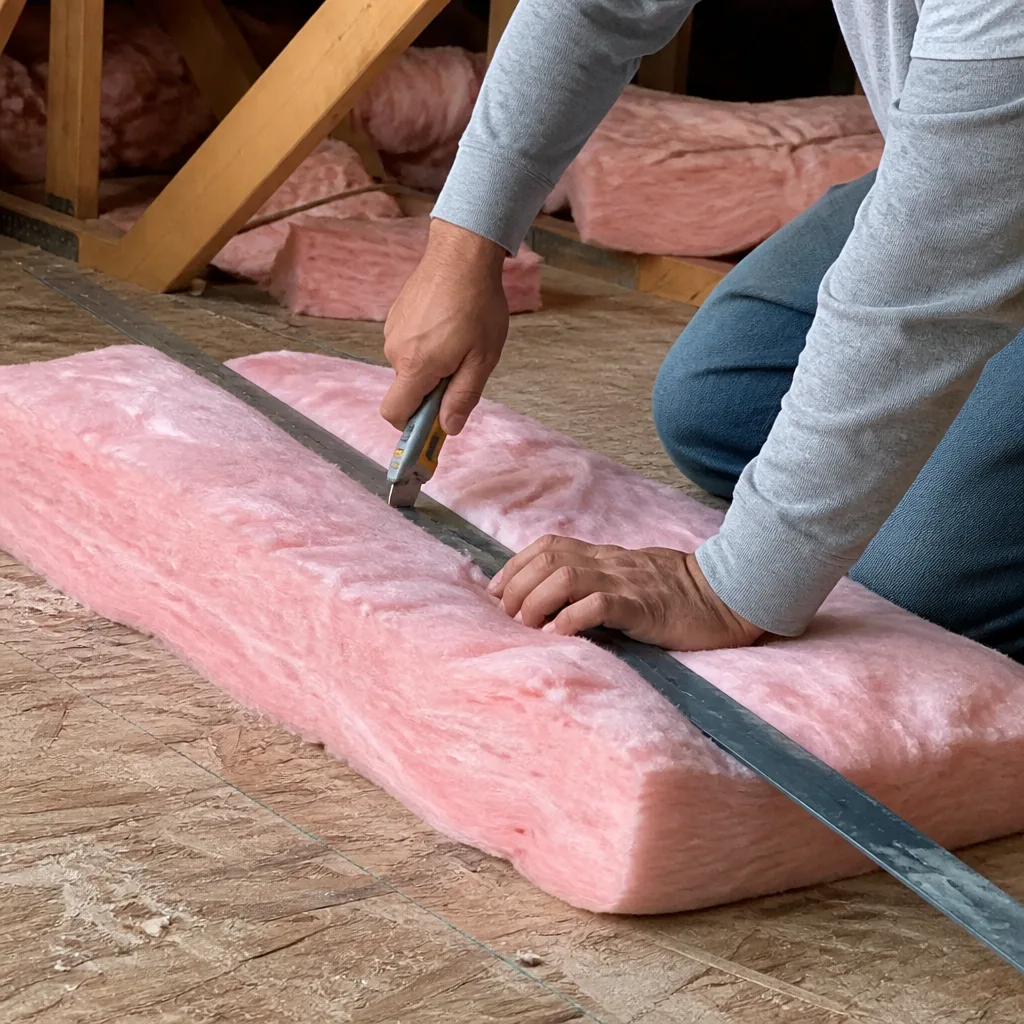
Los Angeles presents a fractured regulatory landscape. The City of Los Angeles maintains its own Department of Building and Safety (LADBS) with rules that often exceed county minimums. Unincorporated LA County areas fall under the county building code, which adopts state standards with fewer local amendments. Knowing which jurisdiction applies to your property changes what you must file and who inspects the work.
City of Los Angeles Specifics
LADBS requires permits for all attic insulation work that increases R-value or changes material type. The city has adopted the 2022 Los Angeles Green Building Code, which incorporates Title 24 Part 6 by reference with several local amendments:
- Attic insulation in hillside areas (common in Los Feliz, Echo Park, and Mount Washington) requires additional fire-resistance documentation when the material faces the roof deck
- Historic-Cultural Monuments and HPOZs (Historic Preservation Overlay Zones) in neighborhoods like Angelino Heights or West Adams require Cultural Heritage Commission review for any work visible from the exterior, including certain roof vent modifications that accompany insulation upgrades
- Soft-story retrofit buildings - thousands of which exist in Los Angeles after the mandatory retrofit program - cannot have crawl space or basement insulation work performed without structural engineering sign-off that the added weight and moisture profile do not compromise the retrofit
City inspections are scheduled through the LADBS online portal. The inspector verifies R-value labels on batts or bags, measures blown-in depth at multiple locations, and photographs vapor retarder placement. Failed inspections require correction and re-inspection; there is no same-day re-inspection for insulation work.
LA County Unincorporated Areas
Properties in unincorporated county territory - including portions of Altadena, East Los Angeles, Florence-Firestone, and Willowbrook - fall under LA County Public Works, Building and Safety Division. The county generally follows the 2022 California Building Code and Title 24 without city-specific amendments.
Key differences from the city:
- Permit thresholds are identical, but inspection scheduling is typically faster - often within 3-5 business days versus 7-10 in the city
- No historic preservation overlay review for insulation work
- No hillside fire district amendments; state fire code applies directly
- County does not maintain online permit history as far back as LADBS; records from before 2010 may require in-person request
Many Los Angeles homeowners do not know whether their property is city or county. The simplest verification: enter your address at zimas.lacity.org. If the parcel falls within city boundaries, LADBS has jurisdiction. If not, LA County applies.
The CF2R/CF3R Compliance Chain: Forms That Follow the Work
This is where most insulation jobs - and most contractors - fall short. California’s energy code requires specific documentation for certain insulation projects, and the forms must be generated, signed, and filed in a precise sequence. Missing any step creates a gap in the compliance record that surfaces at the worst possible moment.
What CF2R and CF3R Actually Are
CF2R - the Certificate of Installation for Insulation - is generated by the installer at project completion. It documents the installed R-value, material type, location, and whether a vapor retarder was included. The installer signs under penalty of perjury that the work matches the approved plans and Title 24 requirements.
CF3R - the Certificate of Field Verification and Diagnostic Testing - is signed by a certified HERS rater who independently verifies the installation. The rater visits the site, measures insulation depth or thickness, confirms vapor retarder placement, and may perform blower-door testing to verify air-sealing performance.
These forms are not paper certificates kept in a file drawer. They are entered into the California Energy Commission’s CF1R/CF2R/CF3R database, accessible to building departments, real estate professionals, and homeowners who know to look.
When HERS Rater Verification Is Triggered
Not every insulation job requires a HERS rater. The requirement applies when:
- The project is new construction or an addition
- The alteration involves more than 50% of the ceiling area or 50% of the wall area in a building
- The project participates in a utility rebate program (such as LADWP’s Home Energy Improvement Program) that mandates HERS verification
- The insulation is part of a whole-home energy upgrade that includes HVAC replacement or duct sealing
The Silver Lake homeowner’s 2019 job fell into category 2: the contractor had insulated the entire attic, exceeding the 50% threshold, but never retained a HERS rater. The CF2R existed; the CF3R did not. When the buyer’s agent requested energy compliance documentation, the gap appeared instantly.
How to Verify Your Forms Exist
- Obtain your property’s 12-digit APN (Assessor’s Parcel Number) from the county assessor
- Contact the California Energy Commission at (628) 226-1097 or email energy@energy.ca.gov with your APN and request a compliance record search
- For city properties, cross-check against LADBS permit records to confirm the permit number matches the CF2R
- If records show a permit but no CF3R, and your project exceeded the 50% threshold, you have a documentation gap that may require retroactive HERS inspection
Retroactive HERS inspection is often limited. The rater can verify what remains visible: insulation depth at access points, vapor retarder presence in reachable areas, and general installation quality. They cannot verify what is buried or covered. In the Silver Lake case, the rater could access only 60% of the attic due to a later-installed HVAC platform, and the CF3R was issued with explicit limitations that the buyer’s lender accepted only after extended negotiation.
Title 24 Part 6 Requirements That Apply Even Without a Permit
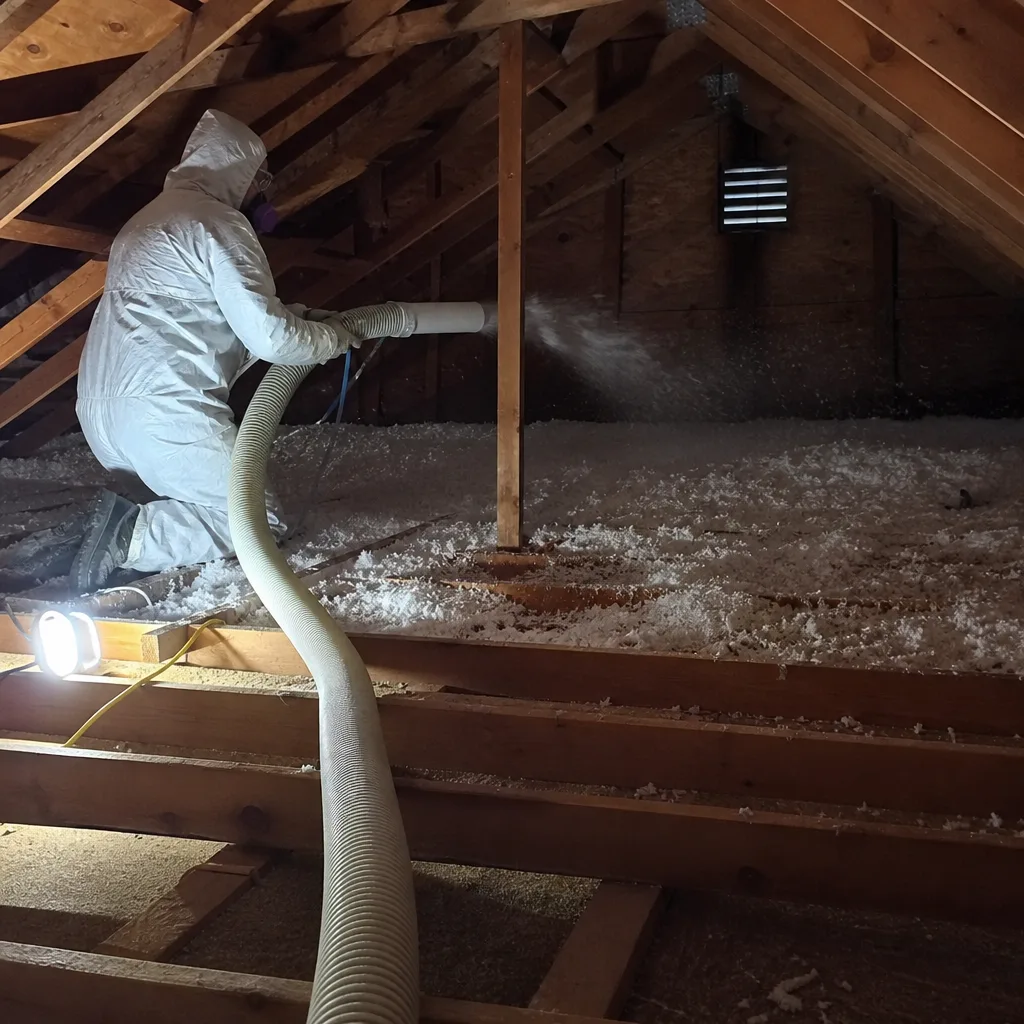
Homeowners sometimes assume that skipping the permit skips the rules. It does not. Title 24 Part 6 applies to all construction, permitted or not, and several of its provisions carry specific penalties or create specific hazards when ignored.
Vapor Retarder Rules
California’s climate zones - Los Angeles spans Zones 8, 9, 10, and 12 depending on exact location - determine vapor retarder requirements. In the coastal and basin areas that comprise most of Los Angeles, Class II vapor retarders (1.0 perm or less, greater than 0.1 perm) are required on the warm-in-winter side of insulated assemblies in new construction and alterations.
For attic insulation, this typically means:
- Kraft-faced batts with the facing down toward the conditioned space
- Unfaced batts with a separate polyethylene sheet installed below the insulation
- Blown-in cellulose or fiberglass with a vapor-retarder paint on the ceiling drywall below
Spray foam assemblies follow different rules: closed-cell spray foam at sufficient thickness acts as its own vapor retarder, while open-cell foam requires a separate Class II retarder in Climate Zone 10 and below, which includes most of Los Angeles.
We have removed insulation in Koreatown attics where the previous installer had flipped kraft-faced batts facing upward, toward the roof deck. In Los Angeles’s mild but marine-influenced climate, this traps moisture against the ceiling drywall, promoting mold that the homeowner smelled before they saw it.
The Knob-and-Tube Prohibition
Title 24 Part 6, Section 150.0(h), is explicit: insulation shall not be installed in a ceiling or wall where knob-and-tube wiring exists unless a licensed electrical contractor has certified that the wiring is:
- Inactive and disconnected at all points, or
- Active but upgraded to carry the additional thermal load without hazard
Knob-and-tube wiring persists in thousands of Los Angeles homes built before 1950, particularly in neighborhoods like Highland Park, Eagle Rock, and the older sections of Venice. The wiring runs through ceramic knobs attached to framing members, with insulation typically absent around it. Homeowners sometimes assume that burying it in new insulation solves the problem. It creates a fire hazard: the wiring was designed to dissipate heat into free air, and surrounding it with thermal insulation causes dangerous overheating.
We encounter this regularly in pre-war Los Angeles housing stock. Our protocol: photograph all visible wiring during the initial inspection, flag knob-and-tube for electrical contractor review, and do not proceed with insulation until written electrical sign-off is in hand. Under Haven Standard: Have it in writing.
Recessed Lighting Clearance
Non-IC-rated (non-insulation-contact) recessed can lights require 3-inch clearance from insulation on all sides. IC-rated fixtures allow direct contact but still require the rating label to be visible for inspection. Title 24 requires this clearance regardless of permit status; we have found insulation packed against non-IC cans in unpermitted Echo Park attic jobs where the homeowner never knew the hazard existed.
Three Attic Conditions That Trigger Mandatory Upgrades
The 2022 Title 24 alteration rules introduced a significant change: when any insulation work is performed in an attic, three specific conditions trigger mandatory upgrades regardless of project scope. A contractor replacing a small section of damaged batt insulation near an access hatch must address these if they exist. Most homeowners, and too many contractors, do not know this.
Condition 1: Attic Access Hatch or Door
If the attic has an access hatch or door - the pull-down stair, the scuttle hole, the knee-wall door - it must be weatherstripped and insulated to a minimum R-value equivalent to the surrounding attic insulation, or R-19, whichever is less. The 2022 rules eliminated the previous exemption for small access openings.
In practice, this means:
- Pull-down stairs receive a rigid insulated cover or a pre-fabricated insulated stair unit
- Scuttle holes receive a rigid insulated box or hatch with compression weatherstripping
- Knee-wall doors receive weatherstripping and insulation on the attic-facing side
We document this with before-and-after photographs showing the gap around the unsealed access and the completed weatherstripped assembly. The blower-door test - a pressurization reading that shows, in one number, how much air the building envelope is losing - typically shows 150-400 CFM50 reduction from access sealing alone in a typical Los Angeles single-family home.
Condition 2: Recessed Can Lights in the Ceiling Below
Any non-IC-rated recessed can light in the ceiling below the attic triggers mandatory replacement or retrofit when attic insulation work is performed. The options are:
- Replace with IC-rated LED fixtures that allow direct insulation contact
- Install a pre-fabricated airtight enclosure (Tenmat, CanCoverIt, or equivalent) maintaining 3-inch clearance
- Remove the can light and install a surface-mounted fixture with no attic penetration
The replacement option has become standard in our Los Angeles work. Modern IC-rated LED cans consume 10-15 watts versus 65-75 watts for old incandescent housings, and the reduced heat load is itself a safety improvement. We specify attic insulation in Los Angeles projects with can light replacement as a line item, not a surprise.
Condition 3: Whole-House Fan or Swamp Cooler
If a whole-house fan or evaporative cooler penetrates the attic floor, the opening must be sealed and insulated to R-19 minimum when attic insulation work is performed. This applies even if the fan is non-functional. The damper or louvers that close when the fan is off are not sufficient; a rigid insulated cover with weatherstripping is required.
Whole-house fans were common in Los Angeles homes built 1945-1975, particularly in the San Fernando Valley where evening temperature drops made them effective. Many remain in place, disconnected but unsealed, leaking conditioned air year-round. The 2022 rules close this loophole.
Our crews carry pre-cut rigid foam covers in standard fan sizes. Installation takes 30 minutes, and the blower-door test verifies the seal. On a recent job in Van Nuys, sealing a 36-inch whole-house fan opening reduced the blower-door reading from 3,800 CFM50 to 3,100 CFM50 - a 700 CFM50 improvement from a single penetration.
How to Pull Your Property’s Permit History from LADBS
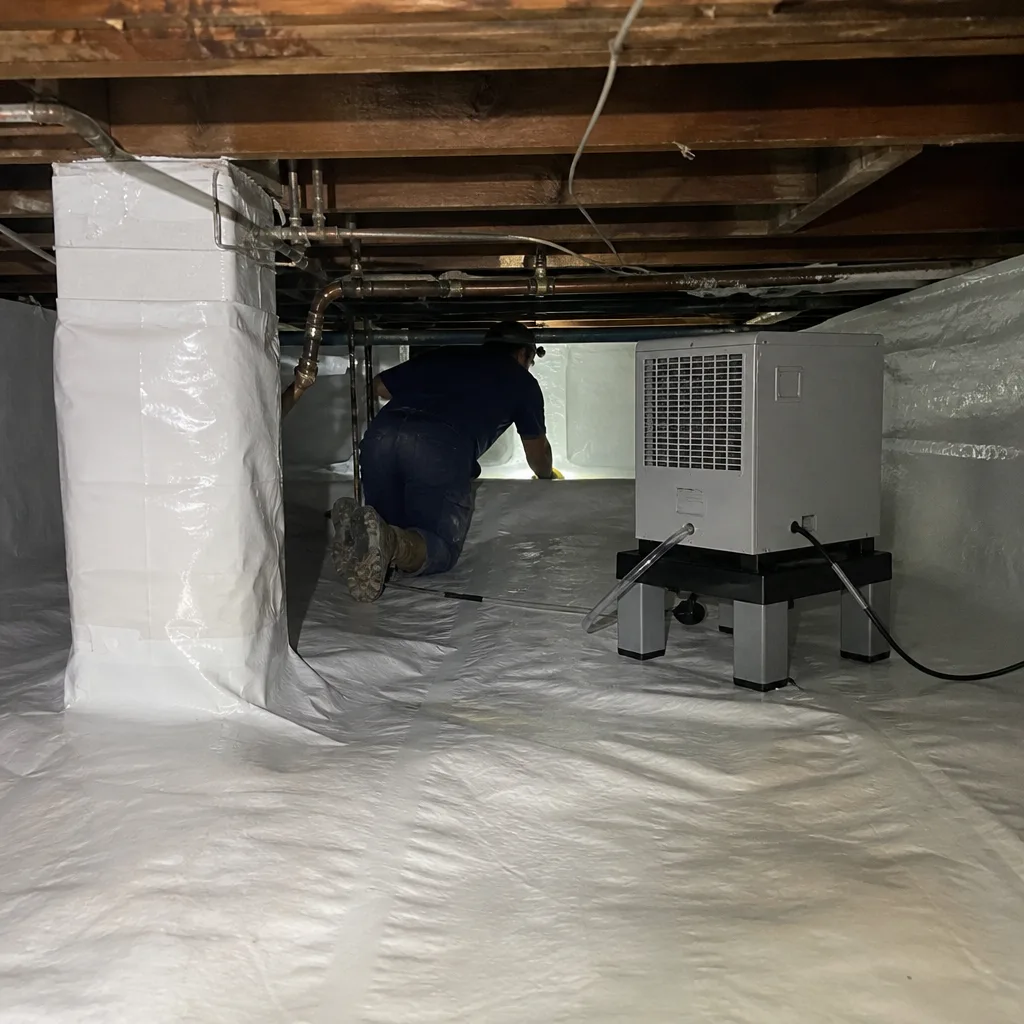
Verifying what work was actually permitted - and what was not - is a critical step before buying a home, selling one, or planning insulation upgrades. LADBS maintains the most accessible online permit database in Southern California, and learning to use it takes ten minutes - a good first step alongside our Attic Insulation Maintenance Checklist for Los Angeles Homeowners.
Step-by-Step: LADBS Online Permit History
- Navigate to ladbs.org and select “Online Services” then “Permit and Inspection Report”
- Enter your property address exactly as it appears on the assessor’s roll. Common errors: using “Street” instead of “St,” or including unit numbers that LADBS does not recognize
- The system returns all permits issued for the property, with permit number, type, issue date, and status
- Click any permit number for detail: scope of work, contractor name, inspection dates, and final status
- For permits older than 1995, the online record may show only summary data. Request full records by email to records@lacity.org with the property address and APN; allow 10-15 business days
When Records Show No Permit for Visibly Present Insulation
This scenario is common in Los Angeles, where decades of unpermitted work accumulate. Your options depend on your goal:
For a home purchase: Request that the seller obtain a retroactive permit or provide a written disclosure of unpermitted work. Lenders increasingly flag unpermitted energy improvements; Fannie Mae and Freddie Mac guidelines require permit verification for certain appraisal types.
For a home sale: Proactive permitting of existing insulation is possible but involves exposing the work for inspection. In practice, this means partial removal so the inspector can verify R-value labels, vapor retarder placement, and clearances. Cost typically runs $800-$2,500 depending on attic size and accessibility.
For your own occupancy: Unpermitted insulation that meets code standards poses no ongoing hazard, but creates documentation gaps. Consider voluntary permitting if you plan to sell within five years, or if you need the compliance record for a utility rebate or property-assessed clean energy (PACE) financing.
We have assisted homeowners in Los Feliz and Atwater Village with retroactive permitting. The process is slower than original permitting - inspections must be scheduled as “re-inspection of existing work” with limited availability - but it clears the title record.
Common Mistakes to Avoid
- Assuming like-for-like replacement needs no documentation. Even replacement jobs that don’t require a permit should generate a written scope, material specifications, and photographs. When the work is later questioned, your only evidence is what you can produce.
- Accepting a contractor’s verbal assurance that “the permit is handled.” In Los Angeles, verify directly through LADBS. Pull the permit number, confirm it is active, and check that inspection appointments are scheduled. We have encountered jobs where the contractor pulled a permit but never called for inspection, leaving the permit expired and the work technically unapproved.
- Installing insulation over knob-and-tube wiring without electrical sign-off. This violates Title 24 regardless of permit status and creates a fire hazard that home inspectors increasingly flag. The electrical sign-off must be in writing and must specifically address the thermal covering.
- Neglecting the CF3R when the project triggers HERS requirements. The CF2R from your installer is not sufficient. If your project exceeded 50% of ceiling or wall area, or participated in a rebate program, the CF3R must exist in the CEC database. Verify before closing out the project.
- Ignoring the 2022 mandatory upgrade triggers. A contractor who replaces insulation without addressing access hatches, non-IC can lights, or whole-house fan openings is not performing complete work. These are not upsells; they are code requirements that attach to the insulation work itself.
- Failing to verify vapor retarder placement in marine climate zones. Los Angeles’s coastal influence means moisture management matters even in dry summers. Kraft facing installed backward, or omitted entirely in a blown-in job, can cause ceiling drywall damage within two to three years.
- Assuming county rules apply to city property. The LADBS-versus-county distinction changes permit fees, inspection timelines, and applicable amendments. Verify your jurisdiction before starting work to avoid rejected applications and re-filing costs.
When to Call a Professional
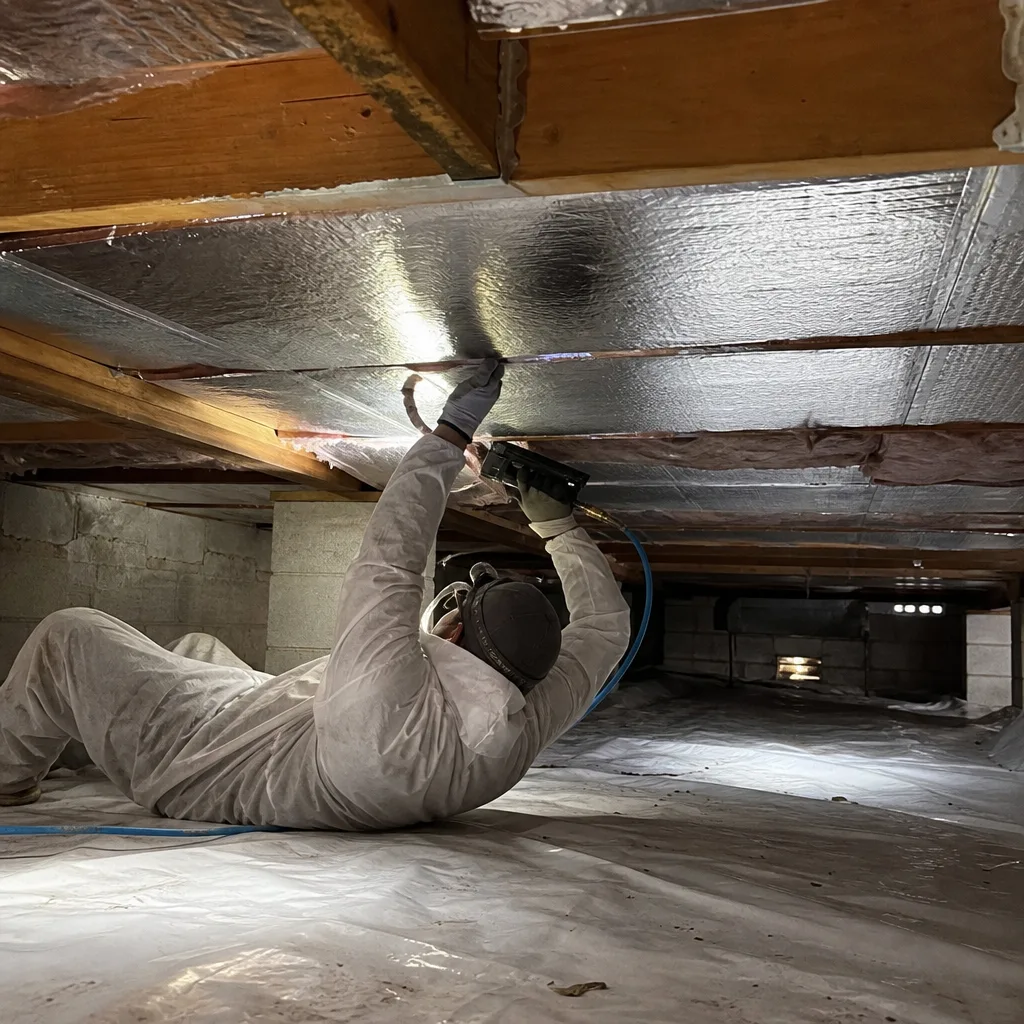
Call a professional when your project involves permit-triggering alterations, knob-and-tube wiring, spray foam installation, or any work where the compliance documentation must survive a future real estate transaction. The cost of proper permitting and HERS verification is modest compared to the six-week sale delay the Silver Lake homeowner experienced, or the $4,000-$8,000 cost of retroactive permitting and destructive inspection.
Topside Attic Insulation Los Angeles offers free estimates in Los Angeles. Every estimate includes a written scope, a written price before any work starts, and a clear statement of what permits and documentation the project will generate. We do not begin work without the homeowner understanding exactly what compliance record they will receive. Call (628) 226-1097 to schedule.
Frequently Asked Questions
LADBS charges a base permit fee of approximately $200-$400 for residential attic insulation, plus plan check fees if the project requires engineered drawings. LA County fees are comparable but may vary by district. The total permit cost typically represents 3-7% of the project value. Call (628) 226-1097 for an exact quote on your specific scope - estimates are free.
Homeowner-performed work is legal in California, but the permit requirement still applies if the work exceeds the like-for-like replacement threshold. A homeowner who increases R-value or changes material type without a permit faces the same documentation gaps and resale complications as a contractor who skips permitting. If you perform your own work, pull the permit in your own name and schedule the inspections.
In the City of Los Angeles, inspection scheduling currently runs 7-10 business days from the date of request, with longer waits during peak construction season (March-October). LA County unincorporated areas typically schedule within 3-5 business days. The inspection itself takes 20-40 minutes for a typical single-family attic. Failed inspections require correction and re-scheduling; there is no same-day re-inspection.
The impact depends on the buyer, the lender, and the type of financing. Cash buyers may accept written disclosure. Conventional lenders increasingly require permit verification for energy improvements. FHA and VA loans require that all work meet local code, which unpermitted work technically does not regardless of actual quality. The safest path: disclose proactively, or obtain retroactive permitting before listing.
A HERS rater is required when the project exceeds 50% of the ceiling area, is new construction, participates in a utility rebate program, or is part of a whole-home energy upgrade. A straightforward blown-in fiberglass job in a portion of the attic, without rebate participation, typically does not trigger the requirement. Your contractor should state in writing whether CF3R verification applies to your project.
Start with the LADBS permit history search described above. If a permit exists, request the inspection records. If no permit exists, examine the physical installation: verify vapor retarder placement, can light clearances, and access hatch sealing. For a documented assessment, we offer a Free Second Opinion on any written estimate or scope - bring us your documentation and we will read it with you. Call (628) 226-1097.
The Bottom Line
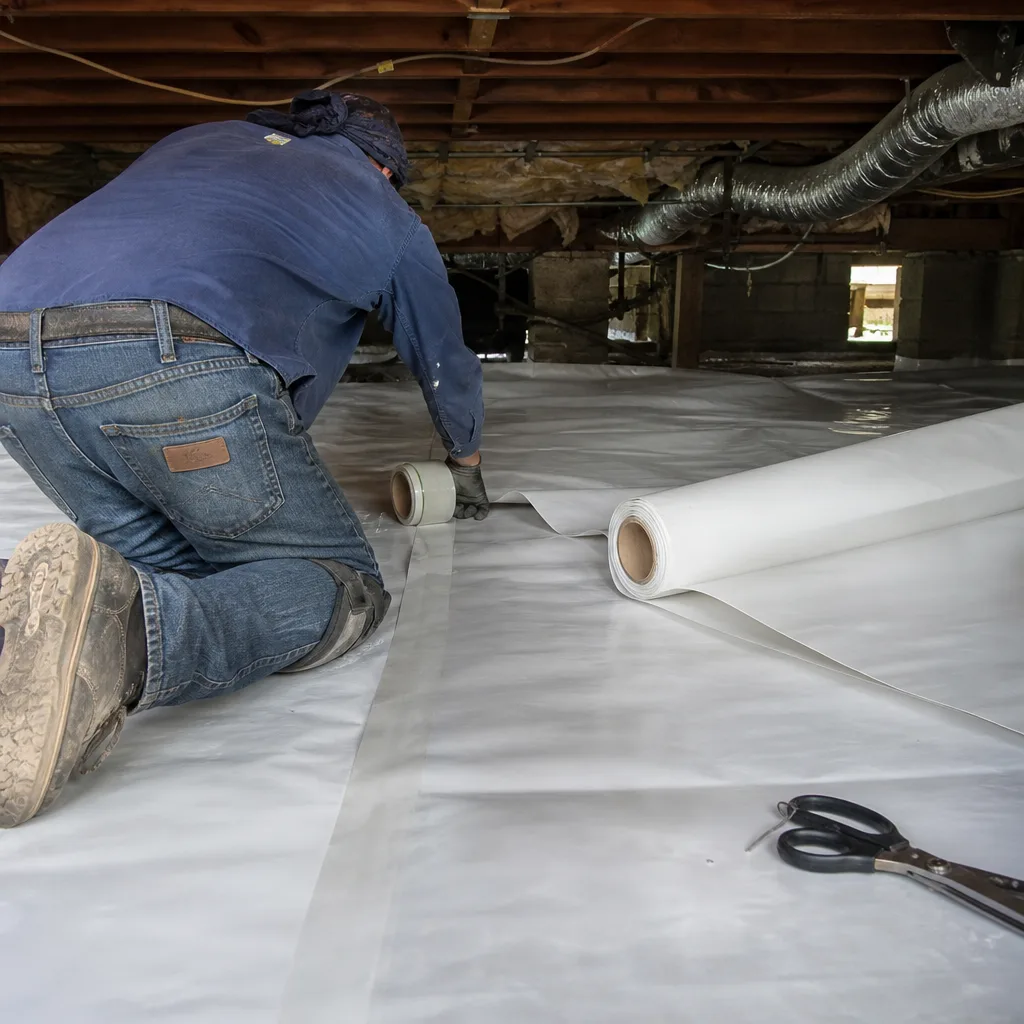
California’s insulation rules are more layered than most homeowners expect, and the documentation requirements - CF2R, CF3R, LADBS permits, electrical sign-offs - create a paper trail that matters most when it is missing. In Los Angeles, the intersection of city and county rules, the 2022 mandatory upgrade triggers, and the persistent presence of pre-1950 wiring in older neighborhoods means that insulation work demands more than material selection and installation skill. It demands compliance discipline. Verify your permits, verify your forms, and verify that your contractor will deliver the documentation before anyone lifts a tool. Under Haven Standard: Have it in writing.
Written by Wes Okafor, Owner at Topside Attic Insulation Los Angeles, serving Los Angeles since 2016.