
Last updated September 22, 2026
Insulation Warning Signs: A Los Angeles Homeowner’s Reference Guide
A hot second floor in a Sherman Oaks house and a hot second floor in a Glendale house can look identical from inside, but the cause is often completely different. One stems from insufficient R-value in a low-slope roof assembly; the other traces to a 14-square-inch gap around an HVAC chase that blower-door testing would find in under 20 minutes. Most guides to insulation warning signs stop at symptoms homeowners feel - drafts, hot rooms, high bills - without teaching the diagnostic logic that separates air-leakage signatures from thermal-resistance failures. This guide closes that gap. You’ll learn to read your home’s actual conditions, distinguish the physical failure modes that cause them, and know which problem you’re paying to fix before a contractor writes a scope.
Quick Answer
The warning signs of failing insulation in a Los Angeles home fall into two distinct categories: air-leakage signatures (cold spots at wall-ceiling junctions, dust lines on insulation surface, asymmetric room temperatures between same-floor rooms) and thermal-resistance failures (uniformly warm ceiling surfaces, high utility bills proportional to square footage regardless of season, attic insulation compressed below labeled depth). A homeowner can inspect for both from the attic hatch without walking the deck, but the fix for each differs - air sealing first, then insulation, or insulation replacement without sealing wastes the new material.
Table of Contents
- Air-Leakage Signatures vs. Thermal-Resistance Failures
- What You Can See from the Attic Hatch Without Walking the Deck
- Three Utility-Bill Patterns That Indicate Insulation Failure in LA
- What Thermal Imaging Shows - and the LA-Specific Limitations
- Five Conditions That Make a Warning Sign an Emergency
- Common Mistakes to Avoid
- When to Call a Professional
- Frequently Asked Questions
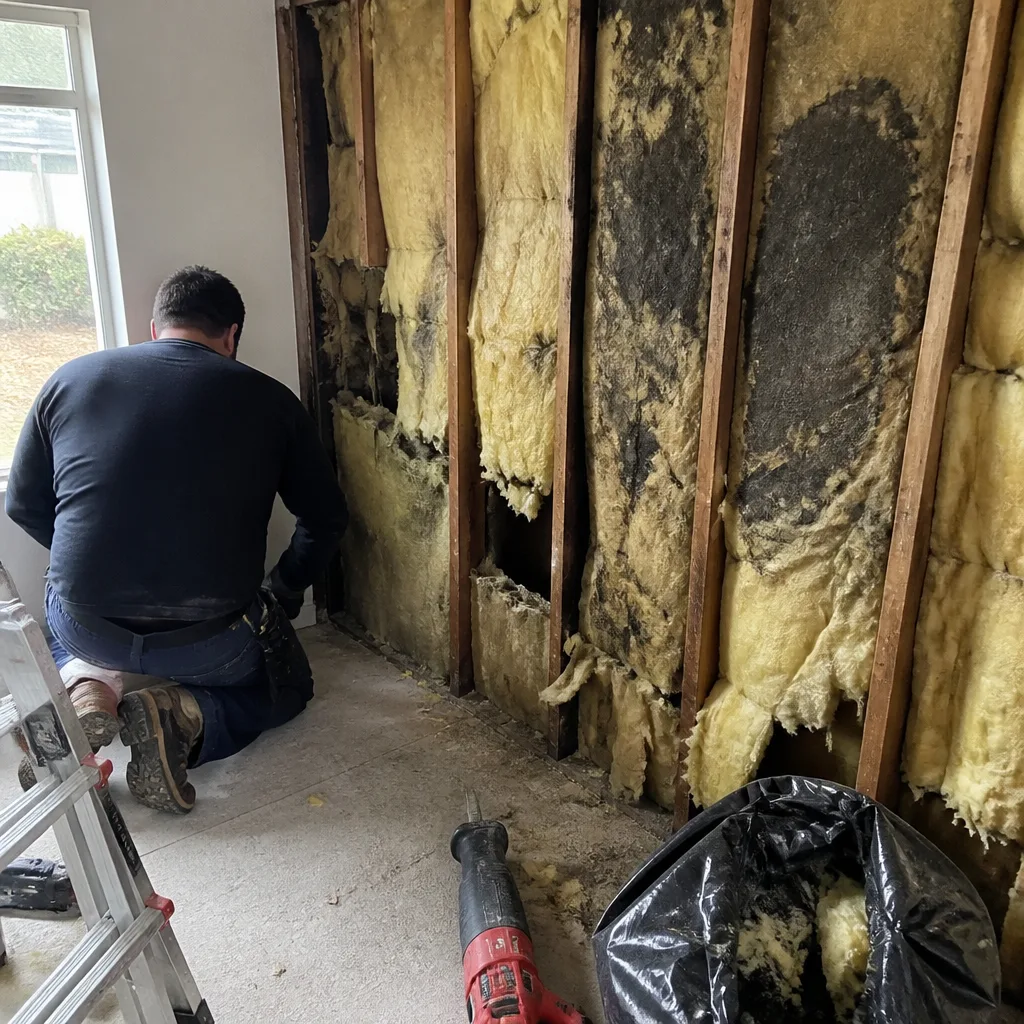 Before
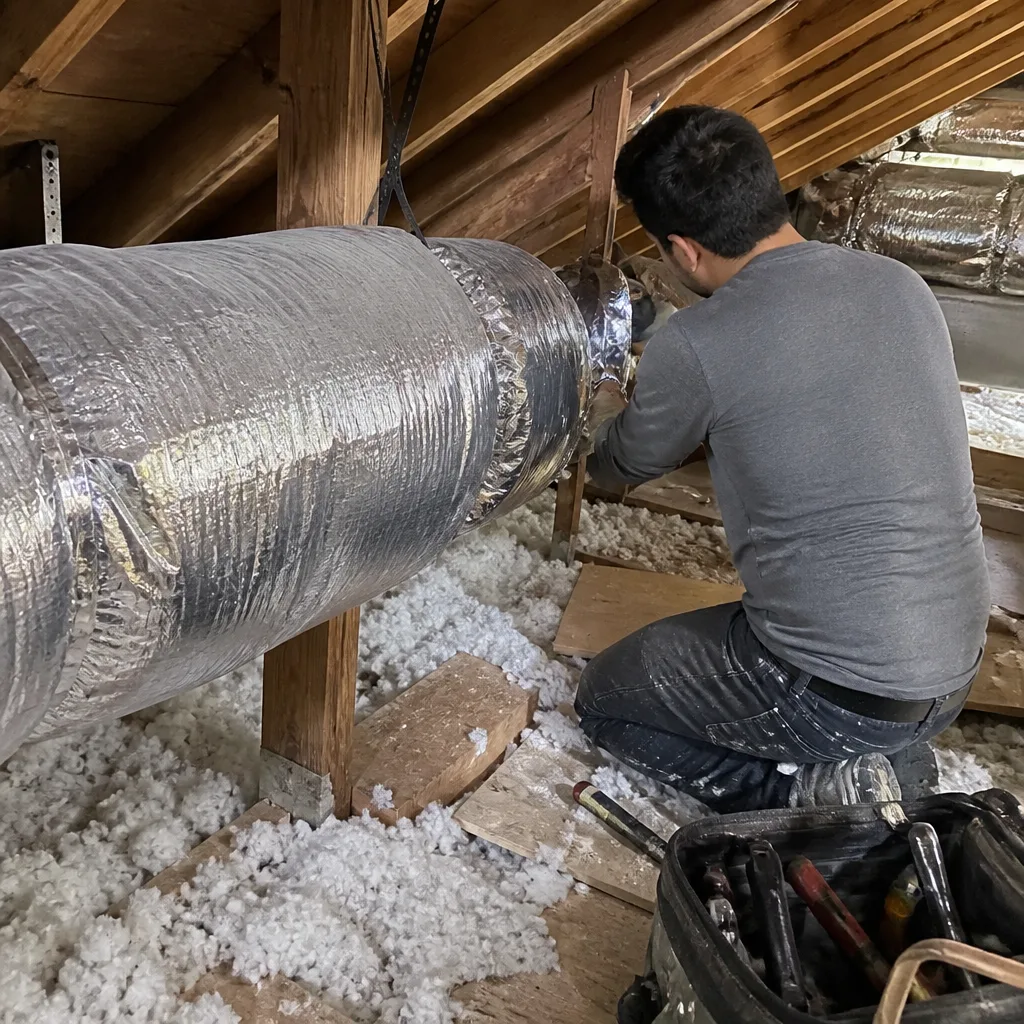 After
AfterAir-Leakage Signatures vs. Thermal-Resistance Failures
Every insulation problem produces one of two failure modes: conditioned air escaping through the building envelope, or heat moving through the envelope faster than the insulation can slow it. The symptoms overlap. The fixes do not. A contractor who treats both as “you need more insulation” will often solve neither.
Air-Leakage Signatures
Air leakage moves heat by convection - air itself carrying conditioned air out and unconditioned air in. In Los Angeles, where heating degree days are low but cooling degree days are high, the dominant pattern is attic air being pulled down into living space through gaps in the ceiling plane. The signatures are specific:
- Cold spots at wall-ceiling junctions in winter. Even mild LA winter nights drop into the 40s. When top plates - the horizontal framing member where wall studs meet ceiling joists - are unsealed, cold attic air channels down the interior wall cavities. You’ll feel it as a drafty band where wall meets ceiling, typically worst in rooms below attic kneewalls or at the second-floor perimeter.
- Dust lines on the insulation surface. Where air moves through fiberglass or cellulose, it carries fine particulate that deposits as dark streaking. In our work across Los Angeles from Venice to Highland Park, we’ve found dust lines directly above recessed can lights, around chimney chases, and along the seams of dropped soffits - each marking a bypass that should have been sealed before insulation was ever installed.
- Asymmetric room temperatures on the same floor. A bedroom at 74°F and an adjacent bedroom at 68°F, both with vents open, points to leakage into one room’s ceiling or wall cavity, not insufficient attic insulation overall. The room with the colder ceiling plane is losing conditioned air upward or pulling attic air downward.
- Insulation that appears “stained” or discolored in patches. This is often moisture deposition from warm, humid interior air hitting cold attic surfaces - the same physics as condensation on a soda can, but inside your ceiling. In coastal Los Angeles ZIP codes where marine layer keeps attic humidity elevated, these patches grow mold within a season.
Thermal-Resistance Failures
Thermal resistance - R-value - slows conductive heat flow. When it fails, heat moves through the assembly uniformly, not through discrete gaps. The signatures differ:
- Uniformly warm ceiling surface in summer afternoon. An infrared thermometer or even careful hand placement shows the entire ceiling warming in proportion to solar gain on the roof, not localized hot spots. In Los Angeles, this is common in homes built 1945-1975 with original R-11 or R-19 attic insulation, now compressed to half its labeled depth.
- High bills proportional to square footage, regardless of season. Air leakage creates seasonal spikes; poor R-value creates a steady baseline load. If your per-square-foot energy cost runs high year-round and your HVAC cycles continuously on mild days, the envelope’s thermal resistance is the suspect.
- Attic insulation depth below labeled R-value. Fiberglass batts labeled R-30 should measure approximately 10 inches. If they’re compressed to 6 inches by storage boards, ductwork, or past work, the effective R-value drops proportionally - to roughly R-18 in this example.
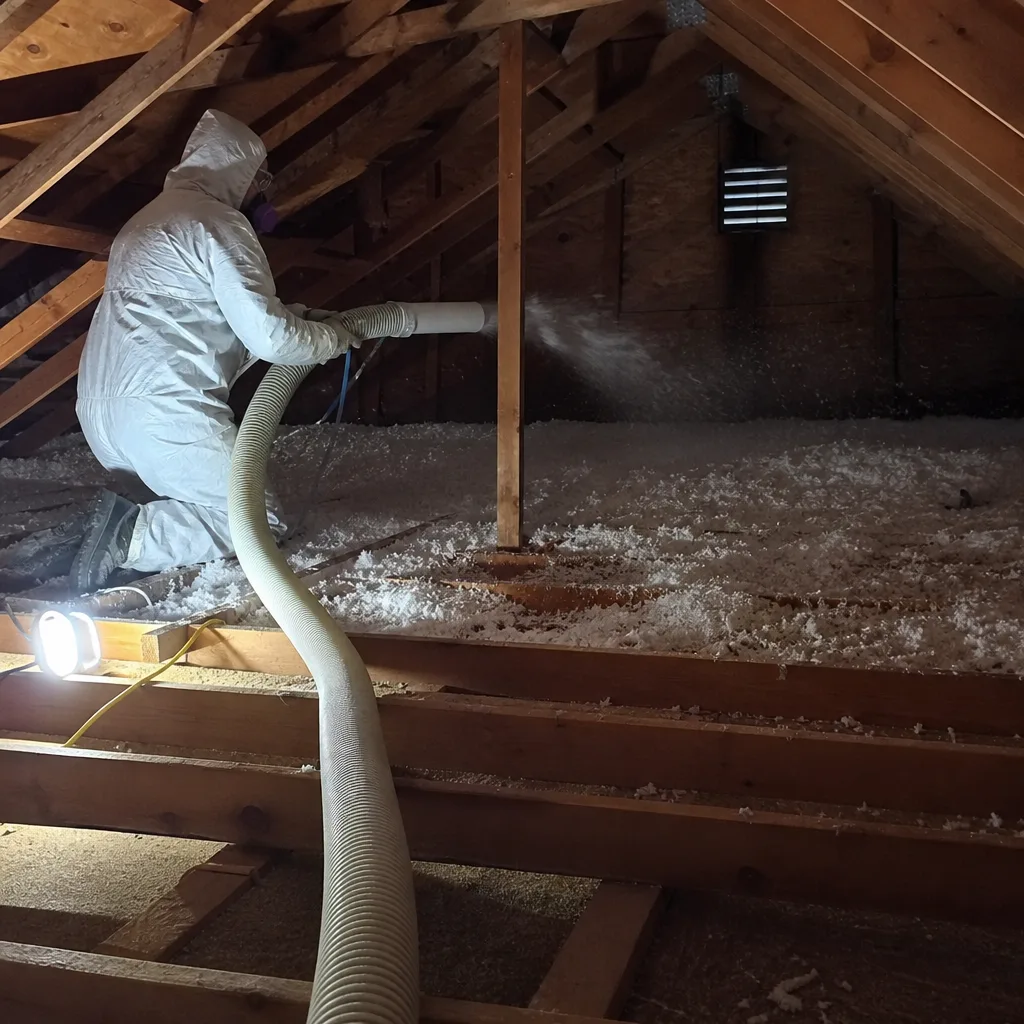
The critical distinction: air leakage must be sealed before insulation is added or replaced. Blowing new fiberglass over an unsealed attic floor, as we see done routinely in Los Angeles tract-home neighborhoods, simply buries the leaks. The air still moves, now through the new insulation, carrying moisture and particulate with it. Attic insulation in Los Angeles should always follow air sealing - never precede it.
What You Can See from the Attic Hatch Without Walking the Deck
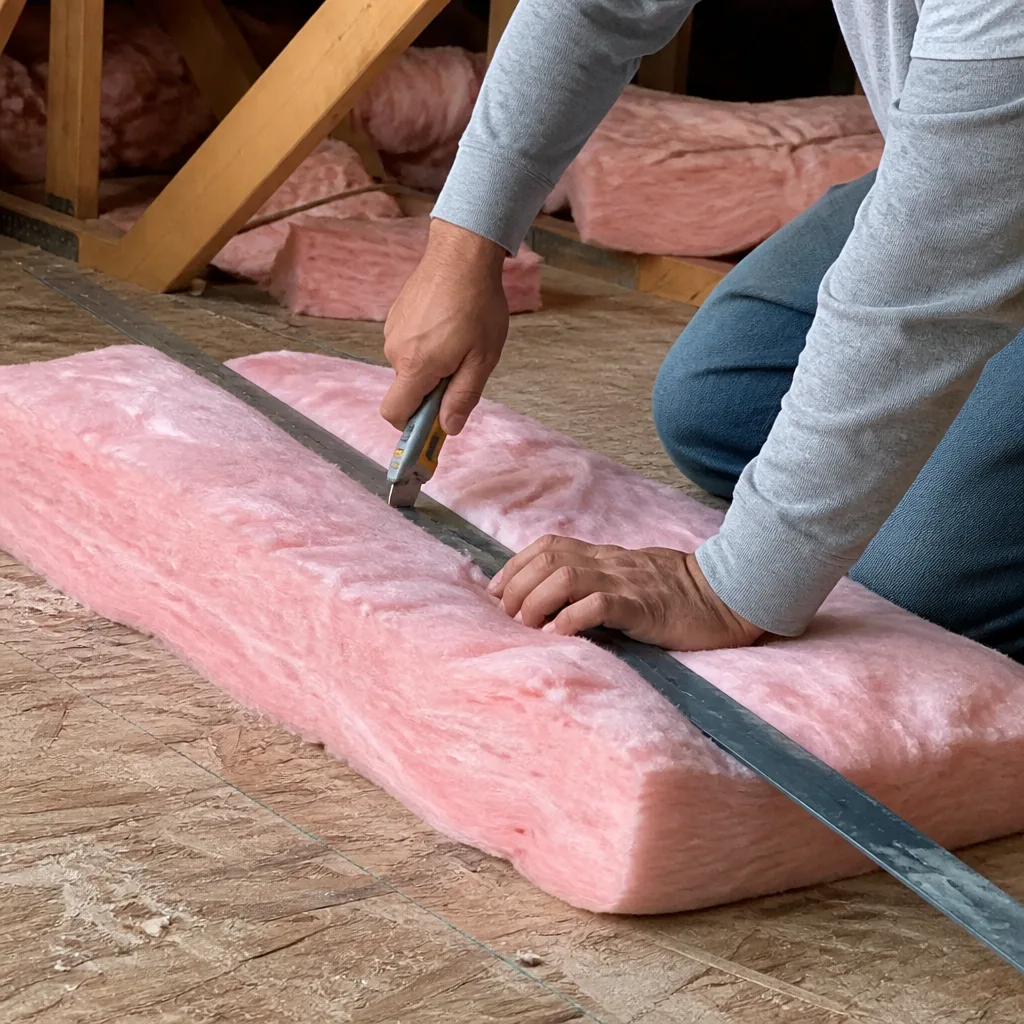
Most homeowners can identify serious insulation problems with a flashlight, a ruler, and 15 minutes at the attic hatch using our Attic Insulation Maintenance Checklist for Los Angeles Homeowners. You do not need to walk the deck - in fact, older Los Angeles homes with 1×6 or 1×8 roof sheathing often have no safe walking surface, and stepping between joists risks falling through the ceiling below.
Step 1: Assess Insulation Depth and Condition
Shine your flashlight across the insulation surface. Look for:
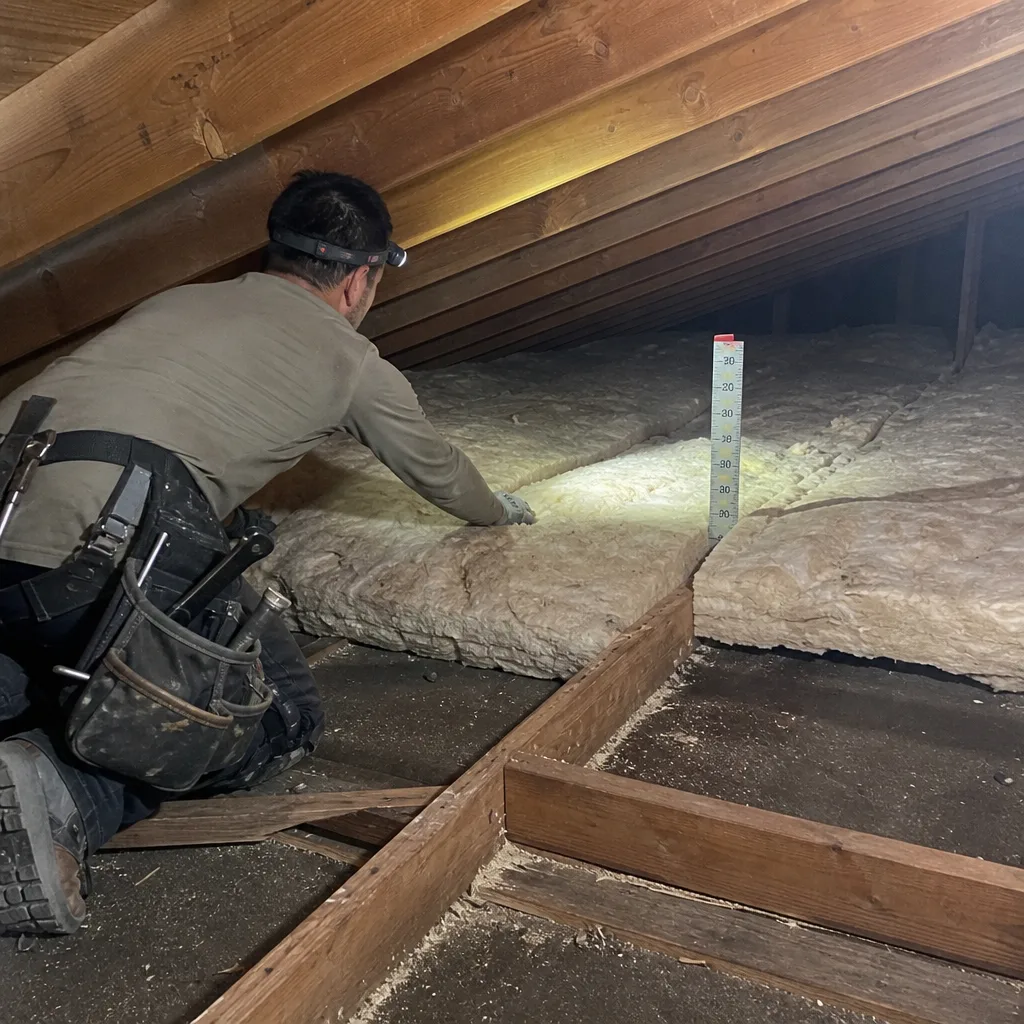
- Compressed vs. full-depth areas. Fiberglass batts that have been walked on, had storage placed on them, or been pushed aside for ductwork will show thin, hard-packed zones surrounded by fluffier material. Measure with a ruler: R-38 fiberglass should stand 12-14 inches; R-30, 10 inches; R-19, 6.25 inches. Compression below 80% of labeled depth indicates significant performance loss.
- Discontinuous coverage. Gaps where insulation was moved for electrical work, plumbing repairs, or pest treatment and never replaced. In Los Angeles, we find this most often above bathroom exhaust fans and near attic access hatches themselves, where workers repeatedly disturb the material.
- Moisture staining or matting. Cellulose that has gotten wet clumps and darkens; fiberglass mats down and loses loft. Either condition indicates a roof leak, condensation from air leakage, or - in coastal neighborhoods from San Pedro to Malibu - marine-layer humidity migrating through the envelope.
Step 2: Identify Top-Plate Bypasses from Below
A top-plate bypass - an air leak where the wall framing meets the ceiling - often reveals itself through insulation discoloration. Look for:
- Darkening or graying of insulation directly above interior walls. This is the dust-line signature: years of air movement filtering through the insulation, leaving particulate deposits. The darker the streak, the longer and more severe the leak.
- Insulation pulled away from the eaves or perimeter. Wind washing - outdoor air entering soffit vents and moving across the attic floor - can pull lightweight fiberglass back from the edges, exposing the top plate entirely. In Los Angeles homes with continuous soffit venting and no baffles, this is nearly universal.
Step 3: Spot Pest Damage at Depth
Rodent activity in Los Angeles attics peaks in late fall and early winter, when roof rats seek shelter from cooling nights. From the hatch, look for:
- Tunneling paths through loose-fill insulation. Compressed trails 3-4 inches wide, often following joist bays or duct runs. Fresh tunnels have smooth walls; abandoned ones collapse and fragment.
- Droppings concentrated near warmth sources. Around furnace plenums, recessed light housings, or where ductwork enters the attic. Fresh droppings are dark and moist; old ones gray and crumbly.
- Insulation displaced into nests. Shredded fiberglass or cellulose gathered into softball-sized masses, often near gable vents or roof penetrations where entry occurred.
Active pest intrusion requires remediation before any insulation work. Sealing and insulating over active rodent pathways traps waste, pheromones, and ongoing damage. Topside Attic Insulation Los Angeles home includes rodent proofing as a prerequisite step when our inspection finds active intrusion.
Three Utility-Bill Patterns That Indicate Insulation Failure in LA
Los Angeles utility bills tell stories that symptoms alone obscure. The city’s mild climate - few freezing days, moderate humidity, intense but brief summer heat - creates distinctive patterns when insulation fails. We’ve analyzed bills from over 9,000 homes sealed and insulated since 2016, and three patterns recur with diagnostic precision.
Pattern 1: September Spikes Without July Peaks
A bill that jumps in September but not July indicates radiant heat gain through a low R-value roofline. July in Los Angeles often brings marine-layer overcast, particularly west of the 405; September brings Santa Ana conditions - dry, clear, intense solar gain. A roof assembly with insufficient insulation or a degraded radiant barrier absorbs this gain and radiates it downward for hours after sunset. The HVAC runs continuously into evening. The homeowner feels “the house never cools down.”
This pattern is common in low-slope roof assemblies common in Mid-Century Modern homes from the Valley to the hills above Los Feliz, where R-19 batts in a 2×6 rafter bay were marginal from installation and have compressed further.
Pattern 2: High December Bills Despite Mild Temperatures
Los Angeles December nights rarely drop below 45°F. If your heating bill climbs anyway, the cause is typically air leakage on cold, radiative nights. Clear winter skies allow roof surfaces to radiate heat to the night sky, dropping attic temperatures 10-15°F below ambient air. Unsealed top plates, recessed light housings, and duct boots pull this cold air into living space. The furnace compensates. The homeowner feels drafts, not uniform cold.
We’ve measured blower-door readings above 3,500 CFM50 in homes where occupants reported “the heater runs all night but I’m still cold.” After sealing, same homes dropped below 2,000 CFM50 and reported comfort at lower thermostat settings.
Pattern 3: Increased Bills After HVAC Replacement
New equipment is often more powerful and better sealed than the unit it replaces. A higher-static blower pressurizes ductwork more aggressively, forcing air through existing leaks in the duct envelope and the building envelope. The new system “works harder” because it’s losing more conditioned air through leaks that the old, weaker blower couldn’t pressurize enough to expose.
This pattern frustrates homeowners who invested in efficiency upgrades. The solution is not a smaller system; it’s sealing the envelope the new system is now pressurizing. Our spray foam insulation in Los Angeles jobs include duct-sealing verification when equipment has been replaced within two years.
What Thermal Imaging Shows - and the LA-Specific Limitations
Thermal imaging cameras detect infrared radiation - surface temperature differences - and translate them to visible images. In insulation diagnostics, they excel at finding air-leakage pathways (cold air shows as dark patches) and missing insulation (uniform temperature anomalies where insulation is absent). But they do not measure R-value, air movement rate, or moisture content directly. The image shows temperature; interpretation requires context.
What Thermal Imaging Reveals
- Air-leakage pathways in real time. A blower door depressurizes the house while the camera scans; infiltrating air cools surface temperatures instantly. The dark streak at a window header or the cold band above a baseboard maps the leak precisely.
- Insulation voids and compression. A uniformly warm or cool rectangle in a ceiling plane, bordered by different temperatures, typically indicates missing or compressed insulation. We’ve found batts fallen away from sloped ceilings in Los Angeles hillside homes, creating 20°F surface temperature differences visible from the room below.
- Moisture accumulation. Evaporative cooling from wet insulation or sheathing creates localized cold spots. In LA’s coastal zones, this pattern appears at roof penetrations where marine-layer moisture condenses on cool morning surfaces.
The LA-Specific Limitation: Delta-T Requirements
Thermal imaging requires temperature difference - delta-T - between interior and exterior to produce meaningful contrast. Industry standard calls for minimum 18°F delta-T; usable images begin around 15°F. In Los Angeles, this eliminates most of the year for coastal ZIP codes.
A Santa Monica home at 72°F interior, 65°F exterior on a June morning - 7°F delta-T - will show nearly uniform surface temperatures regardless of insulation condition. The camera cannot resolve meaningful differences. This is why we schedule blower-door-assisted thermal imaging in Los Angeles between November and March for coastal properties, and extend to April for inland valleys where summer temperature swings arrive earlier.
Homeowners who receive “thermal imaging inspections” in July should ask what delta-T existed at scan time. A report without this number is incomplete. We publish delta-T, outdoor temperature, and indoor setpoint on every thermal imaging documentation we deliver.
Five Conditions That Make a Warning Sign an Emergency
Most insulation problems allow scheduling at homeowner convenience. Five conditions do not. Each presents safety or structural risk that warrants immediate professional assessment.
- Active moisture in insulation. Wet insulation loses R-value, but the greater risk is mold propagation and structural decay. In Los Angeles, where termite pressure is already high, moist framing attracts secondary infestation. If you see water staining, feel damp insulation, or smell mustiness from the attic hatch, schedule inspection within 48 hours - and identify the moisture source (roof leak, condensation from air leakage, or plumbing failure) before any insulation work begins.
- Knob-and-tube wiring contact. Pre-1950 Los Angeles homes often retain original knob-and-tube circuits, particularly in neighborhoods like Eagle Rock, Atwater Village, and parts of the Hollywood Hills. This wiring was designed to run in free air for cooling; burying it in insulation creates fire hazard. Any insulation contact with knob-and-tube requires electrical evaluation before modification. We will not install insulation over active knob-and-tube without written electrician clearance.
- Vermiculite presence. Vermiculite insulation, gray-brown and pebbly, was mined from Libby, Montana through 1990 and may contain asbestos. Disturbing it releases fibers. If your Los Angeles home has vermiculite - common in pre-1980 construction, particularly in hillside and canyon areas where it was marketed for fire resistance - do not touch it. Professional abatement assessment is required before any envelope work.
- Pest infestation with active intrusion points. Rodents in attics chew wiring, compress insulation, and introduce pathogens. Active intrusion - fresh droppings, gnawing sounds, new damage - requires exclusion (sealing entry points) and remediation before insulation replacement. Sealing over active infestation traps animals inside, creating odor, decay, and further damage.
- HVAC equipment sitting directly on compressed insulation. Furnace plenums and air handlers produce heat; when they rest on compressed fiberglass or cellulose, the reduced clearance creates fire risk and restricts combustion air. This configuration violates mechanical code in Los Angeles and requires platform installation or equipment relocation as part of any insulation upgrade.
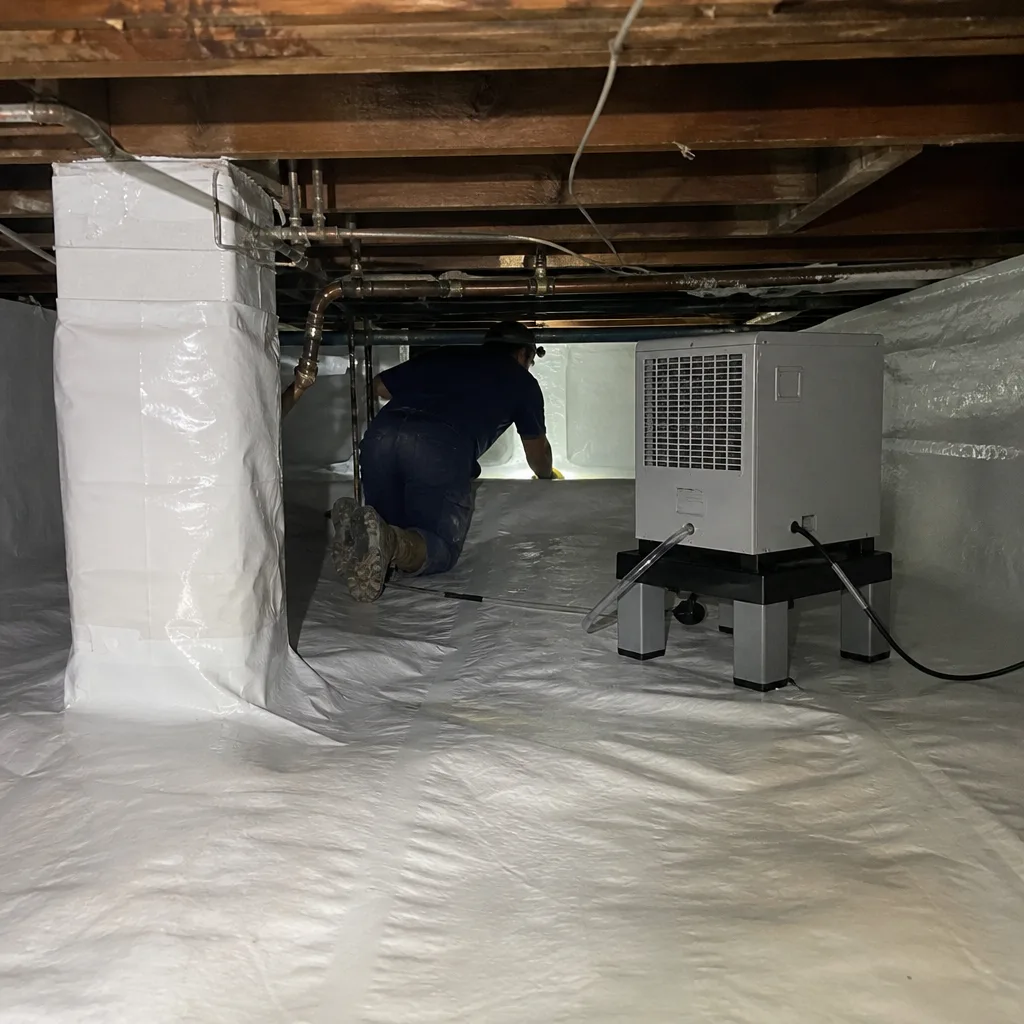
Crawl space encapsulation and vapor barrier in Los Angeles addresses moisture conditions in the lower envelope with the same sequencing principle: source control first, then insulation, never reversed.
Common Mistakes to Avoid
- Adding insulation over unsealed air leaks. This is the most common error we correct in Los Angeles homes. New insulation performs at a fraction of rated R-value when air moves through it, and buried leaks continue delivering moisture and particulate into living space. Air sealing must precede insulation installation - this is not an upsell, it is sequencing.
- Judging insulation by age alone. Fiberglass and mineral wool do not degrade chemically; they fail mechanically through compression, moisture, or disturbance. A 40-year-old batt at full depth and dry condition performs near specification. A 10-year-old batt walked on and compressed does not. Measure depth, don’t assume replacement.
- Using thermal imaging as sole diagnostic. A clean thermal image without delta-T documentation proves nothing. Demand the measurement conditions; without 15°F minimum delta-T, the absence of anomalies is not evidence of performance.
- Ignoring wind washing at eaves. Soffit vents are necessary for attic ventilation, but without baffles to maintain insulation depth at the perimeter, incoming air pushes fiberglass back from the edges. The result: cold top plates, visible as dark bands in thermal images, and effective R-value loss across the entire ceiling perimeter. Baffles cost little; their absence costs comfort.
- Replacing insulation without identifying the moisture source. Wet insulation is a symptom. The cause - roof leak, condensation from air leakage, or plumbing failure - must be resolved or the new insulation will wet again. We’ve removed insulation from Los Angeles homes that had been replaced twice in five years, never with source control.
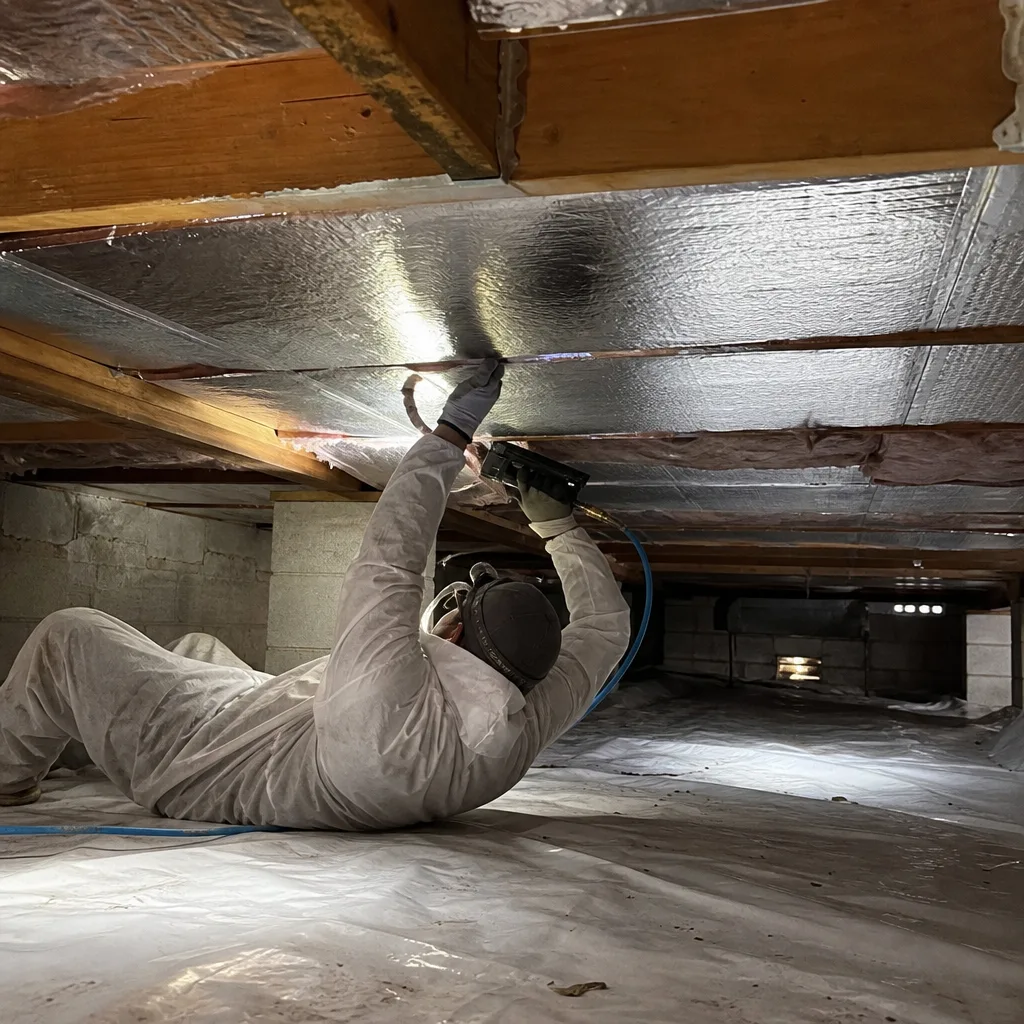
- Assuming all spray foam is equivalent. Open-cell foam (Icynene, Demilec) and closed-cell foam differ in vapor permeance, R-value per inch, and application constraints. Open-cell at rooflines in LA’s mixed-humidity climate requires careful dew-point analysis; closed-cell in crawl spaces can trap moisture if the ground isn’t managed. Material selection follows diagnosis, not preference.
When to Call a Professional
Call for professional assessment when you’ve identified any of the emergency conditions above, when utility bills follow the three patterns described without clear alternative explanation, or when your attic hatch inspection reveals compressed insulation below 80% of labeled depth, active pest intrusion, or moisture staining you cannot source. A competent contractor will begin with a blower-door test - a pressurization reading that shows, in one number, how much air your building envelope is losing - and explain what that number means for your specific home.
Topside Attic Insulation Los Angeles offers free estimates in Los Angeles. Call (628) 226-1097. Every estimate includes a written price before any work starts, a documented photo record of conditions found, and - on applicable jobs - before-and-after blower-door numbers so you can verify the air-sealing result. The 365-Day Done Right Promise applies to all completed work: if it’s not done right, we make it right, backed by a written scope and written warranty delivered before anyone lifts a tool.
Frequently Asked Questions
Most attic insulation jobs in a Los Angeles home this size run between $3,200 and $7,800 for removal and replacement with fiberglass or cellulose to current code R-value, with spray foam roofline work ranging higher depending on assembly complexity. The exact figure depends on square footage, existing material condition, accessibility, and whether air sealing is required - which it usually is. Call (628) 226-1097 for a written price; estimates are free.
You can add over old insulation only if the existing material is dry, uncompressed, free of pest contamination, and not vermiculite. In practice, Los Angeles attics older than 30 years rarely meet all four conditions. We inspect and document before recommending overlay versus removal; the photo record shows you exactly what we found and why we recommended the approach we did.
Seasonal pattern reveals the cause. Bills that spike in specific months - September for radiant gain, December for cold radiative nights - indicate air leakage. Bills that are uniformly high year-round, with HVAC cycling on mild days, indicate low R-value. A blower-door test quantifies leakage; an attic inspection with depth measurement assesses R-value. Most homes have both; the question is which dominates your load.
Spray foam - open-cell like Icynene or Demilec, or closed-cell - justifies its premium when the roofline or wall cavity geometry makes batt or loose-fill installation impractical, or when both air sealing and high R-value are needed in limited depth. In Los Angeles, low-slope roofs with 2×6 rafters and complex hillside framing often fit this description. The decision follows measurement, not assumption; we calculate payback based on your actual bills and assembly.
Fiberglass, mineral wool, and cellulose do not degrade chemically in Los Angeles conditions; their lifespan is determined by physical disturbance, moisture exposure, and pest activity. Well-installed, dry, undisturbed insulation performs for decades. The failure mode is almost never “worn out” - it’s compressed by storage, wet from leaks, or tunneled by rodents. Inspection every 5-7 years catches these before they propagate.
Before work starts: a written price, written scope of work, and written warranty. After work completes: a documented photo record of conditions and completed work, and - on jobs involving air sealing - before-and-after blower-door readings showing the measured improvement. Anything less leaves you without verification of what was promised and what was delivered. Under Haven Standard: Have it in writing.
The Bottom Line
Insulation warning signs in Los Angeles homes are readable, measurable, and separable into distinct failure modes - but only if you look past symptoms to physical causes. For more guides & resources, see our blog. Air leakage and low R-value feel similar from inside; they require different fixes, and only one sequencing order works. Inspect from the attic hatch before calling contractors. Read your utility bills for seasonal patterns. Ask for delta-T when thermal imaging is offered. Demand blower-door numbers and written documentation. The homeowners who get lasting results are not the ones who buy the most insulation; they’re the ones who diagnose correctly first.
Written by Wes Okafor, Owner at Topside Attic Insulation Los Angeles, serving Los Angeles since 2016.